.. . .
.中國 DF-26 飛彈可以完全封鎖攻擊至太平洋第二島鏈.
China 096-SSBN on duty at PACIFIC...
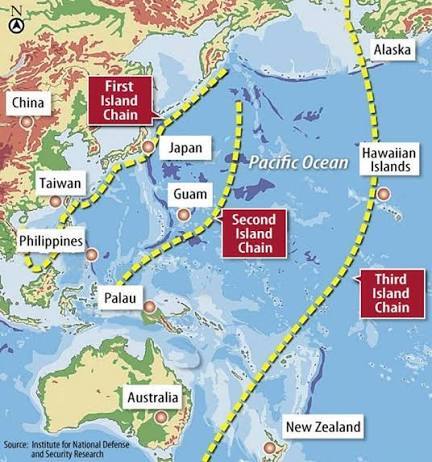
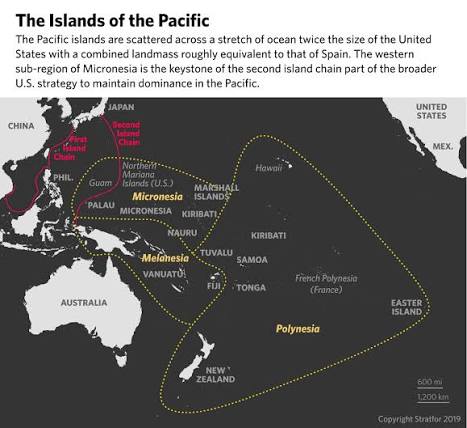
.A second island chain strategy for Asia.
 . .
A missile brigade under the People’s Liberation Army Rocket Force.China’s rocket force tests ‘carrier killer’ DF-26 ballistic missiles.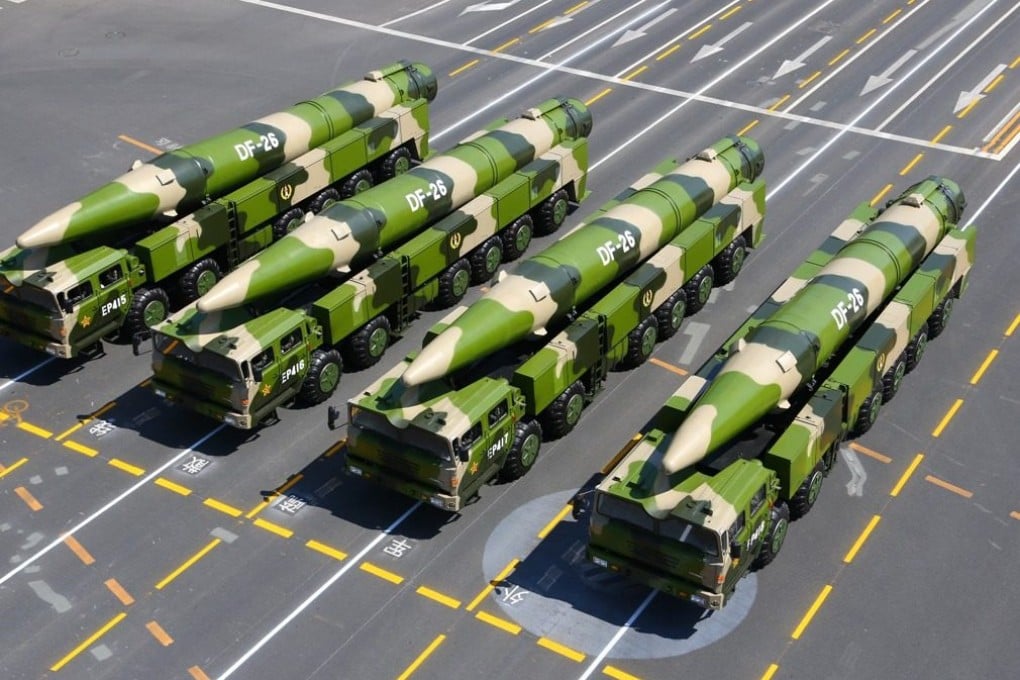
. . .
.
美國智庫「國防優先基金會」(Defense Priorities)軍事分析主任(Jennifer Kavanagh)於2026年9月發表題為《亞洲「第二島鏈」戰略》的研究報告,建議美國逐步將亞洲軍事重心由第一島鏈撤往第二島鏈..智庫報告核心主張.
- A second island chain strategy for Asia.
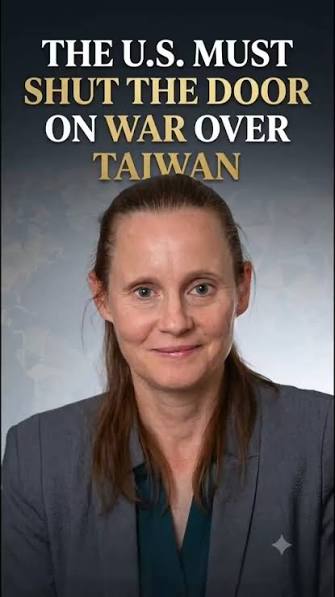 - Jennifer Kavanagh, Director of Military Analysis at Defense Priorities, says: “The U.S. needs a policy that guarantees that it stays out of a war over Taiwan.” The costs of a war with China are not manageable.
- .
- The United States is gradually shifting its military focus in Asia from the First Island Chain to the Second Island Chain.
- 戰略後撤:將美軍重心從脆弱的第一島鏈(如台灣、沖繩)撤至關島、澳洲等第二島鏈與太平洋據點。
- 縮減同盟:終止與日本、韓國、菲律賓及澳洲的共同防衛條約,轉為彈性夥伴關係。
-
- 揚棄「戰略模糊」,明確表態若台海爆發軍事衝突,美軍不予介入,並撤除駐台美軍訓練人員。 對台不干預.?
- 官方定調:民進黨團指出,智庫多元意見不代表美國政府正式政策;美國在台協會(AIT)處長谷立言強調,美國仍持續深化第一島鏈部署與區域夥伴合作。
- 海外學者批評:如英國學者帕塔拉諾認為,撤出第一島鏈等於放棄印太據點,讓區域安全形同虛設。
- A second island chain strategy for Asia.
- The United States has two core interests in Asia worth protecting with military power: defending the U.S. homeland and safeguarding access to key economic markets and trade routes. The first priority requires little in the way of a forward military presence while the second benefits from a modest air and naval presence to hedge against outcomes that would threaten U.S. interests.
- A strategy that shifts U.S. military commitments and presence from the vulnerable “first island chain” toward a more defensible “second island chain” would reduce U.S. military requirements and the risk of a war with China while still protecting U.S. interests.
- The United States should narrow its defense commitments in the region, shifting to a clear non-intervention position on Taiwan, ending mutual defense alliances with South Korea, Australia, the Philippines, and Japan, and negotiating narrower and flexible security partnerships in their place. U.S. military posture should change accordingly.
- The United States should remove most Army and Marine Corps deployments from Asia and cut air and naval power significantly. The remaining U.S. forces should be consolidated at more survivable bases farther from China’s coast and tasked with securing U.S. economic interests and signaling continued U.S. involvement in the Pacific region.
- The United States should provide a clear plan of its intentions and communicate carefully with its allies and China. Changes should be phased over a period of three to eight years, with most changes complete by 2030 and all finalized by 2035.
For over a decade, the United States has defined Asia as its priority theater, that is, the region of greatest importance for U.S. national security and economic interests. This designation owes most obviously to the region’s economic importance. Asia is home to several of the most important U.S. trade partners, including China, Taiwan, and Japan. It is a hub of manufacturing and technological development and the site of many of the world’s most important trade routes.
Asia is also home to the only serious U.S. peer competitor, the People’s Republic of China. Today, China is the geopolitical equal of the United States, with a nearly equivalent GDP and formidable military force. Over the past two decades, U.S. policymakers have become increasingly concerned about the trajectory and purpose of this military development. Many worry that China intends to use its growing military power to push the United States out of Asia or that it has aggressive intentions against U.S. allies such as Japan and South Korea.
The United States has long maintained a massive military presence in Asia, spread across Japan, South Korea, the Philippines, Australia, and U.S. territories such as Guam. The origins of this posture go back at least to the end of World War II, when the United States occupied Japan and turned many of its regional outposts into permanent military installations. Long-term alliances with Japan, South Korea, and the Philippines gave the United States an enduring stake in the region’s security. Over time, these relationships became the central pillars of U.S. military dominance over the western Pacific.
Since the height of the Cold War, the number of U.S. military personnel stationed in the region has fallen, with most U.S. military forces leaving the Philippines and many exiting South Korea as well. But about 90,000 personnel remain, and the institutional barriers to removing them are fierce. Especially since President Barack Obama announced an intention to “pivot to Asia” in 2011, the Pentagon has explored increasing its access to regional military bases for rotational U.S. military deployments or the forward positioning of U.S. assets.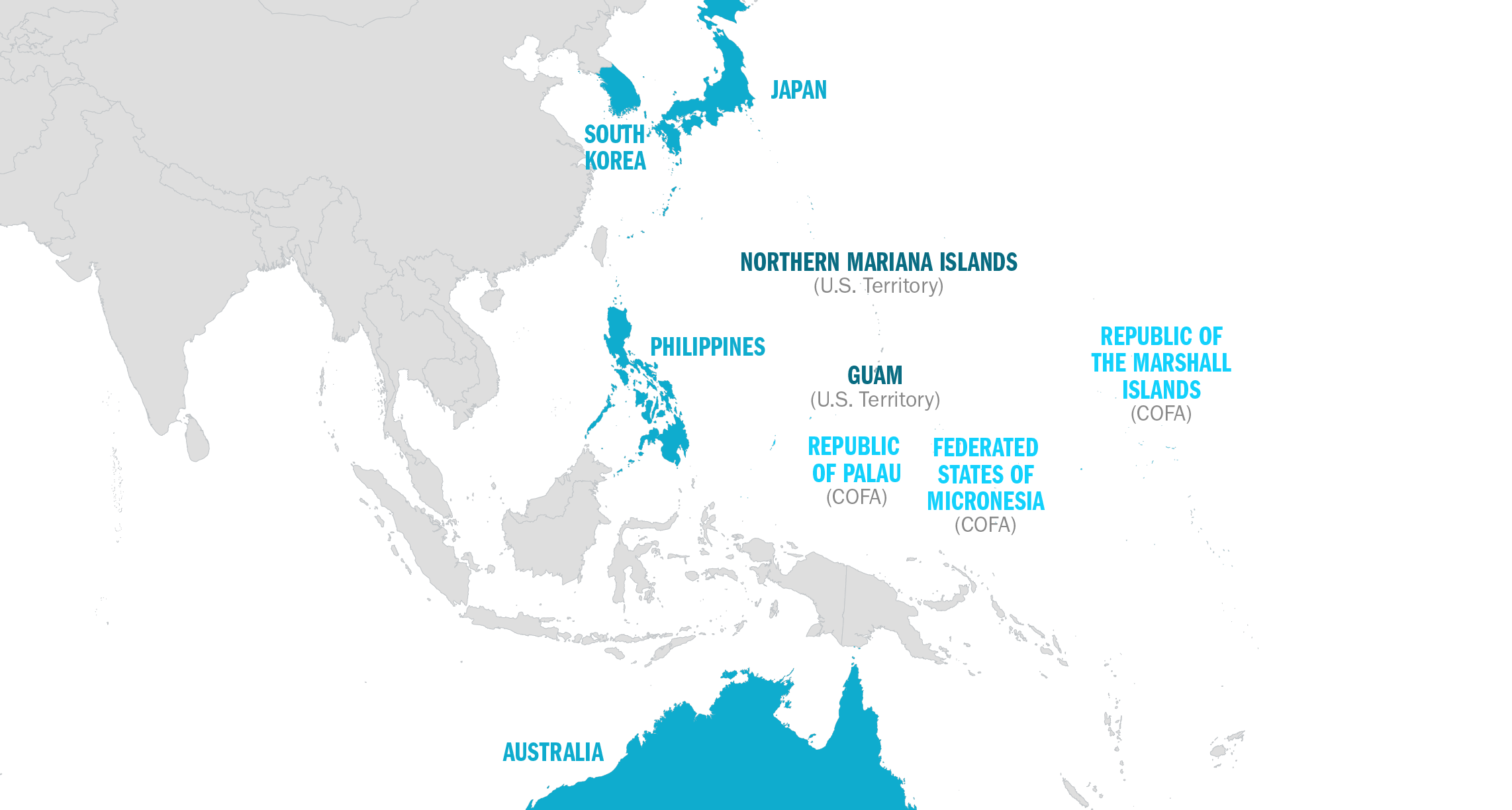
- 美國總統認為美國必須考慮是否退出太平洋第一島鏈?..
-
Taiwan
Today, the United States is not formally committed to defend Taiwan, but its policy of strategic ambiguity leaves the door open should Beijing launch an attack. Some U.S. officials have subtly shifted the meaning of the U.S. stance toward Taiwan, suggesting that even peaceful unification between Taiwan and China would be unacceptable.
Even strategic ambiguity, however, is increasingly untenable, carrying risks far out of proportion to the U.S. interests at stake.
Advocates of Taiwan’s strategic importance justify their position in military and economic terms. Neither holds up to scrutiny. It is certainly true that Washington has interests at stake in Taiwan and that a successful Chinese unification effort would have implications for the United States. But those implications are manageable and do not warrant the costs of war with China or the risks involved in continuing military efforts to prepare for such a war.
Some U.S. analysts maintain that if China were to seize Taiwan, it would gain military advantages sufficient to dramatically shift the balance of power in the region, including a launch point for further expansion and the ability to physically restrict commercial traffic from the South China Sea and Taiwan Strait.
For many, the biggest concern is that after a successful unification, Beijing could use the island as a kind of military base, stationing submarines and ships on Taiwan’s eastern coast, where deeper water and a forward location would make them harder to track. China could also establish missiles and radars at Taiwan’s highest elevations, improving range and targeting for precision strikes.
Subsequent research has challenged the scope of these benefits, however. Locating submarines on the east coast of Taiwan would allow China to avoid only some types of local detection. In any case, China will eventually be able to evade U.S. sensors even without access to Taiwan, and fighting a war with China over an expiring advantage makes little strategic sense. Basing missiles and radars on Taiwan would offer China some advantages in terms of range and targeting precision, but only on the margins, with most Chinese targeting to be done by China’s advanced satellite network in the future. Far more likely is that the ability to dominate water and airspace far into the Pacific is a prerequisite for China to seize Taiwan, not a consequence of it.
Taiwan’s location, 90 miles of China’s coast, also casts some doubt on the notion that seizing the island would be a difference maker for any bid at Chinese regional hegemony. Taiwan is marginally closer to Japan’s southernmost islands than to China, but even if Chinese forces were to seize these locations, it would not shift the regional balance of power nor would it threaten U.S. interests. Major campaigns against Japan or the Philippines would be extremely difficult, even for the powerful Chinese military, and remain highly unlikely. Controlling Taiwan could make it easier for China to restrict access to nearby waters in the South China Sea, but it could likely do this now if it chose to.
In fact, as noted already, China’s road to regional hegemony would be quite difficult (though not impossible), due to both geography and the nationalism of regional countries. As noted previously, neighbors like South Korea and Japan have no interest in being in China’s sphere of influence. China might have more luck with economic coercion and political control than military conquest, but it still seems unlikely that these nations would choose to bandwagon with China.
More likely, China’s neighbors would react by arming themselves to the teeth, strengthening their position vis-à-vis China. This might mean less U.S. influence, but it would not directly damage U.S. interests. In any case, keeping military forces in Asia and retaining the U.S commitment to Taiwan may not be sufficient to prevent China from exploiting political and economic tools against its neighbors. To counter that type of activity, Washington will need an economic and diplomatic strategy.
China’s economic and industrial gains from a successful seizure of Taiwan would be more substantial. There are two considerations: U.S. access to markets in the region and the fate of Taiwan’s semiconductor industry. As noted already, China’s ability to restrict access to the South China Sea does not depend on its control of Taiwan. It can already do this, by diverting or physically stopping all ships associated with U.S. trade as they move through chokepoints near its coast. However, even if China were to try to restrict access to these waters, the United States could still ensure its ability to operate in key economic markets using regional alternatives, including straits in Southeast Asia, through the Philippine and Indonesian archipelagoes, and the Philippine Sea to the east of Japan. This is a militarily feasible task for the United States.
Chinese control of Taiwan could be a bigger problem for the U.S. if it led to a loss of Taiwan’s advanced semiconductors. Such a shutdown could occur due to damage to Taiwan’s semiconductor manufacturing facilities and equipment during an invasion. Alternatively, if China seized the production facilities intact, the United States would likely choose to cut off access to the intellectual property that Taiwan’s companies need to produce the most advanced chips (this IP is housed outside of Taiwan), which also disrupt production and U.S. supplies.
Of course, this would be a policy choice. The United States could instead make a deal with China, trading access to necessary IP for Chinese guarantees to sell Washington advanced semiconductors produced in Taiwan. In the current political environment, this seems unlikely, however. Critics of such a plan would rightly argue that access to U.S. IP would give China’s own semiconductor industry new advantages and leave the United States too vulnerable to a strategic competitor. China could always decide to cut off U.S. access to certain types of chips, despite any economic cost, to advance its own interests (as the United States has done to China) or in the context of a contingency..
-
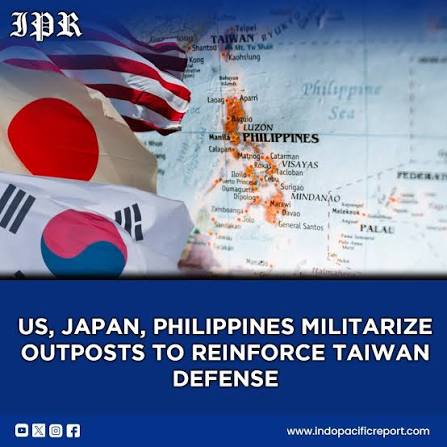
A recent proposal outlined by the Defense Priorities think tank suggests shifting U.S. military focus from the First Island Chain to the Second Island Chain, though this remains a strategic debate rather than official Pentagon policy
 -
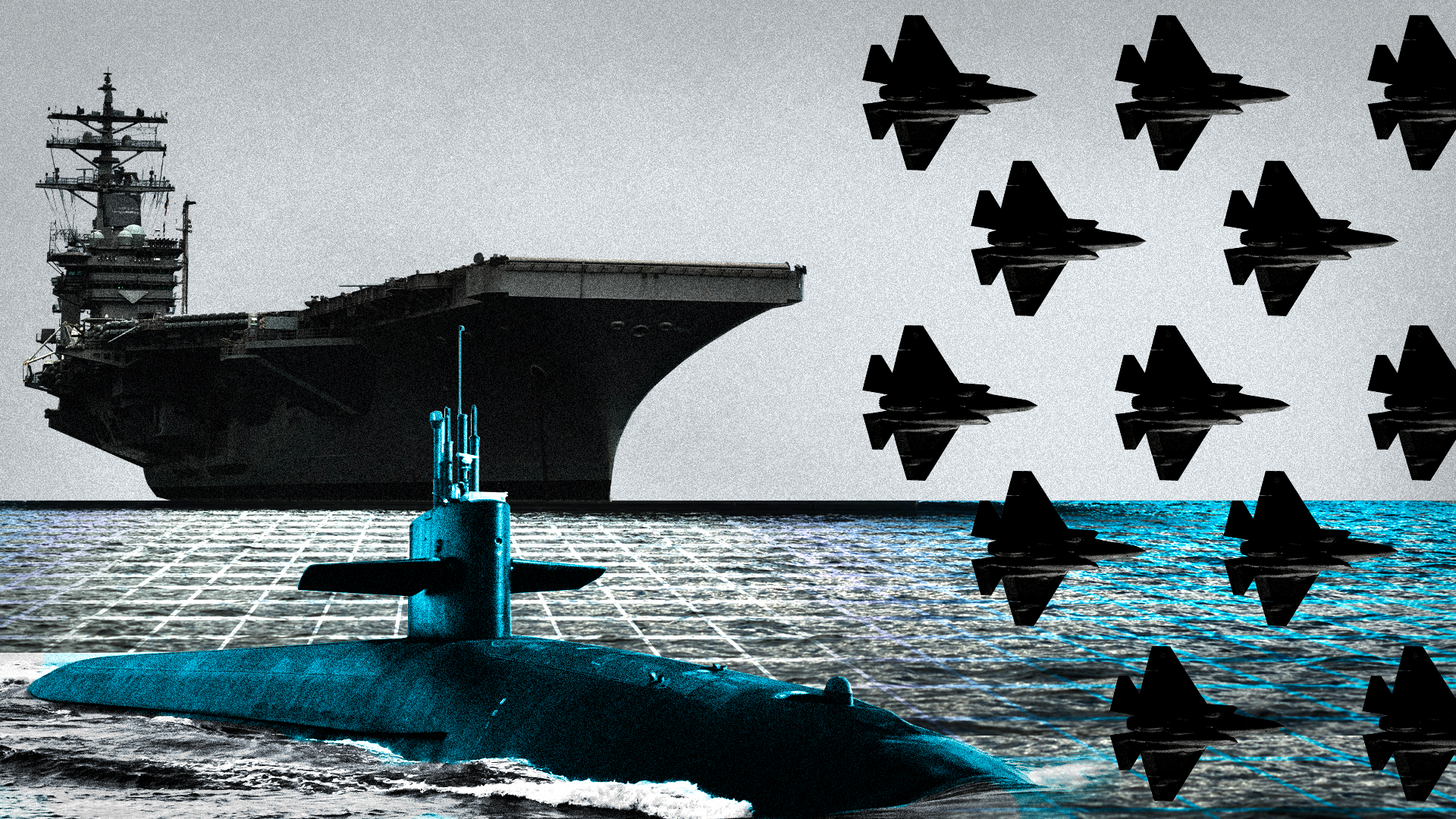
 .China navy rise up and strong more than before. 2030 China navy CVN on duty. .China navy rise up and strong more than before. 2030 China navy CVN on duty.
The first island chain is a strategic arc of Pacific archipelagos off the East Asian continental mainland that separates Chinas near seas from the wider Pacific Ocean.
-
- 國內學者警訊:學者翁XX.分析,雖然這並非華府現行政策,但反映出美國內部對於「保衛台灣成本」與「半導體產能替代性」的重新計算,台灣應警惕華府長期戰略思維的轉變.
- 只要區域國家在重大外交、安全與經濟決策之前,都必須更加認真考慮北京的反應,中國的戰略影響力就已經擴大。盟友不需要成為中國的盟友,中國也可能因此變成美國更難競爭的對手。.
 .. ..- USA back to Second Island Chain ?.
-
No matter how it occurs, however, disruption of the U.S. supplies of the most advanced semiconductors would be temporary. The United States would have the IP required to reconstruct the semiconductor supply chain outside of Taiwan, including production and packaging. This would take some time but is a surmountable challenge. In the interim, the United States could lean on other trade partners that offer some alternatives for certain types of semiconductors. South Korea, for instance, produces many of the most sophisticated chips involved in memory and data storage, while Japan dominates in image sensors and machines involved in manufacturing. China also makes semiconductors, though they are less advanced than those manufactured in U.S. supply chains. China would likely continue selling these chips to the United States even after a war over Taiwan, as they do today. This would be enough to meet most U.S. needs because advanced semiconductors produced in Taiwan are most important for high-end consumer electronics, which are arguably less crucial to U.S. economic prosperity than other inputs.
These scenarios do underline the virtue of finding new sources of supply. Because the United States owns the intellectual property and software used to design the most sophisticated semiconductors, it has a near-term advantage and window to build domestic resilience. Efforts in this direction are underway, but Washington should move more quickly to expand chip manufacturing and packaging capacity.
The bottom line is the implications of a Chinese unification with Taiwan are manageable for the United States. China would undoubtedly get some military benefits from unification (though there would also be costs associated with governance, especially if a local resistance emerged), but the United States would still have advantages in intelligence and the space and undersea domains. Moreover, it could still protect against any unlikely threat to U.S. commercial interests across the western Pacific and the security of the homeland with investments along the second island chain. The United States should scale up its domestic production of semiconductors, but the extent of any disruption would depend on the timeline.
In contrast to the modest U.S. interests at stake, the costs of a war with China over Taiwan would be immense and unmanageable, especially after the U.S. expended significant military power fighting a war in Iran. The death toll for each combatant would likely be in the tens or hundreds of thousands, and there would be a risk of nuclear escalation. Both the United States and China could lose dozens of warships and hundreds of aircraft. The global economic toll could reach into the tens of trillions of dollars, due to the demands of warfighting and the disruption to major international trading routes, investments, and financial markets.
Finally, there is the question of military resources. When the United States made its commitment to Taiwan in 1979, China’s military was no match for its American counterpart. Today, China has a formidable military force, while limits on U.S. military power are real and obvious. The United States enjoys some advantages, but China’s naval capacity is rapidly closing the remaining gaps. China’s missile capabilities also pose a significant challenge, able to place U.S. military bases at risk and force U.S. warships to operate far from the Chinese coast. Questions about the sufficiency of the U.S. military’s own missile stockpile also abound, especially after the war in Iran called into doubt U.S. resilience. U.S. readiness for a war dominated by drones is also questionable. The United States has not been able to defend against drone attacks during the 2026 Iran war and would almost certainly fare worse against China, the global leader in drone production.
The United States could, certainly, use its military power to complicate a Chinese effort to seize Taiwan, but it is not clear that it could outlast China. Even a denial campaign would come at exorbitant cost for the United States, far in excess of any benefits at stake. With a cost-benefit calculation this lopsided, a change in the U.S. commitment to Taiwan seems wise. The United States should shift from strategic ambiguity to a clear non-intervention policy in the event of any military confrontation over Taiwan.
 -
 -
 -
.
|


 作家
作家


 字體:小 中 大


