字體:小 中 大
 |
|
|
|
| 2026/05/02 20:23:29瀏覽608|回應0|推薦0 | |
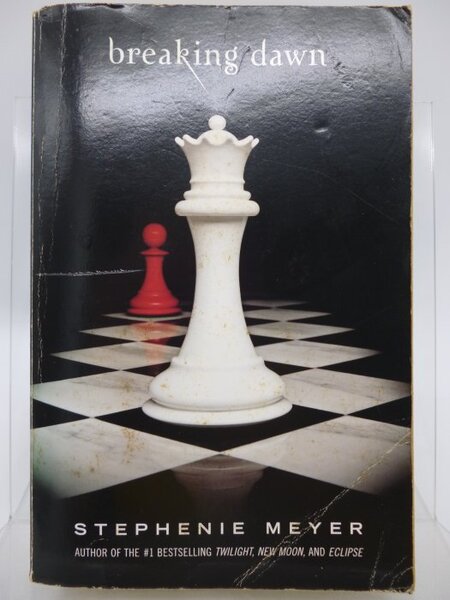
“Twilight” Fantasy Novel Abstract This thesis focuses on Stephenie Meyer’s “Twilight” series of novels, conducting a theoretical analysis from four aspects: narrative structure, core themes, narrative strategies, and artistic achievements. The series includes “Twilight,” “New Moon,” “Eclipse,” and “Breaking Dawn.” It takes as its main line the forbidden love between the human girl Bella Swan and the vampire Edward Cullen, integrating werewolf legends, campus youth, and fantasy romance to construct a story world that combines romance with dangerous tension. First, from the perspective of narrative structure, the series mainly adopts linear development. The story progresses with time, presenting the growth of characters and the deepening of relationships, especially reflected in Bella’s gradual transition from an ordinary girl to entering the vampire world. Linear narration strengthens the continuity and dramatic tension of the story, enabling readers to experience emotional transformations and choices of fate together with the characters. Second, the core themes in the text cover aspects such as love and taboo, growth and identity, family and loyalty, fate and choice, otherness and social norms. The love between Bella and Edward challenges group norms and reflects emotional entanglements that cross social boundaries in reality; the struggle of the werewolf Jacob presents contradictions under multiple identities and choices of loyalty. These themes not only reveal emotional dilemmas in adolescence, but also touch upon cultural implications of group conflict and social otherness. Furthermore, the series is distinctive in its use of narrative person and perspective. “Twilight,” “New Moon,” and “Eclipse” mainly adopt a first-person limited perspective, allowing readers to immerse themselves in Bella’s subjective experience and strengthening identification; “Breaking Dawn” breaks precedent by introducing Jacob’s perspective, making the narrative more dimensional, presenting the tension between werewolves and vampires, and enhancing the polyphonic effect of the story. Finally, from the perspective of artistic achievement and cultural influence, “Twilight,” with its concise and direct narrative style and intense emotional portrayal, has become an important model of young adult fantasy romance in literature; in film adaptation, the series has successfully risen to a global phenomenon, not only generating enormous box office revenue but also triggering widespread fan culture and popular trends. In summary, “Twilight” is not only a romantic fantasy love novel, but also a cultural symbol carrying themes of identity, choice, and belonging. Its influence across literature and film demonstrates how popular literature constructs social meaning and cultural imagination in the global market. Keywords Forbidden Love Identity Family and Loyalty Otherness and Social Norms Young Adult Fantasy Romance I. Series Overview Stephenie Meyer’s “Twilight” series is a romantic fantasy novel centered on the love between the human girl Bella Swan and the vampire Edward Cullen, as well as the supernatural conflicts they face. The series consists of four works: “Twilight” (2005), “New Moon” (2006), “Eclipse” (2007), and “Breaking Dawn” (2008). II. Analysis of Narrative Structure (1) Types of Narrative Structure: The “Twilight” series integrates multiple narrative modes, mainly including: 1. Romance Arc A typical three-stage structure: Meet Cute → Obstacle → Reunion The relationship between Bella and Edward progresses from attraction, struggle, and misunderstanding to eventual union, conforming to the classic structure of romance fiction. 2. Hero’s Journey (with Bella as the core) (1) Departure Stage: Bella moves to Forks and enters the supernatural world. (2) Initiation Stage: She falls in love with Edward and undergoes trials of the vampire world (such as the threat of James and Victoria’s revenge). (3) Return Stage: She ultimately becomes a vampire, gains supernatural abilities, establishes a new family, and becomes part of the Cullen family. 3. Bildungsroman Bella’s journey from an ordinary human to a vampire symbolizes growth and the exploration of identity. 4. Fantasy Conflict and Political Intrigue (1) Power struggles within the vampire world (the Volturi family versus the Cullen family). (2) Conflicts between vampires and werewolves. (2) Structural Analysis of Each Novel 1. “Twilight” Introduction: Bella Swan moves to Forks, meets Edward Cullen, and discovers his identity as a vampire. Development: The relationship between Bella and Edward deepens as she gradually enters the vampire world. Turning Point: Bella is drawn into James’s hunting game and faces a life-and-death crisis. Conflict: Edward and his family fight to protect Bella; James kidnaps and attempts to kill her. Climax: Edward defeats James, and Bella awakens in the hospital but remains human. Resolution: Bella insists on becoming a vampire, but Edward refuses her request, foreshadowing the continuation of the story. 2. “New Moon” Introduction: Edward decides to leave Bella out of fear of harming her. Bella falls into depression and becomes friends with Jacob. Development: Bella discovers that dangerous behavior allows her to hallucinate Edward’s voice and begins to show self-destructive tendencies. Turning Point: Bella jumps off a cliff and is mistakenly believed to have committed suicide; Edward decides to go to the Volturi to seek death. Conflict: Bella and Alice rush to Italy to stop Edward from destroying himself. The Volturi discover that Bella is human and threaten that she must become a vampire. Climax: Edward negotiates with the Volturi and ultimately takes Bella home. Resolution: Bella decides to become a vampire, and the conflict between Jacob and Edward deepens. 3. “Eclipse” Introduction: The love triangle among Bella, Edward, and Jacob intensifies; the vampire Victoria organizes a newborn vampire army. Development: The Cullen family and the werewolves unite to prepare for battle. Bella struggles between Edward and Jacob. Turning Point: Bella realizes that she also loves Jacob but still chooses Edward. Conflict: A great battle breaks out; Victoria is killed by Edward, but the Volturi remain a threat. Climax: Bella formally decides to marry Edward and accept her future as a vampire. Resolution: Jacob leaves in pain, and the wedding plans of Bella and Edward begin. 4. “Breaking Dawn” Introduction: Bella and Edward marry; during their honeymoon, Bella unexpectedly becomes pregnant, and the fetus threatens her life. Development: After a difficult childbirth, Bella is transformed into a vampire, and their daughter Renesmee is born. The werewolf leader Jacob unexpectedly imprints on Renesmee as his destined mate. Turning Point: The Volturi mistakenly believe Renesmee to be a forbidden “immortal child” and prepare to eliminate the Cullen family. Conflict: The Cullen family gathers allies and confronts the Volturi, attempting to resolve the conflict through negotiation. Climax: Bella’s “mental shield” ability plays a crucial role in protecting her family from the Volturi’s attack. Resolution: The Volturi retreat, the Cullen family coexists peacefully, and Bella attains true happiness. (3) Structural Characteristics of the Series 1. Love as the Core, Fantasy as the Background It is primarily a love story, but integrates fantasy elements such as vampires, werewolves, and supernatural abilities. It adopts first-person narration (except for some chapters of “Breaking Dawn”). It emphasizes Bella’s subjective experience, making it easier for readers to identify with the character. 2. Growth Arc of “Human → Supernatural Being” Bella’s transformation from an ordinary girl to a vampire symbolizes a journey of self-realization. 3. Love Triangle Structure The competition between Edward and Jacob runs through three works. 4. Low-Conflict Ending The final chapter resolves conflicts peacefully, avoiding large-scale battles. 5. Contribution to Fantasy Fiction It strengthens the “romantic fantasy” genre and attracts a large number of young readers. It promotes the popularity of the “vampire + romance” theme and influences subsequent works (such as “House of Night” and “The Vampire Diaries”). A female-centered narrative mode grants the heroine a growth journey (from human to vampire). Emotion-driven narration weakens the epic-scale conflicts in traditional fantasy works and instead places love and family at the core. Conclusion The “Twilight” series adopts a narrative model combining romance fiction and the hero’s journey, taking love as the main line, supplemented by fantasy conflict and growth themes, creating a unique “girl-oriented fantasy” style with far-reaching influence. III. Analysis of Core Themes Stephenie Meyer’s “Twilight” series is not merely a romantic fantasy novel. Through the interwoven relationships of vampires, werewolves, and humans, it explores multiple social and philosophical issues, including love, identity, moral choice, gender roles, and family values. The following is an analysis of the main themes addressed in the series: 1. Love and Forbidden Romance (1) Love Across Races: The love between Bella (human) and Edward (vampire) breaks racial boundaries, symbolizing the emotional connection between humans and the “other,” reflecting themes of cross-cultural and interracial relationships in society. (2) Coexistence of Attraction and Danger: Edward’s desire for Bella is both a symbol of love and a metaphor for the inherent danger of vampires, shaping a form of “deadly attraction.” (3) Reason vs. Instinct: Edward must suppress his vampire instincts to protect Bella, reflecting the importance of self-restraint and responsibility in love. 2. Identity and Coming-of-Age (1) Bella’s Transformational Journey: From an ordinary girl to a vampire, Bella’s growth process demonstrates the theme of “self-discovery,” reflecting adolescents’ exploration and choice of identity during development. (2) The Boundary Between “Human” and “Monster”: Edward constantly struggles with his moral positioning as a vampire, while Bella longs to become one, highlighting the dilemma of identity between humans and the “non-human.” 3. Choice and Free Will (1) Bella’s Active Choice: She chooses to fall in love with Edward despite the danger and firmly decides to become a vampire, demonstrating the power of individual will in the face of social pressure and external intervention. (2) Moral Choice of Vampires: The Cullen family chooses a “vegetarian” lifestyle (not hunting humans), demonstrating the balance between instinct and morality through free will and ethical choice. 4. Family and Sense of Belonging (1) Traditional and Alternative Family Structures: Although the Cullen family is not bound by blood relations, it shows stronger bonds than ordinary families, reflecting the diverse forms of “family.” (2) Intergenerational Conflict: Bella’s relationship with her parents, especially her interaction with her father Charlie, reflects conflict and reconciliation within families during adolescence. (3) Jacob and the Werewolf Tribe: His loyalty and sense of responsibility not only reflect tribal consciousness in indigenous culture but also emphasize the bond between family and community. 5. Immortality and Mortality (1) Fear of Death vs. Cost of Immortality: Bella longs for eternal life, while Edward believes that vampire existence is a curse. This contrast explores different human attitudes toward life, death, and immortality. (2) “Cursed Immortality”: The Volturi family symbolizes extreme immortal power, contrasting with the Cullen family and revealing the ethical dilemmas brought by eternal life. 6. Desire and Restraint (1) Vampire Instinct vs. Human Emotion: Edward must restrain his desire for Bella’s blood, and this struggle symbolizes the importance of controlling desire. (2) Symbolism of Sexuality and Purity: Edward insists on abstaining from sexual relations before marriage, interpreted as an embodiment of “chastity culture,” while vampire desire metaphorically represents adolescent sexual impulses. 7. Gender Roles and Feminism (1) Bella’s Dependence vs. Agency: Bella’s dependence on Edward in the early stage has been criticized for reinforcing the stereotype of female passivity, but in the later stage (after becoming a vampire), she gains strength and independence, completing her transformation. (2) The “Protector” Roles of Jacob and Edward: Both men compete for Bella’s love while attempting to control her fate, reflecting issues of female autonomy in emotional relationships. (3) Reversal in the Latter Half of “Breaking Dawn”: After becoming a vampire, Bella gains powerful “shield” abilities, symbolizing the rise of female power. 8. Social Hierarchy and Power (1) The Volturi vs. the Cullen Family: The Volturi symbolize the elite ruling class of the vampire world, monopolizing power and controlling rules, while the Cullen family challenges this authority, resembling the opposition between democracy and autocracy. (2) Conflict Between Werewolves and Vampires: This contradiction is not only a confrontation of biological instincts but also symbolizes power struggles between different cultures and social classes. 9. Sacrifice and Redemption (1) Edward’s Self-Sacrifice: In “New Moon,” he chooses to leave Bella to protect her, demonstrating the spirit of sacrifice in love and responsibility. (2) Bella’s Maternal Love: In “Breaking Dawn,” she is willing to give everything for her daughter Renesmee, demonstrating the greatness and sacrifice of motherhood. (3) Jacob’s “Imprinting”: His protection and loyalty to Renesmee embody another form of sacrifice and commitment. 10. Indigenous Culture and Identity (1) The Quileute Tribe: The novel draws on the mythological background of the real Native American Quileute tribe to create werewolf culture, exploring the inheritance of indigenous identity and its conflict with modern society. (2) Jacob’s Conflict: He struggles between tribal duty and personal emotion, symbolizing the conflict between traditional and modern identity. Conclusion “Twilight” is not merely a fantasy romance novel. Through supernatural elements such as vampires and werewolves, it explores themes including forbidden love, free will, family values, identity, gender roles, death, and immortality. These themes enable it to transcend ordinary romance fiction and become a fantasy work with broad social influence. IV. Analysis of Narrative Person and Perspective Stephenie Meyer’s “Twilight” series adopts different narrative persons and perspectives, enabling readers to understand the psychological states of characters, emotional conflicts, and plot development from multiple angles. The following is a detailed analysis of the narrative techniques in this series: 1. Narrative Person (1) First-Person Mainly applied in: “Twilight,” “New Moon,” “Eclipse” The primary narrator is the heroine Bella Swan, and the story is presented from the perspective of “I.” This approach allows readers to directly enter Bella’s inner world, experiencing her emotional fluctuations, ways of thinking, and gradual understanding of the vampire world. Because the story is subjectively narrated by Bella, the thoughts, motivations of other characters, and the full picture of events are sometimes limited by her understanding, giving the plot a certain characteristic of an unreliable narrator. (2) Multiple First-Person Perspectives Applied in: “Breaking Dawn” “Breaking Dawn” breaks the single perspective of the first three works and adopts alternating first-person narration between Bella and Jacob Black. Part I: Still narrated by Bella, describing her marriage to Edward and the process of her pregnancy. Part II: Shifts to Jacob’s first-person perspective, presenting the werewolf tribe’s reaction to Bella’s pregnancy and his personal struggle between love and responsibility. Part III: Returns to Bella’s first-person narration, describing her new life after becoming a vampire, her adaptability, and the final confrontation. Effect: This multi-perspective narrative technique allows readers to understand the story from different angles. Bella’s sections focus on love, family, and the experience of becoming a vampire; Jacob’s sections allow readers to understand the cultural conflicts of the werewolf tribe, internal contradictions, and his complex emotions toward Bella. Because Jacob and Bella have different worldviews, through his perspective, readers can obtain more comprehensive story information, reducing the cognitive limitations caused by Bella’s strong subjectivity in the earlier works. 2. Narrative Perspective (1) Internal Focalization Since the novels mainly use first-person narration, they belong to internal focalization, meaning the narrator only knows what they see, hear, and feel. This approach enhances immersion, allowing readers to resonate more deeply with Bella or Jacob. However, it also limits the completeness of certain plot elements, for example: Readers can only infer Edward’s true thoughts from Bella’s perspective; In the first half of “Breaking Dawn,” the plans and actions of the werewolf tribe cannot be known from Bella’s perspective. (2) Limited Omniscient Perspective In “Breaking Dawn,” through Jacob’s perspective, the degree of omniscience in the story increases somewhat, because his mode of thinking and the telepathic communication among werewolves (the pack mind) provide insight into the internal dynamics of the werewolf tribe. This makes the narrative of “Breaking Dawn” more layered, rather than entirely dependent on Bella’s personal experience. 3. Advantages and Limitations of the Narrative Method (1) Advantages A. Enhanced Immersion: Since most of the story adopts a first-person perspective, readers can closely follow the protagonist’s growth process, especially Bella’s psychological transformation from human to vampire. Through Jacob’s first-person perspective, the story gains contrasts between different cultures and races, making the plot more layered. B. Creation of Suspense: Because Bella’s perspective is limited, many truths must be gradually discovered by her, such as the real reason for Edward’s departure in “New Moon,” and the secrets of the werewolf tribe. This method of gradually revealing the truth makes the story more dramatic and enhances readers’ curiosity. C. Strengthening Character Emotion: Through first-person narration, the author can deeply present Bella’s psychological activities, such as her attachment to Edward, her conflicting feelings toward Jacob, and her adaptation after becoming a vampire. Jacob’s perspective presents the struggles and differing values of the werewolf world, adding another emotional dimension to the story. (2) Limitations A. Limited Perspective, Incomplete Information: Bella cannot know all the secrets of Edward or the werewolf tribe, so the acquisition of information in the earlier works is somewhat limited, affecting the overall completeness of the story. For example, in “New Moon,” after Edward disappears, readers can only share Bella’s confusion and cannot directly understand Edward’s true thoughts. B. Potential Monotony of Plot: Since the earlier works are almost entirely narrated from Bella’s first-person perspective, the story revolves completely around her, limiting the development of other characters such as the Cullen family and the werewolf tribe. Although “Breaking Dawn” introduces Jacob’s perspective, other important characters, such as Edward and the Volturi, still lack direct narrative space. C. Strong Subjectivity Affecting Interpretation: Because Bella’s narration carries strong personal emotions, some descriptions may be one-sided, making it difficult for readers to objectively understand certain characters’ motivations. For example: Readers can only see Edward’s perfection from Bella’s perspective but find it difficult to understand his inner struggles from his own viewpoint. Bella’s depiction of her feelings toward Jacob is often contradictory, which may lead to misunderstandings of Jacob’s character. 4. Comparison with Other Fantasy Novels Compared with “Harry Potter,” “Twilight” places greater emphasis on first-person psychological depiction, while “Harry Potter” adopts a third-person limited perspective, allowing more flexible shifts in narrative focus. Similar to “The Hunger Games,” both use first-person perspective, making the protagonist’s growth more immersive; however, “Twilight” focuses more on emotional depiction, while “The Hunger Games” emphasizes survival struggle. Conclusion The narrative technique of “Twilight” is primarily based on first-person narration, supplemented by multiple perspectives, using subjective narration to enhance character identification while also creating suspense. However, the limitations of a single perspective result in partial information gaps, affecting the overall completeness of the story. Through Jacob’s independent perspective in “Breaking Dawn,” the story gains greater depth, making the narrative of the entire series richer. V. Theoretical Analysis of the Story The following is a theoretical analysis of the stories in “Twilight,” “New Moon,” “Eclipse,” and “Breaking Dawn.” Part One: “Twilight” (1) Main Characters: Bella Swan — the heroine, an ordinary human girl who moves to Forks and falls in love with the vampire Edward. Edward Cullen — a vampire, member of the Cullen family, possessing the ability to read minds. Jacob Black — a Native American boy, descendant of a werewolf lineage, who has feelings for Bella. The Cullen family — Edward’s vampire family, including Dr. Carlisle, Alice, Emmett, Jasper, and others. James — a ruthless vampire tracker who targets Bella as prey. (2) Plot Development: Bella moves to the town of Forks, meets the vampire Edward, and is attracted by his mysterious aura. Edward reveals that he is a vampire, yet they still develop a romantic relationship. The Cullen family is friendly toward Bella, but during a baseball game, the outsider vampire James targets Bella and wants to hunt her. Bella flees to Phoenix, but James deceives her into a trap, causing her severe injury. Edward rushes to save her and defeats James; Bella nearly becomes a vampire, but Edward successfully prevents it. Conclusion: Bella and Edward attend the prom. She wants to become a vampire, but Edward refuses. Part Two: “New Moon”
Bella Swan — the heroine, suffering from Edward’s departure. Edward Cullen — leaves out of concern for Bella’s safety. Jacob Black — deepens his relationship with Bella and transforms into a werewolf. Victoria — James’s partner, seeking revenge for him. The Volturi — rulers of the vampire world, an ancient vampire family in Italy.
At Bella’s birthday party, an accident occurs; she is frightened by Jasper’s bloodlust, and Edward believes she is safer in the human world, so he chooses to leave. Bella falls into depression and discovers that in dangerous situations she can hallucinate Edward’s voice, leading her to pursue risky behavior. Her relationship with Jacob deepens; she discovers he is a werewolf, and that the werewolves’ duty is to hunt vampires. Victoria seeks revenge, and conflicts arise between the werewolves and her vampire followers. Alice mistakenly believes Bella has committed suicide, and Edward goes to Italy to seek death from the Volturi. Bella rushes to Italy to stop Edward from killing himself; the Volturi demand that she become a vampire or be killed. Conclusion: The Cullen family returns to Forks; Bella insists on becoming a vampire, while Edward hesitates. Part Three: “Eclipse”
Bella Swan — struggles between Edward and Jacob. Edward Cullen — insists on protecting Bella and temporarily allies with the werewolves. Jacob Black — tries to persuade Bella to choose him instead of Edward. Victoria — organizes a “newborn vampire” army to fight against the Cullen family and the werewolves.
A series of murders occur in Seattle; Bella learns that Victoria is creating a “newborn vampire” army. Edward and Jacob come into conflict, and Bella’s feelings begin to waver as the two compete for her love. Victoria leads her army to attack Forks; Edward and the werewolves join forces to resist. In the battle, the werewolves and the Cullen family defeat the newborn army, and Edward personally kills Victoria. Jacob leaves heartbroken; Bella ultimately chooses Edward, and he proposes to her. Conclusion: Bella decides to become a vampire and begins preparing for the wedding. IV. Analysis of Narrative Person and Perspective Twilight by Stephenie Meyer adopts different narrative persons and perspectives, enabling readers to understand the characters’ psychology, emotional conflicts, and plot development from multiple angles. The following is a detailed analysis of the narrative techniques in this series: 1. Narrative Person (1) First-Person Mainly applied in: Twilight, New Moon, Eclipse The primary narrator is the female protagonist Bella Swan, and the story is presented from the perspective of “I.” This approach allows readers to directly enter Bella’s inner world, experiencing her emotional fluctuations, modes of thinking, and her gradual understanding of the vampire world. Because the story is subjectively narrated by Bella, the thoughts and motivations of other characters, as well as the full picture of events, are sometimes limited by her understanding, giving the narrative a degree of unreliability (Unreliable Narrator). (2) Multiple First-Person Applied in: Breaking Dawn Breaking Dawn breaks the single perspective of the previous three installments and adopts alternating first-person narration between Bella and Jacob Black. Part I: Still narrated by Bella, describing her marriage to Edward Cullen and her pregnancy. Part II: Switches to Jacob’s first-person perspective, presenting the werewolf tribe’s reaction to Bella’s pregnancy and his personal struggle between love and responsibility. Part III: Returns to Bella’s first-person narration, depicting her new life after becoming a vampire, her adaptability, and the final confrontation. Effect: This multi-perspective narrative technique enables readers to understand the story from different angles. Bella’s sections focus on love, family, and the experience of becoming a vampire; Jacob’s sections allow readers to understand the cultural conflicts, internal contradictions of the werewolf tribe, and his complex emotions toward Bella. Because Jacob and Bella hold different worldviews, his perspective provides more comprehensive information, reducing the cognitive limitations caused by Bella’s strong subjectivity in earlier volumes. 2. Narrative Perspective (1) Internal Focalization Since the novels mainly adopt first-person narration, they belong to internal focalization, where the narrator only knows what they see, hear, and feel. This enhances immersion, allowing readers to resonate more deeply with Bella or Jacob. However, it also limits the completeness of certain plot elements, for example: Readers can only speculate about Edward’s true thoughts from Bella’s perspective; In the first half of Breaking Dawn, the plans and actions of the werewolf tribe cannot be known from Bella’s viewpoint. (2) Limited Omniscient Perspective In Breaking Dawn, through Jacob’s perspective, the level of omniscience increases somewhat, as his thinking patterns and the Pack Mind communication among werewolves provide insight into the internal dynamics of the tribe. This makes the narrative structure of Breaking Dawn more layered, rather than relying entirely on Bella’s personal experience. 3. Advantages and Limitations of the Narrative Approach (1) Advantages A. Enhanced immersion: Because most of the story uses first-person perspective, readers closely follow the protagonist’s growth, especially Bella’s psychological transformation from human to vampire. Through Jacob’s first-person perspective, the story incorporates contrasts between different cultures and races, adding depth. B. Creation of suspense: Due to Bella’s limited perspective, many truths must be gradually discovered, such as the real reason for Edward’s departure in New Moon and the secrets of the werewolf tribe. This gradual revelation increases dramatic tension and reader curiosity. C. Strengthening emotional depth: First-person narration allows deep exploration of Bella’s inner world, such as her attachment to Edward, her conflicted feelings toward Jacob, and her adaptation after becoming a vampire. Jacob’s perspective presents the struggles and values of the werewolf world, adding another emotional dimension. (2) Limitations A. Limited perspective and incomplete information: Bella cannot know all the secrets of Edward or the werewolf tribe, restricting the comprehensiveness of earlier installments. For example, in New Moon, after Edward disappears, readers remain confused alongside Bella. B. Potential narrative narrowness: Because earlier works rely almost entirely on Bella’s perspective, the story revolves solely around her, limiting the development of other characters such as the Cullen family and the werewolf tribe. Although Breaking Dawn introduces Jacob’s perspective, other key characters still lack direct narrative space. C. Strong subjectivity affecting interpretation: Bella’s narration is highly emotional, potentially leading to one-sided depictions and making it difficult for readers to objectively understand certain characters’ motivations. For example: Readers perceive Edward’s perfection through Bella’s lens but cannot fully grasp his internal struggles; Bella’s conflicted feelings toward Jacob may lead to misinterpretation of his character. 4. Comparison with Other Fantasy Works Compared with Harry Potter, Twilight emphasizes first-person psychological narration, while Harry Potter adopts a third-person limited perspective, allowing greater flexibility in shifting narrative focus. Compared with The Hunger Games, both use first-person narration, but Twilight emphasizes emotional depiction, whereas The Hunger Games focuses more on survival struggles. Conclusion The narrative technique of Twilight is primarily first-person, supplemented by multiple perspectives. It enhances immersion while creating suspense. However, the limitation of a single perspective results in partial information gaps. The inclusion of Jacob’s perspective in Breaking Dawn enriches the narrative layers and makes the overall storytelling more complex. V. Theoretical Analysis of the Story The following is a theoretical analysis of the stories in Twilight, New Moon, Eclipse, and Breaking Dawn: Book One: Twilight (1) Main Characters: Bella Swan — the female protagonist, an ordinary human girl who falls in love with Edward after moving to Forks. Edward Cullen — a vampire, member of the Cullen family, possessing mind-reading ability. Jacob Black — a Native American youth, descendant of werewolves, who has feelings for Bella. The Cullens — Edward’s vampire family, including Carlisle, Alice, Emmett, Jasper, and others. James — a cruel vampire tracker who targets Bella as prey. (2) Plot Development Bella moves to Forks and meets Edward, becoming attracted to his mysterious aura. Edward reveals that he is a vampire, yet they develop a romantic relationship. The Cullen family treats Bella kindly, but during a baseball game, the outsider vampire James targets her. Bella flees to Phoenix, but James deceives her and severely injures her. Edward arrives in time, defeats James, and prevents Bella from becoming a vampire. Ending: Bella and Edward attend the prom; she wishes to become a vampire, but Edward refuses. Book Two: New Moon (1) Main Characters: Bella Swan — suffers due to Edward’s departure. Edward Cullen — leaves to protect Bella. Jacob Black — grows closer to Bella and becomes a werewolf. Victoria — seeks revenge for James. Volturi — rulers of the vampire world. (2) Plot Development Bella is injured during her birthday party; Edward decides to leave her for her safety. Bella falls into depression and begins seeking danger to hear Edward’s voice. Her relationship with Jacob deepens; she discovers he is a werewolf. Victoria seeks revenge, leading to conflict with the werewolves. Alice mistakenly believes Bella has died; Edward goes to Italy to seek death from the Volturi. Bella rushes to Italy and prevents Edward’s suicide. Ending: The Cullens return; Bella insists on becoming a vampire. Book Three: Eclipse (1) Main Characters: Bella Swan — torn between Edward and Jacob. Edward Cullen — protects Bella and allies with the werewolves. Jacob Black — tries to win Bella’s love. Victoria — creates a newborn vampire army. (2) Plot Development A series of murders occur in Seattle; Bella learns Victoria is building an army. Edward and Jacob clash; Bella wavers emotionally. Victoria attacks Forks; the Cullens and werewolves join forces. They defeat the army; Edward kills Victoria. Jacob leaves heartbroken; Bella chooses Edward. Ending: Bella decides to become a vampire and prepares for marriage. III. Eclipse (1) Memorable Dialogue 1. Bella’s choice between Jacob and Edward Bella: “Jacob, I love you. But Edward, he is my soul.” This dialogue directly reveals Bella’s inner struggle. She loves Jacob, but Edward is an inseparable presence in her life. 2. Jacob’s anger Jacob: “I am the better choice. I can give you sunshine, warmth, and happiness. He can only give you darkness and cold.” Here Jacob expresses his love for Bella while revealing the contrast between their two forms of love. (2) Thought-provoking quote “I am Switzerland. I refuse to be affected by territorial disputes between mythical creatures.” Bella expresses her neutrality in the conflict between Edward and Jacob, humorously refusing to take sides. IV. Breaking Dawn (1) Memorable Dialogue 1. Edward’s pain during Bella’s childbirth Edward: “How could you leave me? Please, Bella, don’t go!” This moment shows Edward’s despair and love during Bella’s childbirth. 2. Jacob’s imprinting on Renesmee Jacob: “It’s not a choice. It’s like gravity. When it happens, you can’t resist it.” This explains the werewolf concept of imprinting, expressing love as an unavoidable destiny. (2) Thought-provoking quotes “Now you know. No one’s ever loved anyone as much as I love you.” Edward’s confession to Bella becomes one of the most iconic declarations of love in the series. “Forever and forever and forever.” This phrase symbolizes Edward and Bella’s love as existing beyond time, a true eternal bond. Conclusion: Love, Choice, and Fate Twilight: Love and danger coexist, exploring the unknown and the forbidden. These dialogues and quotes not only drive the narrative forward but also make Twilight an enduring romantic classic in readers’ hearts. VIII. Artistic Achievement The Twilight series is not only a globally bestselling fantasy romance novel but also a cultural phenomenon after its film adaptation. The following analyzes its cinematic adaptation and artistic value. 1. Film Adaptation Film series: The Twilight Saga Release timeline:
Directors:
Main cast:
2. Impact of the Film Adaptation Box office performance: Fan culture: Pop culture influence: 3. Artistic Evaluation (1) Literary Evaluation A. Popular literature and fantasy narrative A. Stephenie Meyer uses simple language and first-person narration, allowing readers to immerse themselves in Bella’s inner world. B. The series combines Gothic romance and modern fantasy, using vampire mythology as its background while focusing on emotional storytelling. C. Themes of forbidden love resonate with young readers, especially regarding adolescence, identity, and emotional confusion. B. Characterization A. Bella Swan: often seen as passive, yet her ordinary traits allow reader identification. B. Edward Cullen: a dangerous yet romantic vampire figure, representing the modern fantasy romantic hero. C. Jacob Black: creates a love triangle and identity conflict between vampire and werewolf worlds, increasing narrative tension. C. Narrative style A. First-person narration strengthens emotional immersion. B. Suspense and slow pacing build a mysterious vampire atmosphere. C. Simple, direct dialogue emphasizes emotional intensity suitable for young readers. (2) Film Evaluation A. Critical reception differences Film reviews are divided. Critics often point to weak storytelling and stiff acting, while fans praise its faithful adaptation. Rotten Tomatoes scores:
Overall, critics viewed the films as average, while audience enthusiasm drove box office success. B. Cinematic style A. Visual style: low-saturation, blue-toned cinematography enhances a surreal vampire atmosphere. B. Music: scores composed by Carter Burwell, Alexandre Desplat, and Howard Shore. Songs from Muse, Paramore, and Florence + The Machine increased audience resonance. C. Character chemistry: the on-screen chemistry between Robert Pattinson and Kristen Stewart became a major attraction. Conclusion: Influence and Achievement Literary achievements:
Film achievements:
Cultural impact:
Final Conclusion: From Literature to Global Phenomenon Twilight is a phenomenon-level work that demonstrates enormous influence in both literature and film adaptation. Despite mixed critical reception, its cultural imprint on young readers and global audiences remains undeniable.
|
|
| ( 創作|連載小說 ) |