字體:小 中 大
 |
|
|
||||||||||||
| 2026/04/27 12:00:30瀏覽930|回應0|推薦0 | ||||||||||||
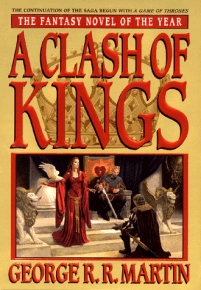
A Theoretical Analysis of the Fantasy Novel A Song of Ice and Fire / Abstract A Song of Ice and Fire is a long-form fantasy novel series written by American author George R. R. Martin. Set on the continent of Westeros and in the eastern land of Essos, it portrays the power struggles among the Seven Kingdoms, the rise and fall of noble houses, magical phenomena, and cyclical history. The series adopts a multi-line narrative and multiple point-of-view (POV) structure, interweaving three major narrative threads—the struggle for the Iron Throne, the threat of the White Walkers in the North, and the rise of Daenerys—thus presenting a grand epic scale. Most characters in the novel occupy morally gray areas, subverting the traditional fantasy hero model. Through anti-heroes, moral ambiguity, and the interplay between fate and choice, the work forms a non-traditional heroic narrative. The plot structure is driven by chain causality, foreshadowing, and major events (such as the Red Wedding, the Purple Wedding, and Jon Snow’s assassination), creating strong dramatic tension and unpredictability. The novel deeply explores themes such as power and political operation, morality and human nature, historical cycles, religious belief, and family and destiny. Power derives not only from lineage and force, but also from strategy, religion, and intelligence networks. Characters embody ethical dilemmas between mercy and cruelty, revenge and forgiveness. Historical cycles and heroic legends are reinterpreted, revealing the tension between destiny and personal choice. Religious beliefs influence political decisions and wars, reflecting real-world entanglements of power and interests. With a meticulous world-building, intricate character relationships, and quasi-historical narrative techniques, Martin integrates fantasy elements with real-world politics and social ethics, creating a grand yet realistic fantasy epic. The work subverts traditional fantasy narrative models and presents profound allegories of human nature, history, and the functioning of civilization. Keywords Power and Politics / Multi-Line Narrative / Non-Traditional Hero / Historical Cycles / Moral Ambiguity I. Overview of the Series A Song of Ice and Fire is a fantasy novel series written by American author George R. R. Martin. Five volumes have been published to date, with a total of seven planned. The following are the titles and summaries of each volume: 1. A Game of Thrones (1996) The story begins in the Seven Kingdoms of Westeros. King Robert Baratheon invites his old friend, Eddard Stark, Lord of the North, to serve as Hand of the King. Eddard discovers that the death of the former Hand is linked to a conspiracy involving Queen Cersei Lannister. He is ultimately framed and executed. Meanwhile, the White Walkers begin to awaken beyond the Wall in the North, and the exiled Targaryen heir, Daenerys, gradually rises in the East. 2. A Clash of Kings (1998) Eddard Stark’s death triggers the War of the Five Kings: Joffrey Baratheon, Robert’s son, ascends the Iron Throne under Lannister control. Ultimately, Joffrey repels Stannis, while Robb faces crisis due to political marriage issues. Meanwhile, Daenerys grows stronger in the East, possessing three young dragons. 3. A Storm of Swords (2000) The War of the Five Kings continues, marked by major events: The Red Wedding: Robb Stark and his mother Catelyn are betrayed and murdered by House Frey, leading to the collapse of Northern power. 4. A Feast for Crows (2005) After the War of the Five Kings, Westeros falls into chaos as various factions compete for power: Cersei Lannister becomes Queen Regent, attempting to consolidate power but is later tried by a religious court due to her tyranny. 5. A Dance with Dragons (2011) This volume overlaps chronologically with A Feast for Crows, focusing on the North, the Wall, and the East: Jon Snow becomes Lord Commander of the Night’s Watch, attempting to reconcile with the wildlings but is assassinated by dissenters. Unpublished Works 6. The Winds of Winter 7. A Dream of Spring This series centers on power struggles, magic, prophecy, and the darker aspects of human nature. Its intricate plot and vast number of characters and perspectives make it one of the most influential fantasy works of the contemporary era. II. Structural Types of the Novel A Song of Ice and Fire features an अत्य complex structure, integrating multi-line narrative, rotating perspectives, and epic long-form storytelling techniques. The following is an analysis of its structural types: 1. Narrative Structure Analysis (1) Epic Multi-Line Narrative The series adopts a grand structure similar to medieval epics, narrating the rise and fall of multiple houses and forces, incorporating war, politics, prophecy, and magic. There are three main narrative lines: The struggle for the Iron Throne (“Game of Thrones”) The threat from the North (“Legend of Ice”) The rise of Daenerys (“Legend of Fire”) (2) Multiple POV Narrative Structure Martin employs a limited omniscient point of view, with each chapter driven by a different POV character. This design allows readers to understand events from multiple perspectives and avoids a single-hero viewpoint. Advantages: (3) Non-Traditional Hero Narrative Compared to traditional fantasy works, characters are more realistic and brutal: Subversion of the traditional protagonist Gray character construction 2. Structural Features of the Plot (1) Chain Causality Structure Events are tightly interconnected; foreshadowing often pays off hundreds of pages later. Example: Arya’s encounter with the Iron Bank influences future assassinations. (2) Major Events and Climaxes The series is renowned for shocking plot twists, with at least one major climax per volume:
3. Overall Structural Typology (1) Epic Long-Form Narrative Comparable to The Lord of the Rings, but more realistic and brutal. (2) Fusion of Political Intrigue and Fantasy Early focus on court politics, gradually incorporating fantasy elements such as dragons, White Walkers, and prophecy. (3) Anti-Traditional Narrative No single protagonist—multiple intertwined destinies form a vast narrative network. (4) Detailed Setting and Quasi-Historical Narrative Martin draws heavily on medieval European history, such as the Wars of the Roses influencing Stark–Lannister conflict. Conclusion The structure of A Song of Ice and Fire integrates multi-line narrative, non-traditional heroism, political intrigue, and fantasy elements. Its unexpected twists and conflicts drive the plot, creating dramatic tension and unpredictability. Beyond depicting power struggles and wars in Westeros, the novel deeply explores human nature, destiny, moral ambiguity, and historical cycles. Through meticulous world-building, layered foreshadowing, and complex character relationships, George R. R. Martin constructs a quasi-historical fantasy epic that subverts traditional narrative models and offers profound influence and inspiration to the literary world. III. Issues Addressed by the Novel A Song of Ice and Fire explores many profound and realistically meaningful issues. These issues span politics, morality, human nature, history, and philosophy, making it not merely a fantasy novel, but also an allegory and reflection on the real world. The following is an organized analysis of the core issues addressed in the series: 1. Power and Politics (1) The Nature and Operation of Power Littlefinger once said, “Knowledge is power,” while Cersei said, “Power is power,” representing different perspectives on power. (2) Political Intrigue and Betrayal Power struggles are filled with conspiracy and betrayal. Characters often betray allies for survival or利益, such as Littlefinger’s betrayal of House Stark and House Frey’s Red Wedding. (3) Kingship and Legitimacy “Who is the rightful king?” is a question that runs throughout the entire series. 2. Morality and Human Nature (1) Moral Ambiguity Most of Martin’s characters are neither purely good nor evil. For example: (2) The Choice Between Mercy and Cruelty Mercy often leads to failure, for example: (3) Revenge and Forgiveness Arya’s storyline is a journey of revenge—will she ultimately lose her humanity because of it? 3. History and Cycles (1) The Fatalism of Repeating History The fall of the Targaryen dynasty parallels the chaos of the War of the Five Kings, showing that history continually repeats itself. (2) The Truth Behind Heroic Legends Are many legends (such as Azor Ahai and the Long Night)真实, or are they artificially constructed narratives? 4. Religion and Belief (1) How Religion Influences Politics and War The Lord of Light (R’hllor) and the Red Priestess Melisandre influence Stannis’s war decisions. (2) Faith and Hypocrisy in Religion Red priests claim R’hllor is the true god, but can they truly foresee the future? 5. Family, Honor, and Destiny (1) The Rise and Fall of Houses The decline and resurgence of House Stark correspond to the turbulent history of Westeros. (2) Bloodline and Destiny Does Jon Snow’s lineage (Targaryen + Stark) indicate that he is the “child of ice and fire”? (3) Conflict Between Honor and Reality Eddard Stark and Robb Stark both die due to their adherence to honor, showing that the real world does not reward justice. 6. Environment and Civilization (1) Nature’s Threat to Civilization The White Walkers and winter beyond the Wall symbolize the destructive force of nature. (2) Contrast Between Wildlings and Civilized Society Wildlings are not bound by feudal systems, but lack stable political organization. Conclusion A Song of Ice and Fire is not merely a fantasy novel, but a profound exploration of human nature, politics, history, religion, and family relationships. Through complex characters and intricate plots, George R. R. Martin reveals the nature of power, the darkness of human nature, the cycles of history, and the unpredictability of fate. The work transcends traditional fantasy and becomes an allegory about how the world operates. IV. Narrative Person and Perspective in Each Volume The narrative of A Song of Ice and Fire primarily adopts a third-person limited point of view, combined with a multiple-POV narrative technique. Each chapter is told from the perspective of a specific character. This method allows readers to understand the story from different viewpoints, increasing narrative depth and dramatic effect, and enabling the same events to be interpreted differently depending on perspective. The following are the main narrative perspectives and characteristics of each volume: 1. A Game of Thrones POV Characters: 9 Characteristics: 2. A Clash of Kings POV Characters: 10 (Theon added) Characteristics: 3. A Storm of Swords POV Characters: 12 (Davos and Jaime added) Characteristics: 4. A Feast for Crows POV Characters: 12 (Aeron, Brienne, Cersei, Asha added) Characteristics: 5. A Dance with Dragons POV Characters: 16 (Barristan, Quentyn, Jon Connington added) Characteristics: 6. The Winds of Winter (Unpublished) It is known that multiple POVs will return and be expanded, including Tyrion, Arya, Jaime, Sansa, and Theon. V. Story Twists, Conflicts, Climaxes, Suspense, and Ending Plot Reversals of Each Volume The narrative structure of the A Song of Ice and Fire series is complex, filled with twists, conflicts, suspense, and climaxes, and it frequently employs plot twists to subvert readers’ expectations. The following is an analysis of the key story elements of each volume, including major twists, conflicts, climaxes, suspense, and endings (and reversals). 1. A Game of Thrones (1) Major Twists
(2) Conflicts
(3) Climax
(4) Suspense
(5) Ending and Plot Reversal
2. A Clash of Kings (1) Major Twists
(2) Conflicts
(3) Climax
(4) Suspense
(5) Ending and Plot Reversals
3. A Storm of Swords (1) Major Twists
(2) Conflicts
(3) Climax
(4) Suspense
(5) Ending and Plot Reversals
4. A Feast for Crows (1) Major Twists
(2) Conflicts
(3) Climax
(4) Suspense
(5) Ending and Plot Reversal
5. A Dance with Dragons (1) Major Twists
(2) Conflicts
(3) Climax
(4) Suspense
(5) Ending and Plot Reversals
6. The Winds of Winter (Unpublished) (1) Possible Twists:
Summary The narrative feature of A Song of Ice and Fire is the subversion of traditional hero stories, heavily using plot twists to destroy characters’ plans. Suspense and unresolved mysteries intensify dramatic tension, such as Jon’s true identity and the true purpose of the White Walkers. Each volume’s climax brings major death or shifts in power, maintaining narrative uncertainty. These structures and arrangements make the series a pinnacle of fantasy literature. VI. Film and Television Adaptation of Each Volume The A Song of Ice and Fire series was adapted into the HBO television series Game of Thrones, which aired from 2011 to 2019, spanning eight seasons. The adaptation generally follows the main storyline of the novels; however, as the plot progressed, differences between the series and the original books gradually expanded. Eventually, the series overtook the source material and developed its own ending. The following summarizes the adaptation of each volume: 1. A Game of Thrones Corresponding season: Season 1 (2011) (1) Adaptation:
(2) Major changes:
(3) Differences from the original:
2. A Clash of Kings Corresponding season: Season 2 (2012) (1) Adaptation:
(2) Differences from the original:
3. A Storm of Swords Corresponding seasons: Season 3 (2013), Season 4 (2014) (1) Adaptation:
(2) Differences from the original:
4. A Feast for Crows Corresponding seasons: Season 5 (partial), Season 6 (partial) (1) Adaptation:
(2) Differences from the original:
5. A Dance with Dragons Corresponding seasons: Seasons 5–6 (1) Adaptation:
(2) Differences from the original:
6. The Winds of Winter (Unpublished) Corresponding seasons: Seasons 6–8 (1) Adaptation:
(2) Differences from the original:
Summary
Despite divergence, both the books and television series have profoundly influenced the fantasy genre. VII. Artistic Achievements and Substantial Contributions to Fantasy Literature The A Song of Ice and Fire series is a milestone in fantasy literature by George R. R. Martin, combining epic fantasy, historical realism, and psychological depth, and has had a major impact on later fantasy works. (I) Artistic Achievements 1. Multi-threaded narrative and complex perspective (Multi-POV Narrative) Martin employs multiple narrative threads, with each chapter presented from a different character’s point of view, allowing readers to observe the same events from different perspectives and forming a multi-layered narrative structure. This technique increases depth and allows psychological growth of characters such as Tyrion, Sansa, and Jon. Influence: Expanded literary complexity in fantasy writing, influencing authors such as Steven Erikson (The Malazan Book of the Fallen). 2. Subversion of fantasy traditions Traditional fantasy (e.g., Tolkien’s The Lord of the Rings) centers on heroic world-saving narratives, but this series subverts such tropes: A. Main characters are not guaranteed survival (Eddard Stark’s death shocks readers). Influence: Inspired the “deconstruction” trend in fantasy, such as Robin Hobb’s Assassin’s Apprentice trilogy and Joe Abercrombie’s The First Law series. 3. Realism and political depth Martin draws inspiration from medieval European history (e.g., the Wars of the Roses), constructing a world filled with political intrigue, religious conflict, and family struggles. The use of diplomacy, warfare, and strategy creates realism. The Red Wedding is inspired by the historical “Black Dinner” in Scotland. Influence: Helped fantasy move beyond sword-and-sorcery into deeper exploration of power, religion, and morality. 4. Moral ambiguity in characters Unlike traditional fantasy, which clearly separates heroes and villains, this series creates morally complex characters:
Influence: Established the era of “non-traditional heroes,” influencing works such as The Lies of Locke Lamora. 5. Expansive and detailed world-building The world is not merely geography but a fully developed universe with history, culture, religion, and language:
Influence: Encouraged more detailed world-building in modern fantasy, such as The Witcher series. (II) Substantial Contributions to Fantasy Literature 1. Bringing fantasy into mainstream culture Through HBO’s Game of Thrones, fantasy literature became globally mainstream. 2. Redefining “adult fantasy” Introduced political realism, brutality, and moral complexity. 3. Influencing narrative structure Popularized multi-POV and non-linear storytelling. 4. Enhancing literary value of fantasy Fantasy became a subject of academic study in institutions such as Oxford and Harvard. Conclusion
The series fundamentally transformed fantasy literature from mythic hero tales into a mature literary genre. 5. The Vastness and Detail of World-Building (Expansive and Detailed World-Building) The world of A Song of Ice and Fire is not merely a collection of countries on a map, but a complete universe filled with details of history, culture, religion, language, and more, such as: The Seven Kingdoms of Westeros, which reflect the feudal system of medieval Europe. The diverse civilizations of the continent of Essos, such as the Iron Bank of Braavos and the ancient ruins of Valyria, which are comparable to the Byzantine and Roman Empires. The Wall and the legend of the White Walkers, which integrate elements of Celtic and Norse mythology. Influence: It influenced later fantasy writers’ methods of world-building, making the settings of fantasy novels more refined, such as in The Witcher series. (II) Substantial Contributions to Fantasy Literature 1. Promoting Fantasy Literature into the Mainstream A Song of Ice and Fire, through the HBO television series Game of Thrones, became a worldwide sensation, allowing fantasy literature to break away from a niche market and enter mainstream culture. Influence: It affected subsequent waves of fantasy adaptations, such as The Witcher (Netflix, 2019) and The Wheel of Time (Amazon, 2021). 2. Redefining “Adult Fantasy” It subverts the hero’s journey and incorporates harsh realism: making fantasy literature possess more adult-oriented characteristics, such as political intrigue, wartime atrocities, and struggles for power. Influence: It contributed to the rise of “Grimdark Fantasy,” such as The First Law series and The Dark Tower series. 3. Influencing Narrative Structure and Writing Techniques Multi-perspective, non-linear narration: it changed the narrative mode of fantasy literature and influenced many modern fantasy works, such as The Name of the Wind (Patrick Rothfuss). Influence: Many later novels adopted similar POV structures, such as The Broken Empire series. 4. Enhancing the Literary Value of Fantasy Fiction Martin’s novels are not merely entertainment works; they also explore themes of history, politics, religion, morality, and fate, allowing fantasy literature to gain higher literary recognition. Influence: It enabled fantasy literature to enter academic discourse, such as fantasy literature courses at Oxford and Harvard beginning to analyze A Song of Ice and Fire. Summary
George R. R. Martin’s A Song of Ice and Fire is not merely a fantasy novel; it transforms the entire structure of fantasy literature and exerts profound influence, making fantasy no longer just fairy-tale heroic stories, but a mature literary genre. References English Original Works Martin, George R. R. A Game of Thrones. 1996. Bantam Spectra. Chinese Translation Bibliography (Simplified Chinese Edition) Martin, George R. R. A Game of Thrones (Vol. 1). Translated by Tan Guanglei and Qu Chang. Chongqing Publishing House, 2008. Chinese Translation Bibliography (Traditional Chinese Edition) Martin, George R. R. Game of Thrones (Vol. 1). Translated by Qu Chang and Hu Shaoyan. Crown Publishing, 2011.
|
||||||||||||
| ( 創作|小說 ) |