Hebrew Song Title:אגדת הל"ה (Agadat haLamed-Hé) Lyrics:יורם טהרלב (Yoram Teharlev) Composer:יוסף הדר (Yosef Hadar) Vocalist:העמרנים (Haamranim), Released in 1963 Original Hebrew Dance Name:בין הری חברון (Bein Harei Chevron) English Translation of Dance Name:The Hebron Hills Chinese Dance Name:希伯萊之戀 Choreography: Dani Dassa, 1979
·
When I first learned this dance about 38 years ago, the instructor at the time (I cannot recall if it was Mr. Tsang Chiu-sing from Hong Kong or someone else) did not introduce the historical background of the dance or the song. Because of its elegant melody, graceful movements, and the romantic Chinese title assigned to it, I was completely misled into thinking this was just another tender, sentimental Israeli love dance. (To all my former students whom I accidentally misinformed back then: please accept my sincere apologies!)
Now, it is time for Teacher Frog (thats me!) 🐸, to set the record straight and thoroughly introduce the tragic origins of this song. Is there anyone out there who wants to hear the real story? If so, please let me hear some applause! (, , !) Alright, by popular demand, the story begins. Grab your lawn chairs and get comfortable, because Teacher Frog’s history class is officially in session!
The original Hebrew title of the song, אגדת הל"ה, translates to "The Legend of the 35" (literally meaning The Legend of the Lamed-Hé). The lyrics narrate a deeply moving and heroic tragedy that took place a year prior to the declaration of the State of Israel, during the struggle to establish a new homeland.
The events occurred between late 1947 and early 1948. Following the end of World War II, a massive wave of Jewish immigration swept back toward their ancestral homeland (historically recognized as the third and fourth Aliyah waves).
At that time, this ancestral land was within Mandatory Palestine under British administration. Between 1917 and 1948, the Jewish people—who had been exiled for two millennia and scattered across the globe—migrated en masse back to the Palestine region, the ancient location of the Kingdom of Judah. This influx was heavily driven by global racial discrimination and the horrific trauma of the Nazi Holocaust. However, the continuous arrival of Jewish immigrants led to constant friction and conflicts with the local Palestinian Arab population.
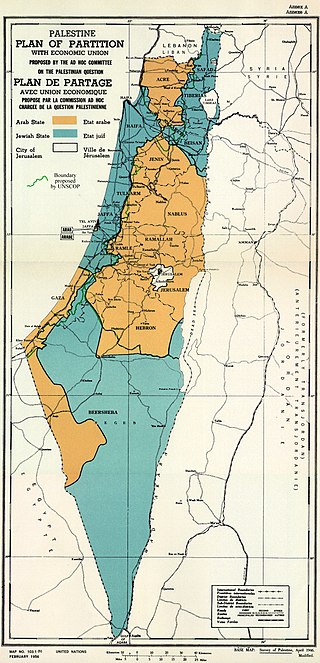
Facing an increasingly chaotic situation, the British government decided in 1947 to terminate its mandate as quickly as possible and withdraw. In November of that same year, the United Nations General Assembly adopted Resolution 181, a partition plan to divide Palestine into two distinct states: the upper section was allocated to the Arabs (the Kingdom of Jordan), and the lower section was designated for the Jewish people to establish their nation, Israel.
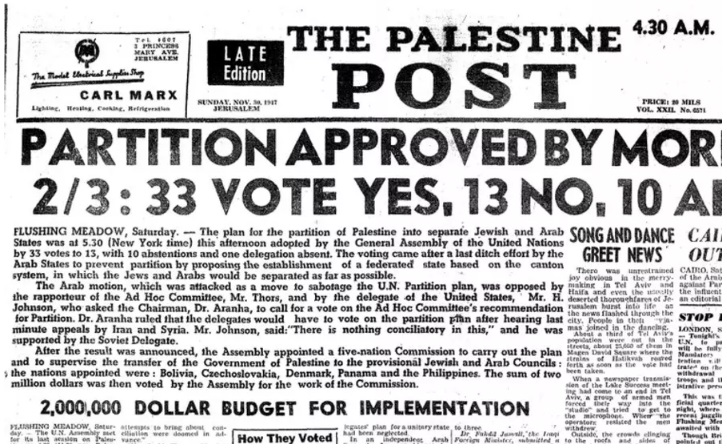
Newspapers dated November 30, 1947, widely reported that the UN had passed the Palestine Partition Plan on November 29 by a vote of 33 to 13.
The tan-colored areas represented Arab territory, while the green areas represented Jewish territory.
[The Prelude to War & The Legend of the 35]
Naturally, the Arab nations rejected this United Nations partition plan. From their perspective, this was Arab land—by what right did the UN carve up their territory and hand a massive portion of it over to the Jewish people? Consequently, immediately following the adoption of the partition plan by the UN General Assembly on November 29, 1947, a coalition of Arab forces launched a three-day military assault against the Jewish communities. Since the State of Israel had not yet been officially declared, the defense relied entirely on the Haganah, a Jewish paramilitary organization that launched immediate counter-attacks. This pivotal conflict marked the opening skirmish of what would lead to the 1948 First Arab-Israeli War (historically documented as the 1947–48 Civil War in Mandatory Palestine).
1947–48 Palestine Partition Civil War
The true story of the 35 Guardians unfolded on January 16, 1948, right in the thick of this civil war.
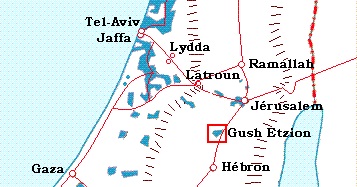
On January 14, 1948, four kibbutzim (Israeli cooperative communities) in Gush Etzion, located just south of Jerusalem, came under heavy Arab siege, leaving them completely isolated and cut off from supplies.
Note the town of Hebron to the south, which gives this dance its Hebrew name, Bein Harei Chevron] In response, a relief convoy consisting of 38 Jewish fighters was formed. In Hebrew, this unit was named Machleket HaHar (meaning The Mountain Platoon, a military platoon typically comprising 36 to 40 personnel). At 11:00 PM on the night of January 15, led by Commander Dani Mass, the platoon set off on foot from Hartuv, carrying vital medical and tactical supplies. They took a winding, perilous route to bypass the British-built Tegart Fortresses guarded by Palestinian police and to evade British reconnaissance patrols.
Wait a moment... doesnt the song title explicitly say "35" guardians? Why did I just write 38? Is Teacher Frog trying to pull a fast one on you, assuming you wouldnt notice the math?
Haha, not at all! The reason is quite straightforward, and here is how the numbers actually shook out: along the grueling march, one of the fighters severely sprained his ankle. Two other platoon members were ordered to escort him back for medical treatment. 38 minus 3 equals 35. And that is how the legendary number 35 came to be.
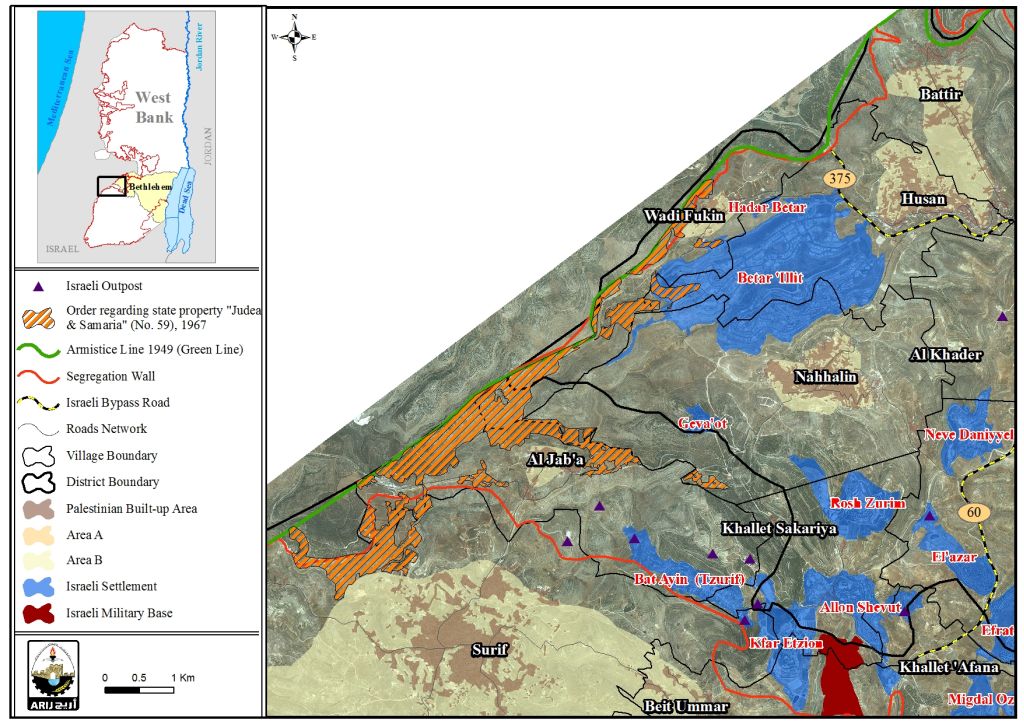
The 35-man platoon hoped to use the pitch-black night as cover to deliver the supplies. However, winter nights only offer about six hours of darkness, making such a long, rugged mountain trek incredibly difficult. By the next morning, as dawn broke, they were nearing Surif—roughly an hour away from their destination. At that moment, two Arab women spotted the platoons two advance scouts and immediately reported their position. As the supply convoy entered the valley between Jaba and Surif in the Hebron Hills...
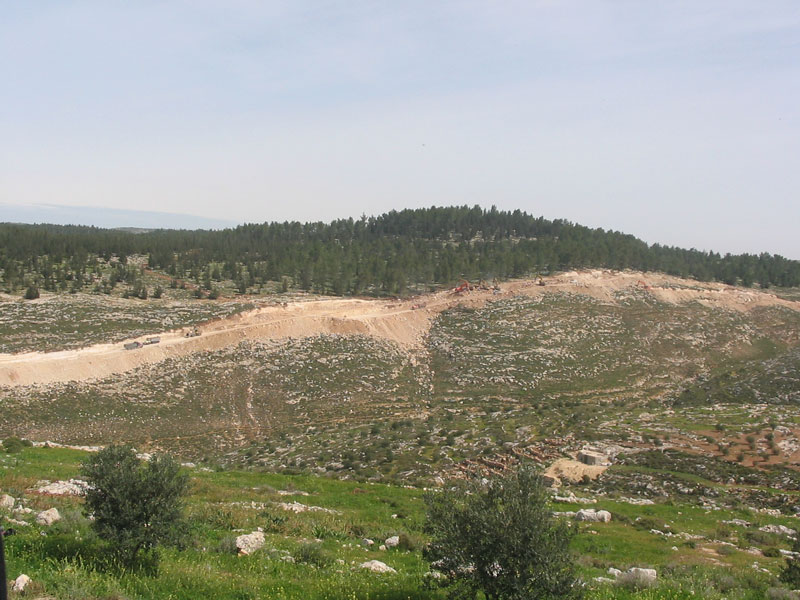
Map of Jaba and Surif vicinity: The Trail of Surif: Suddenly, a massive force of hundreds of armed Arab fighters and local villagers ambushed the 35 men. Despite being overwhelmingly outnumbered, these 35 guardians fought with immense bravery, refusing to retreat an inch. They held their ground from dawn until dusk. Ultimately, their ammunition ran out. At 4:30 PM, in the fading light of the afternoon sun, all 35 honorable guardians made the ultimate sacrifice for their homeland.
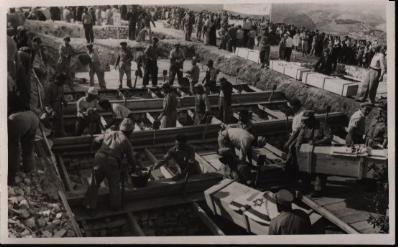
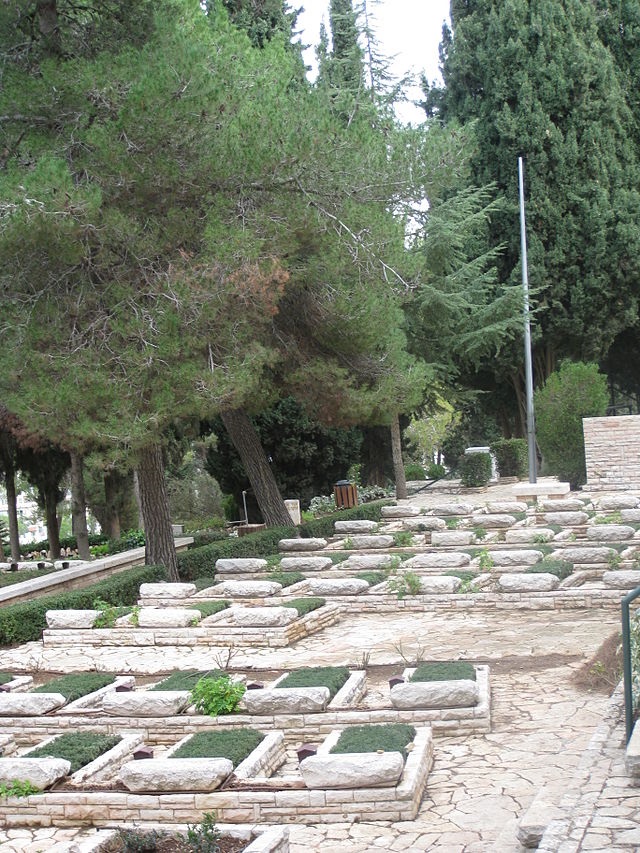
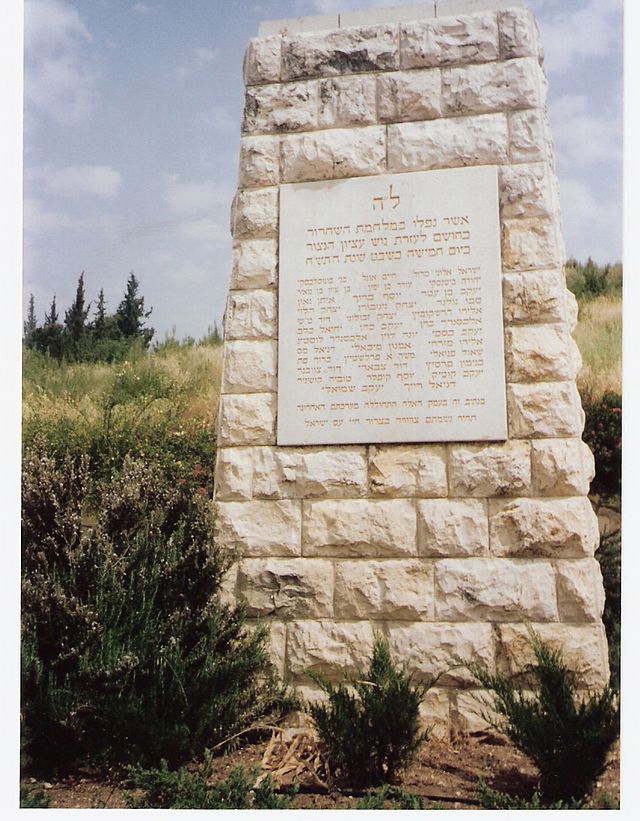
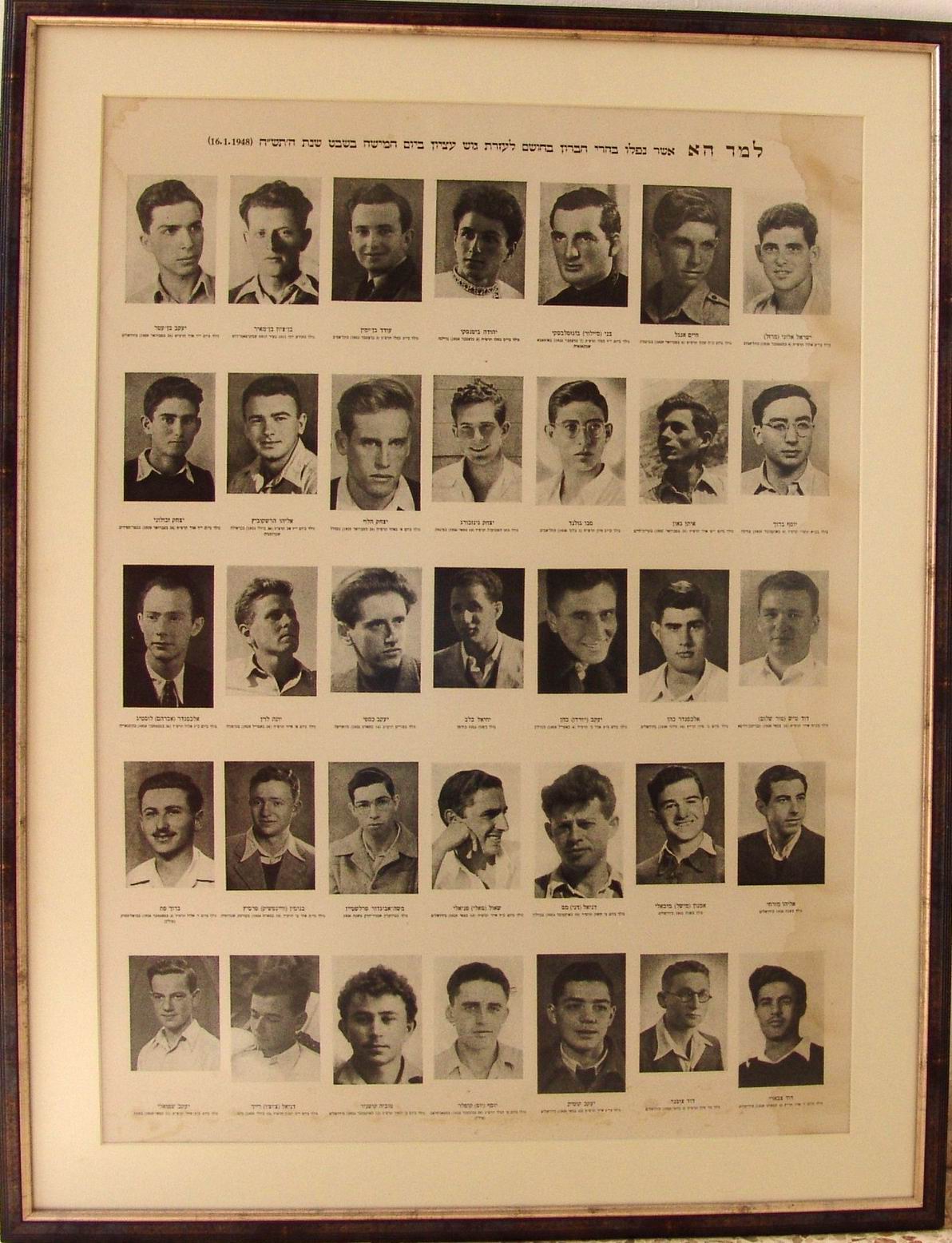
The return of the 35 guardians for burial in Israel: Cemetery of the 35 Guardians: Memorial Monument of the 35: Roster of the 35 Guardians:
Hebrew Lyrics: שוב לי הביא הרוח שיר אגדה נושן, על בחורים שבאו כרוח בין אש ובין עשן.
בין הרי חברון לא נדם עוד, צעדם עוד אל ליל- קרב אחרון.
קני הרובים בערו שם בין הרי חברון, אך עת האיר השחר נותר עוד נער אחד אחרון.
בין הרי חברון...
אבן אחז הנער באגרופו פלדה, אבן אחת ידה עוד בטרם תמה האגדה.
בין הרי חברון...
Transliteration: Shuv li hevi haruach shir agadah noshan, al bachurim shebau keruach bein esh uvein ashan.
Bein harei Chevron Lo nadam od, tzaadam od el leil - krav acharon.
Knei harovim baaru sham bein harei Chevron, ach et heir hashachar notar od... naar achad acharon.
Bein harei Chevron...
Even achaz hanaar beegrofo pladah, even achat yidah od beterem... tamah haagadah.
Bein harei Chevron...
English Translation:(By Teacher Frog) The gentle breeze brings to my face once more, A song of an ancient, legendary lore. A band of young souls, swift as the wind they parted, Amidst the raging fire and smoke where the battle started.
Over the Hebron Hills, The silence does not fall. They march onto the path again, Answering that final battles nightly call.
The rifle barrels burned like branding iron, Right there, amidst the Hebron Hills of fire. Yet as the morning light broke through the dawn... Only one lone young soldier carried on.
Over the Hebron Hills...
The young boy reached and grasped a heavy stone, Within his fist of steel, standing all alone. With all his might, he hurled that final stone into the fray, Before the legend closed and faded away.
Over the Hebron Hills...
[The True Meaning of the Dance Name]
Now that we understand the origins and the profound lyrics of this song, if we listen to the music once more while looking at the historical photographs, I believe every fellow dancer will feel a completely different, deeper emotional resonance in their heart.
To conclude, here is a special presentation of the original demonstration video, presented by the choreographer himself, Dani Dassa.


 字體:小 中 大

 ,
,