Song Title: Коробейники (Romanized: Korobeiniki) Lyrics: Николай Некрасов (Romanized: Nikolai Nekrasov), 1861 Composer: Яков Фёдорович Пригожий (Romanized: Yakov Fyodorovich Prigozhy), 1898 Singer: Folk song, performed by various singers. The version used for most folk dances is the one sung by Jula Jill, the renowned Israeli songbird. Dance Title: Коробушка (Romanized: Korobushka; English: The Peddler’s Pack, meaning a vendors backpack) Choreography: See details below
This dance is a classic folk dance that many veteran dancers fondly learned in their childhood. It was brought to the United States by Soviet ships after World War I, causing an immediate sensation and becoming one of the most popular folk dances of the time. However, it underwent some changes and transformations over the years, which Teacher Frog will explain to you. As usual, Ill talk about the music first, then introduce the dance. Please grab your seats, because Teacher Frog is about to begin!
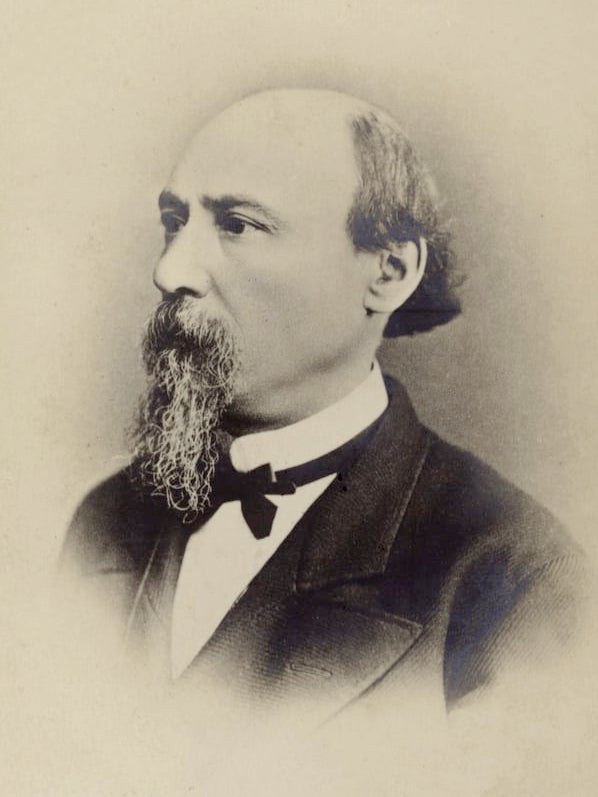
Regarding the music, the lyrics actually came before the music. The lyrics were written in the 19th century, during the reign of Tsar Alexander II of the Russian Empire, by Nikolai Nekrasov, a celebrated Russian poet, writer, critic, and publisher. The poem was written on August 23, 1861, and first published in the October issue of the magazine Sovremennik (Note: The Contemporary), thus gaining widespread recognition. The original poem has thirteen stanzas. Later, in the late 19th century, music was composed for it, though the identity of the definitive composer for the folk version still warrants further investigation. Only the first six stanzas of the poem are used as lyrics.
Nikolai Nekrasov grew up in Nemirov (now Vinnytsia Oblast, Ukraine) with a noble military father and Polish noble mother, spending his childhood near the Volga River where he witnessed the hardships of barge haulers and exile routes. His unhappy, violence-filled childhood under an alcoholic father shaped his literary themes focusing on social injustice, serfs, and womens plights.
Nikolai Nekrasov
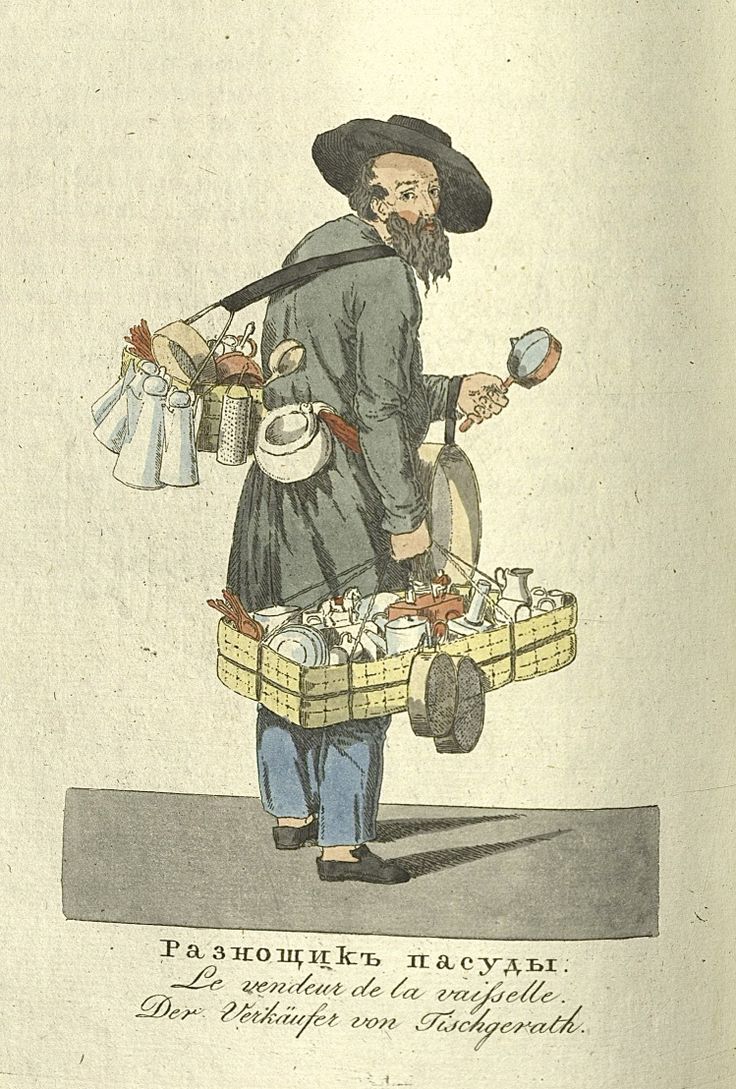
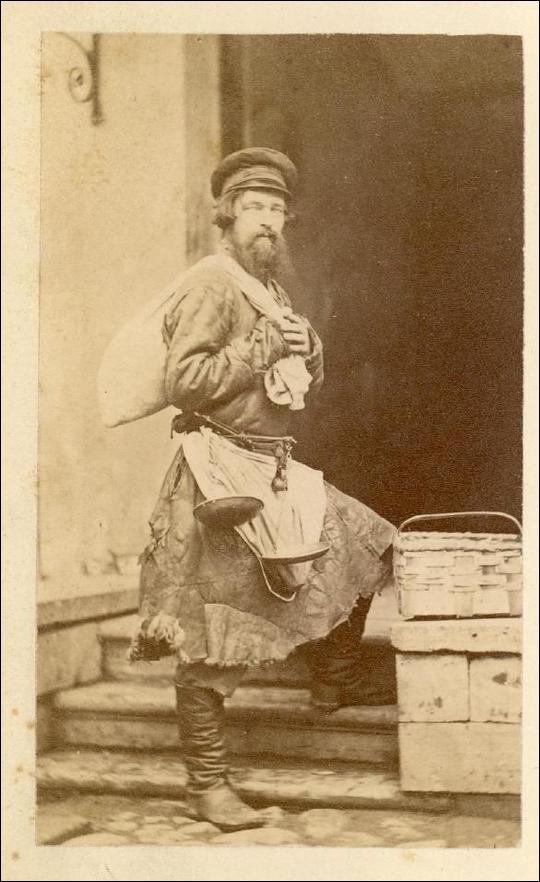
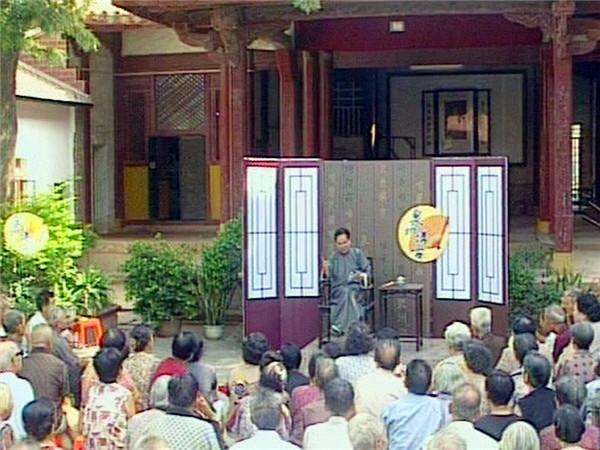
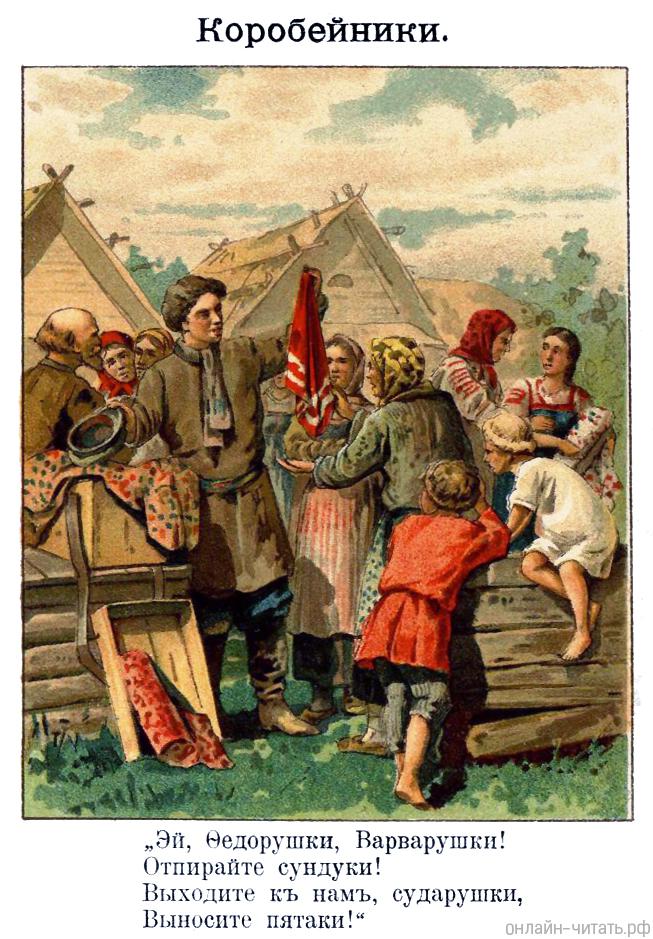
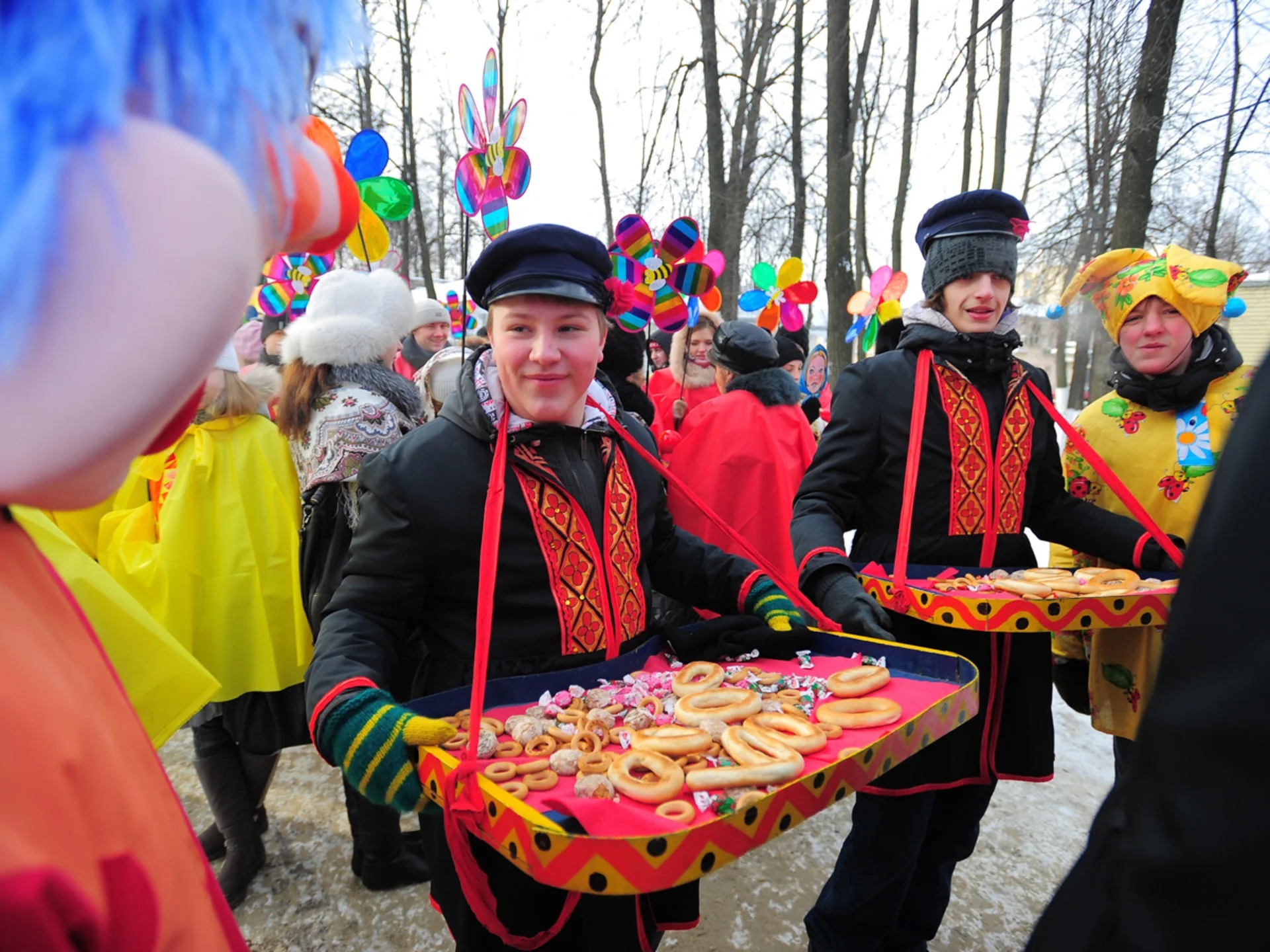
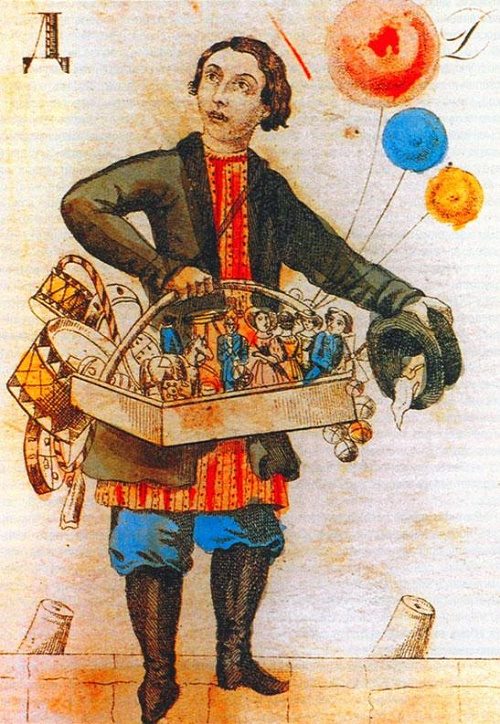
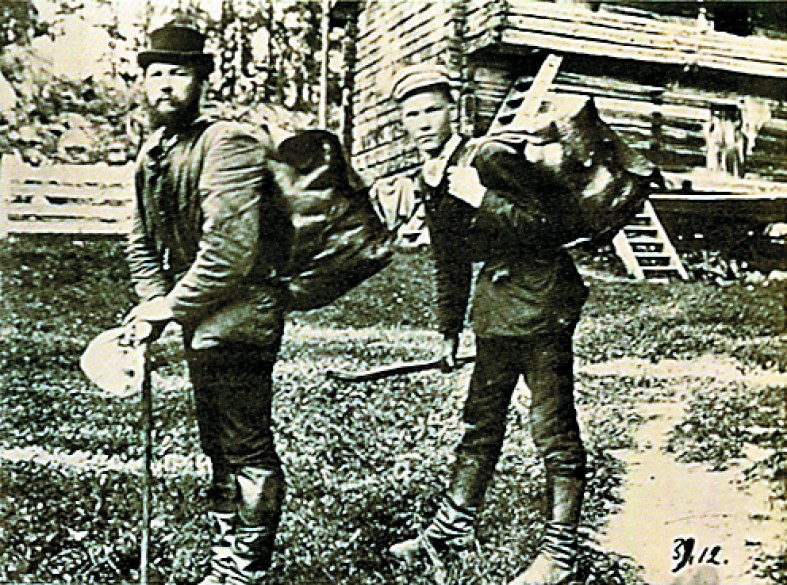
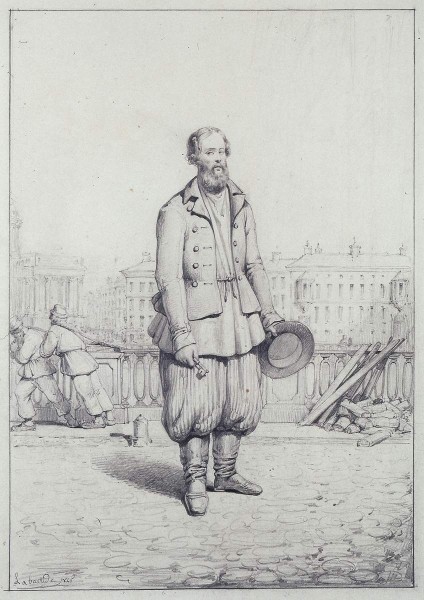
The song title Коробейники (Korobeiniki) describes a traditional peddler with a backpack or shoulder tray, similar to the ancient Chinese "货郎" (Hualang) from the Song Dynasty.
Russian peddler in ancient times: Photo source: Russian Vintage & Historical Archive website
Now lets return to our main topic: the Russian peddler. While we have all heard the lively and lighthearted music of Korobushka, the story penned by Russian poet Nikolai Nekrasov unfolds with many twists and turns. It begins with a chance encounter in a rye field at night, followed by a romantic dialogue sparked by the buying and selling of trinkets. The haggling between the peddler and the young woman subtly hints at courtship, gradually building deep feelings for each other. Then, due to the harsh realities of life, they must temporarily separate. After a long wait, the result is…
(This refers to a 1910 Russian silent film directed by Vasily Goncharov, who adapted the poems plot into a 15-minute silent film titled Korobeiniki.)
Alright, Teacher Frog wont keep you in suspense any longer; lets begin the story.
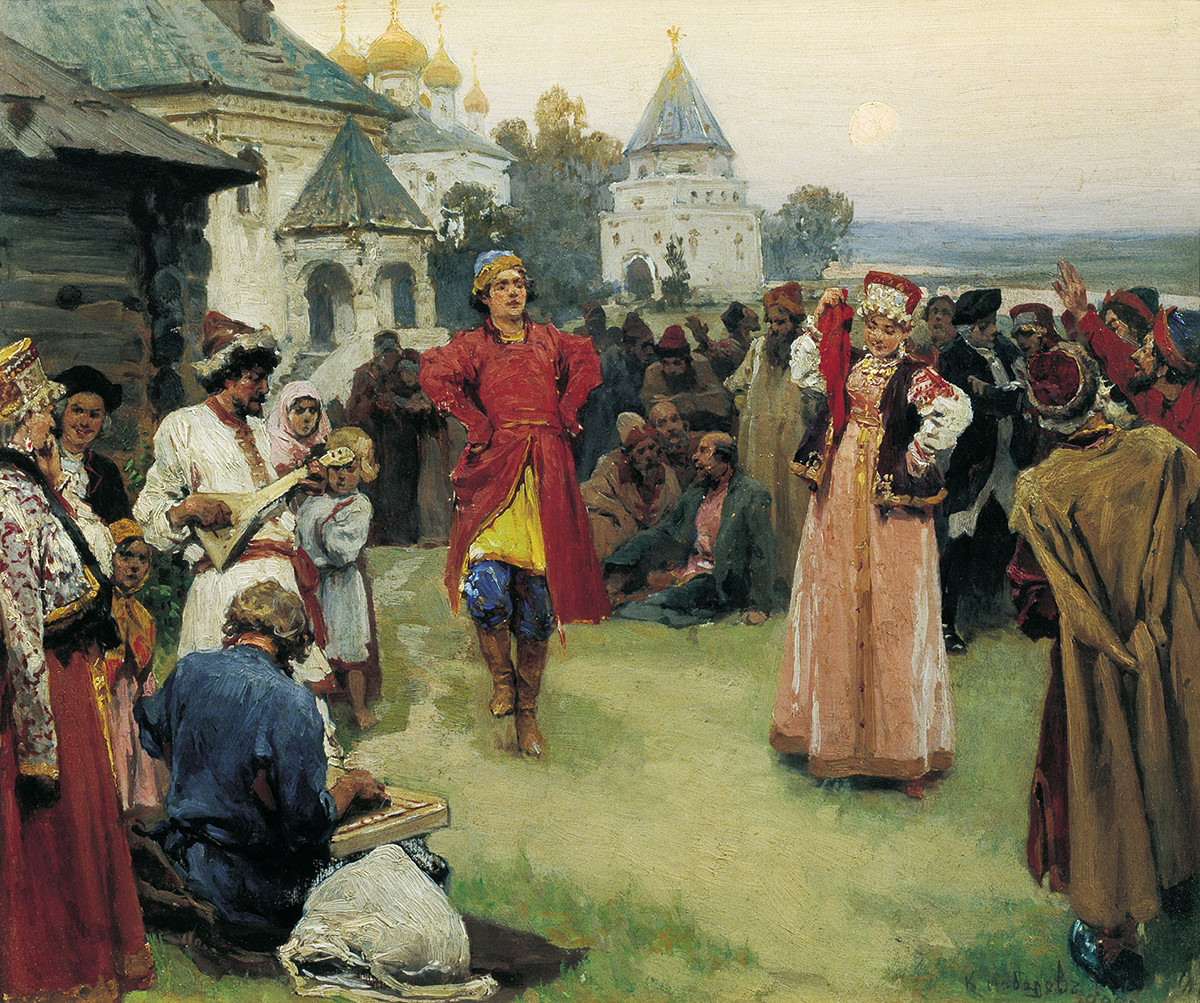
In a village called Kostroma in Russia, two peddlers-one young and one old-came to this remote countryside to do business. The young peddlers name was Ivan, and the older peddlers name was Tikhonych. (Image source: English Wikipedia)
Although the goods Ivan and Tikhonych brought werent exactly rare treasures, in the resource-scarce countryside, these wares were highly sought after by the village women, and some items were even completely unaffordable for them.
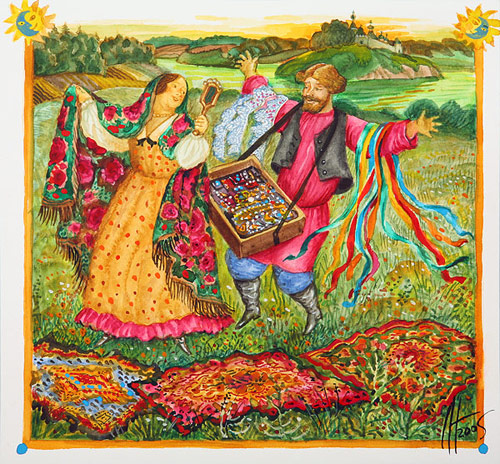
Katerina (affectionately nicknamed Katya), a beautiful girl with dark, piercing eyes, was one of them. She saw a gorgeous piece of floral fabric but didnt have enough money to buy it, so she tried to bargain with Ivan. Young Ivan laughed and said it didnt matter if she was short on money; she could come to the rye field in the evening where they could renegotiate the price. He even playfully suggested that if she gave him a kiss, he might give her a discount. This young, handsome, worldly, generous, and wealthy peddler held an inexplicable attraction for the poor country girl. Thus, bargaining and admiring the fabric became the perfect excuse for the young couple to meet, and under the moonlit flowers, they secretly pledged their lives to each other.
With this tacit agreement of marriage, Ivan wanted to shower Katerina with expensive gifts. However, Katerina firmly refused to accept them. She hoped that Ivan would simply sell all his goods and then return to the village to marry her. She loved Ivan for who he was; without him, even the most expensive gifts meant nothing to her. Yet, leaving his beloved without a token of his affection was unacceptable to Ivan. He prepared an entire array of printed fabrics, ribbons, belts, and other costly gifts for Katerina, but she gently declined them all. Instead, she chose only a small turquoise ring as a token of their love. She didnt want Ivan to spend too much money on her, which deeply moved him. He promised that he would work hard to sell the rest of his wares and, after completing his journey, would definitely return to Kostroma to marry her.
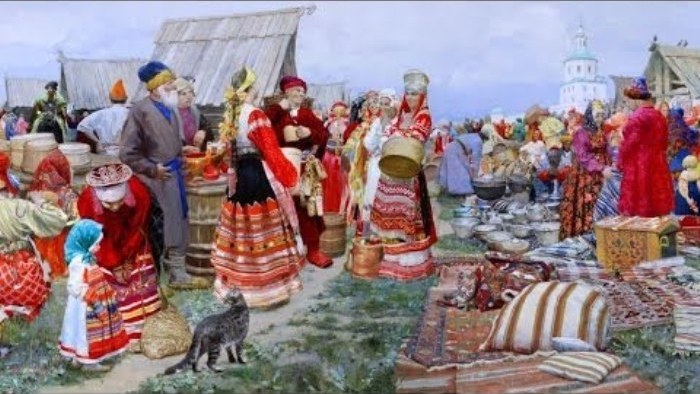
Next, Ivan and Tikhonych set off once again. Buoyed by love, Ivan was full of energy and found the arduous journey of hauling his goods painless. However, Russian society was in turmoil at the time due to constant warfare. Mothers lamented that their sons were away in the army and that they had no money left to buy clothes or accessories. The common folk lived in poverty and hardship; where would they find spare coins for extra goods? Consequently, business became increasingly difficult. Old Tikhonych attributed the dismal market situation to the ongoing war, which was an unavoidable reality.
Image Source: Red Square 123s Blog: Russian Folk Dance
Even so, old Tikhonych was an experienced salesman. He knew exactly how to navigate conversations among the older women and young girls, skillfully using his silver tongue to understand their psychology and negotiate prices. Therefore, his business was naturally much better than Ivans. Conversely, the young and inexperienced Ivan, who lacked the art of haggling, stubbornly stuck to his fixed prices and refused to budge, resulting in much poorer sales.
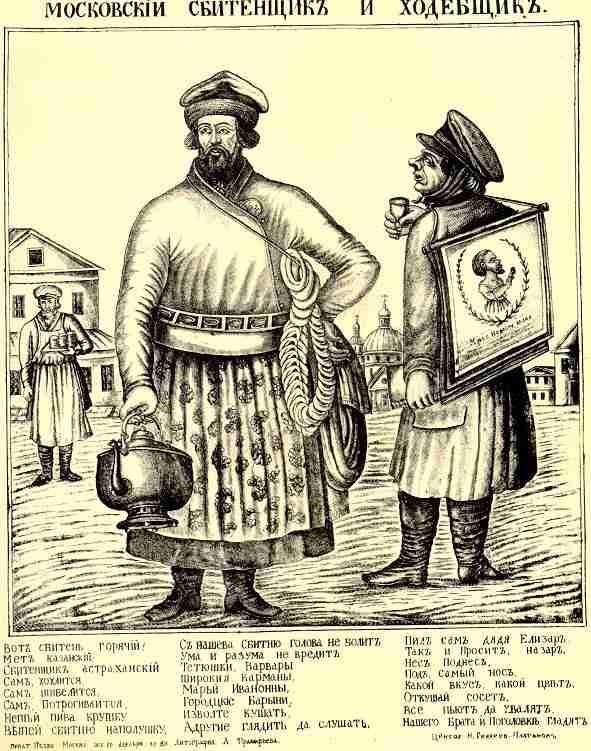
Image Source: Russian Literature Portal website: https://proza.ru/2017/06/08/
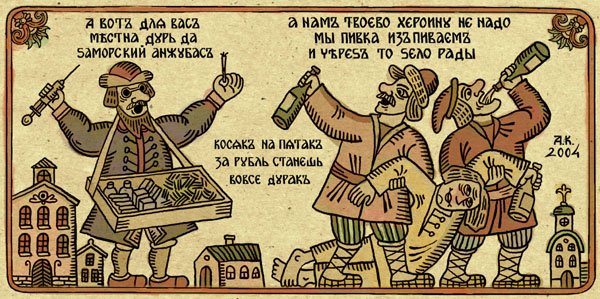
Another day passed, and the two peddlers set off early again, heading to the next village to sell their wares. On the way, old Tikhonych complained once more about the dismal business. This time, however, the reason was different: he noticed that the local Russian women had suddenly become obsessed with high fashion, showing absolutely no interest in the traditional goods they carried. Old Tikhonych blamed this phenomenon entirely on Paris, attributing it to a distorted trend of chasing foreign fashion trends originating from France. (Teacher Frogs Note: Dancers, please refer to the original lyrics below, which contain the line, "If you dont like your nose, theyll glue another one on for you," satirizing this very social phenomenon.)
While Ivan was working hard on the road, Katerina was not idle either. She continued to toil in the fields as usual, keeping her lover Ivan close in her thoughts and maintaining her virtue as a devoted future wife willing to endure hard labor for her groom. Even during the autumn village festival, when other girls dressed up to attract the attention of local men, Katerina quietly prepared half a bottle of sweet liquor, eagerly awaiting her lovers return. She firmly refused gifts from other suitors, holding fast to Ivans parting vow: "After selling this batch of goods, I will definitely..." (Note by Teacher Frog: According to Orthodox tradition following the autumn harvest...) "...Well return before the important festival and feast, and then well head straight to the church for our formal wedding."
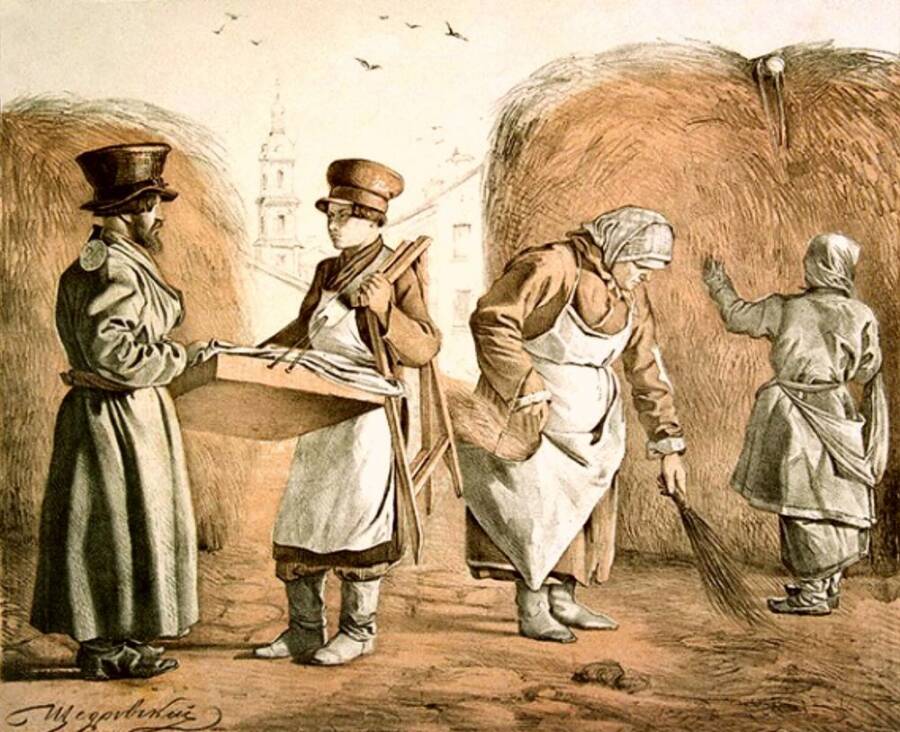
Image source: Russian history website ИСТОРИЯ.РФ:https://histrf.ru/read/articles/ofenya-stranstvuyushchie-torgovcy
Several days later, Ivan and Tikhonych finally sold the last of their goods. With their pockets full of earnings and empty crates strapped to their backs, they hurried home. To return to Kostroma as quickly as possible, they decided to risk taking a shortcut through an unfamiliar forest. Sure enough, after walking for quite some time, they found themselves hopelessly lost in the dense wilderness. As dusk approached and heavy rain began to pour, the two became increasingly anxious-until they encountered a sinister-looking forest ranger armed with a shotgun.
The forest ranger volunteered to lead the two men out of the woods. Unbeknownst to Ivan and Tikhonych, this seeming savior was actually a hot-tempered, deeply dissatisfied, and antisocial criminal. Seeing their empty crates, the ranger instantly realized they were merchants who had successfully sold all their wares; meaning their pockets must be bursting with cash. Overcome by greed, the ranger decided to murder Ivan and Tikhonych on the spot. He shot them both, robbed their corpses of every single ruble they had earned, and pocketed the blood money for himself.
Afterward, the forester took his stolen wealth to a village tavern and began to drink heavily. In his drunken stupor, he inadvertently bragged about the murder and robbery. Upon hearing his confession, the outraged villagers immediately notified the authorities. When the police arrived at the tavern and arrested the forester, the shocking news spread like wildfire through the region. When Katerina heard what happened, she was utterly heartbroken. She rushed into the forest to the crime scene, where she discovered her lovers lifeless body. Overwhelmed with grief, she collapsed in tears beside Ivan.
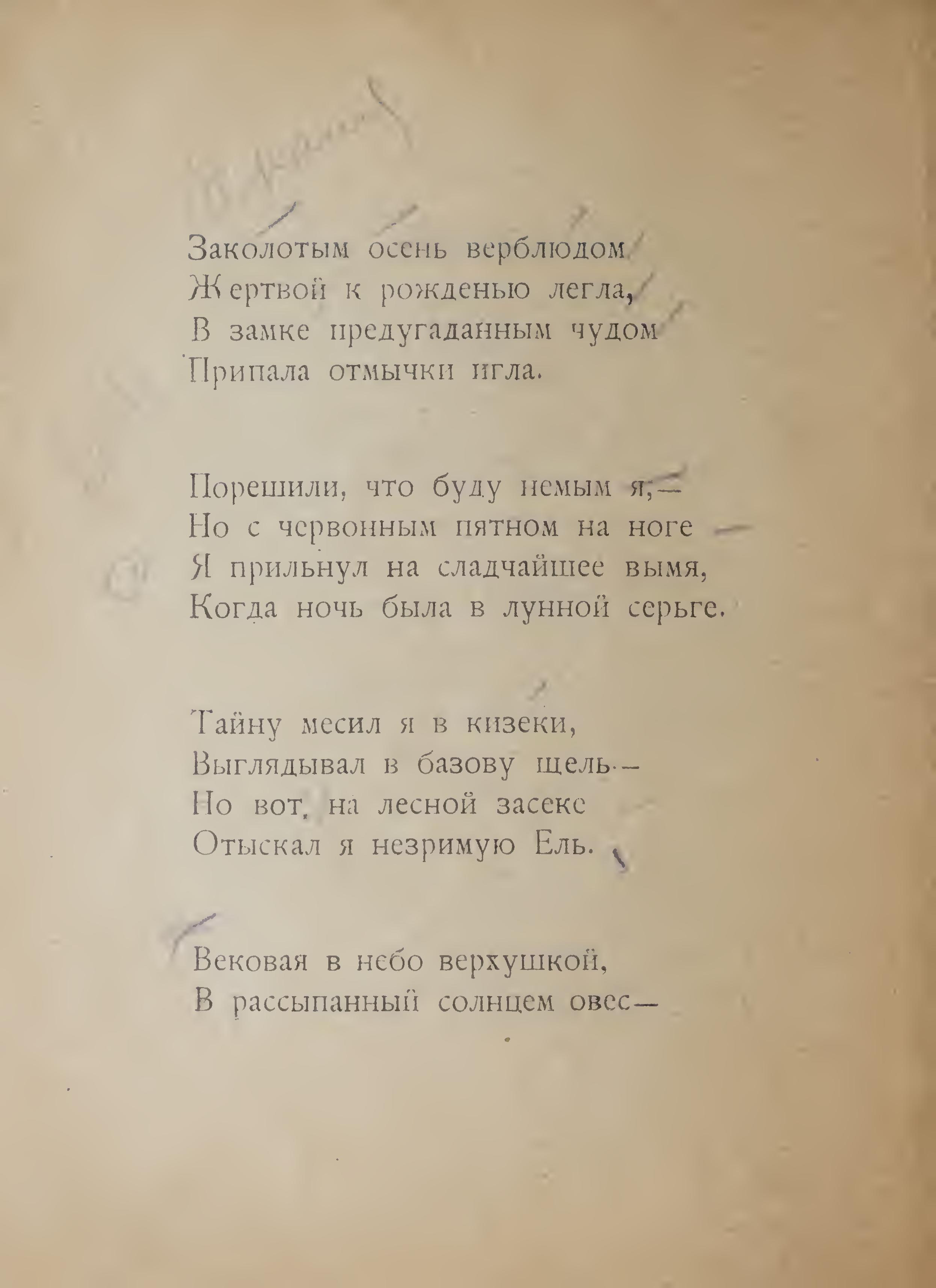
Alas! Who would have thought that behind such a light, cheerful, and lively melody lies such a tragic and harrowing love story? This is truly unbearable for Teacher Frog, who always prefers happy endings. Alright, let us put aside our sadness for a moment and appreciate the original Russian text and translations of this historic poem. Teacher Frog would like to remind you that while the original poem consists of thirteen stanzas, the lyrics used for "Korobushka" are excerpted from the first six stanzas-comprising the first twenty-four lines of the original work.
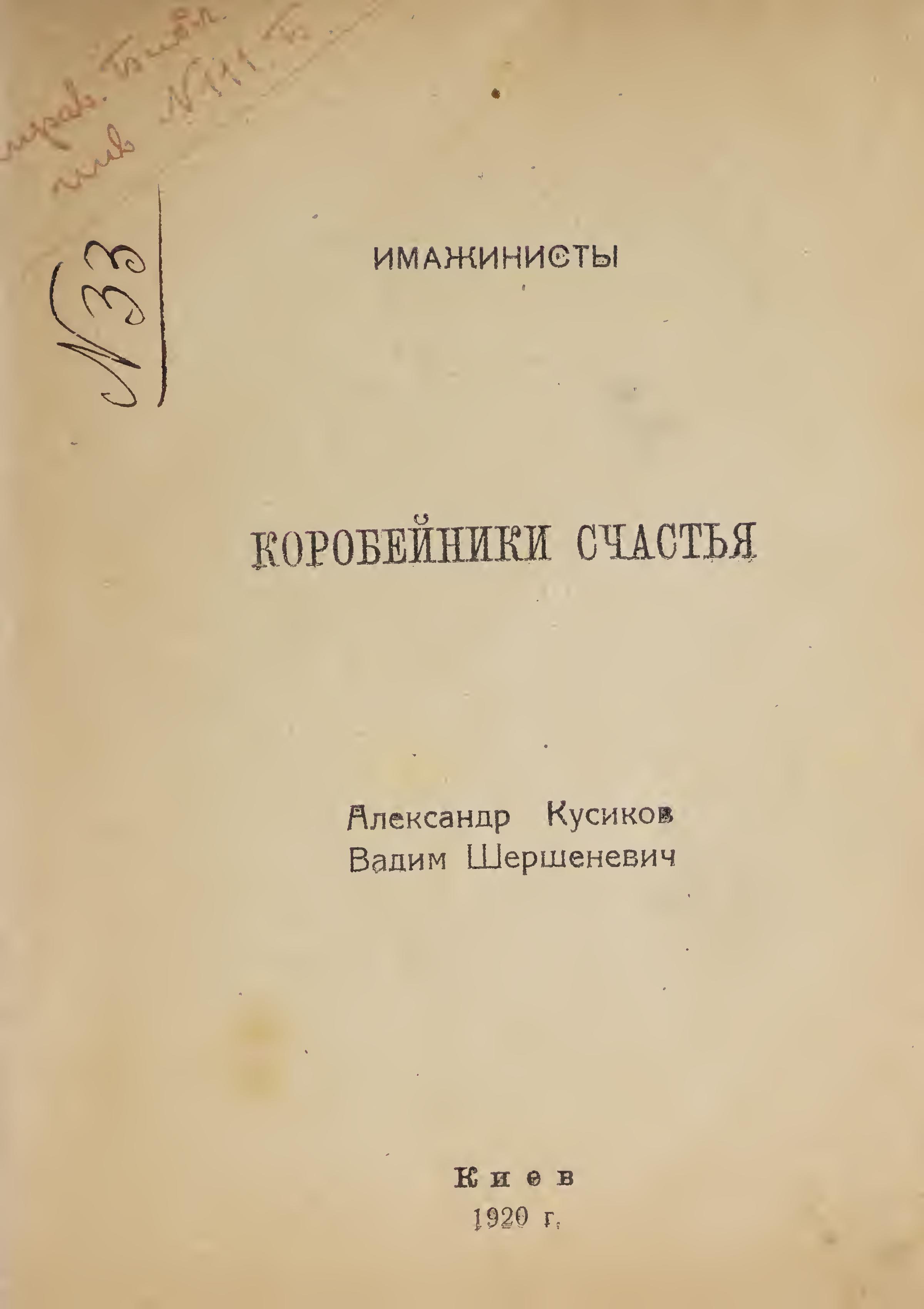
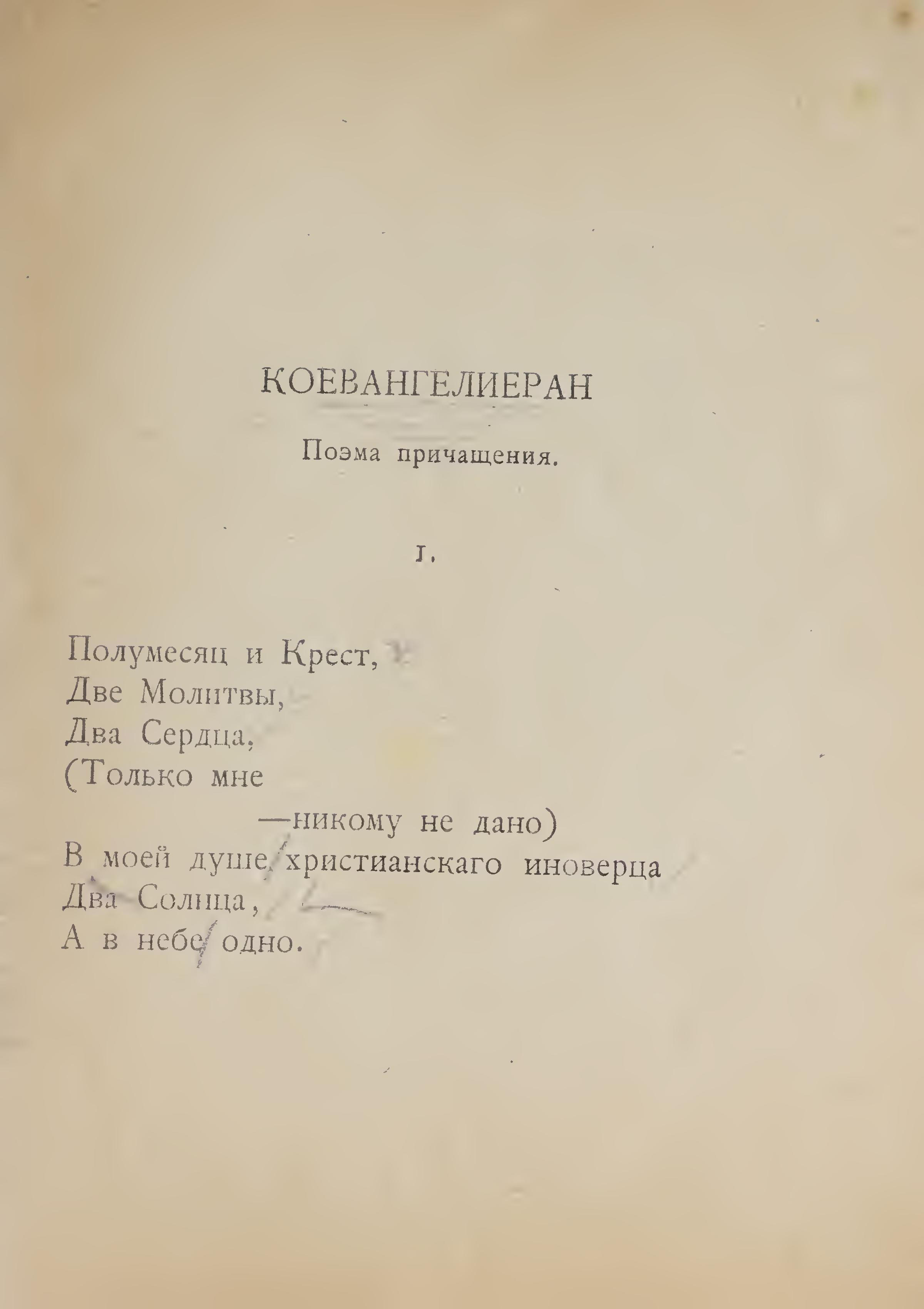
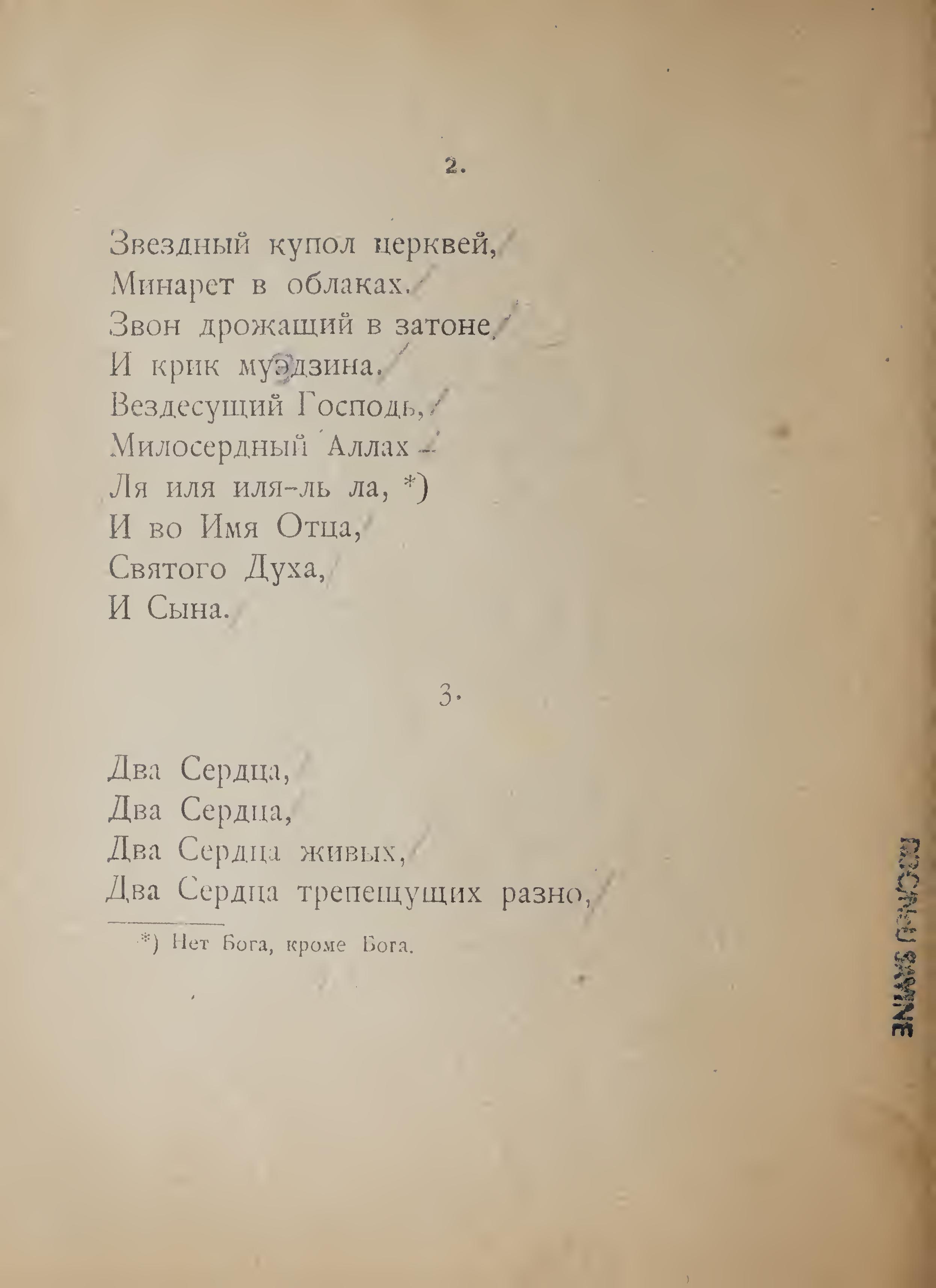
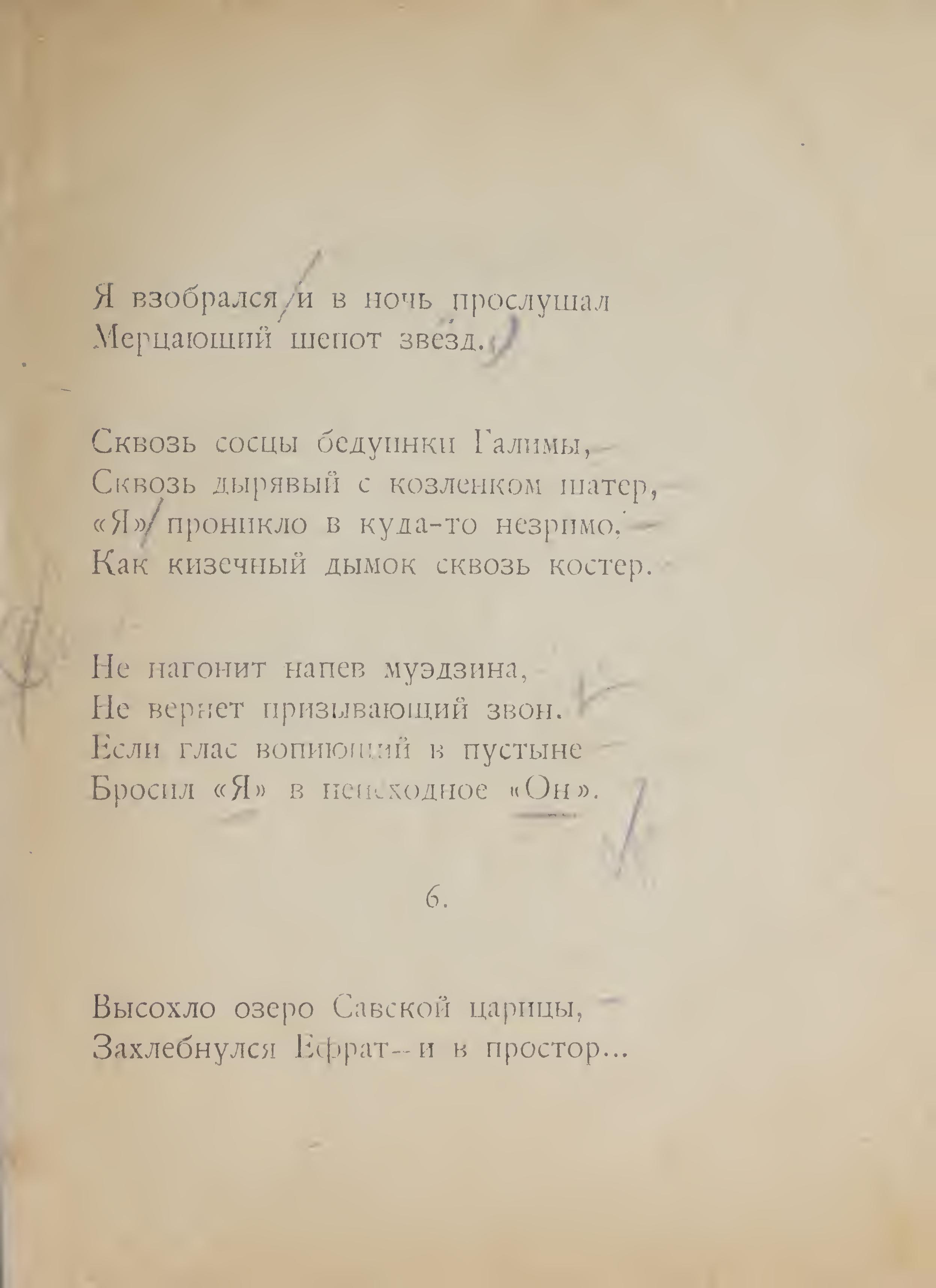
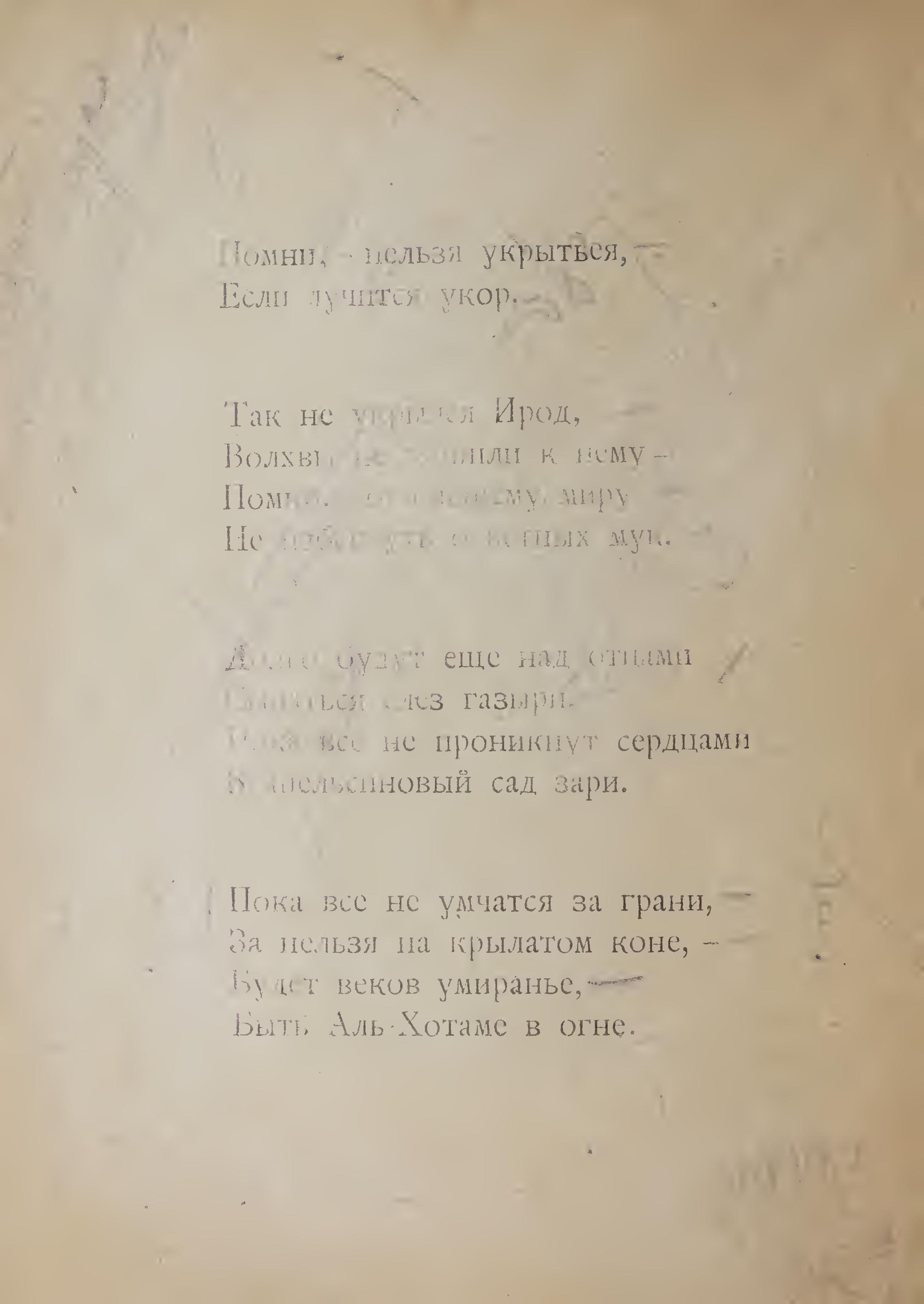
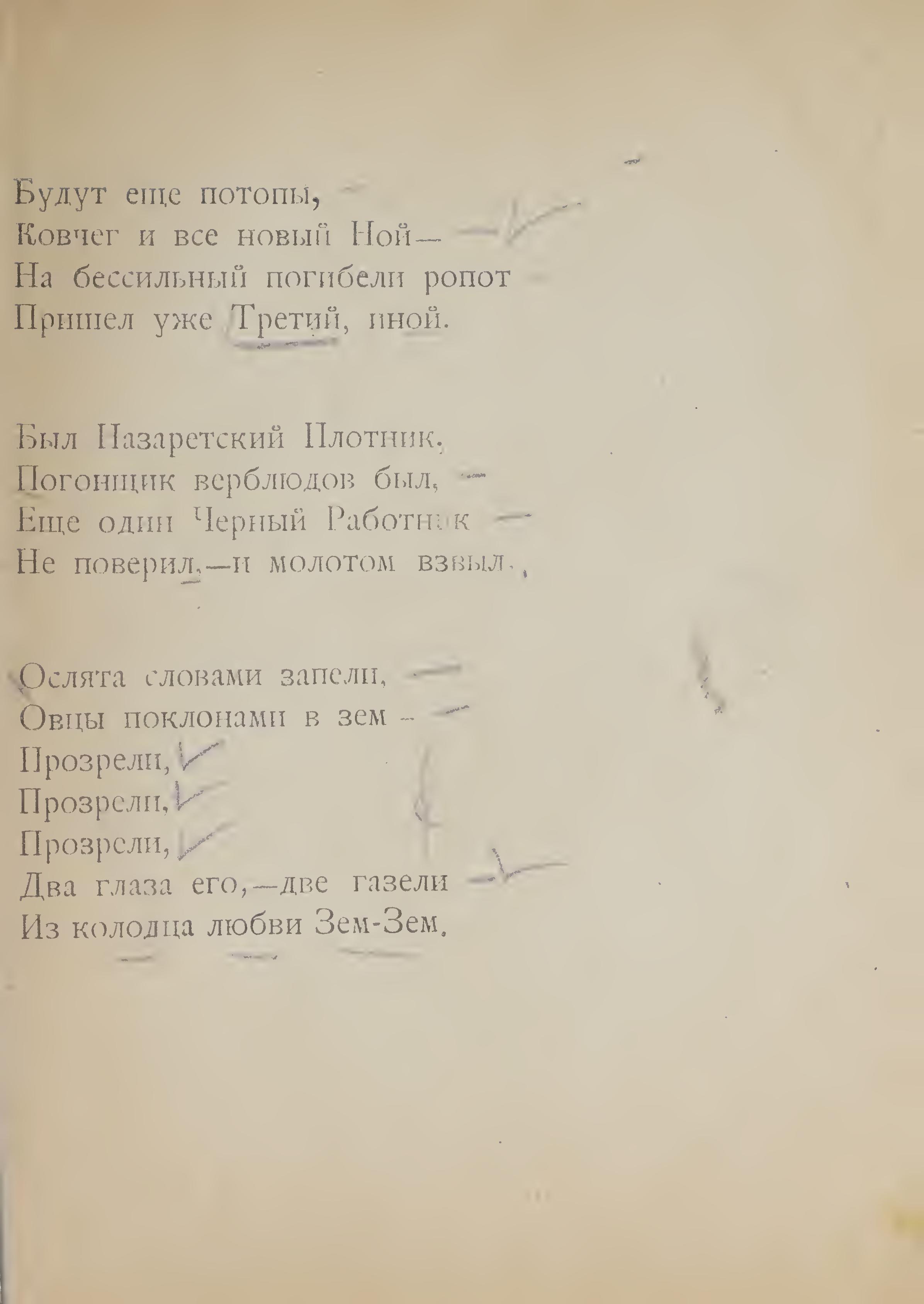
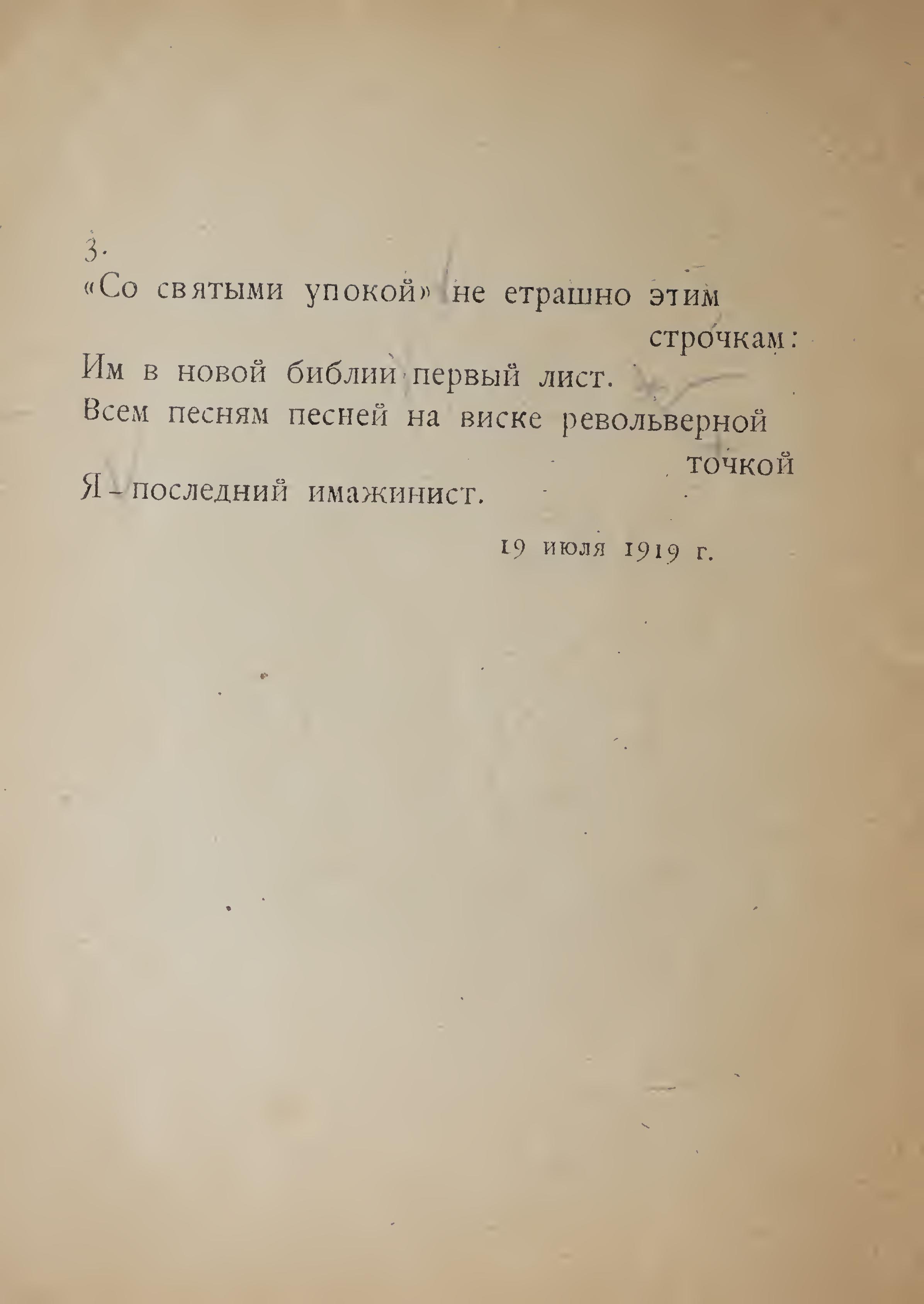
The Boss Invites You to the North Carolina State University Library. This rare poem is preserved in our digital collection: (36 pages in total, please be patient... or skip to the next page quickly)
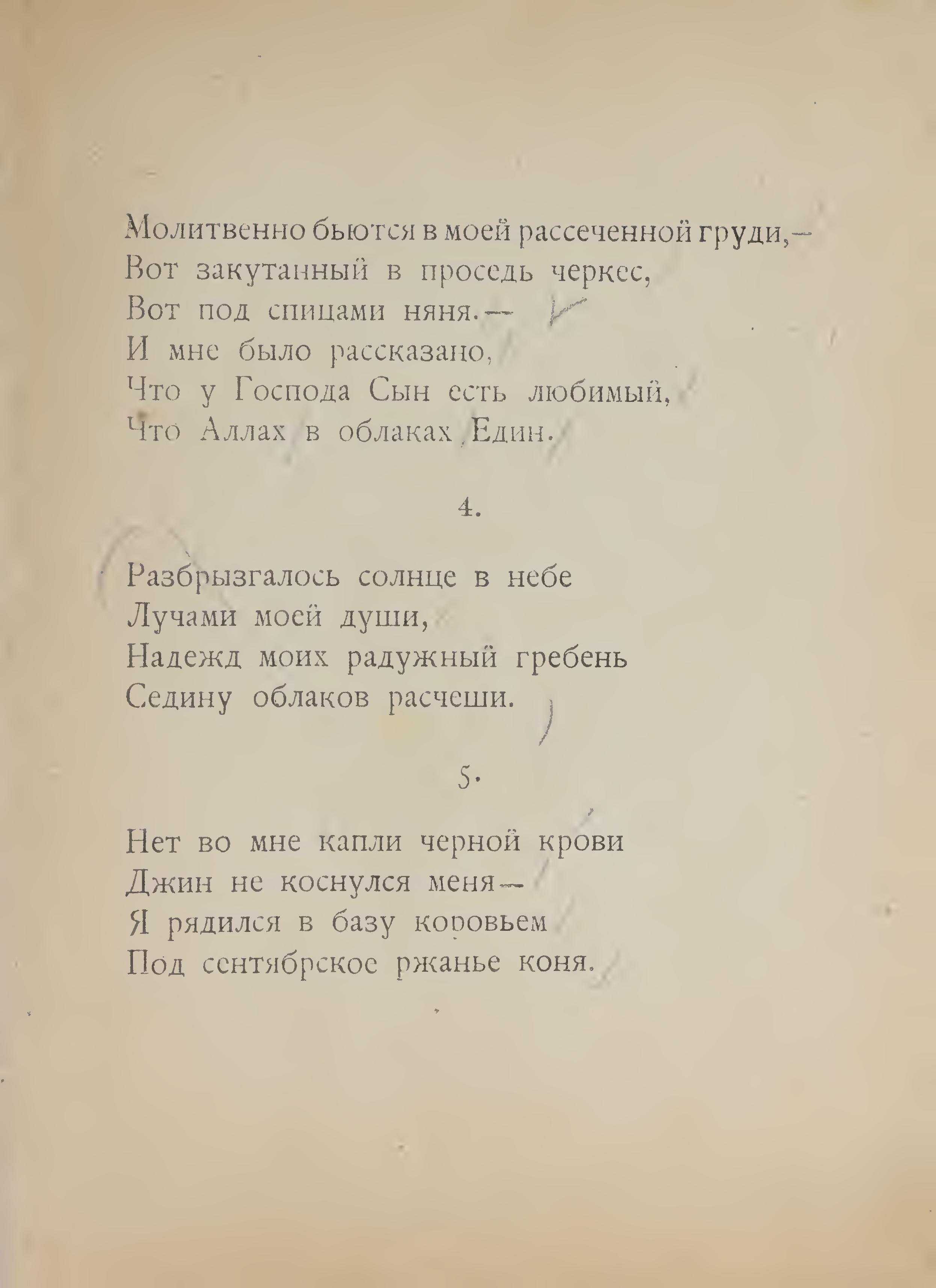
Original Russian Poem: 1. Ой полным полна моя кoробушка Есть и ситец, и парча. Пожалей, душа-зазнобушка, Молодецкого плеча.
2. Выйду, выйду в рожь высокую, Там до ночки погожу, Как завижу черноокую, Все товары разложу.
3. Цены сам платил немалые, Не торгуйся, не скупись, Подставляй-ка губки алые, Ближе к молодцу садись.
4. Вот уж пала ночь туманная, Ждёт удалый молодец... Чу, идёт! – пришла желанная, Продаёт товар купец.
5. Катя бережно торгуется, Всё боится передать, Парень с де́вицей целуется, Просит цены набавлять.
6. Знает только ночь глубокая, Как поладили они. Распрямись ты, рожь высокая, Тайну свято сохрани!
7. Ой, легка, легка коробушка, Плеч не режет ремешок! А всего взяла зазнобушка Бирюзовый перстенёк.
8. Дал ей ситцу штуку целую, Ленту алую для кос, Поясок – рубашку белую Подпоясать в сенокос...
9. Все поклала ненаглядная В короб, кроме перстенька: «Не хочу ходить нарядная Без сердечного дружка!»
10. То-то, дуры вы, молодочки! Не сама ли принесла Полуштофик сладкой водочки? А подарков не взяла!
11. Так постой же! Нерушимое Обещаньице даю:
Опорожнится коробушка, На Покров домой приду И тебя, душа-зазнобушка, В божью церковь поведу!"
12. Вплоть до вечера дождливого Молодец бежит бегом И товарища ворчливого Нагоняет под селом.
13. Старый Тихоныч ругается: "Я уж думал, ты пропал!" Ванька только ухмыляется - Я-де ситцы продавал!
Original Transliteration: 1. Oy polnym polna mоya korobushka Yest i sitets i parcha. Pozhaley, dusha-zaznobushka, Molodetskogo plecha.
2. Vyydu, vyydu v rozh vysokuyu, Tam do nochki pogozhu, Kak zavizhu chernookuyu, Vse tovary razlozhu.
3. Tseny sam platil nemalyye, Ne torguysya, ne skupis, Podstavlyay-ka gubki alyye, Blizhe k molodtsu sadis.
4. Vot uzh pala noch tumannaya, Zhdyot udalyy molodets. Chu, idyot! – prishla zhelannaya, Prodayot tovar kupets.
This song was composed by Yakov Fyodorovich Prigozhy in 1898, which is the definitive version we use today. Please enjoy this folk song full of exotic charm.
Following, well introduce a unique version performed by four Russian women, accompanied by traditional Russian spoons, making the performance even more lively.
Teacher Frogs favorite male-female duet version:
(Teacher Frogs Note: Because this song is rich with authentic Russian flavor, it was featured in 1988 by the American publisher Spectrum Holobyte for the release of Tetris on the Apple IIGS and Macintosh systems. The game was famously accompanied by this very melody, "Korobushka." As Tetris grew into a global phenomenon, even those who were completely unfamiliar with Russian folk music found themselves hooked on this incredibly catchy melody.)
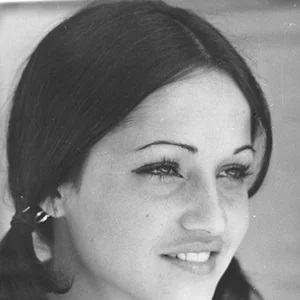
Next, Teacher Frog will introduce the singer behind the version used in our folk dance: Geula Gill, affectionately known as "The Songbird of Israel." As a legendary singer who predates even Ofra Haza, she might be less familiar to modern audiences, especially given how difficult it is to find complete biographical information about her today. Born Geula Levavi in Tel Aviv in 1932 during the Jewish return to Israel, her roots trace back to Tashkent, Uzbekistan, in the former Soviet Union. Coming from a deeply musical family-her father was a mandolinist and her mother a singer-she joined the Israeli army at the age of 16 and was immediately recruited into the military band, launching her professional singing career. Around 1950, she officially changed her stage name to Geula Gill.
Geula Gill in her youth:
Geula Gills significance in Israeli music history is fully comparable to that of Ofra Haza. She performed countless hit songs, and her extraordinary linguistic talent further propelled her international career. The classic version of "Shibolet Basadeh" frequently performed by our veteran dancers, is sung by Gill; the version of "Hagvaot Hakchulot" beloved by slightly younger dancers, is also her masterpiece. Gill was notably the first Israeli singer to tour the former Soviet Union, and she toured extensively across the United States as well. Her immense popularity is illustrated by the fact that blue-collar workers were often willing to spend an entire months salary just to secure a ticket to her concerts.
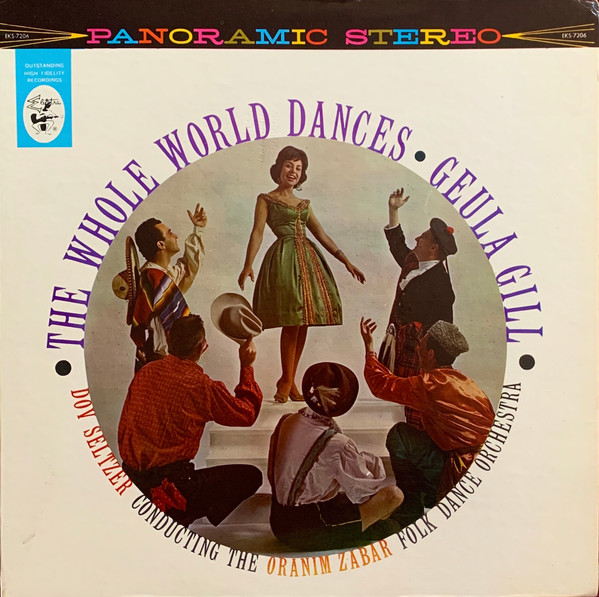
The music used for our "Korobushka" comes from Gills iconic 1961 album, The Whole World Dances.
The Whole World Dances album:
Now, please enjoy Geula Gills rendition for the folk dance:
Next, we move on to the introduction of the dance itself. Teacher Frog has collected and analyzed over 20 versions of the original English dance descriptions and more than 5 versions of the Chinese dance sequences. Following meticulous reading, comparison, and synthesis-while setting aside minor variations in details caused by its long history and widespread distribution-Teacher Frog has categorized this dance into two primary versions. The first version posits that the dance was introduced to the United States from Russia around 1920 (Teacher Frogs rough estimate), specifically brought over via ships after World War I by Jewish Russians who had been living in Ukraine. The second version attributes its choreography to Romeo Rollette, a renowned folk dance teacher active on the East Coast of the United States in New York around 1940.
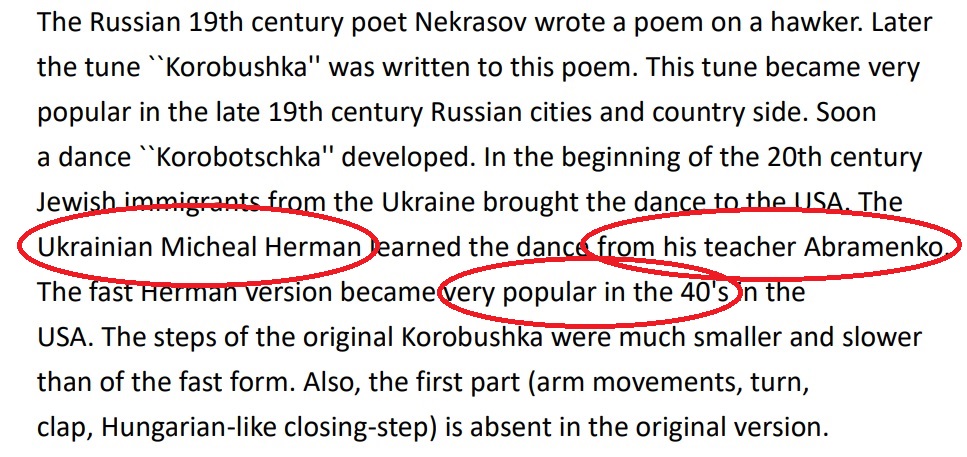
First, let us examine the origins of this dance. While its exact genesis remains a subject of debate, most folk dance historians believe it originated within late 19th-century Russian high society. During the Russian Empire, many choreographers adapted newly popular songs into ballroom dances to cater to the tastes of royalty and aristocrats, sparking a fashionable trend. As the ancient Chinese philosopher Mencius aptly noted, "When those above have a preference, those below will follow suit with even greater enthusiasm." Gradually, this trend trickled down from high society to the common folk, eventually spreading across the broader Slavic regions of Europe. This perspective is widely accepted by folk dance scholars, with Michael Herman-a leading authority on Russian folk dance-being one of its prominent proponents. Herman is a towering figure in the folk dance world; beyond Russian dance, he was proficient in Jewish Yiddish dance and explored traditions from various European countries, even teaching German peasant dances at the World Dance Camp in the United States. Interestingly, his own nationality was Ukrainian. In that vibrant era of cultural exchange, nationality was hardly a barrier limiting the global scope of folk dance research.
(Note from Teacher Frog: During the Tsarist era, society was deeply corrupt, and the divide between rural and urban life was vast. Impoverished peasants in rural areas began imitating upper-class dances as a form of satire. They would thrust their chins high, assuming an absurdly arrogant posture; some wore cold, smug, aloof expressions that practically begged for a punch; others utilized a half-squatting, poker-faced spin to evoke clownish antics. All of these stylistic choices were clever forms of mockery aimed at the ruling aristocracy.)
Another minority school of thought suggests that this dance actually originated in Hungary, migrated to Russia, and subsequently spread to other European nations. Scholars supporting this argument frequently cite the inclusion of the Hungarian Break as a fundamental step withinKorobushka (often referred to in Chinese text as the "崩步" step). A prominent figure holding this view is Ron Houston, a foremost expert in the archival and archaeological study of folk dances. He has authored the celebrated book series The Folk Dance Problem Solver, which clarifies many ambiguous origins and historical inaccuracies within the folk dance community. While Ron Houstons research across folk dance is undeniably exceptional, when it comes to the specific origin of "Korobushka", I respectfully disagree with his hypothesis. Instead, I lean toward the first theory-that it was born within the elite social circles of the Russian upper class.
There is also a separate group of folk dance instructors who propose that this dance belongs to the genre of Eastern European Yiddish Dance. However, Teacher Frog believes this probability is quite low. In an upcoming video lecture, Teacher Frog will explain the reasoning behind this stance.
Do you remember Teacher Hennie Konings, the Dutch-born master of Russian dance? I previously introduced him during my overview of Russian dances’ history:Ya da kalinushku lomala,Devichya Khorovodnaya,Lugovonjka…
According to Mr. Hennie Koningss detailed explanation in his article "Hoe heet die dans / 2: Korobushka" (published in Barinya Brief 94, 1994 AD), this specific dance was first learned by Michael Herman and his instructor, Abramenko, who subsequently popularized and promoted it worldwide.
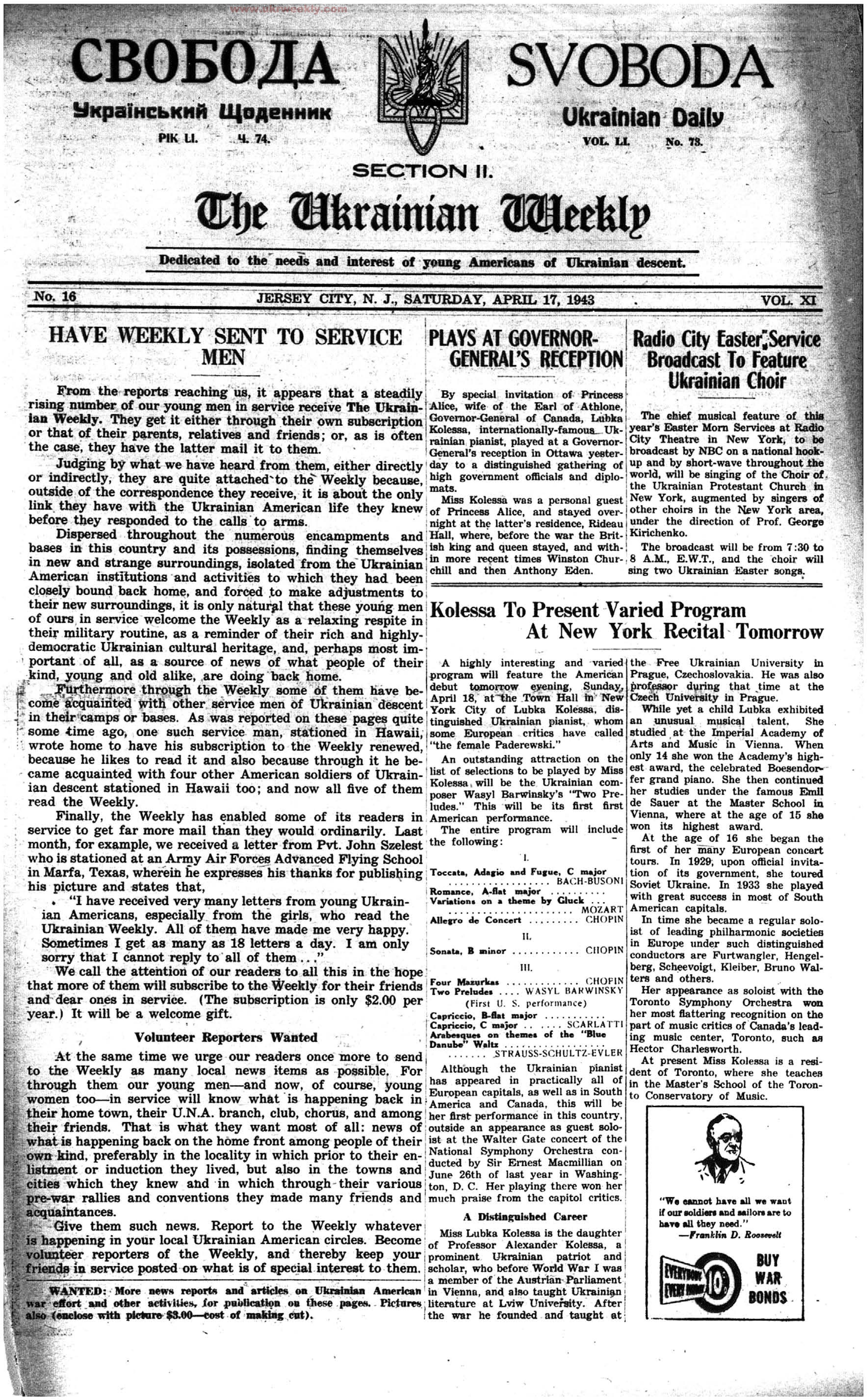
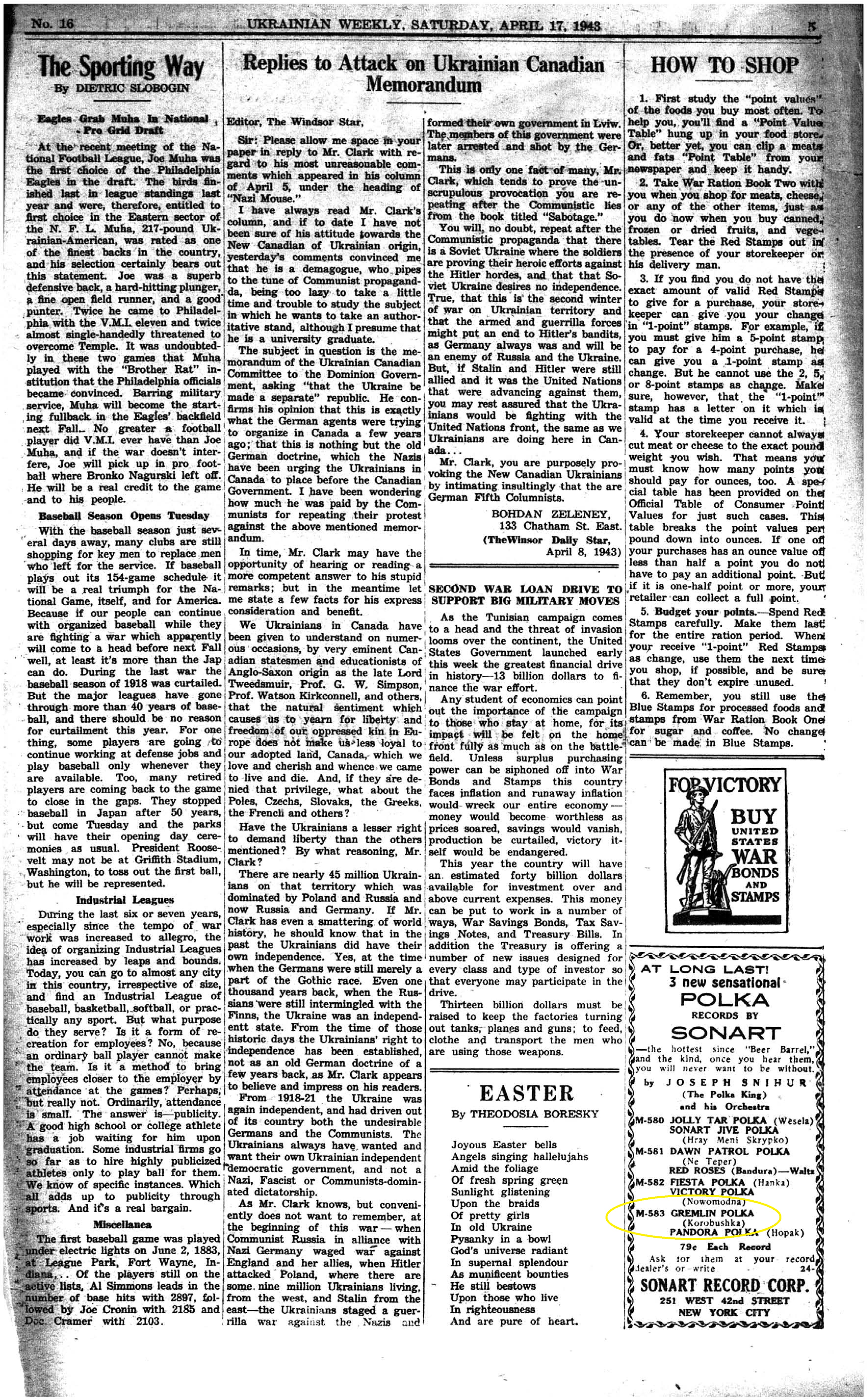
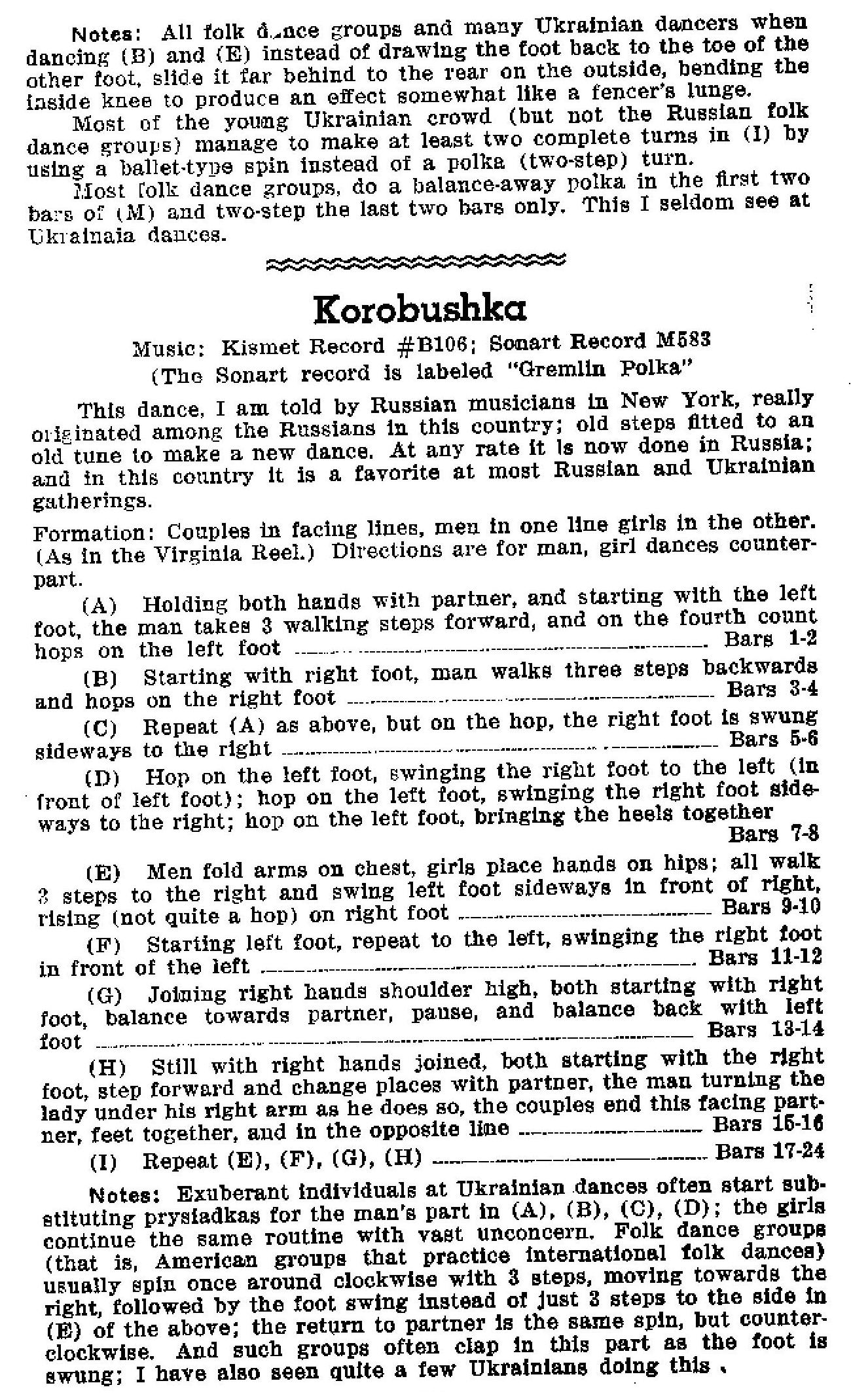
In addition to the two phonetic transliterations of Korobeiniki and Korobushka mentioned on our homepage, certain historical records published in the United States during the 1940s labeled this dance as the Gremlin Polka (a "gremlin" being a type of mischievous, folklore sprite). Teacher Frog has not yet uncovered the exact historical reason behind this naming anomaly, so this point remains open to further verification. However, since it represents a minority record, dancers here do not need to dwell on it too much; it is simply a fascinating historical footnote to keep in mind. For instance, the 16th issue of The Ukrainian Weekly, published on April 17, 1943, explicitly notes that the Gremlin Polka is indeed Korobushka:
The Ukrainian Weekly, April 17, 1943 (Issue 16) - Cover Page:
The Ukrainian Weekly, April 17, 1943 (Issue 16) - Text Page 5:
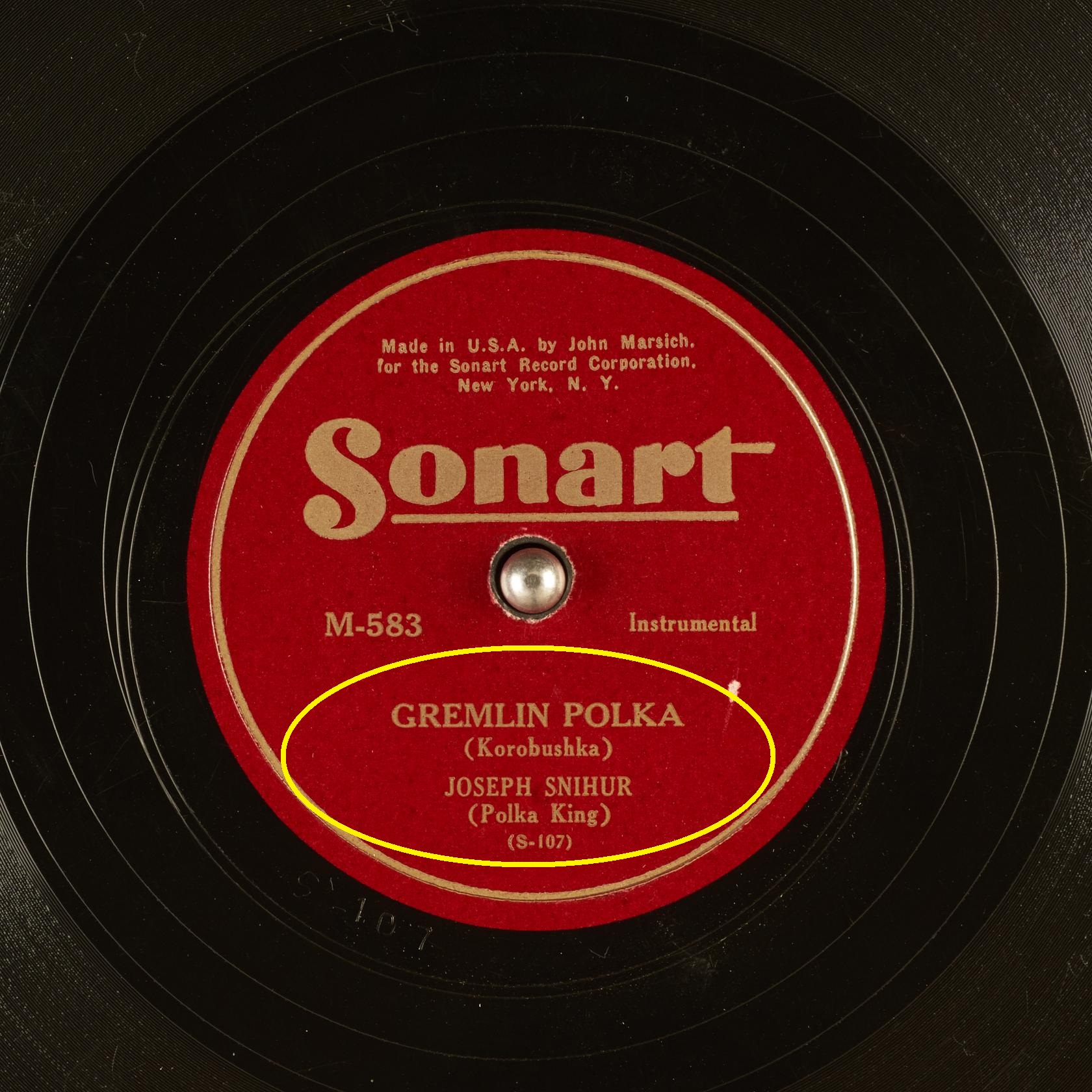
Another example can be found on Sonart Records M-583, a shellac record released in March 1943:
All of this historical background is laid out to illustrate one definitive point: the true origins of this dance are incredibly fluid and complex. This masterpiece has enjoyed global popularity for well over a century, traveling from Eastern Europe to Central Europe, across the entire European continent, and onward to North America, the Middle East, and Asia.
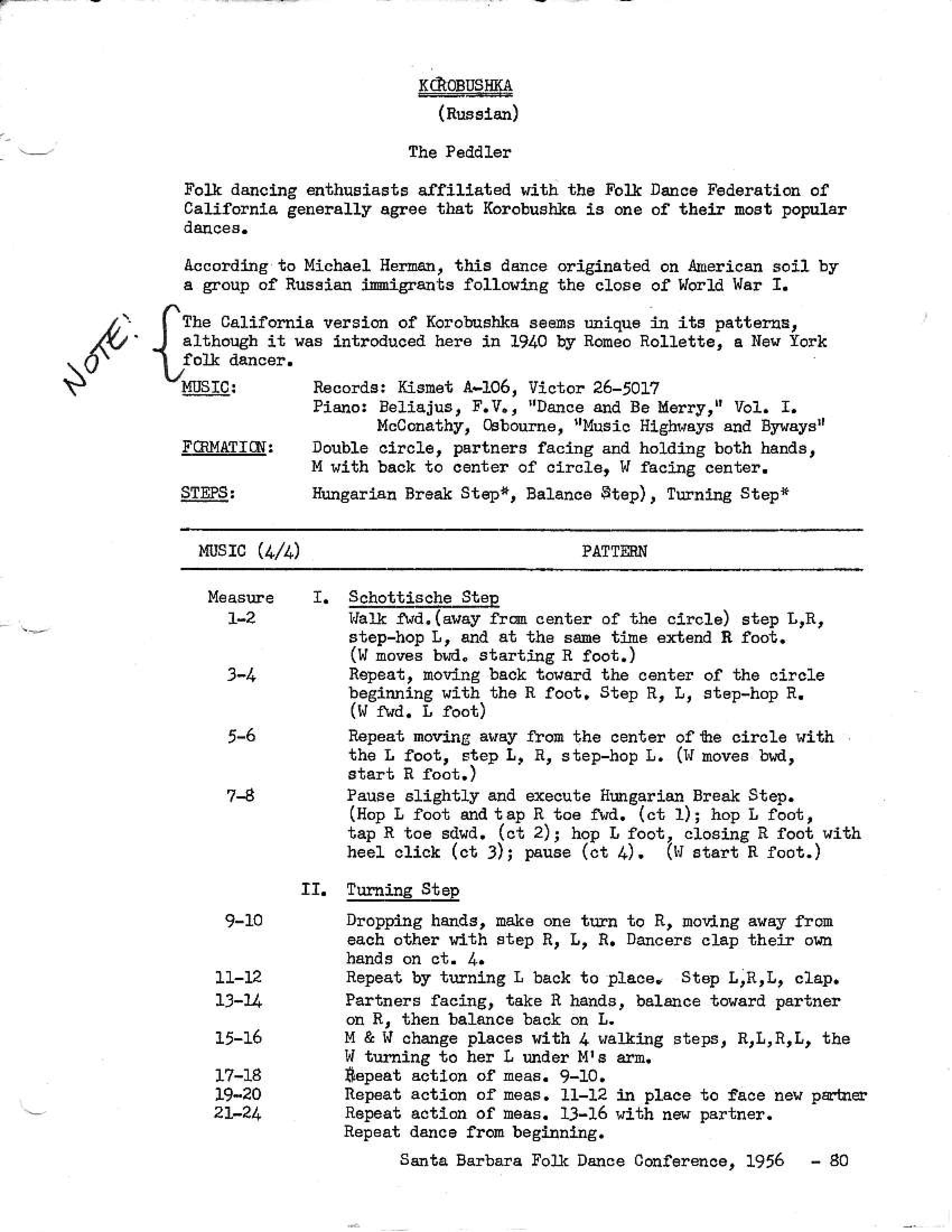
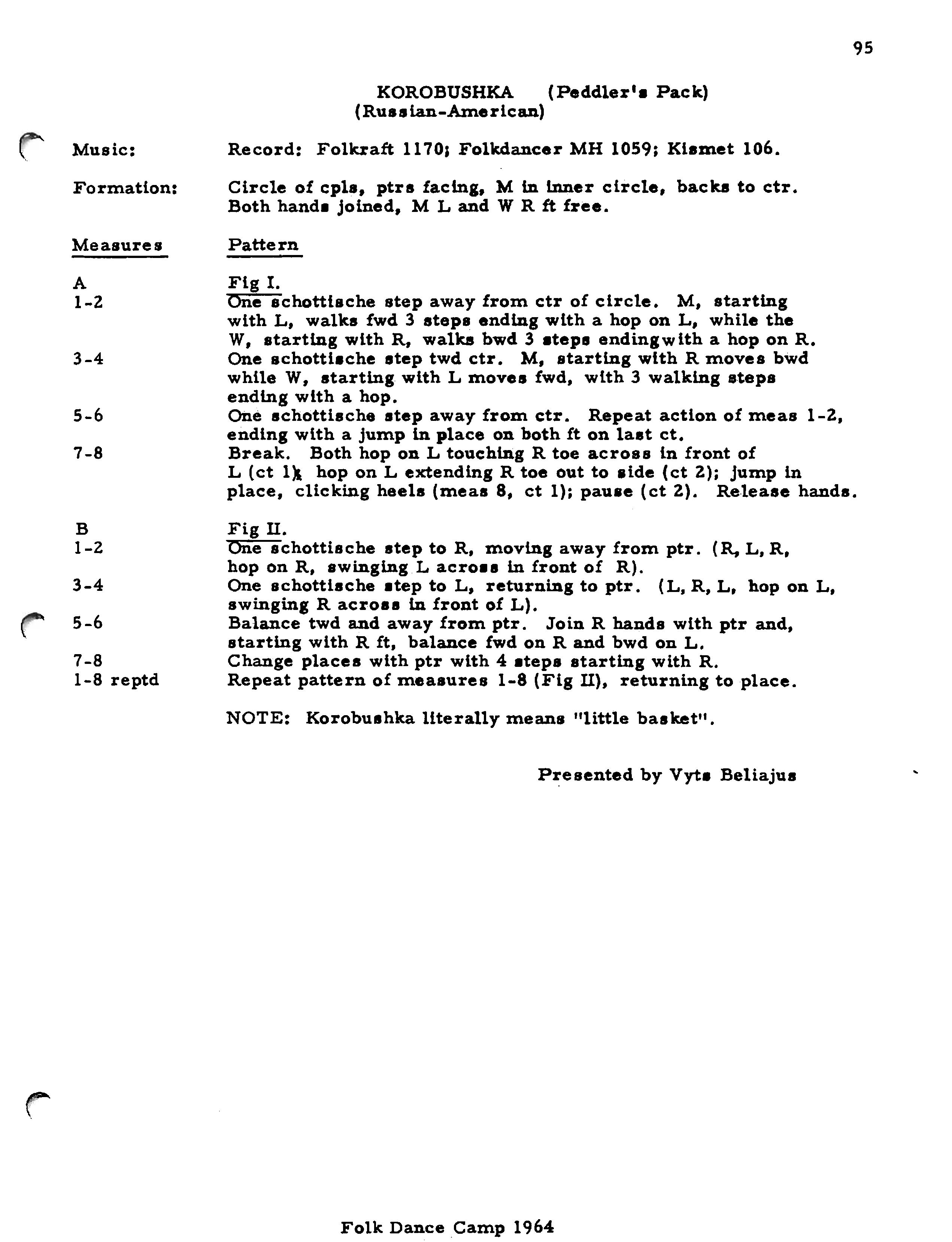
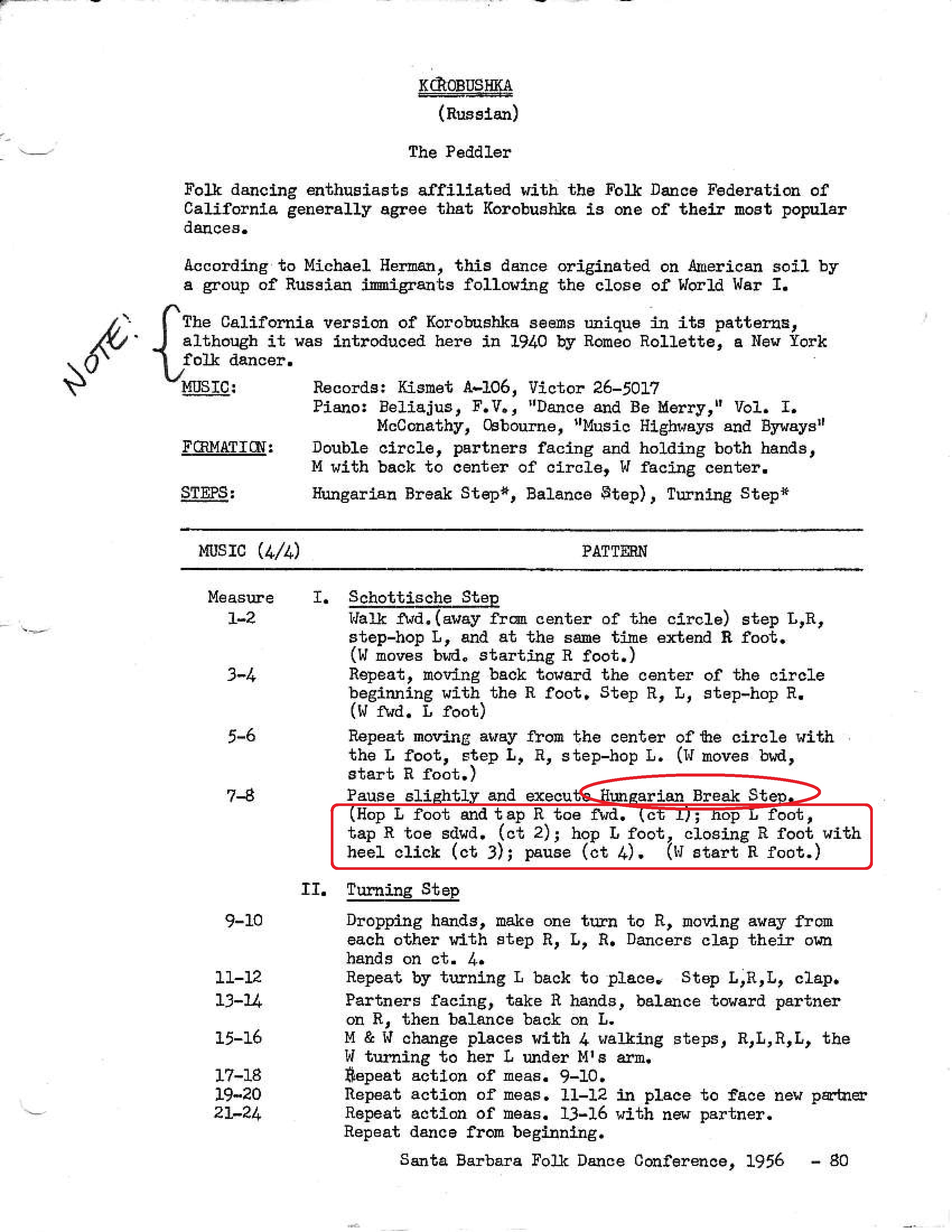
Among the myriad of existing choreography variations, Teacher Frog will briefly introduce 3 original English dance sequences below. As for the dozens of other minor stylistic variations created by different regions, I will leave those for my fellow dancers to collect on their own. Instead, our primary focus will be directed toward a thorough movement analysis of the previously mentioned Hungarian Break Step.
The Boss(That’s me, Teacher Frog) invites you to explore the English dance sequences: Row formation (Longway):
Syllabus of the Santa Barbara Folk Dance Camp, USA,1956:
Stocton Folk Dance Camp Manual,1964:
In terms of dance formation, the formations of The Korobushka include Line formation (a line of boys and a line of girls), Couple dance, and Mixer (partner-changing) formation. As for the starting position, depending on the different dance versions, there are Promenade position, Skating position, Two-hand hold, and No hold, just to name a few. Frog Teacher will not introduce them one by one here.
Next, lets examine the dance step known as “Hungarian Break Step”. When teaching this movement, we usually pass it off with a quick verbal cue: front tap, side tap, close. People may never have imagined that within such a simple phrase and a simple step lies a profound significance that is far from simple. In English dance notation, this sequence is formally cataloged as the "Hungarian Break Step": Teacher Frogs Notation: L = left foot; R = right foot; fwd = forward; ct = count; sdwd = sideward; W = woman.
Teacher Frogs Analysis: The term "Hungarian Break Step" appears to be a colloquial designation native to American folk dance circles. In formal, traditional Hungarian dance terminology, no step bears this exact name. Teacher Frog strongly believes that this movement is a stylized variation of the "Bokázó", one of the most fundamental footwork elements in Hungarian dance. The traditional Hungarian Bokázó involves clicking the heels together sharply (often with the free foot slightly lifted prior to impact to make the heel-click more crisp and visually striking). The final count of the Americanized Hungarian Break Step features this exact heel-clicking closure, mirroring the Bokázó. (PS: There are indeed scholars on the internet who share Teacher Frogs perspective, agreeing that the Hungarian Break Step is simply a modified variation of the Bokázó step! ^_^)
An example of basic and variation Bokázó steps applied to performance: Szatmári verbunk, Hungary.
Even so, Teacher Frog argues that it is far too tenuous to trace the entire roots of the Korobushka Dance back to Hungary, simply because its sequence includes a single variation of a Hungarian basic step.
Finally, Teacher Frog treats dancers to four demonstration videos from other dance groups, allowing dancers to observe more stylistic variations of this iconic folk dance.
Our affiliated Israeli folk dance club: Noam Folk Dance Group
Sacramento Folk Dance Group, Northern California, USA:
Reference demonstration video for the Row formation (Longway):
I finally discovered an earlier dance demonstration by Erik Bendix and Hélène Domergue-Zylberberg at a camp in Weimar, Germany, back in 2008. They truly captured the elegant essence of Russian high society!
Teacher Frogs Note: The video description categorizes this dance as a Yiddish dance, a claim about which Teacher Frog harbors strong reservations. Although some dance scholars mentioned earlier argue that this piece belongs to the Yiddish dance tradition, Teacher Frog remains highly skeptical. This point is crucial because a mixed-gender couple dance directly contradicts the Orthodox Jewish religious codes of that era, which strictly prohibited men and women from dancing together. Therefore, the probability of this being an authentic Yiddish dance is exceedingly low. Do you all remember when, a long time ago, Teacher Frog introduced the masterpiece film Fiddler on the Roof to our dance community, detailing Jewish traditions, customs, and dance scenes? At the eldest daughters wedding banquet, men and women sat separately, dined separately, and danced separately. There was even a highly visible physical divider stretching down the middle of the courtyard to completely segregate male and female guests. (Please refer to the Fiddler on the Roof synopsis on Teacher Frogs blog; I will omit the link here.)
References: 1.English edition Wikipedia 2.Russian edition Wikipedia 3.Folk Dance and Partner Dance, co-edited by Teachers Chang Ching-San and Lin Wen-chong 4.The Folk Dance World, Volume IIby Teacher Chang Ching-San 5.Xiaoya Music(小雅音樂):https://hsiaoya.com/ 6.Facebook post by "History Bro Clarifies"(臉書”歷史哥澄清唬”的貼文) 7.Mainland Chinas Russian Study Abroad Portal:www.huane.net/ 8.Chinese Encyclopedia Database:https://www.newton.com.tw/wiki 9.American Dance Website: Adventures In Dance:https://www.adventuresindance.com/2019/08/anastasia-dance-korobushka/ 10.The Ukrainian Weekly: Issue 16, 1943


 字體:小 中 大