


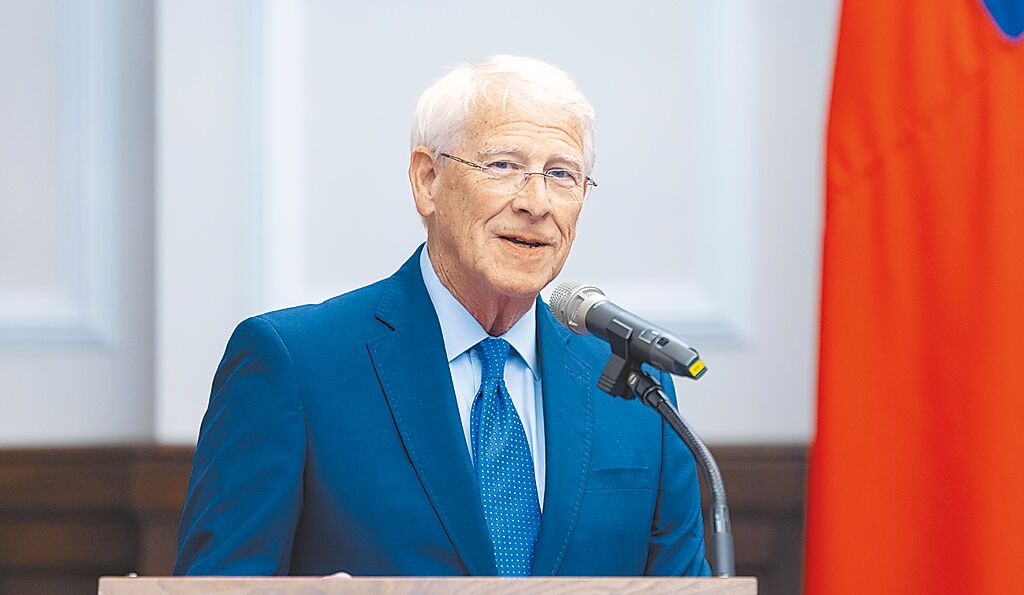
近日,多位美國聯邦參議員在X上發文,批評台灣兩個在野政黨國民黨與民眾黨,未能迅速通過賴清德總統提出的國防特別條例。
密西西比州共和黨籍參議員韋克爾(Roger Wicker)在X上表示,他「看到台灣在野黨在立法院大幅刪減賴總統的國防預算,令他感到失望。」阿拉斯加州共和黨籍參議員蘇利文(Dan Sullivan)則在X上寫道:「我之前警告過,為了向中共卑躬屈膝而削弱台灣國防,等於是在玩火。」亞利桑那州民主黨籍參議員蓋耶哥(Ruben Gallego)也在X上指出:「削減國防預算將削弱對關鍵武器系統的投資,而此時中國的威脅正不斷升高。」
這3位參議員都相當熟悉台灣問題。蘇利文參議員於2024年5月訪台時會晤賴清德總統,也曾在2021年6月訪台時會見當時的蔡英文總統。韋克爾參議員則於2025年8月訪台時與賴總統會面。蓋耶哥參議員也在2026年 1月訪台期間會晤賴總統。
此外,2023年11月,蘇利文在「國家民主基金會」主辦的「2023年度民主獎」頒獎典禮上發表演說,當時蔡英文總統獲頒「2023年民主服務獎章」,以表彰她在推動台灣及全球民主與人權方面的貢獻。巧合的是,這場活動發生在2024年1月總統大選前數周,也被視為一項訊號,顯示美國政治人物以及如國家民主基金會等獲政府支持的組織,都支持民進黨繼續執政。
當然,這並非新現象。冷戰時期,美國支持「兩蔣」,若沒有美國的支持,兩蔣不可能維持其政治權力。1980年代,美國的壓力也促成了台灣的民主化。
較近期的例子是,蔡英文在2011年、2012年總統大選前訪問美國時,一名歐巴馬政府的匿名官員在《金融時報》刊出的評論中批評蔡英文。儘管事後美國國務院表示不會在台灣選舉中選邊站,但訊號已相當明確:歐巴馬政府偏好時任總統馬英九連任。
去年11月,賴清德總統在《華盛頓郵報》發表專文,宣布提出國防追加預算後,數小時內,美國在台協會(AIT)處長谷立言即在臉書發文表示支持,美國國務院發言人也向台灣官媒中央社表示,美國支持該項預算。
不只是美國政府或國會議員會介入台灣政治,智庫圈同樣會介入。前不久,德國馬歇爾基金會印太計畫主任葛來儀(Bonnie Glaser)在X上發文,批評國民黨主席鄭麗文「天真」,因為鄭麗文曾表示「希望兩岸和解能帶來美中和解與合作」。葛來儀經常訪台,並於今年1月與賴清德總統會面。
2025年5月,川普總統訪問中東時曾發表演說,批評美國政府過去習慣「對他國指手畫腳,教導他們該如何生活、如何治理自己的事務」。當時許多人認為,川普總統將採取不干預的外交政策。然而,只要符合「美國優先」的政策,川普政府仍會介入他國內政。近期的例子包括伊朗、格陵蘭、委內瑞拉,以及台灣。
因此,台灣的政治人物必須務實看待現實:美國將延續其長期以來直接介入台灣政治的作法,尤其是在兩岸關係與台灣國防預算議題上。美台雙邊貿易談判也是另一個美國將介入台灣內政的領域,特別是因為協議內容定案後,仍須立法院批准。
近日,在一場廣播節目中,國民黨副主席蕭旭岑批評了AIT處長谷立言,但這並不會導致美國降低其對台灣政治的介入程度。相反地,未來數月,美國很可能會更直接地介入台灣內政,原因在於2026年11月的地方選舉,以及2028年1月的總統與立法委員選舉。無論直接或間接,美國都將持續釋放訊號,表明其偏好民進黨在地方政府、總統大位及立法院中取得多數。
筆者先前曾指出,國民黨或民眾黨主席訪問華府,其實毫無意義。無論是川普第一任政府、拜登政府,或是川普第二任政府,抑或智庫圈,國民黨與民眾黨都無法取代民進黨在外國政府、媒體及智庫間所享有的高度好感。即便民眾黨主席黃國昌近期訪問華府,或國民黨主席鄭麗文今年可能訪美,這樣的現實也不太可能改變。
事實上,即使國民黨與民眾黨全數支持賴清德總統的國防特別條例,並在不刪減其所要求的的情況下通過1.25兆元追加預算案,國際社會仍會讚揚賴清德總統與民進黨強化台灣國防,而不會讚揚在野黨。
正如筆者先前在《中國時報》所述,國民黨在台灣選舉成功之路,並不經由華盛頓。國民黨面臨嚴重的國際形象問題,且近年來始終無法挑戰民進黨在美國及全球所建立的良好形象。若國民黨希望在華府獲得熱烈歡迎,唯一的情況將是其在今年的地方選舉表現亮眼,或被視為有可能贏得2028年總統大選,在此之前絕無可能。
(作者為美國共和黨海外部前亞太區主席)
US Role in Taiwan’s Domestic Politics Isn’t New
By Ross Darrell Feingold
Former Asia Chairman, Republicans Abroad
@RossFeingold
Recently multiple United States Senators posted on X their criticisms of Taiwan’s two opposition political parties, the Chinese National Party (Kuomintang) and Taiwan People’s Party (TPP), for their failure to speedily pass the supplemental defense budget proposed by President William Lai.
Senator Roger Wicker (Republic - Mississippi) wrote on X that he was “disappointed to see Taiwan’s opposition parties in parliament slash President Lai’s defense budget so dramatically.” Senator Dan Sullivan (Republican - Alaska) wrote on X “I’ve warned before - short changing Taiwan’s defense to kowtow to the CCP is playing with fire”. Senator Ruben Gallego (Democrat - Arizona) wrote on X “Cutting their defense budget undermines investments in essential weapons systems just as China’s threats are intensifying”.
These three senators are familiar with Taiwan issues. Senator Sullivan met with President Lai when he visited Taiwan in May 2024 and met with then-President Tsai Ing-wen when he visited Taiwan in June 2021. Senator Wicker met with President Lai when he visited Taiwan in August 2025. Senator Gallego met with President Lai when he visited Taiwan in January 2026.
In addition, in November 2023, Senator Sullivan delivered a speech at the National Endowment for Democracy’s “2023 Democracy Awards” when President Tsai received the 2023 Democracy Service Medal in honor of her contributions advancing democracy and human rights in Taiwan and around the world. Coincidentally, this was weeks before the January 2024 presidential election in Taiwan, and a signal that US politicians and organizations with government support such as the National Endowment for Democracy support continued DPP governance in Taiwan.
Of course, this is not new. In the Cold War era, the United States supported the “Two Chiangs”, and without that support, the Two Chiangs would have been unable to maintain their political power. In the 1980s, pressure from the United States led to Taiwan’s democratization.
More recently, when Tsai Ing-wen visited the United States in 2011 prior to the January 2012 presidential election, an anonymous Obama administration official criticized Tsai Ing-wen in comments published by the Financial Times. Even though afterwards the State Department said that it does not take sides in Taiwan’s elections, the signal was very clear, the Obama administration preferred that then-President Ma Ying-jeou win a second term.
After President Lai announced the supplemental defense budget in an op-ed he authored in The Washington Post in November last year, hours later American Institute in Taiwan Director Ray Greene posted on Facebook his support, and a State Department spokesman told Taiwan government media Central News Agency that the United States supports the budget.
It is not only the US government, or members of the US Congress, who will interfere in Taiwan politics. The “think tank” community will interfere too. In recent hours before this commentary was published, German Marshall Fund Indo-Pacific Program Managing Director Bonnie Glaser posted on X that is KMT Chair Cheng Li-wun is “naïve” after Cheng Li-wun said "Cross-strait reconciliation can bring about cooperation between the U.S. and China." Glaser is a frequent visitor to Taiwan, and met with President Lai in January of this year.
When President Trump visited the Middle East in May 2025, he gave a speech in which he criticized the past habit of the United States government to give “lectures on how to live and how to govern your own affairs”. Many people assumed that President Trump would have a non-interventionist foreign policy.
However, if it is necessary to fit the priorities of “America First”, the Trump administration will involve itself in the domestic politics of other countries. Recent examples include Iran, Greenland, Venezuela, and Taiwan.
Thus, politicians in Taiwan must be realistic; the United States will continue its history of very direct involvement in Taiwan’s politics, especially when it comes to Taiwan’s relationship with China, and Taiwan’s defense budget. The bilateral trade negotiations between the United States and Taiwan are another area where the United States will involve itself in Taiwan’s domestic politics, especially because the Legislative Yuan must approve the agreement after the content is finalized.
Recently on a radio show, KMT Vice Chair Hsiao Hsu-tsen criticized AIT Director Ray Greene, but, this will not cause the United States to reduce its involvement in Taiwan politics. It is likely that in the coming months, the United States will become even more directly involved in Taiwan’s domestic politics, because of the local elections in November 2026, and the presidential and Legislative Yuan election in January 2028. Either directly or indirectly, the United States will continue to signal it prefers that the DPP be elected as municipal government leaders, as president, and hold a majority in the Legislative Yuan.
This author has previously opined that it is pointless for the chairperson of the Kuomintang or TPP to visit Washington DC. Whether it is the first Trump administration, the Biden administration, or the second Trump administration, or the think tanks, there is nothing that the Kuomintang or TPP can do to replace the popularity that the DPP has with foreign governments, media, or think tanks. Even though TPP Chairman Huang Kuo-chang made a recent visit to Washington DC, and Kuomintang Chair Cheng Li-wun might visit Washington DC this year, this reality is unlikely to change.
In fact, even if the Kuomintang and the TPP support President Lai’s supplemental defense budget request by immediately passing the proposal, without reducing President Lai’s requested funding amount of NTD1,250,000,000,000, the international community will praise President Lai and the DPP for improving Taiwan’s defense, and will not praise the opposition parties.
As this author has previously written in the China Times, the path to the Kuomintang’s electoral success in Taiwan does not go through Washington DC. The Kuomintang has an international image problem, and has proven unable in recent years to challenge the DPP’s excellent image in the United States and worldwide. If the Kuomintang wants to receive a welcome reception in Washington DC, it will only occur if the Kuomintang does well in this year’s local election or looks likely to win the 2028 presidential election, and not before.


