字體:小 中 大
 |
|
|
|
| 2026/08/27 02:02:50瀏覽582|回應0|推薦25 | |
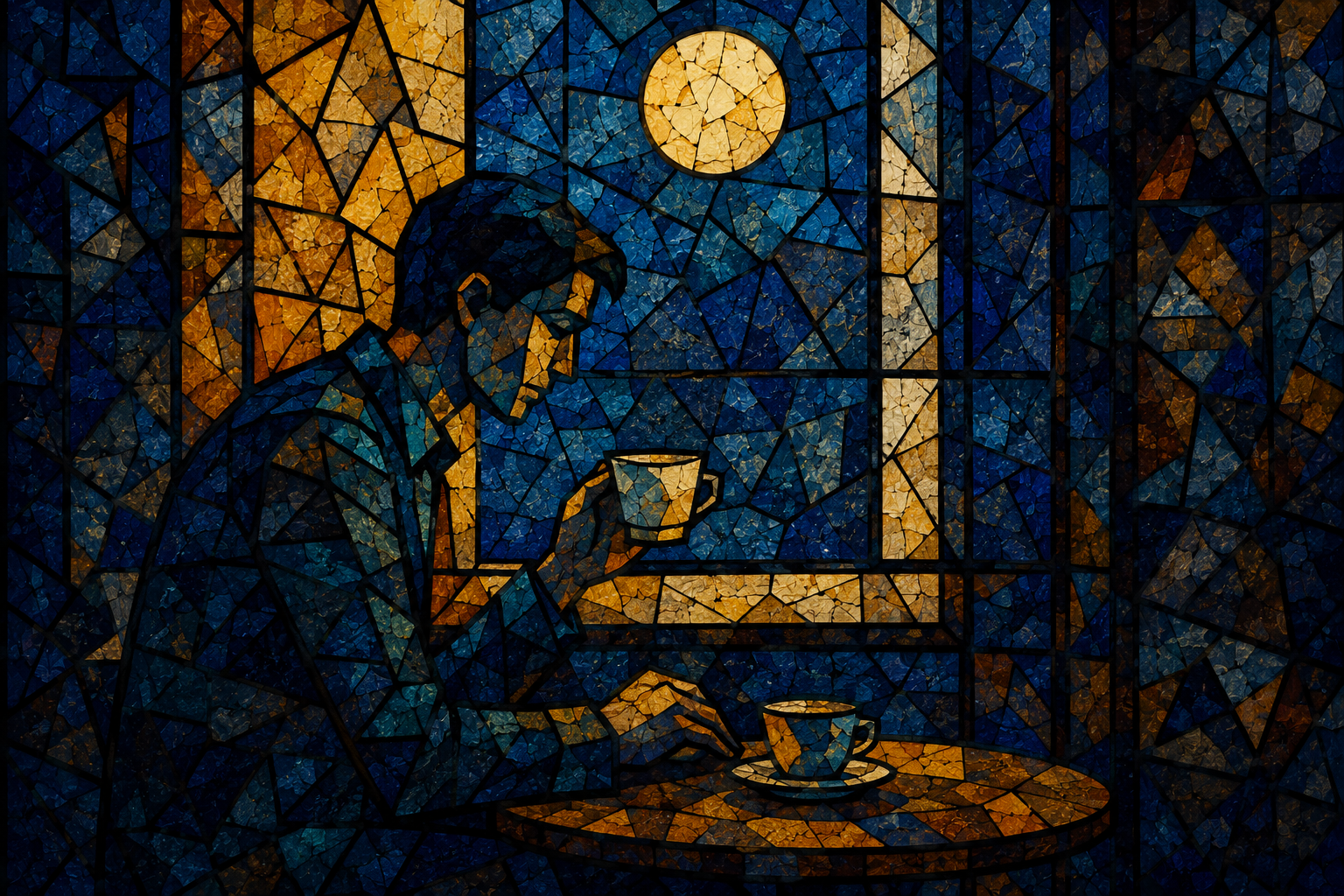
《有無之間》《廖文達》完全可以寫成憤世嫉俗的寫實小說,將個人失敗歸咎世界不公,他可以恨,滿腔憤恨可藉文字發洩,文本卻不以此發揮,反而從價值開始探問:語法使用被動乃因主詞略去,人生落入被動乃因價值失去,究竟價值從何定義?是苦心造詣練就的獨門工夫,如廖文達的翻譯?若由翻譯定義自身價值,則其量化後的成果無異於薪資數字,存在若撇開這量化的結果,存在仍有價值?《廖文達》引述荷爾德林,詩人用敞然如蒼穹的尺度,衡量自身,發現自身滿懷價值而存,此乃詩人。 Ist unbekannt Gott? Ist er offenbar wie die Himmel? 然而詩人,履歷表上無法填寫此職業。《廖文達》只能拿現實不斷叩問:「我是誰?數著帳戶內湊不出下月房租的數字,我是誰?」這句是整部小說的焦慮根源。職業如果不能定義我,收入不能評價我,市場不再需要我,甚至人工智慧也取代我,則我還剩下什麼可活? 弔詭的是,這也使「詩人的尊嚴」真正成立。詩人的尊嚴,拒絕不再要求以職業、以薪資數字、以市場認可,用來定義「我是誰」。或許,廖文達的詩人尊嚴是很簡單且真實的,即是感同身受:「我翻譯,感同身受其靈魂;我清潔,感同身受這環境。」之所以選擇濟慈的夜鶯頌,正是因為整首詩,起源於感同身受的痛啊!活著本身是痛,愛著本身是痛,寫著本身是痛!痛不是只感受苦,而是一股情感太巨大,以致無法承受。承受不了所以痛,承受得了更痛!為了解決這場痛,濟慈用鴉片劑緩解肉身之痛,乘夜鶯之翼而起飛,用精神想像解決生存之痛,用文學藝術超越靈魂之痛,然而終究不可得,從精神跌落現實,醒夢不清也,此痛更悲。 廖文達,猶如濟慈跌落,之後只得接受現實,成為清潔工。 不同於濟慈的是,廖文達在回訪極限峰後寫下感悟: 揮別了濟慈的夜鶯,正如揮別了極限峰的感悟,我懷揣著拿鐵這杯,在幾行感情之間觸動情感,在熱氣騰繞的生命中感受生命。明日,我仍會推著半桶清水,走向熙攘的辦公室,確認天地的污濁都溶解在湛藍的清潔劑中,或許那是乙醇,抑或檸檬酸,或許是價值本身。 極有價值也好,毫無用處也罷,接受現實,最後在勞動清潔的玻璃反射中,主角看清自己。 這份看清之前,是放逐此身於極限峰上,是消融自身於天地蒼茫:「如今獨對天地,就帶著這份情懷,騰雲而上,還如東坡的乘風歸去,返回未曾有我的太虛,步履既然有我的現在,歸向終究無我的未來。」 生命之痛,皆因有我。無我,彷彿是答案了。是嗎?時而有我感受萬物,時而無我消融天地,工作一樣灑掃應對,喝著拿鐵一樣品讀詩詞,時時重新返回自我,只在有無之間,盡在有無之間。感同身受,有無之間之所寫,也許是詩;身受同感,有無之間之所活,應是詩人了。 Between Being and Non-BeingLiao Wenda could easily have been written as a cynical realist novel, blaming the injustice of the world for one mans failure. He could have hated; he could have poured his full resentment into his writing. Yet the work refuses that path. Instead it begins by questioning value itself: a passive construction arises from an omitted subject; a passive life stems from a lost sense of value. How, then, is value defined? Is it a master craft, a singular skill painstakingly cultivated over a lifetime, such as Liao Wendas translation? If worth is defined by translation, then once reduced to a measurable output, it is no different from a figure on a payslip. Stripped of that quantifiable result, does existence still possess value? Liao Wenda invokes Hölderlin, who speaks of a poet measuring himself against a scale as open as the heavens, discovering himself full of worth, dwelling upon this earth poetically. Ist unbekannt Gott? Ist er offenbar wie die Himmel? Is God unknown? Is He manifest as the heavens? dieses glaub ich eher. Des Menschen Maaß ists. This I believe rather: it is the measure of man, Voll Verdienst, doch dichterisch, full of merit, yet poetically, wohnet der Mensch auf dieser Erde… man dwells upon this earth. Yet poet is a title never entered on a résumé. Liao Wenda keeps striking reality with the same raw question: "Who am I? Counting figures in an account that fall short of next months rent—who am I?" This is the root of the novels entire anxiety. If a profession no longer defines me, if income no longer evaluates me, if the market no longer needs me, and if artificial intelligence replaces me—what remains of me to live for? Paradoxically, it is precisely this that allows the dignity of the poet to stand. The poets dignity lies in no longer demanding that profession, salary, or market recognition define "who I am." Perhaps Liao Wendas dignity as a poet is simple and real: empathy. "In translation, I feel the soul within; in cleaning, I feel the world around me." The choice of Keatss Ode to a Nightingale is no accident—the entire poem springs from the pain of feeling with the world. To live is pain; to love is pain; to write is pain. Pain is not merely enduring suffering, but an emotion so vast it cannot be contained. Unbearable, it is pain. Bearable, it is pain all the more. To resolve this pain, Keats turned to laudanum to ease the flesh, rose on the nightingales wings to escape existential suffering through imagination, and used art to transcend the pain of the soul. Yet in the end it could not be attained. Falling from spirit back into reality, unable to tell waking from dream, the pain grew only more bitter. Liao Wenda, like Keats, falls back into reality, and thereafter can only accept it, becoming a cleaner. Unlike Keats, however, after returning to Limietberg he writes this realization: I have bid farewell to Keatss nightingale, just as I have bid farewell to the revelations of Limietberg. I cradle this cup of latte, touched by feeling between a few lines of emotion, sensing life within the rising steam. Tomorrow I will still push half a bucket of clear water into the bustling office, dissolving the worlds grime into the blue solution—perhaps ethanol, perhaps citric acid, or perhaps value itself. Whether of great value or of no use at all, he accepts reality. At last, in the glass polished clean by his own labour, the protagonist sees himself. Before this clarity came the exile of the self upon Limietberg, the dissolving of the self into the vastness of heaven and earth: "Now, alone before heaven and earth, I carry this feeling and rise upon the clouds, as Su Shi once imagined himself riding the wind homeward—returning to the great void before I ever existed, my steps still belonging to this present self, bound at last for a future in which no self remains." The pain of life exists because there is a self. Non-being seems, perhaps, to be the answer. Or is it? At times there is a self, feeling all things; at times there is non-being, dissolving into heaven and earth. The work remains the same—sweeping, wiping, attending to what lies before him. The latte is still drunk while reading poetry. Again and again he returns to the self, existing only between being and non-being, dwelling entirely in between. To feel and bear—what is written between being and non-being is perhaps poetry. To bear and feel—what is lived between being and non-being is surely the poet. 河水再流:
|
|
| ( 創作|詩詞 ) |