字體:小 中 大 |
|
|
|||||||||||||||||||||||||||||||||||||||||||||||||||||||||||||||||||||||||||||||||||||||||||||||||||||||||||||||||||||||||||||||||||||||||||||||||||||||||||||
| 2026/10/30 09:29:56瀏覽12|回應0|推薦0 | |||||||||||||||||||||||||||||||||||||||||||||||||||||||||||||||||||||||||||||||||||||||||||||||||||||||||||||||||||||||||||||||||||||||||||||||||||||||||||||
〈A Love Letter from Lhasa〉1 by Chen Ching-Yang Chapter List Chapter 1 – The Portrait Artist at Shuishe Pier, Sun Moon Lake A LOVE LETTER FROM LHASA FEATURE FILM SCREENPLAY
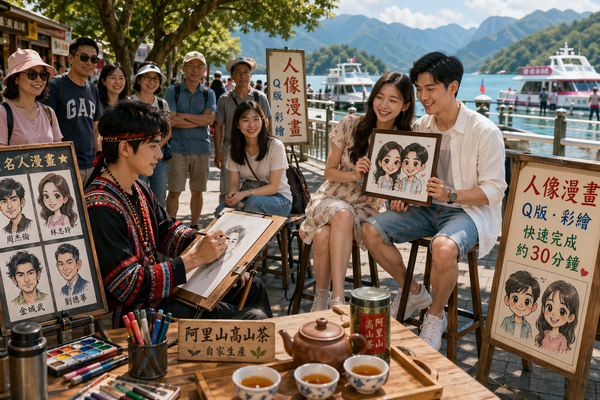
I. A Prophecy from a Past Life: A Turning Point by Sun Moon Lake Tang Huaimin, a young Tsou man from the Dabang community in Taiwan’s Alishan region, is an art student who loves painting and has Tibetan ancestry. He sets up a portrait-painting stall at Shuishe Pier on Sun Moon Lake, earning his living expenses and tuition through his own hard work. Huaimin and Tang Mengying have been childhood sweethearts, and their families have long since arranged their engagement. The two have agreed to pursue advanced studies in fine arts in Paris. Mengying comes from a wealthy family and is willing to use her personal savings to help them realize their dream of studying abroad ahead of schedule. Huaimin, however, is independent and strong-willed. He insists on raising the tuition money through his own efforts and refuses to rely on financial support from his fiancée. One day, an elderly Tibetan lama named Gongga Sonam, a man of profound spiritual cultivation, arrives at Huaimin’s portrait stall. The lama not only recognizes Huaimin’s Tibetan ancestry but also declares that he is the reincarnation of King Songtsen Gampo of Tibet. He prophesies that Huaimin will travel to Lhasa, Tibet, where he will meet the reincarnation of Princess Wencheng. The two will transcend past and present lifetimes and resume the romantic bond that remained unfulfilled in their previous existence. The lama also tells Huaimin that, if he reaches Lhasa, he can look for him at the Small Jokhang Temple. At first, Huaimin is skeptical. However, after searching online for historical portraits of Songtsen Gampo, he discovers that the king’s facial features bear a striking resemblance to his own. This unexpected discovery arouses his intense curiosity about reincarnation and prompts him to reconsider his connection to Tibet. To him, Tibet is no longer merely the mysterious land described by the elderly lama; it is also the ancestral homeland he has never personally visited. Huaimin decides to travel to Tibet for two reasons: to verify the lama’s prophecy and to rediscover his cultural roots. However, this decision disrupts the future he and Mengying have planned together. Unable to understand why Huaimin has suddenly changed their plans to study abroad, Mengying argues with him. Huaimin returns to Alishan and explains what has happened to his parents, Dege Losang and Tang Meilan. Losang reveals that, before Huaimin’s grandfather died, he left a final instruction: if a lama ever spiritually awakened Huaimin and called upon him to return to Tibet for an extended stay, the family must not stand in his way. His parents therefore agree to let him embark on his journey to find his roots. Mengying and her mother, Zhao Yayun, immediately travel up the mountain, hoping to persuade Huaimin to abandon his trip to Tibet, marry Mengying ahead of schedule, and then go to Paris together. Huaimin, however, has made up his mind. At the same time, Mengying cannot bear to leave her father, Tang Yunfei, to shoulder the entire burden of running the family hotel alone. In the end, she has no choice but to put aside, at least temporarily, her hope of accompanying Huaimin. Their separation, which ends without a mutual understanding, becomes the starting point of their future romantic conflict and foreshadows Huaimin’s eventual encounter with Annie. II. The Beginning of a Journey to Find Her Roots: Tsangyang Annie Reunites with Her Father Meanwhile, Tsangyang Annie, a Tibetan-American woman of mixed heritage, is a doctoral student in the graduate program in art studies at the University of California, Berkeley. By chance, she discovers an illustrated album left behind by her grandmother, Tsangyang Drolma. Through the album, she feels the pull of her family history and Tibetan culture, awakening a desire to search for her roots. Annie’s mother, Grace, has been diagnosed with cancer, and her life is nearing its end. Recognizing her daughter’s unspoken longing, Grace finally reveals a long-buried story from her past. During their college years, Grace and Zhaxi fell in love and originally envisioned a future together. However, while Zhaxi was traveling to Tibet in search of handwritten scrolls of love poems by his ancestor, Tsangyang Gyatso, Grace, struggling with loneliness and wavering in her feelings, had an extramarital affair with Li Jianhua. When Zhaxi learned of the affair, he was devastated. In anger, he left his wife and daughter and returned to China alone. This painful history became an emotional knot that none of the three could untangle for many years. Before her death, Grace encourages Annie to return to China to find her biological father, Zhaxi, and help him fulfill the final wish of her grandmother Drolma: to recover the lost family heirloom of the Tsangyang family, a handwritten scroll of love poems by the Sixth Dalai Lama, Tsangyang Gyatso. Annie takes her mother to the hospice ward of a church-affiliated hospital. Grace dies shortly afterward. At the funeral, Li Jianhua breaks down in grief and gives Annie the letters Zhaxi had written to Grace over the years. While flying to China, Annie reads the letters and finally understands the love, betrayal, regret, and separation that shaped the previous generation’s lives. She also realizes that her father has never stopped longing for his homeland or worrying about the family heirloom that was lost. Upon arriving in Chengdu, Sichuan, Annie finds her biological father, Zhaxi, who teaches at an art college in the city. She tells him that Grace has passed away and that, even on her deathbed, her mother remained deeply remorseful about what happened years ago. Overwhelmed by emotion, Zhaxi admits that he had forgiven Grace long ago. Annie explains that she has not come merely to reunite with him; she also wants to fulfill her grandmother’s final wish by recovering the original handwritten scroll of Tsangyang Gyatso’s love poems. United by this shared purpose, father and daughter begin to rebuild their relationship and decide to embark on a joint quest for the lost treasure. Zhaxi brings along his female student, Meiduo, and travels with Luo Zhe Zhangyang, a young Tibetan man familiar with the roads and local customs of the Tibetan regions. They enter Tibet along the southern Sichuan-Tibet Highway in Zhangyang’s passenger-cargo truck. Along the way, they pass through Ya’an, known as the “Rain City,” stay overnight at Litang Monastery, and are forced to spend a night in the wilderness at Dongda Mountain Pass when their vehicle breaks down. The hardships of the journey test everyone’s physical endurance and gradually transform the search into an adventure filled with suspense and danger. III. An Encounter in Lhasa: The Reincarnated Lovers, Songtsen Gampo and Princess Wencheng After Zhaxi and his companions arrive in Lhasa, Zhangyang takes Annie and Meiduo on a tour of the old commercial district around Bajiao Well. At a portrait stall, Annie sees paintings of Songtsen Gampo and Princess Wencheng and is astonished to discover that the princess’s facial features bear a striking resemblance to her own. At that moment, the artist Tang Huaimin appears at the stall. Annie notices how closely Huaimin resembles the portrait of Songtsen Gampo, while Huaimin realizes that Annie looks remarkably like Princess Wencheng. Both find the coincidence almost unbelievable. Huaimin gives Annie the two portraits and accompanies her on a tour of the old district. Intrigued by the origins of the paintings, Annie asks about them. Huaimin promises to take her to the Small Jokhang Temple on another day to see the original Tang-dynasty paintings on which the portraits were based. The following day, Zhangyang takes Annie and Meiduo to visit the Potala Palace and the Jokhang Temple. Annie takes the opportunity to slip away from the group and contact Huaimin, who then leads her to the Small Jokhang Temple. There, they are able to examine the original Tang-dynasty paintings at close range and encounter the elderly lama, Gongga Sonam, once again. Sonam bows to them and declares plainly that Huaimin is the reincarnation of Songtsen Gampo and Annie is the reincarnation of Princess Wencheng. He predicts that the two will marry again in this lifetime. His words leave Annie deeply shocked. Although she has not yet fully accepted the idea of reincarnation, she cannot ignore the many coincidences surrounding the portraits, their physical resemblance to the historical figures, and the circumstances of their encounter. Having originally come to Tibet to search for her family’s lost heirloom, Annie begins to realize that there may be a special connection between herself and Huaimin that goes beyond mere chance. Later, in a restaurant, Annie sees handwritten love poems by Tsangyang Gyatso on the wall. Recognizing Huaimin’s handwriting, she senses the affection he has expressed through the verses. She responds with a poem of her own, revealing the feelings of admiration and love gradually emerging within her. Through poetry, the two begin to communicate their emotions. The love poems of Tsangyang Gyatso cease to be merely historical artifacts and become a medium through which Huaimin and Annie come to know and fall in love with each other in their present lives. IV. The Lost Scroll of Love Poems: The Treasure Hunt and the Struggle for Cultural Artifacts After learning the true purpose of Annie’s journey, Zhangyang offers to help. He introduces her to Li Ming, a friend at the cultural relics bureau, hoping to locate the scroll through official channels. Unfortunately, this well-intentioned gesture places Zhaxi and his companions in danger. After Li Ming and Dawa, the bureau’s director, learn that the scroll may possess tremendous historical value, they begin plotting to take possession of it. Sensing that something is wrong, Zhaxi rebukes Annie for revealing the purpose of their search to outsiders without carefully considering the consequences. Annie realizes that Zhangyang’s introduction may have put them at risk and immediately asks him to inform Li Ming that they no longer need the bureau’s assistance. However, acting on Dawa’s orders, Li Ming and Yangjin have already installed a tracking transmitter on Zhangyang’s truck to monitor the group’s movements. Dawa goes further, contacting public security authorities in various localities and instructing them to watch for Zhangyang’s vehicle. Zhaxi, Annie, Zhangyang, and Meiduo continue to Shigatse in search of clues. They pass through Baima Temple and eventually arrive at Tashilhunpo Monastery, where they obtain a crucial lead: during the Cultural Revolution, the monastery’s elderly abbot entrusted the scroll of love poems to a group of nomadic herders for safekeeping. This discovery rekindles Zhaxi’s hope. The group immediately begins visiting nomadic community leaders in various areas, trying to determine where the scroll has been kept. Zhangyang gradually realizes that someone is following them. He eventually discovers a tracking transmitter beneath the chassis of his truck and enlists the help of local falconers to throw their pursuers off the trail. Despite these efforts, Dawa and Li Ming continue expanding their surveillance through the public security network, tracking Zhaxi and his companions. The group arrives at the shores of Lake Namtso and visits Dege Wangdui, a leader of the local nomadic community. Wangdui advises them to travel to Nagqu and seek out Duoren Danzeng, a clan leader with extensive connections. At the lakeshore, Annie encounters Huaimin once again. Huaimin openly confesses his feelings for her, and Annie accepts his courtship. Their relationship quickly deepens, developing from a series of fateful coincidences and a shared connection through poetry into a genuine and steadfast love. Wangdui arranges for his nephew, Gesser—the Tibetan name used by Tang Huaimin—to guide Zhaxi and the others to Nagqu. After entering the city, the group comes under public security surveillance once again. Realizing that the situation is becoming dangerous, Zhaxi, Zhangyang, and Gesser decide to split up. Zhaxi and the others remain at the hotel as a diversion, while Gesser and Annie escape ahead of them to search for Danzeng. Huaimin and Annie each use their own methods to evade the plainclothes officers. They then arrange to meet in a park by phone. Huaimin contacts his former classmate and friend, Sun Jiayang, to come to their aid. Since Danzeng is one of Jiayang’s longtime clients, Jiayang agrees to take the couple into the pastoral region to look for him. Meanwhile, while Zhaxi and the others are away, public security officers enter their hotel room and install a miniature tracking transmitter in one of Zhaxi’s shirt buttons, allowing them to continue monitoring his movements. Huaimin and Annie finally meet the clan leader, Danzeng. As soon as he sees them, Danzeng kneels in reverence. He explains that when his father received the scroll of love poems from the elderly abbot of Tashilhunpo Monastery, he heard a prophecy: one day, a couple who were the reincarnations of Songtsen Gampo and Princess Wencheng would come to reclaim the scroll. The group compares Huaimin and Annie’s faces with the historical portraits hanging on the wall and is even more astonished by their resemblance to the royal figures. As these events continue to unfold, Annie gradually comes to believe that her bond with Gesser may indeed be connected to the karmic ties of a previous lifetime. After confirming that Danzeng’s family has preserved the scroll, Annie immediately informs her father. Zhaxi and his companions take advantage of their participation in the Nagqu Horse Racing Festival to try to shake off their pursuers. Although Zhaxi disguises himself and evades some of those following him, he remains unaware that the button transmitter is still attached to his clothing. Li Ming and the others therefore manage to track him down once again. To prevent further complications, Huaimin suggests retrieving the scroll as soon as possible. Danzeng’s son, Nyima, leads Zhaxi and the others to the hiding place. Just as they retrieve the scroll, Li Ming and several public security officers emerge from an ambush with guns drawn, forcing Zhaxi to surrender the artifact. Faced with overwhelming odds, Zhaxi follows Huaimin’s advice and hands the scroll over to Li Ming. Having secured what they believe to be the prize, Li Ming and his associates quickly leave. The group soon discovers, however, that the scroll Li Ming took is only a replica. The genuine manuscript had been brought to Taiwan by Huaimin’s grandfather, Gongga, twenty years earlier and is now in the custody of Huaimin’s father, Losang. Although the revelation that the original has survived brings an end to the immediate crisis of the artifact dispute, the experience further convinces Zhaxi that their quest to recover the family heirloom seems to be guided by some mysterious force of destiny. Zhaxi once made a vow before the Buddha that, if he could recover the ancestral scroll, he would give his blessing to his daughter’s marriage to Huaimin. Now that the whereabouts of the genuine manuscript have been revealed, he decides to honor his promise and give Annie’s hand in marriage to Huaimin. Annie does not object to her father’s arrangement, because through the dangers they have faced together, their shared journey to discover their roots, and their exchanges of poetry, she has already come to recognize Gesser as the man with whom she wishes to spend the rest of her life. V. Returning to Alishan: Family Acceptance and the Life-Bean Festival Huaimin brings Annie back to Taiwan. They first arrive at Taoyuan International Airport, where his younger sister, Tang Aiyu, comes to meet them. As a welcoming gift, Annie gives Aiyu a dzi bead necklace. During the journey back to Alishan, Annie listens as Aiyu talks about the various affairs of the family. Gradually, Annie comes to understand that every family has its own worries and difficulties, and she begins to learn more about the environment in which Huaimin grew up. When Huaimin’s parents meet Annie, they recognize from their son’s firm attitude that he has already made his choice. Although they are willing to accept Annie, they remain concerned about how to explain the situation to the Tang family. After all, Huaimin and Mengying have known each other since childhood, and both families have long placed their hopes in the engagement. Losang insists that Huaimin face Mengying courageously rather than use his new relationship as an excuse to evade the hurt caused by his previous commitment. After a lengthy and heartfelt conversation with her brother, Aiyu gradually understands why he has chosen Annie and begins to support their relationship. She takes the initiative to prepare traditional Tsou clothing for Annie in anticipation of the community’s upcoming Life-Bean Festival. As an important traditional celebration of the Tsou people, the festival gives Annie an opportunity to gain a deeper understanding of Huaimin’s ethnic culture. It also strengthens the connection between their love, their families, their ancestral lands, and their cultural identities. For Huaimin, returning to Alishan is not simply a matter of explaining his decision to his parents; it is also an opportunity to welcome Annie into his life and introduce her to his cultural roots. For Annie, the journey allows her to move beyond her search for her Tibetan family roots and gain a deeper understanding of the traditions and way of life of Taiwan’s Indigenous peoples. Together, they begin laying a new foundation for their future. However, Mengying has not truly let go of their relationship. She cannot accept that the man she has waited for over so many years is going to marry someone else. As a result, Huaimin and Annie’s marriage faces further trials arising from past love, family obligations, and the lingering grip of unresolved emotions. VI. A New Life in Berkeley: Love, Education, and Career Converge After returning to Berkeley, California, Annie and Huaimin begin building a new life together. They organize their home and yard, establish new daily routines, and continue pursuing their respective academic and career goals. Annie must complete her doctoral dissertation, while Huaimin hopes to pursue professional animation training in addition to his artistic work, expanding his painting skills into the fields of film and animation. Huaimin has always held idealistic aspirations for his future, but his lack of formal experience in animation production makes him hesitant. Annie encourages him to seize the opportunity and not allow his overly romantic nature to limit his talent. She believes that Huaimin does not need to pursue extraordinary achievements, but neither should he allow his abilities to go to waste. He should actively pursue further training and create a broader future for himself. Encouraged by Annie, Huaimin visits Hall, the CEO of Disney, at the company’s headquarters in Burbank. Hall greatly admires Huaimin’s talent and potential, while Johnson, the head of the animation department, proposes a training program that will allow him to continue his education while working and receive professional training in animation production. Huaimin thus gains an opportunity to enter the international animation industry, gradually developing from an artist with a natural gift for painting into a professional animator. However, an email brings turmoil to their new life. Su Limin, Mengying’s half-sister on their father’s side, works at Disney. While casually reviewing Huaimin’s employee records, she discovers that he has married Annie. Limin informs Mengying of the news, revealing that Huaimin has not only fallen in love with someone else but has also married without properly explaining the situation to her. Devastated, Mengying feels that her years of devotion have been betrayed. Out of affection for her younger sister and a sense of injustice on her behalf, Limin decides to help Mengying seek redress and begins discussing ways to deal with Huaimin. What began as an emotional conflict over a love that neither party could fully leave behind gradually develops into a complicated struggle involving workplace rivalry, reputation, and power. Meanwhile, Annie continues working on her doctoral dissertation and gradually establishes her own academic direction. Huaimin undergoes training at Disney, participates in animation production, and strives to balance work with study. Although the couple supports each other, they cannot entirely escape the pressure brought on by Mengying and Limin. VII. A Confrontation Between an Old Love and a New One: Mengying’s Obsession and Limin’s Trap Unable to accept Huaimin’s departure from her life, Mengying decides to return to Taiwan to confront the unresolved issues left by their relationship. She hopes to win him back and believes that Annie’s appearance has changed the course of the life that was originally meant to be hers. Annie, however, knows that her marriage to Huaimin was not the result of a passing impulse. Their relationship developed into genuine love through their shared experiences of the treasure hunt, dangerous crises, and spiritual exploration. When Mengying and Annie confront each other directly, their contrasting understandings of love become unmistakable. Mengying clings to their childhood bond, the family-arranged engagement, and the years she has spent waiting for him. She finds it difficult to accept that their relationship has changed. Annie, by contrast, believes that love should be built on the choices people make in the present, mutual understanding, and a willingness to share responsibility. Their conflict is not merely a struggle over the same man; it also reflects fundamentally different outlooks on life and emotional values. To avenge her sister’s hurt, Limin begins using her position and professional connections at Disney to set traps, hoping to control Huaimin and undermine his career. On the surface, she may approach him through offers of collaboration, expressions of concern, or work assignments. In reality, she brings her personal grievances into the workplace and attempts to put Huaimin in a disadvantageous position. Mengying and Limin temporarily form an alliance, but their objectives are not entirely the same. Mengying still hopes to win Huaimin back, whereas Limin is more inclined to seek justice for her sister through retaliation. Faced with these schemes, Annie does not simply react emotionally. Instead, she relies on her clear judgment, her understanding of her husband, and her command of the facts to unravel the other women’s plans one by one. Through repeated challenges, Huaimin also gradually learns to navigate the complexities of workplace competition and interpersonal relationships. He is no longer merely an artistic young man absorbed in his creative work. Hall evaluates Huaimin and Limin’s abilities, character, and job performance to determine which of them is genuinely qualified to assume greater responsibilities. Huaimin’s talent gradually earns recognition, while Limin’s ambition and methods begin to come under scrutiny. Their workplace rivalry intensifies their conflict and paves the way for Huaimin to take on a major assignment in the future. VIII. Entering the Greater China Market: A Business Trip to Tibet and a Separation Between Husband and Wife As Huaimin’s professional skills at Disney continue to mature, Hall entrusts him with an animation project related to the Greater China market. Huaimin and Limin travel to Tibet on a business trip to conduct cultural research and gather reference materials for an animated feature film. The journey brings Huaimin back to a region he knows well and gives him an opportunity to transform his cultural background into material for his animation work. However, Limin has not entirely abandoned her hostility toward Huaimin, and their professional interactions remain marked by an undercurrent of rivalry. Huaimin must fulfill the assignment entrusted to him by the company while remaining alert to the tactics Limin might employ against him. For Huaimin, Tibet is no longer merely the starting point of his search for his roots and his love story. It has also become an important setting in which he can transform cultural memories into international film and television productions. Meanwhile, Annie remains in Berkeley, working hard to complete her doctorate. Their professional and academic commitments keep them apart. Huaimin faces workplace pressure in a distant land, while Annie must balance her research, household responsibilities, and concern for her husband. They maintain their relationship through regular communication and mutual support, and the distance between them deepens their understanding of the trust and commitment required by marriage. As Huaimin’s work gradually earns Hall’s recognition, Annie also becomes an important source of support through her own professional expertise. She is not merely the wife who stood by Huaimin through his romantic crisis; she is also a partner capable of thinking through creative directions with him and analyzing project content. Their relationship thus develops beyond a union based solely on romantic love into a partnership in which they confront professional and personal challenges together. IX. The Shanghai Branch: Career Success and the Return of an Old Love Huaimin’s performance at Disney earns Hall’s high praise. He is eventually entrusted with a major responsibility and promoted to general manager of the Shanghai branch, where he is charged with developing the Greater China market. This appointment marks the beginning of a new stage in his career. It also symbolizes his transformation from the young man who once earned his living painting portraits by Sun Moon Lake into a professional capable of managing an international business operation and overseeing major animation projects. Hall arranges for Huaimin and Annie to move to Shanghai and hopes that Annie will serve as Huaimin’s special assistant. The appointment gives the couple an opportunity to work and live together in a new city while placing greater managerial responsibilities on Huaimin’s shoulders. However, Shanghai also becomes the place where Huaimin and Mengying meet again. Their past has never truly disappeared, and their old feelings resurface when they reunite. Mengying was deeply hurt when she learned that Huaimin had married someone else. Now, seeing his professional success with her own eyes, she finds her love, resentment, and sense of injustice growing even more complicated. Huaimin, meanwhile, must find the appropriate boundaries between respecting the past, facing reality, and protecting his marriage. Limin has not abandoned her schemes either. She continues looking for opportunities to undermine Huaimin at work and devises more covert traps in an attempt to sabotage his professional achievements and reputation. Huaimin is at the height of his career, yet he gradually becomes caught in a crisis where work pressures, unresolved romantic entanglements, and internal power struggles collide. Just as Huaimin struggles to keep the company running and resolve personnel and project-related problems, his body begins to show serious warning signs. After undergoing medical examinations, he is diagnosed with cancer. The news strikes like a bolt from the blue, disrupting his career plans and forcing Annie, Mengying, Limin, and Hall to confront the reality of Huaimin’s precarious situation. X. The Cancer Crisis: Letting Go of Resentment and Rediscovering Love and Forgiveness After Huaimin is diagnosed with cancer, the workplace rivalries and romantic entanglements that once surrounded him suddenly seem far less important. Annie bears the tremendous emotional burden of her husband’s illness but continues doing everything she can to stay by his side, care for him, and help him maintain hope. Mengying also reexamines her feelings for Huaimin amid this life-threatening crisis. She gradually realizes that clinging to their past engagement and the love she has lost cannot change the fact that they have already embarked on different paths in life. At a hospital in Shanghai, Hall personally visits Huaimin and promises him an extended leave of absence so that he can focus on his recovery. Despite his physical weakness, Huaimin remains concerned about the company’s future. He makes three requests to Hall: that the company consider appointing Su Limin as general manager of the Shanghai branch; that the animated feature film project A Chinese Ghost Story be assigned to Emily and Tang Mengying; and that production of the animated feature film The Love-Sick Monk Tsangyang Gyatso be expedited. Huaimin knows that Limin has previously plotted against him, yet he is still willing to recommend her for greater responsibility. He believes that the company’s long-term development should not be dictated by personal grievances and that Limin genuinely possesses the ability to expand the Greater China market. Hall is deeply moved by Huaimin’s generosity and foresight. When Mengying learns that Huaimin is still willing to consider the interests of someone who has hurt him, she begins to reflect on why she has been unable to let go of the past. Huaimin’s decision marks a major emotional turning point in the story. He does not use his illness to accuse those who have hurt him, nor does he waste his remaining strength on revenge. Instead, he works to arrange the future of the company, his colleagues, and his family. Faced with Huaimin’s willingness to put past grievances aside, Limin finally has an opportunity to reconsider her own behavior. Mengying, too, gradually comes to understand that true love does not mean keeping someone by one’s side at all costs, but respecting the choices that person has already made. Huaimin’s illness forces all the characters to set aside their former positions and reconsider the meaning of love, responsibility, and forgiveness. Mengying eventually forgives Huaimin, bringing a long-standing romantic conflict to its final resolution. XI. Returning to Lhasa: The Homecoming of the Love-Poem Scroll and the Hope of Life While confronting cancer, Huaimin and Annie decide to take the original scroll of love poems by Tsangyang Gyatso, which has been kept in Alishan, back to Lhasa and donate it to the Jokhang Temple for preservation in its collection. They believe that this cultural heritage, passed down over several centuries, should not remain forever in the private possession of a single family. Instead, it should return to a place closely connected to its history, culture, and spiritual traditions, where future generations can preserve, study, and appreciate it. Although Annie understands that the scroll is a precious heirloom of the Tsangyang family, she supports her husband’s decision and discusses the matter with her father, Zhaxi. After centuries of displacement and loss, the manuscript finally has an opportunity to return to its homeland. This fulfills her grandmother Drolma’s final wish and brings an important chapter of Zhaxi’s lifelong search to a close. Upon arriving in Lhasa, Huaimin and Annie go to the Jokhang Temple and donate the scroll for preservation. When Lama Sonam learns that Huaimin has cancer, he speaks with him again about Tibetan Buddhism, the karmic connections that shape human lives, and the meaning of spiritual practice. Sonam had originally hoped that Huaimin would take Buddhist vows, remain at the monastery, and carry on the tradition of Tibetan medicine. However, he also understands that Huaimin and Annie still have responsibilities in life that remain unfulfilled. When Huaimin decides to entrust the precious scroll to the Jokhang Temple for safekeeping, Sonam is deeply moved and resolves to devote all his efforts to treating Huaimin’s illness, no longer insisting that he renounce worldly life and enter the Buddhist order. For Huaimin, this return to Lhasa is more than the act of returning a cultural artifact. It reconnects his personal life, family memories, and cultural mission. Beginning with the prophecy at his portrait stall by Sun Moon Lake, he has traveled through the search for his roots, love, marriage, workplace rivalry, and a life-threatening illness. At last, he returns to Tibet, the land that first called to him, to reconsider his relationship with his ancestors, his faith, and his own life. Huaimin remains at the Tibetan Medicine College of the Jokhang Temple to receive treatment from Lama Sonam. As he faces his illness, he no longer relies solely on sheer willpower to endure his suffering. He learns to accept the care of his wife and family and to approach life’s unpredictability with greater peace of mind. Annie remains faithfully by his side, becoming his greatest source of strength as he confronts his illness. XII. Overcoming the Trial Between Life and Death: A New Life and the Transmission of Cultural Heritage After receiving treatment at the Tibetan Medicine College, Huaimin finally recovers from cancer. Restored to health, he gains the opportunity to complete the academic studies and creative projects he had left unfinished. After returning to California, he pursues a master’s degree in film, integrating painting, professional animation, and cinematic storytelling. He also mentors animators at Disney, passing on his accumulated knowledge and experience to a new generation of creators. Annie also successfully earns her doctorate and returns to her alma mater, the University of California, Berkeley, where she becomes a lecturer in the Department of Art. Through her academic research and teaching, she continues exploring the relationships among art, culture, and history. Her own journey to discover her roots also becomes a source of profound insight into understanding different cultures. The couple brings Zhaxi, now retired, to live with them in California, where they enjoy family life together with their young daughter. After experiencing his separation from Grace, his reunion with his daughter, and the recovery of the lost scroll of love poems, Zhaxi can finally enjoy his later years in the company of his family. Life under one roof with three generations gradually eases the regrets he has carried for so many years and allows the Tsangyang family’s story to continue through the next generation. Huaimin and Annie do not forget their cultural roots simply because their lives have become stable. During every extended holiday, they take their daughter back to Alishan in Taiwan to help Huaimin’s father tend the family’s coffee and tea plantations, reconnecting with the rhythms of community life and their emotional bond with the land. Alishan becomes another home for the family, while Tibet remains their shared spiritual homeland. Through marriage, family ties, and cultural inheritance, these two lands become connected by a bond that stretches across the ocean. The Lhasa Love Letter uses the legend of Songtsen Gampo and Princess Wencheng’s love in a previous life as the thread connecting multiple settings and periods across Alishan and Sun Moon Lake in Taiwan, Lhasa in Tibet, and California in the United States. From the search for a lost scroll of love poems to a love that transcends cultural boundaries; from unresolved romantic entanglements and workplace conspiracies to a life-and-death struggle brought on by cancer, the story portrays characters who must continually make choices as their lives are transformed by fate. The union of Huaimin and Annie represents not only the fulfillment of their love but also the mutual understanding of two cultures, two family histories, and two lands. Tsangyang Gyatso’s scroll of love poems finally returns to its homeland, while Huaimin regains his life through his recovery from illness. Ultimately, the story asks not only whether a romantic bond from a previous life can truly exist, but also whether, when confronted with lost love, the impermanence of life, and the separation of families through history, people can replace resentment with understanding, release their obsessions through forgiveness, and discover new meaning in life through love and the transmission of cultural heritage. A Love Letter from Lhasa Complete Character Guide — Expanded Edition I. The Leads and Core Characters
II. The Tang and Tang Families: Family Bonds, Affection, and Romantic Conflict
III. Su Limin and the Disney Workplace Characters These characters are important because they extend the novel beyond romance and treasure hunting into workplace competition, creative ethics, power dynamics, and personal redemption. The novel explicitly describes Limin appropriating a story outline written by Annie. Hall subsequently intervenes in the investigation and discusses how to handle the matter with two department heads.
IV. Supporting Characters in the Tibetan Quest and Historical-Cultural Storyline
V. Other Supporting Characters with Specific Narrative Functions
VI. Official Character Classification
Editorial note: Character names and English titles are rendered according to the information available in the Chinese-language character guide. Names, titles, and physical descriptions that the source identifies as requiring verification should be checked against the complete Chinese novel before this document is used as a final production reference.
|
|||||||||||||||||||||||||||||||||||||||||||||||||||||||||||||||||||||||||||||||||||||||||||||||||||||||||||||||||||||||||||||||||||||||||||||||||||||||||||||
| ( 創作|連載小說 ) |