字體:小 中 大
 |
|
|
|
| 2026/01/19 15:40:59瀏覽349|回應0|推薦0 | |
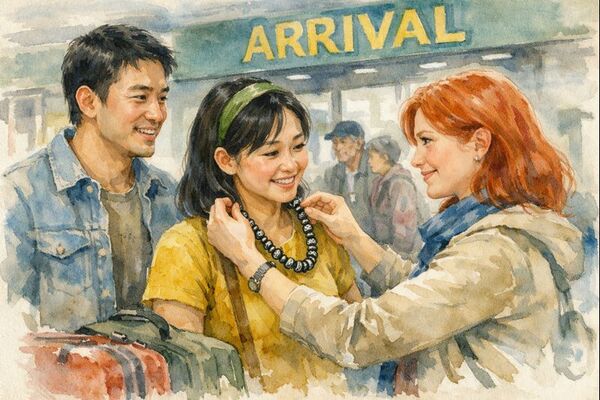
〈A Love Letter from Lhasa〉7 by Chen Ching-Yang Chapter 13 – Annie’s Trip to Alishan 01 “Little sister, how long have you been waiting?” Huaimin said, “This is my sister, Tang Aiyu.” Aiyu happily said, “Dzi beads! That must have cost a lot!” “Thank you, sister-in-law. The car is at the entrance; shall we go?” Aiyu said, “Big brother, I’ve kept your beloved car in great condition.” The three got in. Aiyu sat with Annie in the back seat while Huaimin drove. The RV slowly left the side road and entered the highway. 02 Annie pressed the window down and looked outside. A cool breeze brushed her face as cicadas chirped intermittently along the roadside. The RV wound along the mountain road, flanked by tea and coffee plantations. Inside, Annie’s curiosity got the better of her. “Aiyu, you grow coffee here in Alishan too?” “In the U.S., the drinks we drink most are coffee, followed by tea.” Annie smiled, “Frost high-mountain tea? That sounds so poetic.” Huaimin said, “Just a few days. I need to accompany Annie to California; she’s working on her PhD thesis, and I’ll act as her advisor.” Aiyu looked disappointed. “Oh, I thought I could finally take a breather while you’re back.” Aiyu made a funny face. “I know! Mom and Dad treat me like a maid.” “All right! Just a few more months. Once Annie finishes her degree, we’ll come back and stay at home for a while, so you can relax.” Aiyu smiled. “Now that’s what a big brother should say!” Annie thought: It seems every family has their own challenges… 03 Inside the living room, Tang Meilan and Luo Sang were busy sorting coffee beans while chatting. Meilan worried, “Sigh! Huaimin’s only been in Tibet a year, and… if Mengying finds out he’s moved on, she’ll never forgive him!” 04 Meilan stared at the red-haired Annie for several seconds. “Mom, Dad, this is my girlfriend, Annie.” Luo Sang asked, “Huaimin, you said in your email you met Uncle Danzeng in Naqu?” Annie followed Gesang’s family into the main hall, where a crucifix hung on the central wall, and a statue of the Virgin Mary gave her a sense of familiarity. Huaimin said, “My mother’s family is Catholic. My surname is Tang, from my mother’s side—Tang Huaimin.” “Talk for a while. Aiyu, come help Mom in the kitchen.” Meilan waved at Aiyu. Inside, Luo Sang accompanied Huaimin and Annie, brewing a pot of tea while Gesang poured it. “Annie, try our home-grown high-mountain tea.” Huaimin said, “This spring tea was roasted this year.” Annie asked, “Making tea must be hard work, Gesang?” Luo Sang returned with a wooden box. “The manuscript is here,” he said, opening it. Inside lay a sheepskin scroll, surrounded by bundles of bamboo charcoal. Luo Sang gestured, “Annie, you can take it.” “This manuscript belongs to your Tsangyang family; I’m returning it to you,” Luo Sang said. “Dad, along the way, Aiyu complained about a lot of things…” 05 Meilan proudly said, “Tsou-style dishes—not easy to find elsewhere.” Aiyu pointed at the dishes. “This fried river fish and salted crispy river shrimp—they’re sourced locally, keeping the original flavors.” “This is wild betel flower with Ma-gao and red wild onion; that’s tofu with Xiangchun leaves,” Aiyu explained. Meilan reminded, “Don’t just talk, Annie. Serve yourself.” Meilan offered Annie a chicken leg. “Home-raised free-range chicken—try it.” 06 Aiyu brought him a cup of lemon aiyu jelly. Aiyu seriously said, “Yes, I’m worried about you, brother.” “Little sister, maybe you think I shouldn’t let Mengying down. But I’m not suited for her. She should find a man with business acumen to take over her father’s hotel.” Huaimin fell silent, gazing at the sparse lights on the hillside. Huaimin asked, softly, “If you were me, would you want to marry into the Tang family and live that awkward upper-class life under her father’s nose?” “Brother, why make yourself sound so weak? I think you have a good business mind! Without your marketing strategies, the family’s coffee and tea wouldn’t be so successful.” Huaimin smiled wryly. “I learned marketing to ensure my parents’ twenty years of hard work is fairly rewarded, not exploited. But I’m not a merchant driven by money and power.” “You’ve always been together. I believe Mengying understands you and will empathize,” Aiyu said, maintaining optimism. “Little sister, you don’t understand. If I marry Mengying, even if she initially empathizes, her parents will try to mold me into a true businessman. I don’t want to be changed, and that life would make me unhappy, hurting Mengying in the long run.” “Sigh…” Aiyu sighed. “Then you must clarify things with Mengying quickly. I can’t bear to see your future married life unhappy!” 07 “I’ve only ever seen coffee beans on trees in pictures before. Seeing them up close for the first time feels so novel,” Annie said as she examined them. “These beans will need over a month before reaching maturity and being ready for harvest,” Huaimin replied. Annie looked up. “Gesang… Huaimin, these coffee trees are all kept around two meters tall. Is that to make harvesting easier?” Huaimin smiled. “Exactly! We practice organic cultivation, so the coffee trees don’t grow too fast, which means we don’t need frequent pruning. That effectively reduces labor and the cost of fertilizers and pesticides.” Annie nodded. “Organic cultivation and toxin-free food have really become a trend in the last decade or two, haven’t they?” Huaimin explained, “Using pesticides can reduce tangible losses from pests and diseases. Chemical fertilizers accelerate growth, make fruits bigger, flowers prettier, and leaves denser. But these methods violate natural laws.” Annie’s eyes widened. “That’s an interesting way to put it!” “By intervening in nature, farmers may seem to gain more and faster economic returns, but in reality, they pay a long-term and costly price.” Annie smiled. “I understand! Residual pesticides and toxic substances enter the human body through the food chain, harming consumers’ health and increasing medical costs. Chemical fertilizers alter soil properties, causing long-term contamination.” Huaimin nodded appreciatively. “Exactly. Pesticide residues and soil pollution lead to significant social costs.” “So your adoption of organic cultivation isn’t just following a trend; you understand the meaning and value behind it,” Annie observed. Huaimin smiled. “I’m just a farmer, but I know the social responsibility I carry. Actually, the history behind these changes is quite remarkable.” “Oh? I’m all ears!” Annie said, intrigued. Huaimin recounted: “When my parents first inherited this tea plantation from my grandparents, they followed old practices. They believed that without pesticides and chemical fertilizers, tea trees would be difficult to manage, which could seriously affect harvests and family income. These ideas were instilled in them by my grandparents and reinforced by what they personally witnessed.” Annie asked, “So how did you change your parents’ mindset?” “It wasn’t me who changed them. They witnessed the process of organic cultivation and the resulting economic benefits, which led them to reflect and make the change themselves.” “Oh, so it wasn’t you who changed their minds?” Huaimin laughed. “Haha! I had just started elementary school back then, barely knowing how to read and still talking like a child. How could I have influenced them at all?” “Ha, that makes sense,” Annie laughed along. “About twenty years ago, when the concept of organic cultivation was just emerging, some young, highly educated farmers in the tribe, guided by the agricultural association, started applying organic methods and ecological techniques to young tea plantations. They improved soil quality with bean powder, bean dregs, and green manure, planted rye or lupines between tea rows to suppress weeds, and used cover crops after plowing as green fertilizers instead of chemical fertilizers. They controlled pests with ecological methods, creating an environment unfavorable for pests but suitable for natural enemies. For example, windbreaks and shade trees were planted along field edges and steep slopes to increase vegetation and stabilize the soil. Slopes that were too steep or prone to erosion were converted to forest to increase ecological diversity and stabilize the plantation. Finally, plant-based and low-toxicity mineral pesticides were used to reduce pest numbers without harming beneficial insects.” “You just gave me a lesson! Huaimin, your expertise is impressive. You’re a very wise farmer,” Annie said with a smile. Huaimin asked, “Annie, just now you were testing me. Now it’s my turn. Do you know what kind of grass you’re standing on—the soft, carpet-like one?” Annie pouted. “I’m not a botanist, so how would I know? But I’ve seen this kind of grass in my own garden. It does feel soft and flat, just like you said.” “It’s called Qingfang grass, or Lotus Bean grass. It grows vigorously, suppresses weeds, retains soil moisture, and beautifies the landscape. It’s also medicinal, bitter and cold in nature, used for treating lung ailments and reducing heat. In our high-altitude Alishan region, elders know a lot about medicinal and toxic plants. If someone falls ill, unless it’s an emergency requiring surgery, herbs are often used first.” Annie nodded. “Living in the mountains really requires this kind of knowledge. My grandmother, Tserma, lived in Tibet, and she knew quite a lot about this too.” Huaimin smiled. “Half of what I know comes from elders, half from personal experience. It’s all verified in practice, not just book knowledge.” Annie said earnestly, “Book knowledge? I wouldn’t think that! Your rich knowledge comes from your environment—living it, seeing it. As for books, as a PhD student, I’m more used to that!” They shared a brief look and smiled in agreement. Huaimin said mysteriously, “Alishan coffee is just as good as imported coffee!” “I’ve always been a coffee drinker—Blue Mountain, Mandheling, Nescafé, Maxwell—I’ve tried them all,” Annie listed. Huaimin asked, “Those are all common brands. But you haven’t tried Taiwan-grown coffee yet, right?” Annie blinked mischievously. “Don’t treat me like a country bumpkin! On my first trip to Taiwan, I went with friends to try local coffee from a village whose name I forget.” “You mean Gukeng coffee from Yunlin County!” Huaimin clarified. “Yes! That’s the one,” Annie laughed. “Both Gukeng and our Alishan coffee are Arabica. Currently, Taiwan mainly grows Arabica and Robusta. Arabica beans are less bitter and cover about seventy percent of the market. Robusta is more bitter and sour, usually used in three-in-one instant coffee. Taiwan’s Arabica coffee grows in Ruisui (Hualien), Huisun (Taitung), Gukeng (Yunlin), Alishan (Chiayi), Dongshan (Tainan), and Shandimen (Pingtung). Annual output is about 100 tons, less than a tenth of consumption, so most beans are still imported.” Huaimin detailed varieties, regions, and markets, leaving Annie amazed and impressed. Annie teased, “Looks like I have to take you as my mentor, Huaimin.” “The altitude of Alishan creates ideal climatic conditions: humid summers with afternoon showers nourish the coffee, dry winters concentrate the sweetness, making high-altitude beans dense, fine-textured, and richly aromatic.” Annie smiled. “Hearing you describe it like that, I’ll have to show my appreciation properly.” Huaimin beamed. “No problem. Tonight I’ll brew coffee with our own beans for you, and then I’ll take you to visit our tea plantation.” Annie curtsied playfully, “Please, my husband, lead the way!” Huaimin couldn’t help laughing at her funny gesture. Chapter 14: The Tsou Carnival – Life Bean Festival 01 “This coffee is really fragrant and strong, with a unique taste!” Annie exclaimed. Tang Aiyu hinted playfully, “Annie, you must remember the taste of this coffee!” Annie nodded seriously. “I will! This is brewed from the Tang family’s own coffee beans, personally prepared by Huaimin.” Aiyu continued, “The Life Bean Festival is an important Tsou celebration. Many couples hold weddings during the festival and receive blessings from the tribe. Big brother, Annie, what wedding gifts would you like? Make a list—only what I can afford!” Tang Meilan, coughing, tried to signal Aiyu to stop speaking so suddenly about weddings. But Aiyu, true to her nature, blurted out, “Mom, last night brother confided in me about his heart. You should respect his decision!” Meilan, slightly embarrassed, noticed her husband signaling her, and said, “I just got choked on the tea, nothing happened.” Annie smiled. “No rush. Let’s just see the festival first.” Meilan quickly added, “Yes, marriage is a lifelong matter, it must be taken seriously.” Huaimin thought for a moment and said, “Then, Aiyu, sew two sets of traditional outfits for Annie to wear at the festival.” Aiyu smiled. “No problem! I’ll go get the measuring tape.” She hurried inside. Huaimin smiled at Annie. “My sister is impatient, but her sewing skills are excellent.” Aiyu returned like a whirlwind with tape and notebook. “Annie, come, let me take your measurements.” Annie stood while Aiyu measured her height, arm length, and chest and waist dimensions, recording everything. Aiyu said confidently, “All done! One leather outfit and two casual outfits—three days and it’s finished.” Annie smiled sweetly. “Thanks, Aiyu.” “You’re welcome. As the future lady of the Tang family, I have to get in good with you, or no one will care about me when I visit my family!” Huaimin grinned. “Ha! Who would ignore the little lark?” The Tang elders laughed too. Rosang said, “From tomorrow, you’ll have regular working hours, weekends off, and overtime pay extra.” Aiyu folded her hands and bowed deeply. “Thank you, Supreme Ancestor!” Annie and the family laughed at her playful gesture. 02 Annie’s red hair and blue eyes, and foreign features, drew the curiosity of several similarly-featured local youths, and she was equally curious about them. A girl asked, “Annie, are you from the Netherlands?” “No, I’m from California, USA. My mother’s ancestors came from the Netherlands and immigrated to the US East Coast in the late 19th century.” A boy said kindly, “Then we share the same ancestry. My ancestors also came from the Netherlands, fleeing to our Tsou tribe after being defeated by Zheng Chenggong in the mid-17th century.” Annie smiled. “So your ancestors included Dutch people too.” Another girl asked, “Where did you meet your boyfriend?” “In Lhasa, Tibet. My grandmother’s old home is there.” “Lhasa? That’s so far away! Isn’t it backward there? Don’t Tibetans travel by horse or ox?” Annie explained, “You’re mistaken. Tibet has developed a lot. Lhasa has bus networks and shopping centers, like Taichung. Only herders still ride horses because it’s convenient for the vast pastures.” The boy added, “Wow, so advanced? I thought Tibetans still lived very hard lives, using cow dung as fuel.” Annie replied, “Herders have always used cow dung, convenient for nomadic life. Many Tibetans now live in cities, and herders with livestock have significantly improved daily lives.” Huaimin added, “Continuous exchanges shorten knowledge gaps. If you visit Shanghai, you’ll see it’s more advanced than Taipei, keeping pace with Tokyo and New York.” The boy said, “Indeed. Except for Tokyo, I haven’t visited other major cities.” The girl said, “Annie, Alishan is wonderful! Welcome back to settle here.” Annie said, “I probably won’t settle here soon. Huaimin and I plan to stay in Tibet for a while.” 03 Next, pairs of young men and women in traditional clothing entered the hall hand in hand as their names were announced by the master of ceremonies, forming lines. The tribe’s chief recited a marriage proclamation, followed by a blessing from the tribal shaman, and then a romantic couple’s dance began to the music. At the climax, the groom knelt on one knee, holding a bamboo cylinder as he proposed to the bride. They drank from a shared cup, after which the groom carried the bride in his arms, receiving cheers from friends and family. On the sidelines, Huaimin embraced Annie as they watched the traditional wedding unfold. Beside them, Aiyu tapped a drum and said, “Big brother, Annie, when you decide to get married, come back to Alishan!” Huaimin smiled: “If you find a boyfriend, no need to wait for us!” Aiyu made a funny face: “My boyfriend is still staying at some unknown grandma’s place!” Soon, tourists and Tsou tribe members joined together in the square, forming two large circles of singing and dancing. Dressed in traditional attire, Annie followed Huaimin and Aiyu, keeping rhythm with the drums, quickly getting into the spirit of the festival. Around the edges of the square, dozens of stalls offered traditional Tsou snacks: banana mochi, hunter’s rice parcels, millet bamboo rice, stone-grilled wild boar, and salad made from betel flowers and mountain herbs. Tang Meilan and her husband Luosang busily wrapped long hunter’s rice parcels in shell ginger leaves. During breaks in the dancing, Huaimin, Annie, and Aiyu joined to help. Under Meilan and Aiyu’s careful guidance, Annie learned to wrap the hunter’s rice parcels herself. 04 Once inside, Huaimin drew the mountain-cutting knife, swinging it to clear a path as the women followed behind. They arrived at a large tree with a trunk roughly wide enough for three people to embrace. “Let’s harvest this one first,” Huaimin said. Aiyu handed him the long bamboo pole. Huaimin used it to cut down a bunch of Aiyu fruits hanging at the lower edge of the tree. The fruits fell to the ground, and Aiyu picked one up, slicing it open with a sickle, smiling: “Ripe, brother.” Annie stepped closer, curiously asking, “So the seeds turning yellow-brown means the fruit is ripe?” Aiyu nodded: “Yes! Aiyu fruits have male and female plants.” Annie smiled: “So even Aiyu fruits have genders?” Aiyu explained: “Not just the fruit; the Aiyu vine itself has male and female plants. This vine climbing the spruce tree has both male and female, and sometimes people accidentally cut the male. The male fruits produce pollen but not the jelly we eat.” Annie asked, “How do you tell the difference?” “Wait a moment, I’ll find a male fruit for comparison,” Aiyu said. She placed the bamboo pole against the tree trunk and searched the grass, quickly finding two male fruits. She compared them to the female fruit in Annie’s hand. “Annie, notice the spots on the skin,” Aiyu said, pointing back and forth. Annie observed: “The male fruits have denser, larger spots.” “Exactly. Female fruits have sparser, smaller spots. Let me cut them open for you.” Aiyu sliced a male fruit: “See? Inside are pollen and red anthers. This one wasn’t parasitized by the tiny Aiyu wasp.” She cut another male fruit: “If parasitized, the right half shows anthers, the left half has round galls created by the wasp larvae, each containing a tiny Aiyu wasp. Look how cute they are!” Annie gasped: “My God! It’s amazing!” Huaimin added: “What’s unique about Aiyu is its fruiting process: the plant transforms the insect, then back to the plant.” Annie, confused, asked: “Plants transform insects and back? Isn’t Aiyu just a vine?” Huaimin smiled: “A male plant can fertilize 5–10 female plants. After fruiting, it produces Aiyu wasps (scientifically called galls). The adult wasps enter female fruits to pollinate them, creating jelly-producing fruits. Isn’t that fascinating?” Annie laughed: “Oh, so it’s just pollination via tiny wasps! You made it sound mystical.” Huaimin then showed the fruits in detail, explaining the plant’s hidden flowers and pollination process, including how the wasps lay eggs in male flowers, mate, then pollinate female fruits, ultimately producing the jelly we eat. Annie exclaimed: “Wow! What an incredible process!” Huaimin said: “Class is over, now watch me perform!” Huaimin put on spiked shoes, using his hands and feet to climb the vine-covered tree trunk like a nimble monkey. Annie looked at the mossy trunk worriedly: “You’re climbing higher; it’s mossy and slippery. Isn’t it dangerous?” Aiyu laughed: “Nope! He’s been doing this since middle school with our uncle. Later, he joined the track team and discovered the spikes made climbing more stable.” At about 8–9 meters high, Huaimin sat astride a forked trunk and shouted down: “Sisters, pass me the pole!” Aiyu and Annie lifted the bamboo pole overhead and handed it up. Huaimin used it like a staff, cutting bunches of Aiyu fruits, which the women collected below, separating female fruits and placing them in bamboo baskets. 05 In the courtyard, Tang Meilan and Luosang were ready with peelers and large round bamboo sieves. The fruits were emptied onto thick cardboard, forming small hills. The five worked together: Huaimin laid peeled fruits on the sieves, Annie made small cuts in each, tossing them into plastic buckets, while the others peeled the thick skins. Annie smelled a peel: “It has a fruity aroma!” Meilan said: “These peels can be collected for chicken or fish soup—it tastes good.” Annie smiled: “Every part of Aiyu is precious!” Luosang said: “After drying and removing the seeds, you can take them to the U.S. for Huaimin to make jelly. It’s hard to find there.” Annie: “Yes! I wouldn’t get to taste this delicious dessert except here!” Huaimin explained: “Aiyu jelly is common on the island and in supermarkets, but seeing whole fruits elsewhere is rare; most Aiyu in Taiwan is wild and hard to cultivate.” Annie asked: “Why is your sister named Aiyu?” Meilan smiled: “When she was born, I was busy peeling Aiyu fruits, just like now.” Annie smiled: “Ah, I see!”
|
|
| ( 創作|連載小說 ) |