字體:小 中 大
 |
|
|
|
| 2026/01/07 20:14:39瀏覽220|回應0|推薦0 | |
|
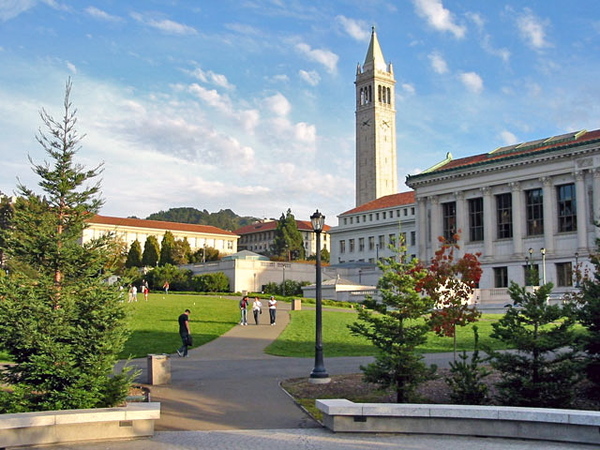
〈A Love Letter from Lhasa〉2(2) by Chen Ching-Yang Chapter Three – Tsangyang Annie at the University of California, Berkeley 01 Founded in 1873, the University of California, Berkeley stands proudly with its classical architecture. Sunlight glinted off the ornate bronze gates as they cast a timeless glow. Inside the art library, doctoral candidate Tsangyang Annie was browsing through materials on Buddhist mural art when she stumbled upon a book written in both English and Tibetan: Illustrated Compendium of Esoteric Tibetan Murals. Curious, she murmured to herself, Flipping through the pages, she found a photograph of her grandmother and her father as a child. She stared at it intently. 02 In a quiet suburban neighborhood near Berkeley, tree-lined streets stretched peacefully in every direction. Annie’s home sat among neat lawns and tidy houses. Late at night, Annie sat at her desk, still reading the book. Exhausted, she eventually fell asleep. Her mother, Grace, entered quietly with a jacket and draped it over her shoulders. Noticing the book, she picked it up and flipped through a few pages before gently guiding Annie to bed. Holding the book, Grace murmured to herself, 03 In the morning, Annie woke up and realized that the illustrated album on her desk was gone. Mom must have taken it, she thought. She walked into the dining area. Breakfast sandwiches and a glass of milk were set on the table. Grace was tidying up at the sink. “Mom, where’s my book?” Annie asked. “It’s on my desk in the bedroom,” Grace replied, turning around and untieing her apron. Annie nodded. “I’ve been thinking about it for a long time.” Grace sighed deeply and sat down across from her, holding her daughter’s hand tightly. Her voice trembled. “What must come will come… In a few months, I won’t be here anymore.” Annie froze. “Mom… why would you say that?” “The doctors say I have a malignant brain tumor. It’s already out of control.” “Then why didn’t you tell me earlier?” Annie asked, her voice quivering with reproach. Grace’s eyes filled with tears. “I didn’t want you to worry. After I’m gone, go back to China… reunite with Zashi.” 04 An ambulance arrived at the Tsangyang residence. Medical staff stepped out and pulled a stretcher from the back. Annie opened the door as the medics entered the house. Curious neighbors gathered nearby. They helped Grace down the steps and laid her gently onto the stretcher. The medics and driver wheeled her into the ambulance. Annie leaned forward, touching her mother’s cheek. “Mom, I’ll come to be with you soon.” She stepped back as the doors closed. The ambulance pulled away while neighbors gathered around her. “Annie, what happened to Grace?” someone asked. “Late-stage brain cancer,” Annie replied softly. “Is she going to hospice care?” Annie nodded, tears welling in her eyes. 05 Holding a folder containing her doctoral proposal, Annie entered the director’s office. “Uncle, this is my doctoral research proposal,” she said, handing over the folder. “Let me take a look.” Annie handed him the illustrated volume. Li Jianhua smiled gently. Annie nodded. “How do you plan to conduct the research?” “I want to return to my ancestral homeland in Tibet and conduct field studies over several months.” “You should look for your father. He’s very familiar with Tibetan culture and religion. He teaches at the Chengdu Academy of Fine Arts.” “But… how can I find him?” “You’ll find him there. And Annie—how is Grace doing?” Annie lowered her voice. “What? You already know about her condition?” “She told me herself. She asked me to return to China and find my father.” “She didn’t want you to worry,” Li Jianhua sighed. “She’s at Sacred Heart Hospice, isn’t she?” “Yes. I took her there yesterday.” “I’ll visit her after work. Back in our university days, Zashi, Grace, and I studied together. Your father was a gifted poet—his love poems and songs captured Grace’s heart.” Annie said quietly, with a trace of bitterness, Li Jianhua looked uneasy. 06 In the hospice ward, Grace lay unconscious, an IV drip hanging by her bedside. Annie sat beside her, holding the illustrated book. Li Jianhua knocked softly and entered, carrying two cans of nutritional milk and a basket of fruit. They walked quietly to the bedside. “Let her rest,” he whispered. “I’ll only stay a moment.” He sat down, gazing at Grace with tenderness and regret. Noticing his expression, Annie sensed there was more between him and her mother than friendship alone. 07 Grace’s condition worsened. She slipped into a coma, and the hospice notified Annie. Annie rushed to the hospital. Doctors and nurses stood by the bed. She knelt beside her mother, gently touching her face, overwhelmed by sorrow for her lonely later years. Suddenly, Grace opened her eyes. “Annie… don’t blame your father, Zashi. I’m the one who wronged him.” “Mom…” Annie whispered. “Go back to China. Find your father. Help him fulfill Dolma’s final wish—to retrieve the handwritten poetry manuscript of Tsangyang Gyatso.” “I will,” Annie replied softly. “I’ll go with him and fulfill Grandma’s wish.” Grace looked at her daughter, smiled faintly, and slowly closed her eyes. 08 At the suburban cemetery, a pastor presided over Grace’s funeral. After the eulogy, Annie placed a wreath on the coffin. Li Jianhua held a bouquet of white lilies. As the coffin was lowered into the grave, he scattered the flowers and fell to his knees, covering his face as he wept. Annie stepped forward and helped him up. After the service, they walked out of the cemetery together. Li Jianhua handed Annie a brown envelope. Annie opened the envelope and saw several letters and a stack of cash. “Uncle…” “I know money is tight for you. Take this with you—you’ll need it when you return to China.” Annie nodded silently. 09 Li Jianhua drove Annie to the airport terminal. After parking, they stepped inside together. Annie pulled her suitcase behind her. “Annie, when you see Zashi in Chengdu, send him my regards,” he said. She nodded. Li Jianhua hugged her and kissed her forehead. He stood watching as she passed through immigration, waving goodbye. 10 Seated on the plane, Annie read the letters her father had written to Li Jianhua. As she finished reading, her resentment toward her father slowly dissolved. “So… it was Uncle who came between them,” she murmured softly. She gazed out the window at the clouds glowing in the sunlight, lost in thought. Chapter Four Reunion of Father and Daughter in Chengdu 01 At the arrivals hall of Chengdu Airport, Annie stepped out alone, pulling a suitcase behind her. She hailed a taxi and climbed inside. “Where to, miss?” the driver asked. “Chengdu Academy of Fine Arts.” The taxi headed toward the city. Dragging her suitcase, Annie arrived at the Art Department building. She stopped a female student with sharp features and a ponytail. “Excuse me, may I ask where Professor Zashi’s office is?” “He’s my thesis advisor,” the student replied. “He should be teaching right now. I’m Nasan Medo. Why don’t I take you there? You can leave your luggage in his office.” “Thank you,” Annie said with a smile. Medo led Annie to the office to store her luggage, then guided her to a large classroom. After a brief wave, Medo left. Annie sat in the back row, quietly attending her father’s lecture on The History of Tibetan Art. Father looks much older than in the photographs, she thought. 02 When class ended, students filed out of the room. Annie stood near the front, waiting. Zashi gathered his lecture notes and looked up. When he saw Annie, Grace’s face suddenly appeared in his mind. He froze. “Father,” Annie said softly in Tibetan. “I am Tsangyang Annie.” The papers slipped from Zashi’s hands. He opened his arms and embraced her tightly. Father and daughter stood there, tears filling their eyes, unable to speak. Nearby students stared in quiet curiosity. Zashi led Annie to his office. She took out the illustrated manuscript written by her grandmother and handed it to him. They sat facing each other, speaking in Tibetan. “Father, this book was written by Grandmother Dolma. I came back to fulfill her last wish.” “So Grace told you about the manuscript of Tsangyang Gyatso’s love poems?” “Yes… and also about what happened between you, Mother, and Uncle Li.” Zashi sighed bitterly. “I wronged both Grace and you.” “Father… Mother has passed away.” Zashi was stunned. “I… I didn’t get to see her one last time…” “You knew she had brain cancer?” “Yes. Jianhua told me in a letter about a year ago. I never expected her condition to worsen so quickly.” “Before she passed, she told me not to blame you. She said she was the one who wronged you.” Zashi sighed deeply. “I heard Mother mention it once,” Annie said softly. “After the victory over Japan in 1945, my mother Dolma and her husband, an American Flying Tigers pilot named Neil Young, followed the Nationalist government to Taiwan. Before leaving, they hid the manuscript inside a shrine wall in our old home in Lhasa. But during the Cultural Revolution, the house was destroyed and our family scattered. The sandalwood box containing the manuscript disappeared. For over twenty years, I’ve searched Tibet again and again, but to this day, no one knows whether it still exists.” Annie sighed softly. 03 Father and daughter drove home together. Zashi led Annie inside. Annie entered the guest room, set down her suitcase, and opened the window, gazing outside. Zashi prepared butter tea and yak meat in the kitchen. On the dining table sat a wooden bucket of butter tea, a bowl of tsampa, and a plate of braised yak meat. They sat facing each other. Annie poured tea into a ceramic bowl and tried mixing the tsampa, clumsily at first. “I haven’t eaten food like this since Grandma passed away,” she said softly. “Use your hands—we Tibetans eat this way,” Zashi smiled. “Try it.” She kneaded the mixture with her fingers. Zashi placed a slice of yak meat on her plate. She took a bite. “You can stew it longer, but I like it this way. Eat more—help yourself.” 04 Later, Annie sat on the sofa flipping through a photo album. Zashi brought a plate of pears and apples. “Local fruit. Try some.” He sat beside her and looked at the album. In the photo, Zashi held infant Annie while Grace leaned beside him, radiant. “That was Grace… she was beautiful,” he murmured. “Did Jianhua often come to the house?” “He only came once a year, on my birthday,” Annie replied. “But he always treated Mom with respect.” Zashi nodded. “He kept his promise.” “Mom used to take me to church every month to receive financial support. I think Uncle Li was sending the money.” “I forgave them both long ago.” Just then, Medo arrived carrying barley flour and barley wine as gifts. Zashi was about to introduce them when he realized they already knew each other. Medo smiled. “Nice to see you again.” “This is my father,” Annie said. “I just returned from the U.S.” Zashi smiled. “So you’ve met?” Medo asked, “Teacher, when are we leaving for Tibet to collect research materials?” “Once I finish grading final papers, we’ll depart together.” 05 On the day of departure, a young man in overalls drove up in a van. “This is my daughter, Annie. She just returned from the U.S.,” Zashi introduced. The man extended his hand. “Nice to meet you. I’m Zhang Yang.” Annie shook his hand. “Nice to meet you.” Zhang Yang laughed in surprise. “You speak Tibetan!” “Zhang Yang is our local guide,” Zashi said. “Every time I go to Lhasa, he drives for me.” They loaded the luggage. Zashi sat in front, the two women in the back. The van pulled onto the southern Sichuan–Tibet highway, beginning the long journey toward Lhasa.
|
|
| ( 創作|小說 ) |