字體:小 中 大
 |
|
|
|
| 2016/06/11 15:48:04瀏覽357|回應0|推薦0 | |
Chapter 3 Types of Movies - film noir (Wikipedia) The film noir genre generally refers to mystery/crime dramas produced from the early-1940s to the late 1950s. Movies of this genre were shot in black and white, and featured stories involving femmes fatales, doomed heroes/anti-heroes, and tough, cynical detectives. In film noir, the protagonist is usually an antihero who rarely pursues or achieves leadership status.
- Direct Cinema (Wikipedia) Direct Cinema is a documentary genre that originated between 1958 and 1962 in North America, principally in the Canadian province of Quebec and the United States, and developed by Jean Rouch in France. (limits the use of narrators, allows the audience to observe events as they occur) - experimental film (Wikipedia) Experimental film, experimental cinema or avant-garde cinema is a mode of filmmaking that rigorously re-evaluates cinematic conventions and explores non-narrative forms and alternatives to traditional narratives or methods of working. Many experimental films, particularly early ones, relate to arts in other disciplines: painting, dance, literature and poetry, or arise from research and development of new technical resources.
- horror film (Wikipedia) Horror is a film genre seeking to elicit a negative emotional reaction from viewers by playing on the audience's primal fears. Horror films are often characterized by a protagonist who saves a community that rejects her.
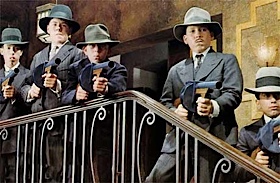
Mob films — or gangster films — are a subgenre of crime films dealing with organized crime, often specifically with the Mafia. Especially in early mob films, there is considerable overlap with film noir.
- 3 major types of movies -> narrative, experimental, documentary Chapter 4 Elements of Narrative The role of the omniscient narrator is to chronicle the events of a story in an impartial way. He or she has full access to the events and dialogue occuring in the narrative, rendering his or her account the most complete and accurate. This all-knowing, all-seeing narrator type jumps from scene to scene, following characters throughout a story and assessing the progress of the narrative. - diegesis (Wikipedia) Diegesis is a style of fiction storytelling that presents an interior view of a world in which:
In diegesis the narrator tells the story. The narrator presents the actions (and sometimes thoughts) of the characters to the readers or audience. - non-diegetic element (FilmSound.org) The distinction between diegetic or non-diegetic sound depends on our understanding of the conventions of film viewing and listening. We know of that certain sounds are represented as coming from the story world, while others are represented as coming from outside the space of the story events. A play with diegetic and non-diegetic conventions can be used to create ambiguity (horror), or to surprise the audience (comedy). -Nero
Nero Burning Rome -> Nero Burning Rom (燒錄軟體) Great Fire of Rome (Wikipedia)
|
|
| ( 不分類|不分類 ) |


 -
-