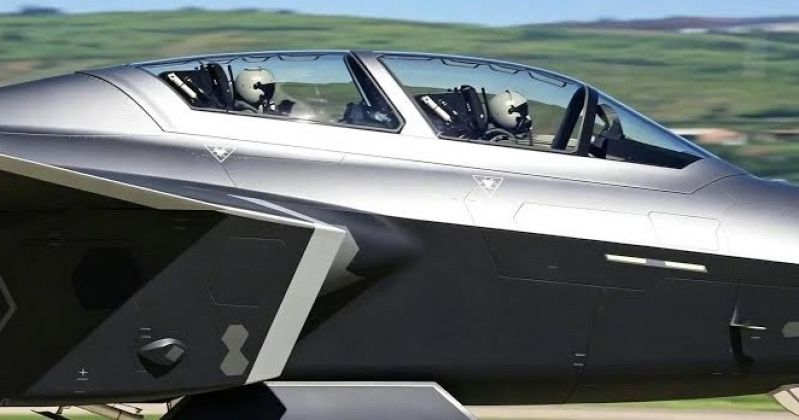
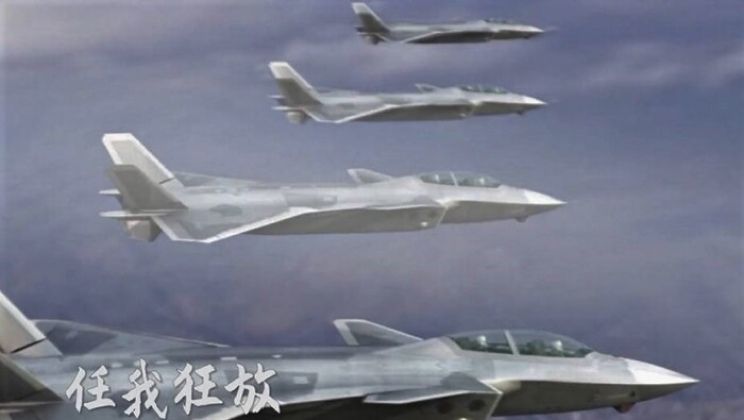
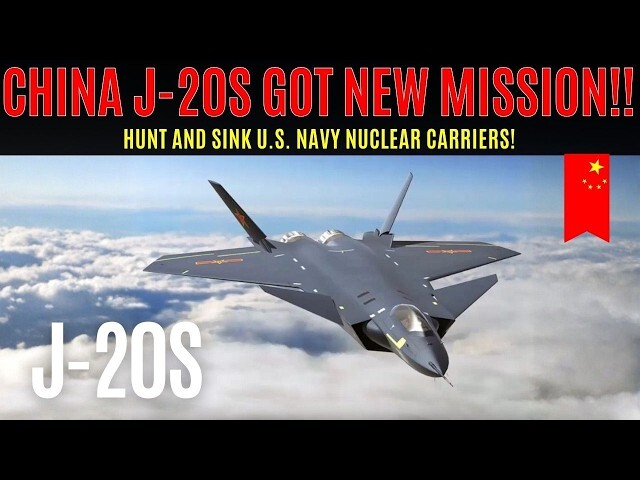
The People’s Liberation Army Air Force was confirmed in July 2025 to have brought the J-20S into service, marking the first time that an aircraft of its generation became operational with the ability to accommodate two airmen. The J-20’s much longer range than rival Western fighter types, with a combat radius approximately twice as wide as the F-22 and F-35, makes work sharing particularly important to avoid pilot fatigue, despite the aircraft’s unprecedentedly high levels of automation and highly streamlined information displays. While a number of the F-35’s clients have shown an interest in a twin seat variant, in particular Israel, this was never viable in large part due to the fighter’s much smaller airframe which cannot easily be modified to accommodate a second seat. All sixth generation fighters developed in China and the U.S., however, are expected to be twin seaters. ..
The J-20S stealth fighter, the worlds first two-seat fighter jet, is the brain of the battlefield in the air.
Beijings bold move to transform the J-20S into the worlds first two-seat fifth-generation fighter jet has created a technological monster capable of manipulating swarms of drones and UAVs from the shadows.\
However, the appearance of the J-20S fighter jet , a unique two-seat variant of China s J-20 series, has officially broken this rule.
International military experts quickly realized that this was not a typical training exercise, but a deliberate leap forward aimed at addressing the problem of information overload on a digitized battlefield.
By bringing a second pilot back into the cockpit, China created a perfect role-playing system: the front pilot focused entirely on controlling the aircraft and maneuvering to evade enemy weapons, while the operations officer in the back acted as a commanding brain, coordinating the entire surrounding fire network.\


 作家


 字體:小 中 大