作家
作家


 字體:小 中 大
 |
|
|
||||||||||||||||||||||||||||||||||||||||||||||||||||||||||||||||
| 2026/07/08 15:44:15瀏覽554|回應0|推薦12 | ||||||||||||||||||||||||||||||||||||||||||||||||||||||||||||||||
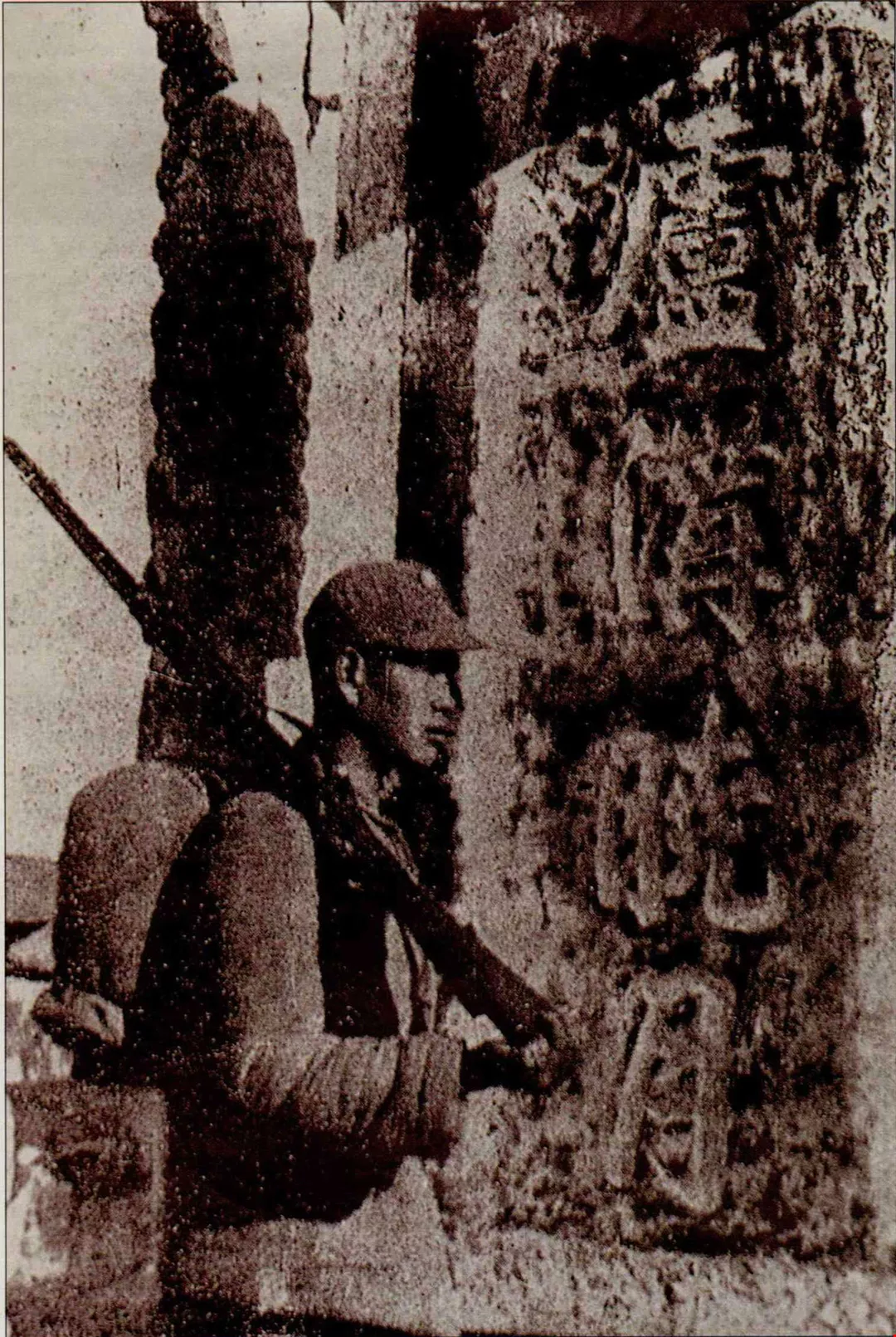
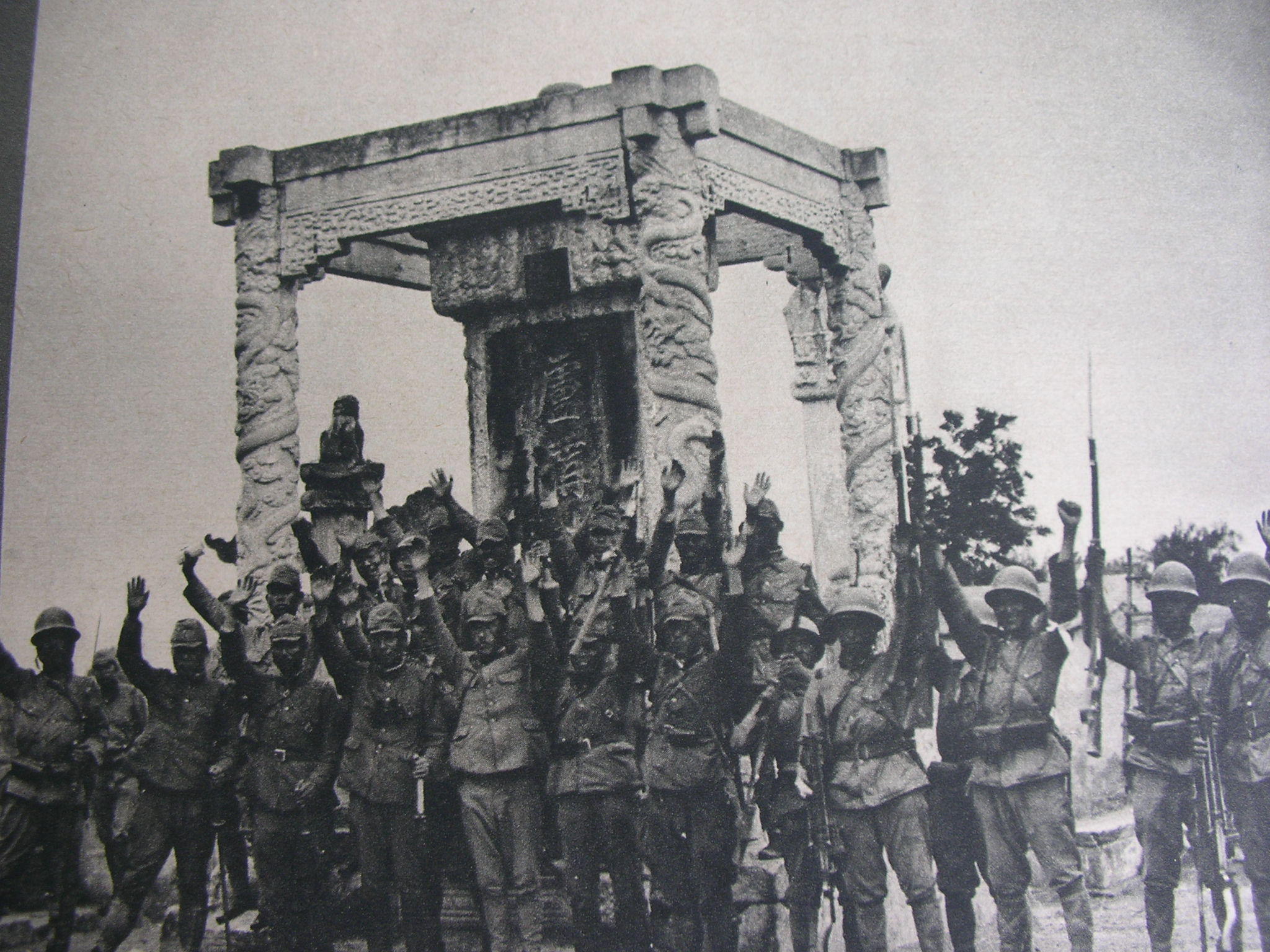
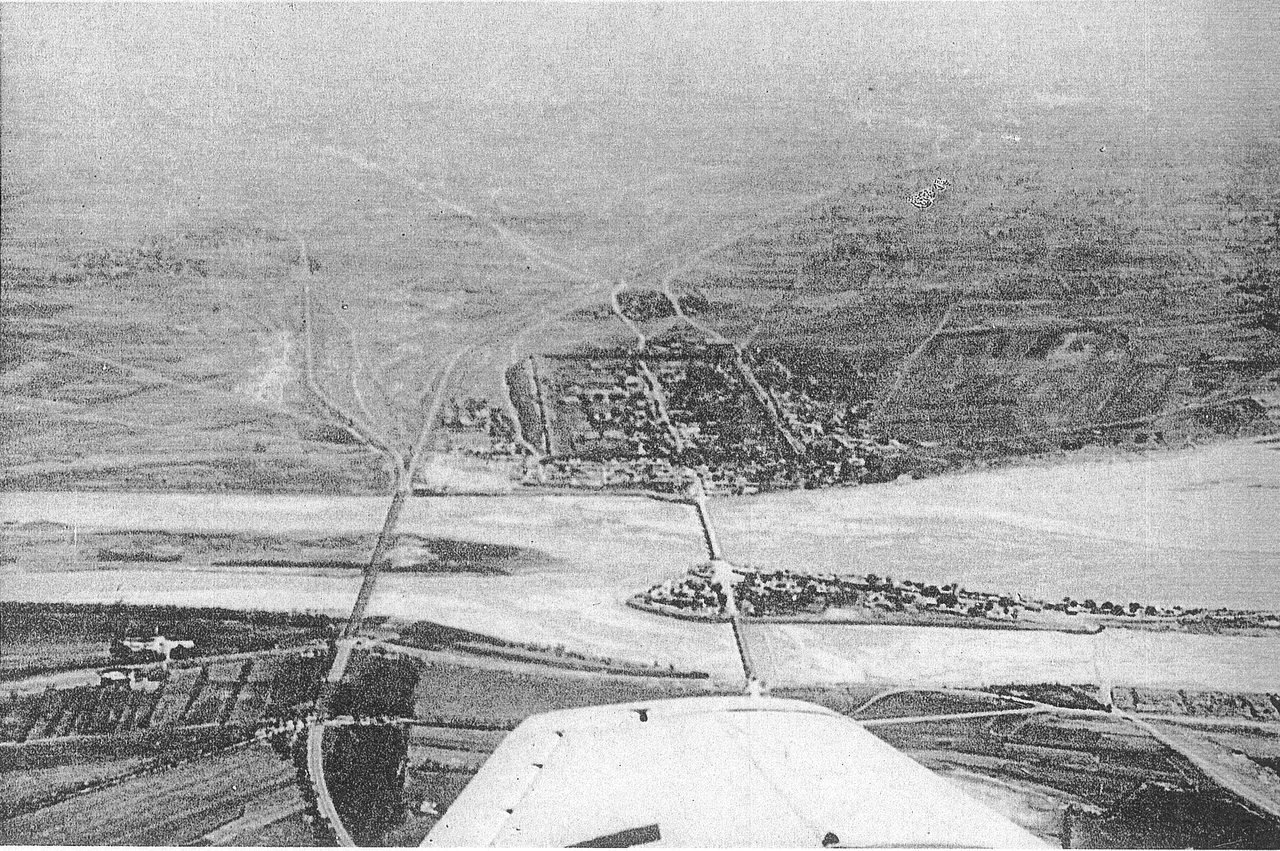
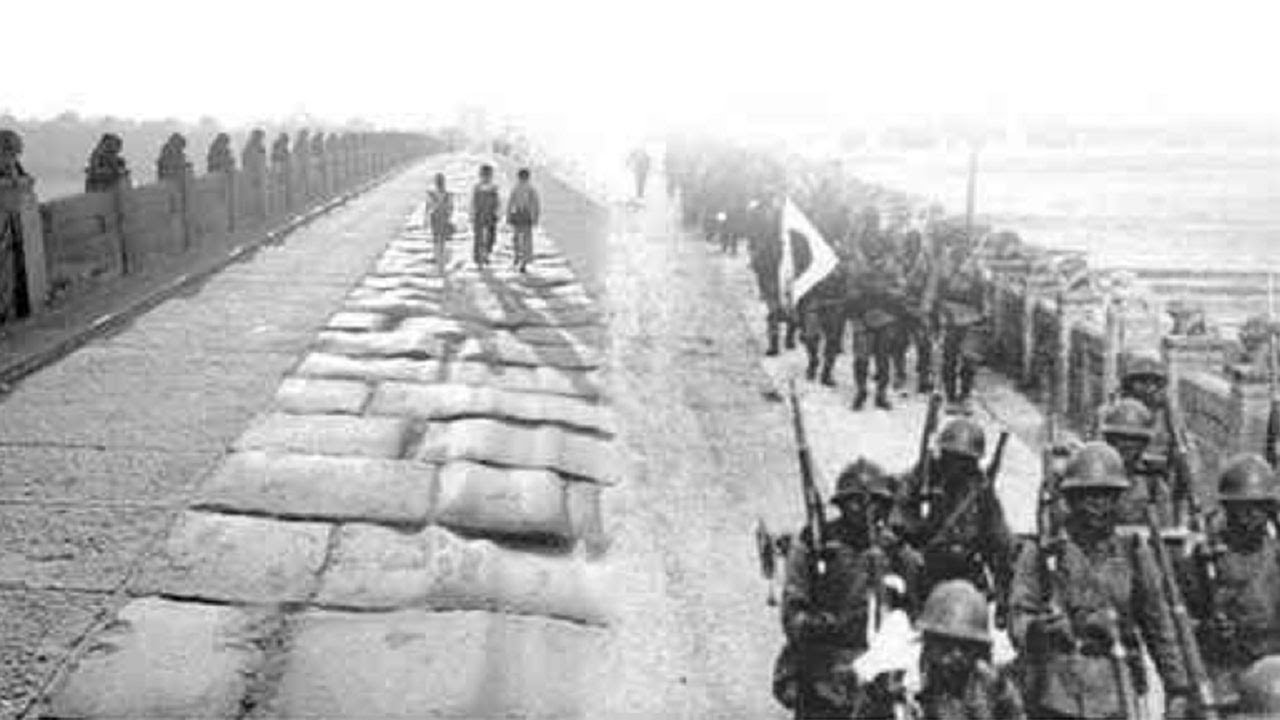
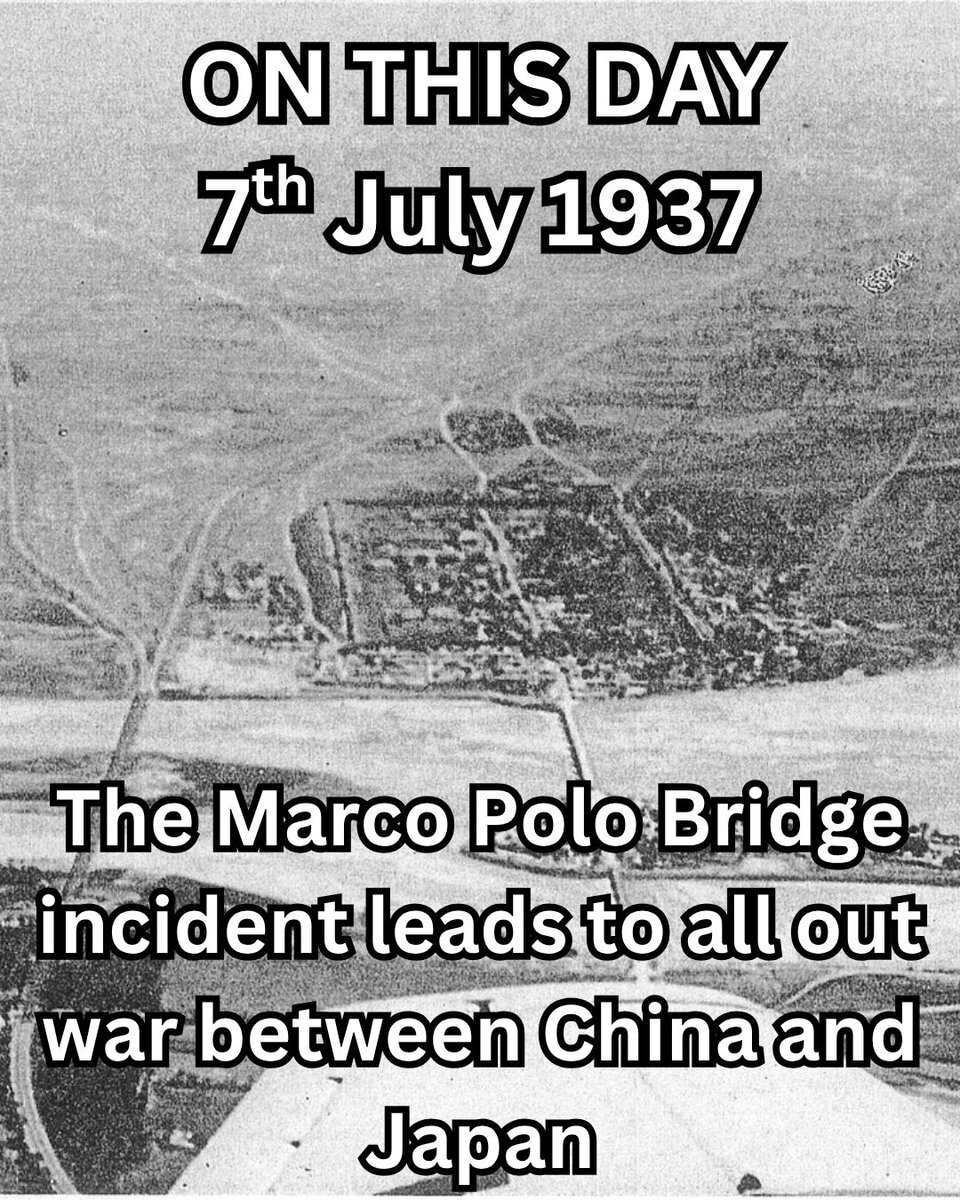
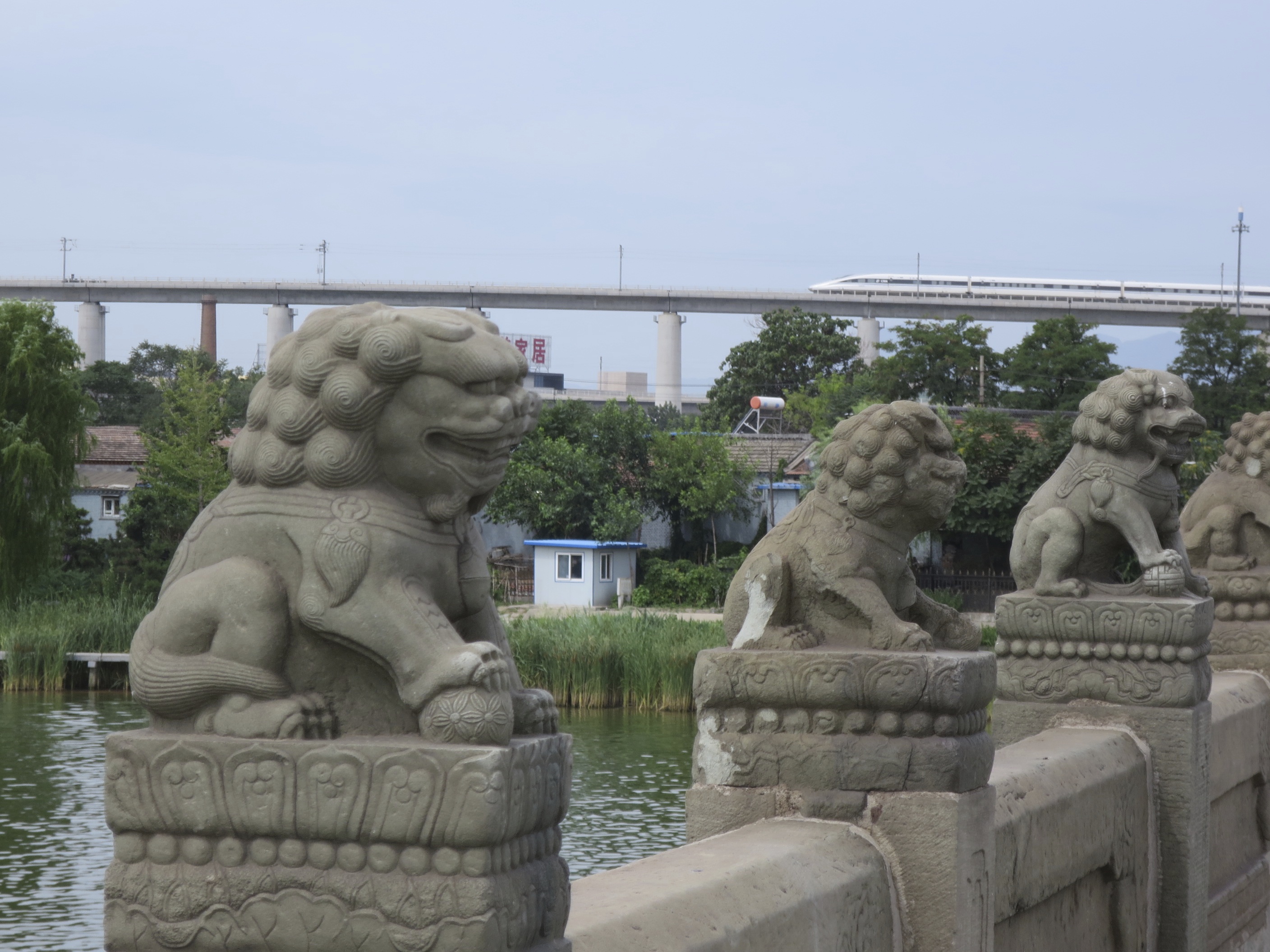
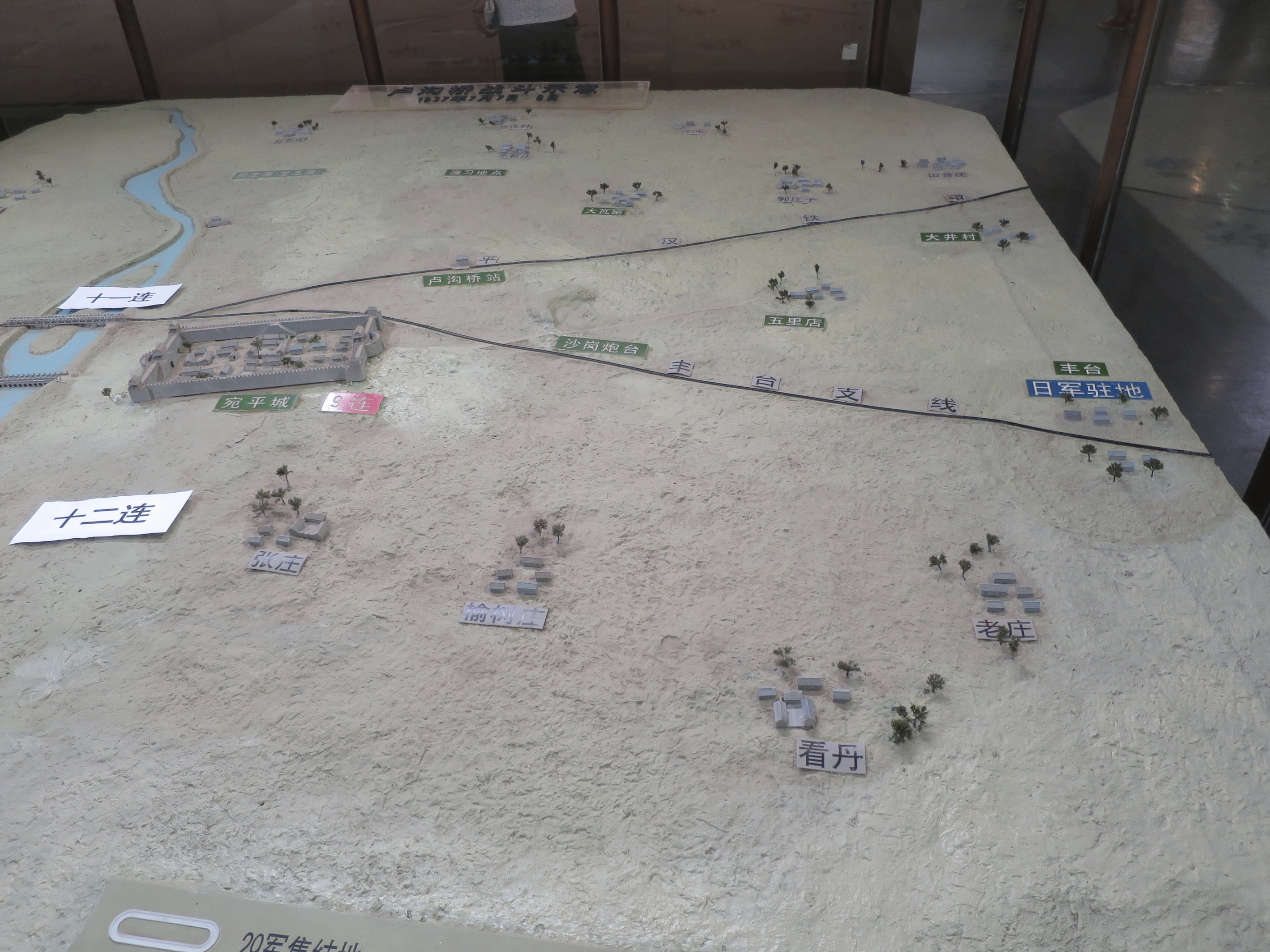
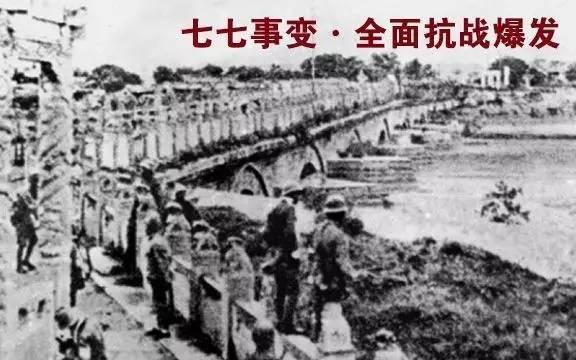
The Marco Polo Bridge Incident (1937)Although it is generally accepted that World War II began with Hitler’s invasion of Poland in 1939, the roots of that global conflict actually reach back to the Marco Polo Bridge Incident of July 7, 1937. A clash between troops from the Republic of China (ROC) and the Imperial Japanese Army (IJA) may have had little immediate importance for Americans and Europeans but it mattered a great deal to those living throughout East and Southeast Asia. They soon found themselves at the center of a violent conflict to shape and reshape the world order. The Marco Polo Bridge Incident transpired a mere dozen or so miles southwest of Beijing’s Forbidden City in the vicinity of the walled municipality of Wanping. The eponymous 11-arched stone bridge, dating from the 1180s and mentioned by Marco Polo (hence the name in English), leads into Wanping’s Western Gate. In 1937, IJA night maneuvers directed from nearby Fengtai town quickly snowballed into an assault on Wanping and the bridge, prompting a Chinese response. Like the bridge, with its balustrade topped by innumerable ornamental carved-stone lions, early twentieth-century East Asian history itself is segmented by events termed “incidents” when they occurred in efforts to minimize their importance. None turned out to be as momentous as the Marco Polo Bridge one. Despite its significance, however, the instigators, the defenders, the event, and the setting are still, to some extent, shrouded in obscurity.
https://youtu.be/KFchwvj9lCA?si=8pb9cmc7Y7sIPYIo .
The heightened tensions of the Marco Polo Bridge incident led directly to full-scale war between the Empire of Japan and the Republic of China, with the Battle of Beiping–Tianjin at the end of July and the Battle of Shanghai in August. In 1937, during the Battle of Beiping–Tianjin the government was notified by Muslim General Ma Bufang of the Ma clique that he was prepared to bring the fight to the Japanese in a telegram message] Immediately after the Marco Polo Bridge incident, Ma Bufang arranged for a cavalry division under the Muslim General Ma Biao to be sent east to battle the Japanese. The Turkic Salar people made up the majority of the first cavalry division sent by Ma..
.
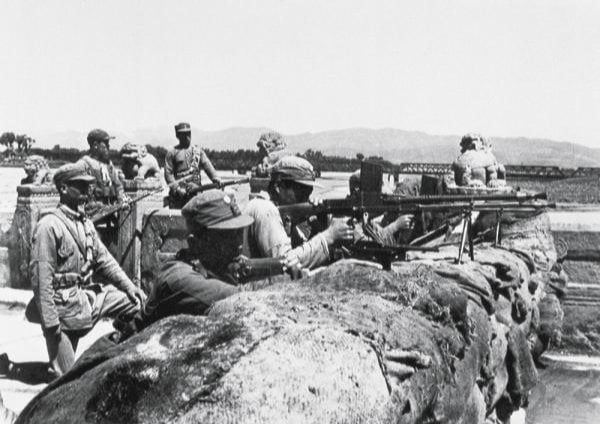
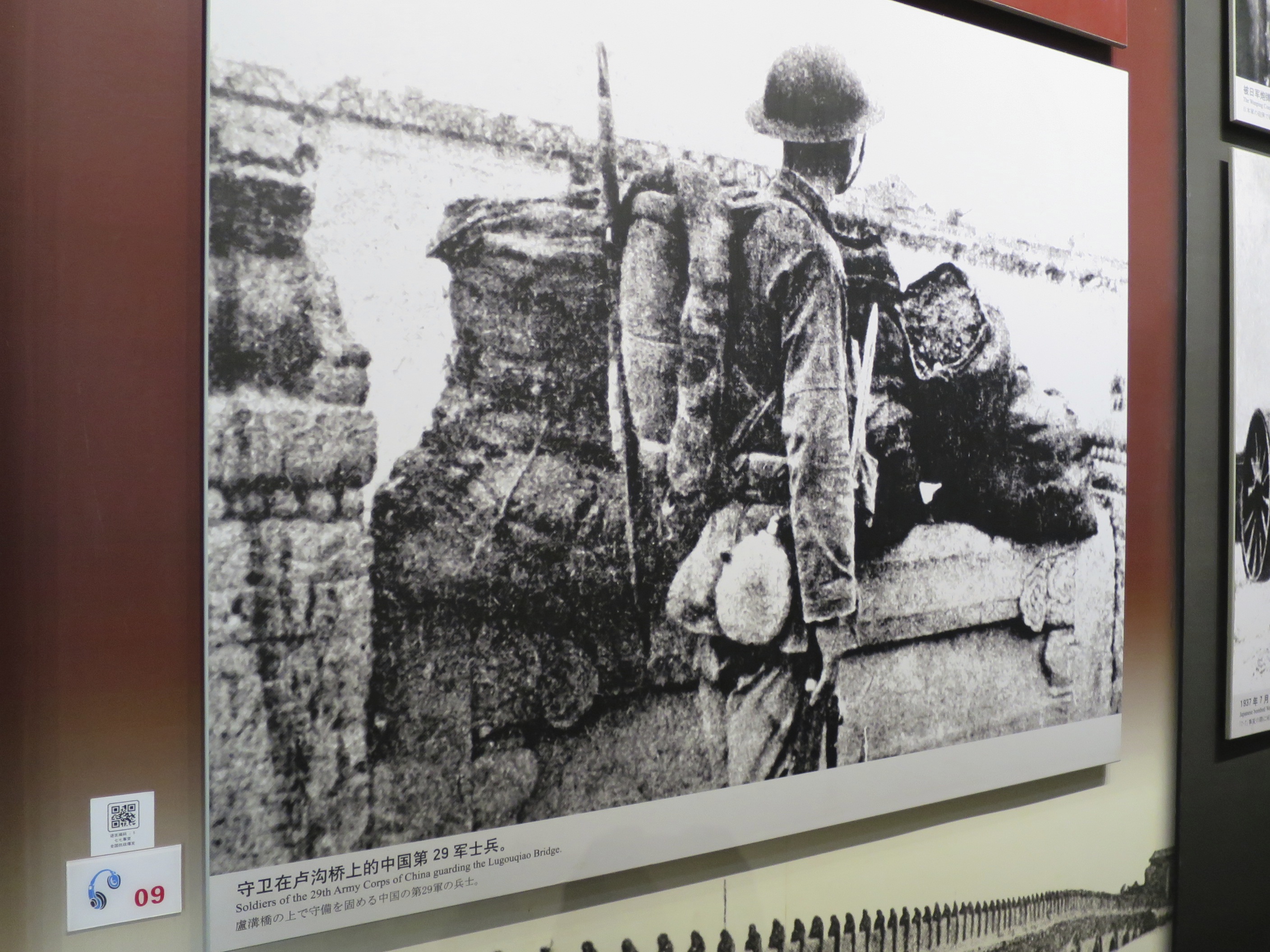
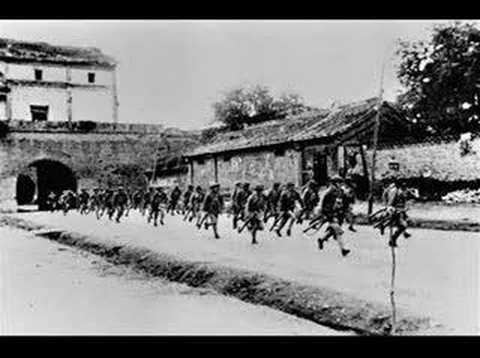
The Marco Polo Bridge incident, also known as the Lugou Bridge incident] or the July 7 incident,[b] was a three-day battle that began on 7 July 1937 in the district of Beijing between the 29th Army of the National Revolutionary Army of the Republic of China and the Imperial Japanese Army. Since the Japanese invasion of Manchuria in 1931, there had been many small incidents along the rail line connecting Beijing with the port of Tianjin, but all had subsided. On the night of 7 July, Japanese garrison troops at Lugouqiao held an unusual manoeuvre; and, alleging that a Japanese soldier was missing, demanded entry into the City of Wanping to conduct a search. Fighting broke out while the Japanese complaint was still under negotiation. However, the missing Japanese soldier had already returned to his lines. The Marco Polo Bridge incident is generally regarded as the start of the Second Sino-Japanese War.]. On the night of 7 July, the Japanese units stationed at Fengtai crossed the border to conduct military exercises. Japanese and Chinese forces outside the town of Wanping—a walled town 16.4 km (10.2 mi) southwest of Beijing—exchanged fire at approximately 23:00. The exact cause of this incident remains unknown. When a Japanese soldier, Private Shimura Kikujiro, failed to return to his post, Chinese regimental commander Ji Xingwen (219th Regiment, 37th Division, 29th Army) received a message from the Japanese demanding permission to enter Wanping to search for the missing soldier; the Chinese refused.. .. Simultaneously in Nanjing, Generalissimo Chiang Kai-shek determined that Japans expanding presence in North China could no longer be tolerated. Rather than allowing the regional 29th Army to handle the crisis independently, Chiang ordered Central Army divisions to march north towards Baoding and Shijiazhuang to reinforce the front lines.0 A ceasefire agreement was reached on 11 July in Beiping, negotiated primarily by Chinese General Song Zheyuan, commander of the 29th Army and chairman of the Hebei-Chahar Political Council, alongside representatives Zhang Zizhong and Zhang Yunrong. The formalized three-point agreement stipulated that:
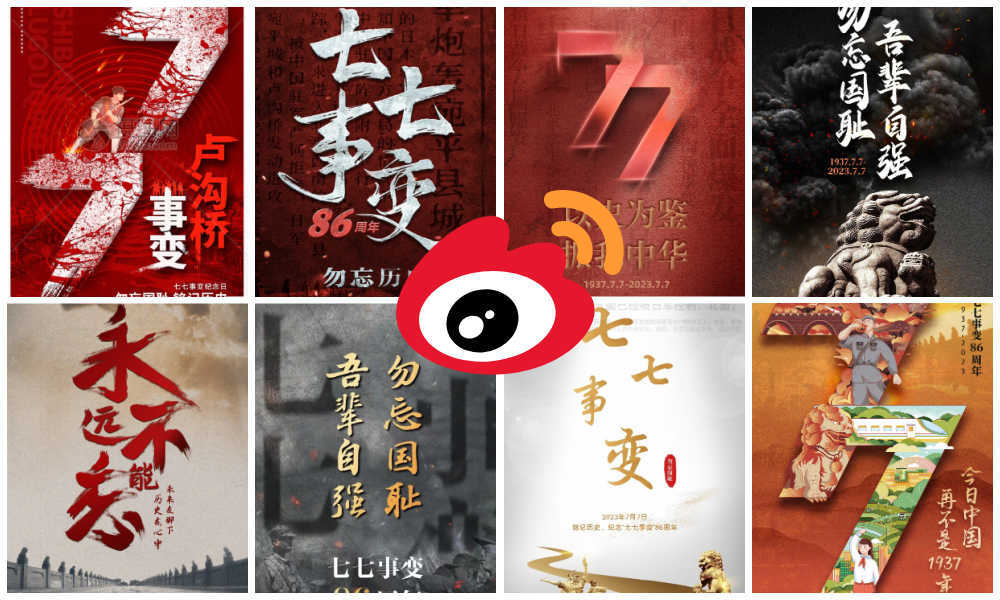
. 1937-2026 .紀念蘆溝橋事變,勿忘國恥, 日本侵略中國,攻打中國,殘殺中國人 .蘆溝橋事變(又稱「七七事變」)發生於1937年7月7日晚間。日.軍藉口演習時一名士兵失蹤,強行要求進入北平宛平縣城搜查遭拒後開砲,第二十九軍奮起抵抗。此事件成為日本全面侵華戰爭及中國全民族八年抗戰的正式起點。 事變起因:衝突引爆:1937年7月7日夜間,駐豐台日軍在北平(現北京)西南的蘆溝橋畔進行軍事演習。日本軍方藉口一名士兵「志村菊次郎」失蹤(後歸隊),要求進入宛平城搜查,遭到中國守軍第二十九軍嚴詞拒絕。
歷史影響:全面抗戰:事變後,戰火迅速由華北蔓延。國民政府蔣中正於7月17日發表著名的「廬山談話」,宣告地無分南北老幼,皆有守土抗戰之責,從此展開長達八年的中日全面戰爭。
歷史遺跡:位於現今北京市豐台區的蘆溝橋及宛平城,至今仍保留了事變時的彈痕,成為見證該歷史事件的重要國家級紀念地與文化遺產。.
 . . . .七七事變,又稱盧溝橋抗戰、盧溝橋事變]: 472 、馬可波羅橋事變(英語:Marco Polo Bridge Incident)]: 660 ,日方當時稱北支事變。事變發生於1937年7月7日晚至8日凌晨,地點在北平西南的盧溝橋、宛平城(河北省宛平縣)一帶,交戰雙方為日本中國駐屯軍與中國國民革命軍第二十九軍。該事件被認為是日本帝國主義發動全面侵華戰爭、中國全民族抗戰的起點[5]: 304–315 。 1937年7月7日晚10時40分,日本駐豐台中國駐屯軍結束在盧溝橋附近軍事演習,稱演習地點傳來槍聲,並有一名士兵志村菊次郎「失蹤」[,要求進入宛平城搜查,遭守城的國民革命軍第二十九軍(前身之一為西北軍)拒絕[。日軍即攻擊城西盧溝橋[。翌日清晨5時許,日軍砲轟宛平城[,國軍第二十九軍奮起抵抗[2 。隨後發生平津作戰,第二十九軍敗退至保定,日軍佔領平津地區。中國抵抗日本發動全面戰爭的作戰[。 .
   . . |
||||||||||||||||||||||||||||||||||||||||||||||||||||||||||||||||
| ( 時事評論|兩岸 ) | ||||||||||||||||||||||||||||||||||||||||||||||||||||||||||||||||


 ..
..
 ..
..