。.
.Why China Fired a Long-Range Missile Into the Pacific
Beijing had long tested nuclear missiles only within its borders. A rare launch over an ocean shows it is determined to narrow the gap with the United State.
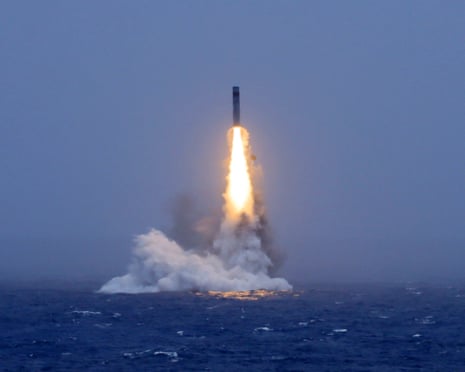
With one missile fired over the Pacific Ocean from a submarine lurking off China’s coast, the country’s leader, Xi Jinping, has proclaimed his determination to build a full suite of nuclear weapons, including sea-based missiles that have long been Beijing’s weak spot.The missile test on Monday came after China’s military has been battered for years by mass removals of commanders accused of corruption and disloyalty. But Chinese media declared that the test showed the country remained on track to create a full nuclear triad; that is, a range of land-, air- and sea-based weapons that could give Beijing a stronger hand in a regional crisis or war with the United States.
Chinese officials have been muted about the test and its implications. Not the Global Times, a Chinese newspaper controlled by the Communist Party
“Our national nuclear triad had another upgrade,” the paper said in an article on Tuesday.
.The Liberation Army’s sea-based nuclear force is capable of carrying out stable, reliable strategic counterstrikes from anywhere in the vast open seas of the Pacific Ocean,” it said, citing a Chinese expert.
That claim is hyperbole: China is still some way from operating nuclear-armed submarines undetected and wherever it likes. Even so, the test indicated that China is expanding its undersea nuclear ambitions, and shedding its reluctance to test missiles in international skies and oceans, despite the scrutiny and alarm such exercises set off, several experts said.
.Most basically, China needed to technically validate its newest submarine-launched ballistic missile capability. But there was a broader message to the world — China now has a fully operational nuclear triad,” said Evan S. Medeiros, a professor at Georgetown University and a former China director in the National Security Council under President Obama. “China is probing the boundaries of U.S. defense strategy.”
For decades, China kept a relatively modest nuclear arsenal — much smaller than those of the United States and Russia — and has usually tested its nuclear-capable missiles within its own land borders. This was only the third time that China has conducted a long-range test of a missile across the Pacific. The first was in 1980; the most recent in 2024.
But as China’s nuclear weapons multiply and diversify, and as Beijing grows more confident in its global status, more tests may come. This time, China’s leaders also may have been happy to send a warning to the region and to Washington: that Beijing is capable of projecting power in new and intimidating ways, some experts said.
The location of the submarine that launched the missile was not immediately clear. Chinese maritime authorities had released notices on Monday warning about possible hazards in the seas off China’s northern and southeastern coasts.
Officials from two governments in the region said on the condition of anonymity that initial assessments indicated the missile was launched from the South China Sea, off southern China.
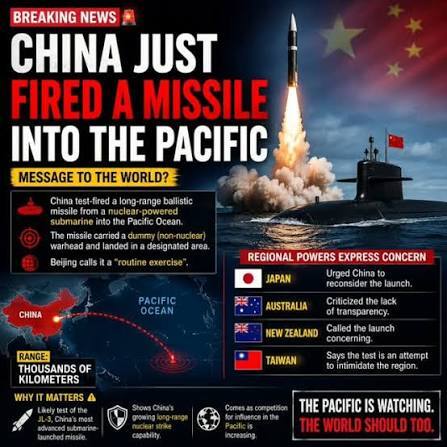
But other experts said the missile may have been launched near the Bohai Bay on the northeastern Chinese coast and arced southeast for more than 4,300 miles, landing in the sea off the Solomon Islands. (The Japanese government said the missile did not pass through Japan’s airspace or exclusive economic zone.)
“China is telling the world that it has a very large stick with which it will be able to dominate the Pacific,” said Justin Bassi, a former national security adviser in the Australian government who is now the executive director of the Australian Strategic Policy Institute in Canberra.
He noted China’s recent ire at Japan and Australia, including over Canberra’s recent security agreement with Fiji in the Pacific.
China does not want the Australian and Japanese counter-influence, interference and coercion approach to be taken up by others in the region,” Mr. Bassi said.
.Still, such tests take months of preparation, and the latest one was above all driven by the Chinese government’s desire to narrow the United States’ lead in sea-based nuclear forces, experts said. Even as China has rapidly expanded its land-based long-range missiles, its nuclear capabilities at sea have lagged.
Nuclear submarines rely on quiet stealth for their menacing power; their goal is to evade detection, forcing adversaries to fear an unexpected strike from the depths. But for decades, Chinese nuclear submarines were notoriously noisy, sending out rumbles and squeaks that other navies could detect with sonar.
China is still some distance from matching the standards set by the United States and Russia in submarine stealth and submarine-based nuclear missiles.
.But the country has been investing heavily to close the gap, said Bruce Jones, a scholar at the Brookings Institution and the author of a forthcoming book, Sub War, about global undersea rivalry.
China is racing to catch up in quality, and poised to surge ahead in numbers,” he said. “It’s likely we’ll see more tests
China has about 14 nuclear-powered submarines, including six that are nuclear-capable, Rear Adm. Mike Brookes, the commander of the U.S. Office of Naval Intelligence, told a congressional commission in March. The United States has around 70 nuclear submarines. But China has ramped up its production rates.
It is unclear what submarine China fired the missile from, and what kind of missile it was. Beijing rarely releases such details.
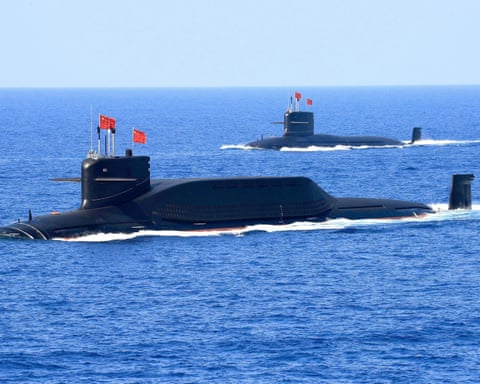
Some experts believe that the submarine was the Type 094 — China’s most advanced model in wide use — and that the missile was probably a JL-3, an intercontinental ballistic missile that China displayed at a big military parade last year. The Pentagon has said that the missiles have been installed on Type 094 submarines.
China is building a new generation of submarines that will be stealthier than the Type 094, possibly approaching capabilities achieved by an advanced Russian model, Andrew Erickson, a professor at the U.S. Naval War College, wrote in a study published this week.
China’s quieting approach remains imperfect but is determined, comprehensive and improving,” Professor Erickson wrote, referring to the technology used to make submarines hard to detect. He emphasized his conclusions were his own, and did not represent the Naval War College or the U.S. Navy.
More Tests Are Likely
China is likely to conduct more testing of its submarine-based nuclear missiles by firing them into the Pacific Ocean, despite the criticism Monday’s test drew from Japan, the Philippines, Taiwan, Australia and the United States, said several experts.
“China conducts a lot of missile tests, but the overwhelming majority of them go toward the interior,” William Alberque, the former director of an arms control and disarmament center under NATO, wrote by email.
The United States conducts five to 10 tests of its Minuteman and Trident missiles over the Pacific every year, according to Mr. Alberque. Russia’s tests are conducted mostly from the Barents Sea, flying toward east Russia.
China has previously conducted secret tests of submarine missiles in the Bohai Bay area, Lyle Morris, a senior fellow at the Asia Society’s Center for China Analysis, wrote in an assessment of Monday’s test. Long-range tests allow missiles to be tested in conditions that resemble the heat and turbulence of real wartime trajectories.
The likely launch location of China’s latest test fits with its emerging “bastion” strategy for its submarine-launched nuclear missiles, wrote Mr. Alberque, now a senior analyst at Pacific Forum. Under that approach, China’s submarines lurk in seas close to its coast, protected by cordons of defense against detection and attack. From there, China’s JL-3 submarine-launched nuclear missiles could strike large parts of the U.S. west coast.
In those bastions, Mr. Alberque wrote, “they’re reasonably sure they can’t be ‘got’ by the U.S. if they had to fire off the big beasts.”
.
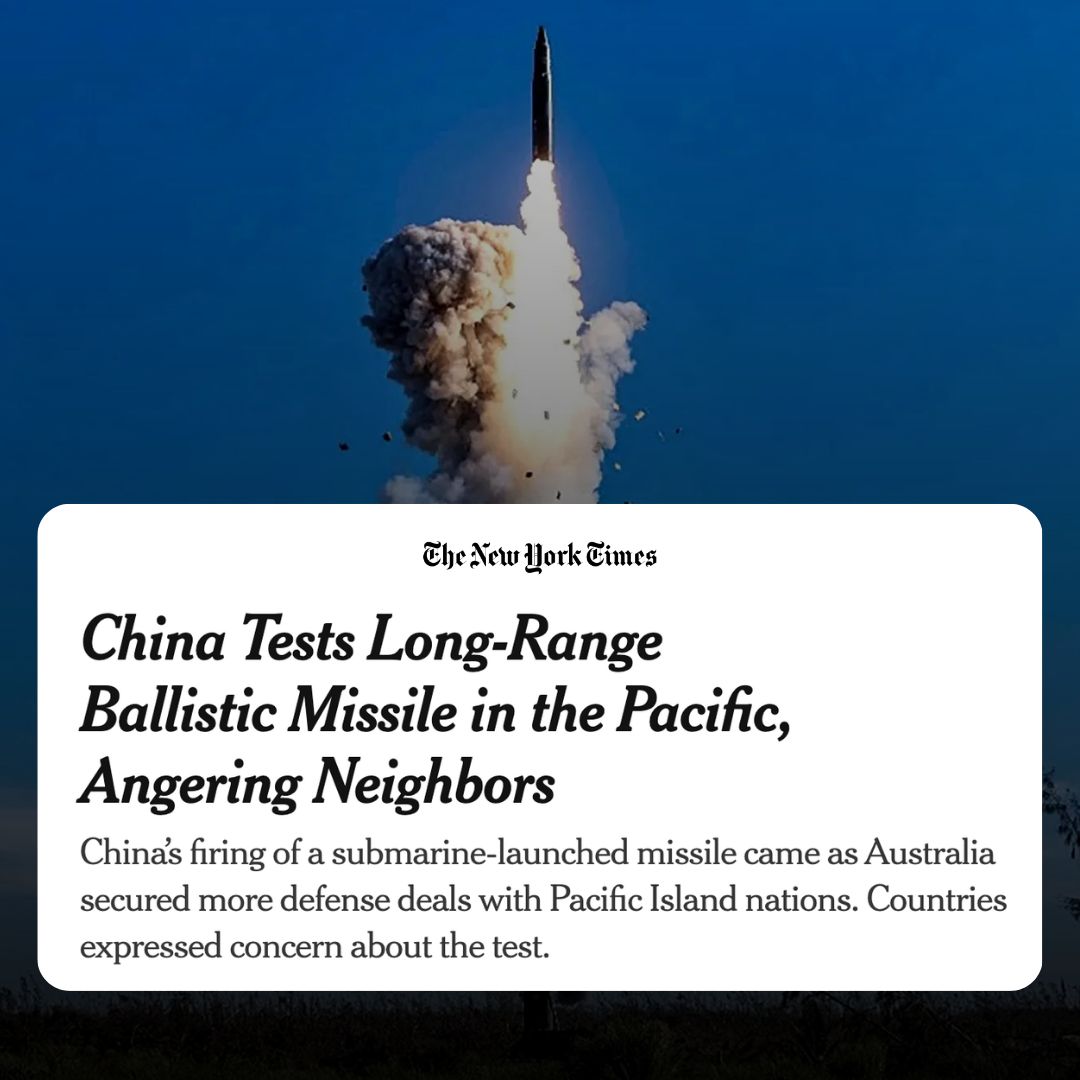
.一艘潛伏在中國沿海的潛艇向太平洋發射了一枚導彈,中國最高領導人習近平由此宣告其打造一個完整核武器體系的決心,其中包括長期以來一直被視為北京弱項的潛射導彈。
在週一舉行此次導彈試驗之前,中國軍隊多年來因大批被控腐敗和不忠的指揮官遭到清洗而飽受打擊。但中國媒體宣稱,這次試驗表明該國在構建完整的「三位一體」——即涵蓋陸基、空基和海基的武器體系——核打擊力量方面依然走在正軌上,這讓北京在地區危機或與美國的戰爭中有了更多籌碼。.中國官方對此次試驗及其影響一直保持低調。但由中共控制的中國報紙《環球時報》沒有這樣做。報導援引一位中國專家的觀點稱:「解放軍海基核力量可在太平洋廣闊公海任意點位,實施穩定、可靠的戰略反擊。」這一說法有些誇大其詞:中國目前尚做不到在不被察覺的情況下隨心所欲地讓攜帶核武器的潛艇出海作業。儘管如此,多位專家表示,這次試驗表明中國正在擴大其水下核雄心,並正在擺脫在國際領空和海域測試導彈的顧慮,而不顧此類演習所引發的密切注視與警惕。.
 「最根本的是,中國需要從技術上驗證其最新的潛射彈道導彈能力。但這也是向世界傳遞一個更廣泛的信息——中國現在已經擁有了完全具備作戰能力的『三位一體』核力量,」喬治城大學教授、歐巴馬總統時期前白宮國家安全委員會中國事務主任麥艾文(Evan S. Medeiros)表示。「中國正在試探美國國防戰略的邊界。」幾十年來,中國一直維持著相對精簡的核武庫——遠小於美國和俄羅斯的規模——並且通常在其陸地國境之內測試具備核能力的導彈。這僅僅是中國第三次跨越太平洋進行長程導彈試驗。第一次是在1980年;最近一次是在2024年。但一些專家表示,隨著中國核武器的數量激增和種類多元化,以及北京對自身全球地位的信心日益增強,未來可能會有更多的試驗。這一次,中國領導人可能也樂於向該地區和華盛頓發出警告:北京有能力以一種全新的、具有威懾力的方式來彰顯力量。發射導彈的潛艇具體位置目前尚不完全清楚。中國海事部門曾於週一發布航行警告,提醒注意中國北部和東南部沿海海域可能存在的危險。這兩個地區的政府官員在要求匿名的情況下表示,初步評估顯示導彈是從中國南部的南海海域發射的。該報在週二的一篇文章中稱:「我國『三位一體』核力量再升級。但另一些專家表示,該導彈可能是從中國東北沿海的渤海灣附近發射的,並向東南方向飛行了4300多英里,最終墜落在所羅門群島附近的海域。(日本政府表示,該導彈並未通過日本領空或專屬經濟區。)位於坎培拉的澳洲戰略政策研究所執行所長、前澳洲政府國家安全顧問賈斯汀·巴希表示:「中國是在告訴世界,它擁有一根非常粗大的大棒,足以用來在太平洋稱霸。」
他提到了中國近期對日本和澳洲表達的憤怒,其中包括針對坎培拉最近與太平洋國家斐濟簽署的安全協議。
“
「中國不希望澳洲和日本這種對抗影響力、干涉與遏制的手段被該地區的其他國家所效仿,」巴希說。
專家們指出,儘管此類試驗需要數月的準備時間,但最近這一次試驗的動機主要還是源於中國政府渴望縮小與美國在海基核力量上的差距。儘管中國迅速擴張了其陸基遠程導彈,但海上核能力一直相對滯後。
核潛艇的威懾力取決於它靜音匿蹤的能力,追求的是規避探測,迫使對手忌憚來自深海的未知突襲。但在過去幾十年裡,中國的核潛艇因噪音巨大而聞名,發出的轟鳴與吱嘎聲很容易被其他國家的海軍通過聲吶探測到。
相比美國和俄羅斯在潛艇隱身及潛射核導彈方面樹立的標準,中國還有一些距離。
但布魯金斯學會學者、即將出版的關於全球水下競爭的新書《潛艇戰爭》(Sub War)的作者布魯斯·瓊斯表示,中國一直在投入巨資以縮小這一差距。
“.”
「中國正在質量上奮起直追,並準備在數量上實現超越,」他說。「我們很可能會看到更多的試驗。」
美國海軍情報局局長麥克·布魯克斯少將在今年3月向一個國會委員會表示,中國擁有大約14艘核動力潛艇,其中六艘具備核打擊能力。美國擁有大約70艘核潛艇。但中國已經提升了其潛艇的生產速度。
目前尚不清楚中國是從哪艘潛艇上發射了這枚導彈,也不清楚是哪種類型的導彈。北京極少公布此類細節。
一些專家認為是094型潛艇.中國目前廣泛使用的最先進型號——而所射導彈很可能是巨浪-3型,這是一種中國在去年一場重大閱兵式上展示過的洲際彈道導彈。五角大廈曾表示,這些導彈已經裝備在了094型潛艇上。美國海軍戰爭學院教授安德魯·埃里克森在本週發表的一項研究中寫道,中國正在建造新一代潛艇,它們的隱身能力將比094型更強,可能已經接近俄羅斯的先進潛艇的能力。「中國的靜音手段雖然仍不完美,但其執行很堅定、全面,並且在不斷進步,」埃里克森在談到使潛艇難以被探測的技術時寫道。他強調,這些結論僅代表其個人觀點,並不代表海軍戰爭學院或美國海軍。未來可能進行更多試驗 幾位專家表示,儘管週一的試驗引來了日本、菲律賓、台灣、澳洲和美國的批評,但中國未來仍可能會通過向太平洋發射導彈來對其潛射核導彈進行更多測試。「中國進行了大量的導彈試驗,但其中絕大多數都是面向其內陸腹地發射的,」北約前軍控與裁軍中心主任威廉·阿爾伯克通過電子郵件寫道。據阿爾伯克稱,美國每年會在太平洋上空對其「民兵」和「三叉戟」導彈進行五到10次試驗。而俄羅斯的試驗主要是在巴倫支海進行,並飛向俄羅斯東部。.亞洲協會中國分析中心高級研究員萊爾·莫裡斯在對週一試驗的一份評估中寫道,中國此前曾在渤海灣地區進行過潛射導彈的祕密試驗。長程試驗能夠讓導彈在類似於真實戰時軌跡的高溫與氣流擾動條件下接受檢驗。阿爾伯克寫道,在這些堡壘中,「他們有充分理由相信,如果必須發射這些『龐然大物』,是不會被美國『抓到』的。」
現任太平洋論壇高級分析師的阿爾伯克寫道,中國的最新試驗的可能發射陣位符合其正在成形的潛射核導彈「堡壘」戰略。在這種策略下,中國的潛艇潛伏在靠近其海岸的海域,有層層防探測和防攻擊保護。中國的巨浪-3型潛射核導彈可以在這些海域發射,打擊美國西海岸的大部分地區.
.
.
.

.


 作家
作家


 字體:小 中 大