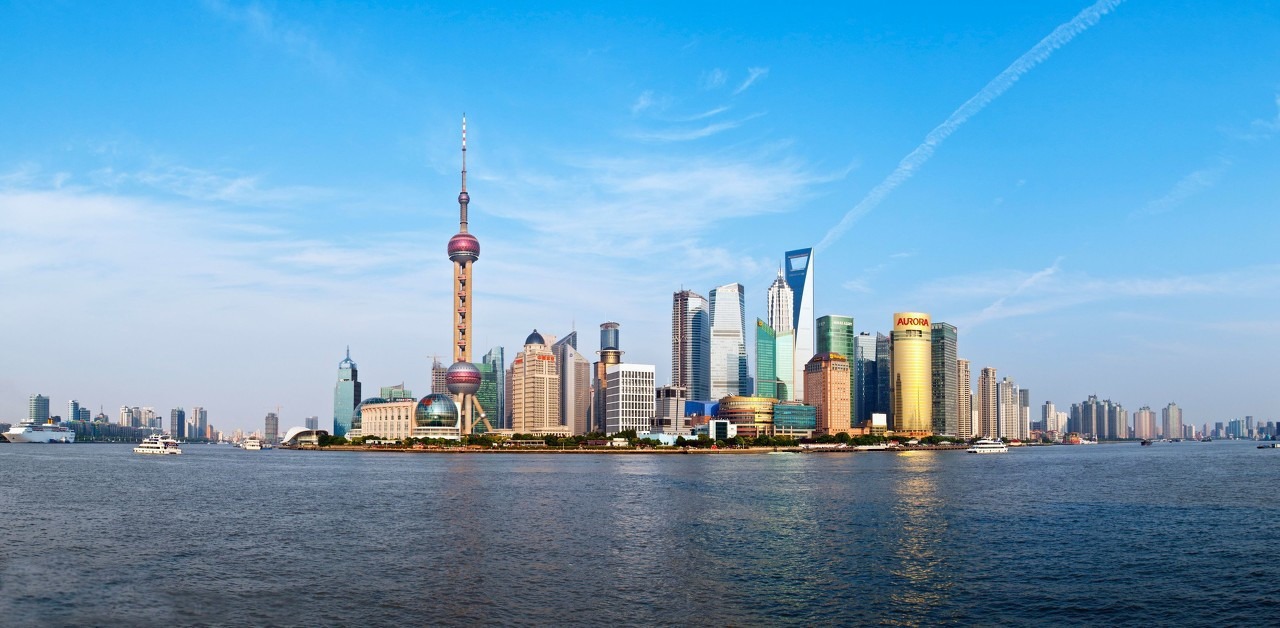
作家
作家

 
 字體:小 中 大
 |
|
|
|
| 2022/07/06 10:26:55瀏覽990|回應2|推薦5 | |

  . .HSBC.BANK.(UK)
.1860年至1880年間拍攝的外灘.
..
..
 .
 .
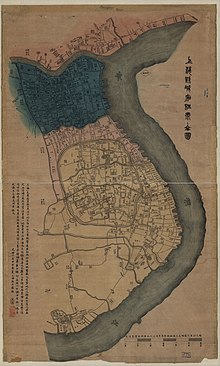
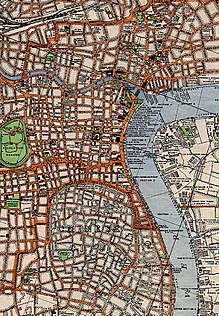
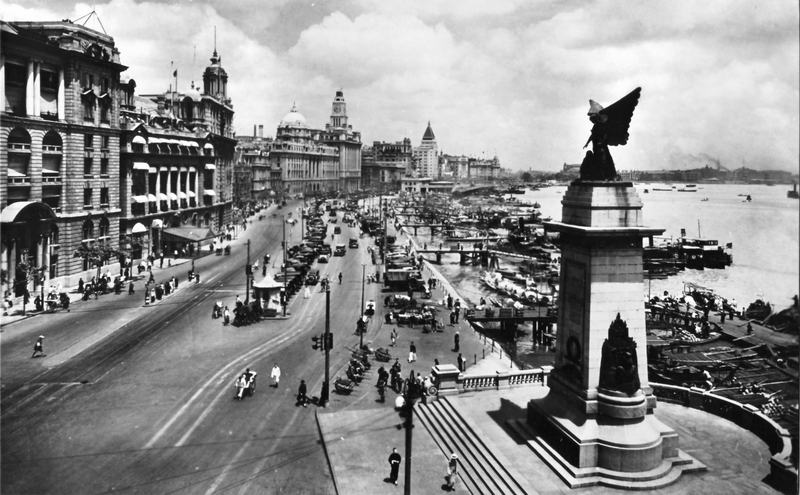
.外灘(上海話拼音:nga thae,發音:[ŋᴀ̀tʼᴇ́])是上海市中心的一個區域,由一段沿黃浦江的馬路和沿路的建築和設施構成,為上海重要的地標之一。全長1.5公里,南起延安東路,北至蘇州河上的外白渡橋,東面即黃浦江,西面是舊上海金融、外貿機構的集中地。外灘沿路坐擁二十多幢風格各異的歷史建築,有折衷主義的,也有文藝復興式的,還有早期現代式的,故而被譽為「萬國建築博覽群」。
自上海開埠後,外灘就開始成為了上海乃至中國的金融及貿易中心[,也被稱為
「東方華爾街」.
英資公司怡和洋行(Jardine Matheson & Co.,外灘27號),寶順洋行(Dent & Co.,外灘14號)、老沙遜洋行(David Sasson and Sons Company,外灘24號),以及美資的旗昌洋行(Russell & Co.,外灘9號)。1848年在這裡鋪築了馬路和加固了江岸。而這條馬路的名稱是「Bund」,來源於印地語,在英語裡是「堤岸」,「有堤岸的港埠」的意思,此名稱至今仍是外灘在多數語言中的稱呼。外黃浦灘的南段則劃入法租界建造「法蘭西外灘」碼頭區。1865年,外灘裝上了煤氣路燈並在後來的1882年更新為了弧光燈[。1883年上海第一條電話線路從外灘正豐街(今廣東路)鋪設至十六鋪.
至1846年上海闢為商埠以後,許多外國的銀行,商行,總會,報社開始在此雲集。
一幢幢商業大樓拔地而起。外灘成為西方列強在上海的政治,金融,商務和文化中心。當年各國的領事館,如英國領事館,法國領事館,俄國領事館等,都大多集中與此
  . .  .
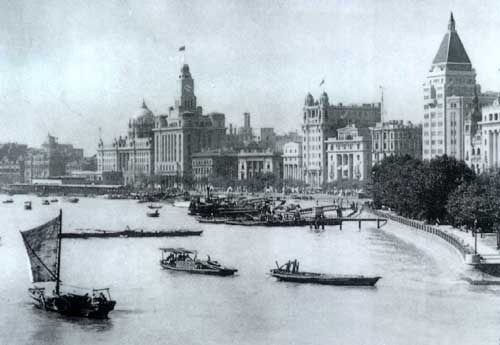
  The Bund, Shanghai in 1926 as seen from the US Consulate General on Huangpu Road..
  .
 .
.
 .
.
.
.
.
 .
   .
 .
 .
.
 . .Vintage engraving from 1878 showing ships in the Port of Shanghai.
   . ..
 ..
 .
.
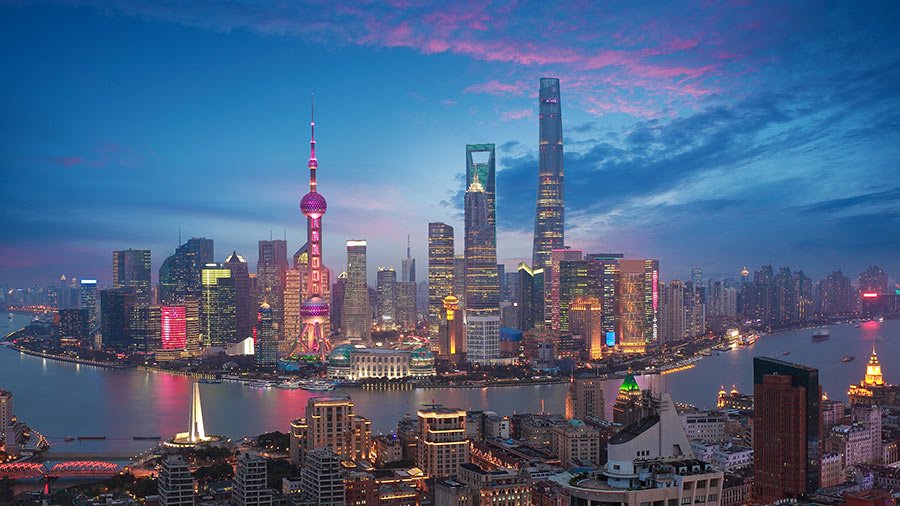
.The Bund or Waitan (Chinese: 外滩; pinyin: Wàitān, Shanghainese romanization: Nga3thae1, pronounced [ŋà.tʰɛ́], lit. Outer Beach) is a waterfront area and a protected historical district in central Shanghai. The area centers on a section of Zhongshan Road (East Zhongshan Road No.1) within the former Shanghai International Settlement, which runs along the western bank of the Huangpu River in the eastern part of Huangpu District. The area along the river faces the modern skyscrapers of Lujiazui in the Pudong District. The Bund usually refers to the buildings and wharves on this section of the road, as well as some adjacent areas. From the 1860s to the 1930s, it was the rich and powerful center of the foreign establishment in Shanghai, operating as a legally protected treaty port.
The Shanghai Bund has dozens of historical buildings, lining the Huangpu River, that once housed numerous banks and trading houses from the United Kingdom, France, the United States, Italy, Russia, Germany, Japan, the Netherlands, and Belgium, as well as the consulates of Russia and Britain, a newspaper, the Shanghai Club and the Masonic Club. The Bund lies north of the old, walled city of Shanghai. It was initially a British settlement; later the British and American settlements were combined in the International Settlement. Magnificent commercial buildings in the Beaux Arts style sprang up in the years around the turn of the 20th century as the Bund developed into a major financial center of east Asia. Directly to the south, and just northeast of the old walled city, the former French Bund (the quai de France, part of the Shanghai French Concession) was of comparable size to the Bund but functioned more as a working harbourside. By the 1940s, the Bund housed the headquarters of many, if not most, of the major financial institutions operating in China, including the "big four" national banks in the Republic of China era. However, with the Communist victory in the Chinese civil war, many of the financial institutions were moved out gradually in the 1950s, and the hotels and clubs closed or converted to other uses. The statues of colonial figures and foreign worthies which had dotted the riverside were also removed    交通銀行.
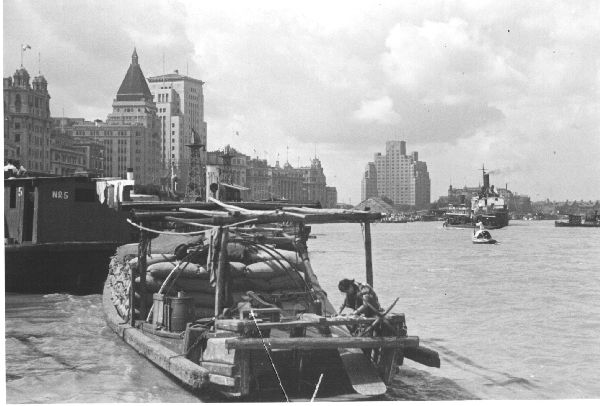
19世紀90年代的外灘.
    |
|
| ( 休閒生活|旅人手札 ) |