字體:小 中 大
 |
|
|
|
| 2026/06/30 20:18:53瀏覽219|回應0|推薦0 | |
|
入選詩作之4
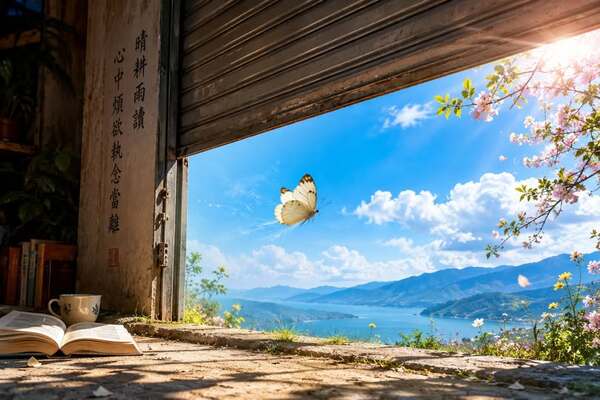
002<ㄧ隻蝴蝶飛越鐵捲門>/廖文基
門外的世界遼闊自由
門內的世界狹隘桎梏
為了欣賞短暫的藍天
白粉蝶用盡全力
從門內飛越門外
乾枯的身軀貼著炙熱地面
沒人在乎它的生與死
跟上天借來的軀殼
累積折舊後
終將回歸塵土
餘生有限
不為紅塵不為欲望
只為今生的夢
晴耕雨讀
心中煩欲執念當離
掀開簾帷
跟著春天去旅行
走讀山巔水湄
小窗外
ㄧ片蔚藍
〔陳去非導讀〕
一、以詮釋學勾勒詩意——從「飛越」到「覺悟」的人生隱喻
〈一隻蝴蝶飛越鐵捲門〉是一首兼具生命哲思與禪意精神的新詩。詩人藉由「白粉蝶」飛越鐵捲門的意象,象徵人對自由、理想與精神解放的追尋。首段中,「門外的世界遼闊自由/門內的世界狹隘桎梏」,形成鮮明的二元對比,鐵捲門不只是物理阻隔,更象徵現實人生中的束縛、制度、欲望與精神牢籠。白粉蝶雖然渺小脆弱,卻仍「用盡全力」飛向藍天,隱含人類對生命價值的追尋與對自由境界的嚮往。
第二段則將視角拉回生命本體。蝴蝶「乾枯的身軀貼著炙熱地面」,帶出生命終將耗損、衰敗的宿命感。「跟上天借來的軀殼」一句,具有濃厚的佛家與存在哲學意味,暗示肉身只是暫時寄寓的容器,生命本身終究要回歸塵土。詩人在此不僅描寫蝴蝶,更藉蝴蝶映照人類有限而孤獨的生命處境。
第三、四段則由生命感傷轉向精神超脫。「不為紅塵不為欲望/只為今生的夢」,顯示詩人逐漸從世俗執念中抽離,轉向簡樸而澄明的人生理想。「晴耕雨讀」帶有東方隱逸文化色彩,而「心中煩欲執念當離」更具有禪宗式的自我淨化意味。最終,「跟著春天去旅行/走讀山巔水湄」,人生由封閉的「門內」轉向自然開闊的天地,「小窗外/一片蔚藍」則象徵心靈終於獲得解放與澄明。整首詩因此形成一條由束縛、覺悟到超脫的精神軌跡。
二、以新詩修辭美學分析形式設計與表現技巧
此詩在形式設計上,採取「短行分段」結構,使語言具有凝鍊、沉思與留白效果。四段之間形成遞進式精神層次:第一段寫衝破束縛,第二段寫生命無常,第三段寫欲念放下,第四段則寫精神回歸自然。這種段落安排具有明顯的層遞結構,使詩意逐步深化。
首段大量運用「對比」與「象徵」修辭:
> 「門外的世界遼闊自由
門內的世界狹隘桎梏」
「門外」與「門內」、「遼闊自由」與「狹隘桎梏」形成空間與精神的雙重對照。鐵捲門象徵現實壓迫與生命困境,而白粉蝶則象徵靈魂、夢想與自由意志。尤其「為了欣賞短暫的藍天」一句,以「藍天」象徵理想與希望,展現生命即使短暫,也仍願意奮力追尋美好的存在價值。
第二段運用了擬人與借代技巧:
> 「跟上天借來的軀殼」
將生命視為向天地暫借之物,是典型的哲理性借喻。詩人避免直接說教,而以含蓄意象傳達「生命有限」的觀念。此外,「累積折舊後/終將回歸塵土」將人的肉身物化為會折舊的器物,具有存在主義式冷峻感,也形成一種蒼涼的時間美學。
第三段則轉入東方禪意書寫:
> 「晴耕雨讀
心中煩欲執念當離」
「晴耕雨讀」屬典型文化意象,帶有陶淵明式隱逸情懷。詩人以簡潔句式營造節奏感,同時透過「煩欲執念」等抽象詞彙,呈現內在精神修行。這裡採用的是「虛實互映」技巧——外在生活平淡,內在精神卻充滿深層自省。
最後一段則善用空間意象與色彩象徵:
> 「跟著春天去旅行
走讀山巔水湄」
「春天」象徵重生與希望,「山巔水湄」則構成流動而開闊的自然畫面。結尾:
> 「小窗外
一片蔚藍」
以留白式結尾收束全詩。「蔚藍」既是天空,也是心境;既是景物,也是精神境界。這種以景結情的方式,使詩意停留在悠遠而寧靜的餘韻之中。
三、從美學學理整理此詩的美學特色
此詩的美學特質,首先表現在「生命哲思美學」。詩人透過蝴蝶飛越鐵捲門的短暫瞬間,思索生命自由與存在意義,呈現出海德格所說「向死而生」的存在感。生命雖有限,卻因追尋自由而具有價值,因此整首詩瀰漫著一種蒼涼而崇高的精神氣息。
其次,此詩具有鮮明的「禪意美學」。詩中的「不為紅塵不為欲望」、「心中煩欲執念當離」,皆帶有東方佛禪思想中的「放下」精神。詩人並未激烈批判現實,而是透過簡淡語言與自然意象,引導讀者回到內心澄明的狀態。這種美學特徵接近中國古典美學中的「沖淡之美」與「空靈之美」。
再者,此詩展現出「留白美學」與「意象美學」的特色。詩中沒有繁複敘述,而是藉由蝴蝶、鐵捲門、藍天、小窗等具體意象,讓讀者自行延伸聯想。尤其結尾「一片蔚藍」,形成開放式意境,使詩意超越文字本身,產生餘韻不絕的審美效果。
此外,此詩亦具有「自然美學」特徵。從「春天」、「山巔水湄」到「蔚藍」,自然景物不只是背景,而是精神救贖的象徵。詩人將人的內在心境與自然景觀融合,形成「情景交融」的審美境界。這種寫法與中國山水詩傳統相呼應,也呈現現代新詩追求精神淨化的藝術方向。
總體而言,〈一隻蝴蝶飛越鐵捲門〉是一首融合生命哲學、禪意精神與自然意象的新詩。它以簡潔而深刻的語言,將短暫生命中的自由追尋與精神超脫,轉化成富有靜謐光澤的詩性美學。
002. “A Butterfly Flying Over the Rolling Shutter Door” / Liao Wenji The world outside the door is vast and free. Its withered body clings to the scorching ground. This body, borrowed from Heaven, The remainder of life is limited. Not for the mortal world, To farm on sunny days, The vexations, desires, and attachments in the heart should all be abandoned. Lift the curtain, and travel with spring, wandering and learning among mountain peaks and watersides. Outside the little window, an expanse of azure blue. Guided Reading by Chen Qufei I. Interpreting the Poetic Meaning Through Hermeneutics — From “Flying Across” to the Metaphor of Enlightenment “A Butterfly Flying Over the Rolling Shutter Door” is a modern poem that combines reflections on life with the spirit of Zen. Through the image of a cabbage white butterfly flying over a rolling shutter door, the poet symbolizes humanitys pursuit of freedom, ideals, and spiritual liberation. In the opening stanza, “The world outside the door is vast and free; a striking binary contrast is established. The rolling shutter door is not merely a physical barrier; it also symbolizes the restraints, institutions, desires, and spiritual prisons found in real life. Although the cabbage white butterfly is tiny and fragile, it still “exhausts all its strength” to fly toward the blue sky, implying humanitys pursuit of the value of life and its longing for a realm of freedom. The second stanza shifts the perspective back to life itself. The butterflys “withered body clings to the scorching ground,” conveying the inevitable destiny of exhaustion and decay. The line, “This body, borrowed from Heaven,” carries strong Buddhist and existential philosophical implications, suggesting that the physical body is merely a temporary vessel borrowed for a time, while life itself must ultimately return to dust. Here, the poet is not merely describing the butterfly but also reflecting humanitys finite and solitary condition through its image. The third and fourth stanzas move from sorrow over mortality toward spiritual transcendence. “Not for the mortal world, not for desire, but only for the dream of this lifetime,” reveals the poets gradual detachment from worldly obsessions and movement toward a simple and lucid ideal of life. The phrase “To farm on sunny days, to study on rainy days” evokes the tradition of Eastern reclusive culture, while “The vexations, desires, and attachments in the heart should all be abandoned” possesses the flavor of Zen-style self-purification. Finally, “Travel with spring; wander and learn among mountain peaks and watersides,” marks lifes transition from the enclosed “inside the door” toward the expansive realm of nature. The concluding image, “Outside the little window, an expanse of azure blue,” symbolizes the ultimate liberation and clarity of the soul. Thus, the entire poem traces a spiritual journey from bondage, through awakening, to transcendence. II. Analysis of Form and Rhetorical Techniques from the Perspective of Modern Poetry Aesthetics In terms of formal design, the poem adopts a structure of short, segmented lines, giving the language a concise, contemplative quality while creating ample poetic silence. The four stanzas form a progressive spiritual sequence: the first depicts breaking free from constraints; the second contemplates lifes impermanence; the third relinquishes worldly desires; and the fourth returns the spirit to nature. This arrangement creates a clearly ascending structural progression, allowing the poems meaning to deepen step by step. The opening stanza makes extensive use of contrast and symbolism: “The world outside the door is vast and free; The oppositions between outside and inside, and between vast freedom and narrow confinement, create both spatial and spiritual contrasts. The rolling shutter door symbolizes the oppression of reality and the hardships of life, while the cabbage white butterfly symbolizes the soul, dreams, and free will. In particular, the line, “To glimpse the brief blue sky,” uses the blue sky as a symbol of ideals and hope, expressing that even though life is brief, it is still worth striving wholeheartedly for beautiful possibilities. The second stanza employs personification and metonymic metaphor: “This body, borrowed from Heaven.” Life is portrayed as something temporarily borrowed from Heaven and Earth, a classic philosophical metaphor. Rather than preaching directly, the poet conveys the concept of lifes finiteness through subtle imagery. Furthermore, “After accumulating the wear and depreciation of time, it will eventually return to dust,” objectifies the human body as an artifact that gradually depreciates through use, producing a stark existential atmosphere while also creating an austere aesthetic of time. The third stanza shifts into Zen-inspired writing: “To farm on sunny days, “To farm on sunny days, to study on rainy days” is a classic cultural image associated with the reclusive spirit of Tao Yuanming. Through concise phrasing, the poet establishes a rhythmic cadence while employing abstract expressions such as “vexations, desires, and attachments” to depict inner spiritual cultivation. Here, the technique of interweaving the concrete and the abstract is employed: outwardly, life appears simple and ordinary, while inwardly, profound spiritual reflection unfolds. The final stanza skillfully employs spatial imagery and color symbolism: “Travel with spring; Spring symbolizes rebirth and hope, while mountain peaks and watersides create an expansive, flowing natural landscape. The concluding lines, “Outside the little window, bring the poem to a close through deliberate poetic openness. Azure blue is simultaneously the sky and the state of mind; it is both scenery and spiritual realm. By ending with landscape rather than direct emotion, the poem leaves readers with an enduring sense of tranquility and resonance. III. The Poems Aesthetic Characteristics from the Perspective of Aesthetic Theory The poems aesthetic qualities are first manifested in its aesthetics of philosophical reflection on life. Through the fleeting moment of a butterfly flying over a rolling shutter door, the poet contemplates freedom and the meaning of existence, presenting what Heidegger described as “being-toward-death.” Although life is finite, it acquires meaning through the pursuit of freedom. Consequently, the entire poem is permeated by an atmosphere that is both solemn and spiritually elevated. Secondly, the poem possesses a distinctive Zen aesthetic. Expressions such as “Not for the mortal world, not for desire,” and “The vexations, desires, and attachments in the heart should all be abandoned,” embody the Buddhist and Zen ideal of letting go. Rather than fiercely criticizing reality, the poet employs restrained language and natural imagery to guide readers back toward inner clarity. This aesthetic closely resembles the classical Chinese ideals of subtle simplicity and ethereal emptiness. Furthermore, the poem demonstrates the characteristics of both the aesthetics of negative space and the aesthetics of imagery. Rather than relying on elaborate narration, it employs concrete images—the butterfly, the rolling shutter door, the blue sky, and the little window—to encourage readers to extend their own associations. In particular, the concluding image, “An expanse of azure blue,” creates an open-ended poetic realm in which the poem transcends its own words, producing an enduring aesthetic resonance. Moreover, the poem also embodies a natural aesthetic. From spring, to mountain peaks and watersides, to the azure blue sky, nature serves not merely as a backdrop but as a symbol of spiritual redemption. The poet unites the inner landscape of the human heart with the external landscape of nature, achieving the classical aesthetic ideal of the fusion of emotion and scenery. This approach echoes the tradition of Chinese landscape poetry while also reflecting the artistic pursuit of spiritual purification in modern poetry. Overall, “A Butterfly Flying Over the Rolling Shutter Door” is a modern poem that integrates the philosophy of life, the spirit of Zen, and natural imagery. Through concise yet profound language, it transforms the pursuit of freedom and spiritual transcendence within the brevity of human life into a poetic aesthetic illuminated by serenity and quiet radiance.
|
|
| ( 創作|文學賞析 ) |