字體:小 中 大
 |
|
|
|
| 2025/05/04 19:58:38瀏覽23|回應0|推薦0 | |
Introduction – Company BackgroundGuangXin Industrial Co., Ltd. is a specialized manufacturer dedicated to the development and production of high-quality insoles. With a strong foundation in material science and footwear ergonomics, we serve as a trusted partner for global brands seeking reliable insole solutions that combine comfort, functionality, and design. With years of experience in insole production and OEM/ODM services, GuangXin has successfully supported a wide range of clients across various industries—including sportswear, health & wellness, orthopedic care, and daily footwear. From initial prototyping to mass production, we provide comprehensive support tailored to each client’s market and application needs. At GuangXin, we are committed to quality, innovation, and sustainable development. Every insole we produce reflects our dedication to precision craftsmanship, forward-thinking design, and ESG-driven practices. By integrating eco-friendly materials, clean production processes, and responsible sourcing, we help our partners meet both market demand and environmental goals.
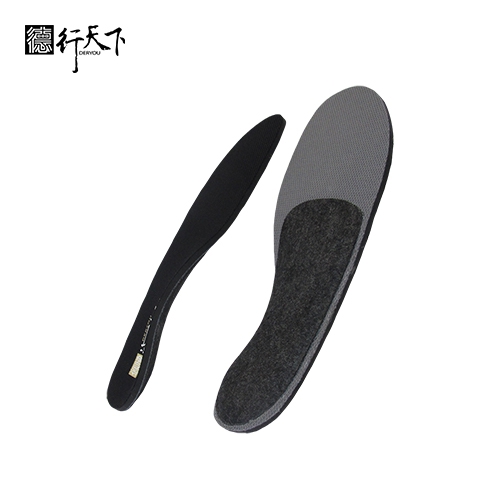
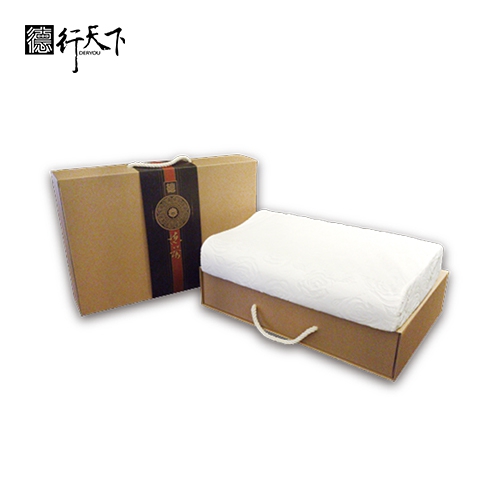
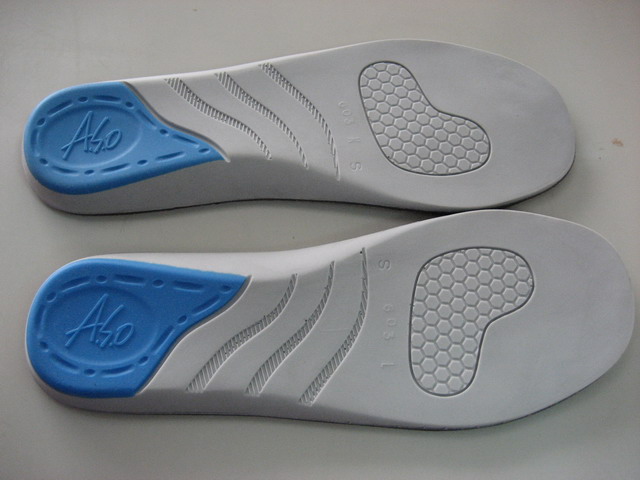
Core Strengths in Insole ManufacturingAt GuangXin Industrial, our core strength lies in our deep expertise and versatility in insole and pillow manufacturing. We specialize in working with a wide range of materials, including PU (polyurethane), natural latex, and advanced graphene composites, to develop insoles and pillows that meet diverse performance, comfort, and health-support needs. Whether it's cushioning, support, breathability, or antibacterial function, we tailor material selection to the exact requirements of each project-whether for foot wellness or ergonomic sleep products. We provide end-to-end manufacturing capabilities under one roof—covering every stage from material sourcing and foaming, to precision molding, lamination, cutting, sewing, and strict quality control. This full-process control not only ensures product consistency and durability, but also allows for faster lead times and better customization flexibility. With our flexible production capacity, we accommodate both small batch custom orders and high-volume mass production with equal efficiency. Whether you're a startup launching your first insole or pillow line, or a global brand scaling up to meet market demand, GuangXin is equipped to deliver reliable OEM/ODM solutions that grow with your business.
Customization & OEM/ODM FlexibilityGuangXin offers exceptional flexibility in customization and OEM/ODM services, empowering our partners to create insole products that truly align with their brand identity and target market. We develop insoles tailored to specific foot shapes, end-user needs, and regional market preferences, ensuring optimal fit and functionality. Our team supports comprehensive branding solutions, including logo printing, custom packaging, and product integration support for marketing campaigns. Whether you're launching a new product line or upgrading an existing one, we help your vision come to life with attention to detail and consistent brand presentation. With fast prototyping services and efficient lead times, GuangXin helps reduce your time-to-market and respond quickly to evolving trends or seasonal demands. From concept to final production, we offer agile support that keeps you ahead of the competition. Quality Assurance & CertificationsQuality is at the heart of everything we do. GuangXin implements a rigorous quality control system at every stage of production—ensuring that each insole meets the highest standards of consistency, comfort, and durability. We provide a variety of in-house and third-party testing options, including antibacterial performance, odor control, durability testing, and eco-safety verification, to meet the specific needs of our clients and markets. Our products are fully compliant with international safety and environmental standards, such as REACH, RoHS, and other applicable export regulations. This ensures seamless entry into global markets while supporting your ESG and product safety commitments. ESG-Oriented Sustainable ProductionAt GuangXin Industrial, we are committed to integrating ESG (Environmental, Social, and Governance) values into every step of our manufacturing process. We actively pursue eco-conscious practices by utilizing eco-friendly materials and adopting low-carbon production methods to reduce environmental impact. To support circular economy goals, we offer recycled and upcycled material options, including innovative applications such as recycled glass and repurposed LCD panel glass. These materials are processed using advanced techniques to retain performance while reducing waste—contributing to a more sustainable supply chain. We also work closely with our partners to support their ESG compliance and sustainability reporting needs, providing documentation, traceability, and material data upon request. Whether you're aiming to meet corporate sustainability targets or align with global green regulations, GuangXin is your trusted manufacturing ally in building a better, greener future. Let’s Build Your Next Insole Success TogetherLooking for a reliable insole manufacturing partner that understands customization, quality, and flexibility? GuangXin Industrial Co., Ltd. specializes in high-performance insole production, offering tailored solutions for brands across the globe. Whether you're launching a new insole collection or expanding your existing product line, we provide OEM/ODM services built around your unique design and performance goals. From small-batch custom orders to full-scale mass production, our flexible insole manufacturing capabilities adapt to your business needs. With expertise in PU, latex, and graphene insole materials, we turn ideas into functional, comfortable, and market-ready insoles that deliver value. Contact us today to discuss your next insole project. Let GuangXin help you create custom insoles that stand out, perform better, and reflect your brand’s commitment to comfort, quality, and sustainability. 🔗 Learn more or get in touch: Custom foam pillow OEM in China Are you looking for a trusted and experienced manufacturing partner that can bring your comfort-focused product ideas to life? GuangXin Industrial Co., Ltd. is your ideal OEM/ODM supplier, specializing in insole production, pillow manufacturing, and advanced graphene product design. With decades of experience in insole OEM/ODM, we provide full-service manufacturing—from PU and latex to cutting-edge graphene-infused insoles—customized to meet your performance, support, and breathability requirements. Our production process is vertically integrated, covering everything from material sourcing and foaming to molding, cutting, and strict quality control.Graphene cushion OEM production factory in Taiwan Beyond insoles, GuangXin also offers pillow OEM/ODM services with a focus on ergonomic comfort and functional innovation. Whether you need memory foam, latex, or smart material integration for neck and sleep support, we deliver tailor-made solutions that reflect your brand’s values. We are especially proud to lead the way in ESG-driven insole development. Through the use of recycled materials—such as repurposed LCD glass—and low-carbon production processes, we help our partners meet sustainability goals without compromising product quality. Our ESG insole solutions are designed not only for comfort but also for compliance with global environmental standards.Graphene-infused pillow ODM Indonesia At GuangXin, we don’t just manufacture products—we create long-term value for your brand. Whether you're developing your first product line or scaling up globally, our flexible production capabilities and collaborative approach will help you go further, faster.Private label insole and pillow OEM Thailand 📩 Contact us today to learn how our insole OEM, pillow ODM, and graphene product design services can elevate your product offering—while aligning with the sustainability expectations of modern consumers.Innovative pillow ODM solution in China Over 370 million years ago, the Devonian era saw significant biological evolution but ended in a mass extinction event. Recent research indicates that this extinction resulted from both volcanic activity and plant-driven deoxygenation. This study, combining various scientific disciplines, underscores the relevance of Earth’s history in addressing current environmental issues. A new study indicates that a combination of volcanic activity and oceanic purification processes drove Earth’s ecosystems to a tipping point. Diverse and full of sea life, the Earth’s Devonian era — taking place more than 370 million years ago — saw the emergence of the first seed-bearing plants, which spread as large forests across the continents of Gondwana and Laurussia. However, a mass extinction event near the end of this era has long been the subject of debate. Some scientists argue the Late Devonian mass extinction was caused by large-scale volcanic eruptions, causing global cooling. Others argue a mass deoxygenation event caused by the expansion of land plants was to blame. Gabriel Filippelli. Credit: School of Science at IUPUI Recent Study Findings A recently published study in the journal Communications Earth and Environment led by researchers at IUPUI now posits that both factors played a role — and draws attention to the environmental tipping points the planet faces today. Filippelli and Gilhooly said the study’s conclusion gives researchers a lot to consider. During the Devonian era, new biological outcomes on land produced negative effects for life in the ocean. In the present day, Gilhooly noted, activities like fertilizer runoff emptying into the ocean, combined with heating from fossil fuel combustion, are reducing oceans’ oxygen levels. The previous outcome of this similar scenario in the Late Devonian had catastrophic outcomes, he said. Study researchers participate in fieldwork at Trail Island in East Greenland, near a Late Devonian rock outcrop. Credit: John Marshall, University of Southampton Historical Lessons and Modern Implications “Throughout Earth’s history, there have been a series of biological innovations and geological events that have completely reshaped biological diversity and environmental conditions in the ocean and on land,” Gilhooly said. “In the Devonian era, a new biological strategy on land produced a negative impact for life in the ocean. This is a sobering observation when put in the context of modern global and climatic change driven by human activities. We have a lot to learn from Earth’s history that can help us think of strategies and actions to avoid future tipping points.” William Gilhooly III. Credit: School of Science at IUPUI Other contributors to the study were Kazumi Ozaki of the Tokyo Institute of Technology, Christopher Reinhard of the Georgia Institute of Technology, John Marshall of the University of Southampton, and Jessica Whiteside of San Diego State University. The study is co-authored by School of Science at IUPUI faculty Gabriel Filippelli and William Gilhooly III. The lead author is Matthew Smart, an assistant professor of oceanography at the U.S. Naval Academy who was a graduate student in Filippelli’s lab at the time of the study. Findings and Methodology The work is the first to unify two competing Late Devonian extinction theories into a comprehensive cause-and-effect scenario. Essentially, the group concluded that both events — mass volcanism and deoxygenation caused by land plants flushing excess nutrients into oceans — needed to occur for the mass extinction to take place. “The key to resolving this puzzle was identifying and integrating the timing and magnitude of the geochemical signals we determined using a sophisticated global model,” Filippelli said. “This modeling effort revealed that the magnitude of nutrient events we were seeing based on the geochemical records could drive substantial marine extinction events, but the duration of the events required both factors — tree root evolution and volcanism — to sustain the marine conditions that were toxic to organisms.” With experts in sedimentology, paleontology, geochemistry, biogeochemistry, and mathematical modeling, the group literally dug deep to geochemically analyze hundreds of samples scattered across different continents. These include samples from Ymer Island in eastern Greenland, home of some of the oldest rock samples on the planet. “The process was highly interdisciplinary,” Gilhooly said. “This combined expertise created a rigorous approach to collecting the samples, correlating sequences in time, acquiring the chemical data, and using geochemical models to test working hypotheses about the relative influences of biotically — plants — and chemically — volcanoes — driven triggers of mass extinction. Our analyses demonstrate that the influences are much more mixed than an either-or scenario.” Reference: “The expansion of land plants during the Late Devonian contributed to the marine mass extinction” by Matthew S. Smart, Gabriel Filippelli, William P. Gilhooly III, Kazumi Ozaki, Christopher T. Reinhard, John E. A. Marshall and Jessica H. Whiteside, 29 November 2023, Communications Earth & Environment. DOI: 10.1038/s43247-023-01087-8 The study was funded by the National Science Foundation, the American Chemical Society Petroleum Research Fund, and JSPS KAKENHI. The amphibious Scolopendra alcyona Tsukamoto & Shimano inhabits streamside environments, deep in the forests of the Ryukyu Archipelago. Credit: Tokyo Metropolitan University Godly proportions for rare jade Scolopendra named after local gods, one of the largest arthropods in Japan. Researchers from Tokyo Metropolitan University and Hosei University have discovered a new species of large, tropical centipede of genus Scolopendra in Okinawa and Taiwan. It is only the third amphibious centipede identified in the world, and is the largest in the region, 20 cm (8 in) long and nearly 2 cm (0.8 in) thick. It is also the first new centipede to be identified in Japan in 143 years, a testament to the incredible biodiversity of the Ryukyu Archipelago. Scolopendra is a genus of large, tropical centipede, one of the original genera named by the father of modern taxonomy himself, Carl Linnaeus. They are strong predators in any soil ecosystems they inhabit, with around 100 different species found in tropical regions around the world. Of these, only five have been identified in Japan and Taiwan. Scientists were excited when news came in of an unknown centipede species sighted around the Ryukyu Archipelago, reportedly attacking giant freshwater prawns. A team led by Sho Tsukamoto, his supervisor Associate Professor Katsuyuki Eguchi of Tokyo Metropolitan University, and Professor Satoshi Shimano of Hosei University set out to look for and identify this mystery creature. It turned out that they had discovered an entirely new species. Genetic analysis confirmed that it was distinct from any of the other Scolopendra inhabiting the region. Approximately 20 cm in length and 2 cm in width, it is the largest centipede species to be found in Japan and Taiwan. Sporting a beautiful jade-colored shell, it has been named Scolopendra alcyona Tsukamoto & Shimano after the Greek mythological figure Alcyone, who was transformed into a kingfisher by Zeus. Its new Japanese name, ryujin-ômukade, also has a mythological origin, in homage to the region where it was found. Local myths have it that a dragon god, or ryujin, was in agony because a centipede had entered his ear. On seeing a chicken quickly devour a centipede, it was said that the god came to fear both centipedes and chickens. In the days of the kingdom of Ryukyu, people painted chickens on their boats and hoisted a centipede flag to strike fear into the dragon gods and cross the sea safely. Notably, the scientists found that the centipedes preferred streamside environments, and exhibited amphibious characteristics, making it only the third amphibious Scolopendra in the world. This is the first discovery of a new centipede in Japan in 143 years; the fact that such a large invertebrate could go undiscovered until now is a reflection of the unexplored biodiversity of the Ryukyu Archipelago, and a strong case for its preservation. The species is most likely endangered, and currently inhabits forest streams where people do not go. The team hopes to continue to monitor and study them from a safe distance, to preserve their habitat. Reference: “A new amphibious species of the genus Scolopendra Linnaeus, 1758 (Scolopendromorpha, Scolopendridae) from the Ryukyu Archipelago and Taiwan” by Sho Tsukamoto, Shimpei F. Hiruta, Katsuyuki Eguchi, Jhih-Rong Liao and Satoshi Shimano, 17 April 2021, Zootaxa. DOI: 10.11646/zootaxa.4952.3.3 This work was supported by the Asahi Glass Foundation (Leader: Katsuyuki Eguchi; FY2017-FY2020; Leader: Satoshi Shimano, FY2020-FY2023), a JSPS KAKENHI Grant-in-Aid for Scientific Research (18K06392), the Tokyo Metropolitan University Fund for TMU Strategic Research (Leader: Prof. Noriaki Murakami; FY2020-FY2022) and the Nippon Life Insurance Foundation. Tagging and illuminating only the inhibitory “brake” cells (green) in human brain tissue is just one of many things the new tool from Duke University, CellREADR, can do. Credit: Derek Southwell, Duke University Editing technology is precise and broadly applicable to all tissues and species. Scientists at Duke University have developed an RNA-based editing tool that targets individual cells, rather than genes. It is capable of precisely targeting any type of cell and selectively adding any protein of interest. Researchers said the tool could enable modifying very specific cells and cell functions to manage disease. Using an RNA-based probe, a team led by neurobiologist Z. Josh Huang, Ph.D., and postdoctoral researcher Yongjun Qian, Ph.D. demonstrated they can introduce into cells fluorescent tags to label specific types of brain tissue; a light-sensitive on/off switch to silence or activate neurons of their choosing; and even a self-destruct enzyme to precisely expunge some cells but not others. The work will be published today (October 5, 2022) in the journal Nature. ADAR Enzyme Enables Targeted Cell Modification Their selective cell monitoring and control system relies on the ADAR enzyme, which is found in every animal’s cells. While these are early days for CellREADR (Cell access through RNA sensing by Endogenous ADAR), the possible applications appear to be endless, Huang said, as is its potential to work across the animal kingdom. “We’re excited because this provides a simplified, scalable, and generalizable technology to monitor and manipulate all cell types in any animal,” Huang said. “We could actually modify specific types of cell function to manage diseases, regardless of their initial genetic predisposition,” he said. “That’s not possible with current therapies or medicine.” Customizable RNA Tool for Disease Management CellREADR is a customizable string of RNA made up of three main sections: a sensor, a stop sign, and a set of blueprints. First, the research team decides what specific cell type they want to investigate, and identifies a target RNA that is uniquely produced by that cell type. The tool’s remarkable tissue specificity relies on the fact that each cell type manufactures signature RNA not seen in other cell types. A sensor sequence is then designed as the target RNA’s complementary strand. Just as the rungs on DNA are made up of complementary molecules that are inherently attracted to each other, RNA has the same magnetic potential to link with another piece of RNA if it has matching molecules. After a sensor makes its way into a cell and finds its target RNA sequence, both pieces glom together to create a piece of double-stranded RNA. This new RNA mashup triggers the enzyme ADAR to inspect the new creation and then change a single nucleotide of its code. The ADAR enzyme is a cell-defense mechanism designed to edit double-strand RNA when it occurs, and is believed to be found in all animal cells. Knowing this, Qian designed CellREADR’s stop sign using the same specific nucleotide ADAR edits in double-stranded RNA. The stop sign, which prevents the protein blueprints from being built, is only removed once CellREADR’s sensor docks to its target RNA sequence, making it highly specific for a given cell type. Once ADAR removes the stop sign, the blueprints can be read by cellular machinery that builds the new protein inside the target cell. In their paper, Huang and his team put CellREADR through its paces. “I remember two years ago when Yongjun built the first iteration of CellREADR and tested it in a mouse brain,” Huang said. “To my amazement, it worked spectacularly on his first try.” The team’s careful planning and design paid off as they were then able to demonstrate CellREADR accurately labeled specific brain cell populations in living mice, as well as effectively added activity monitors and control switches where directed. It also worked well in rats, and in human brain tissue collected from epilepsy surgeries. Potential for Advancing Neurological Research and Treatment “With CellREADR, we can pick and choose populations to study and really begin to investigate the full range of cell types present in the human brain,” said co-author Derek Southwell, M.D., Ph.D., a neurosurgeon and assistant professor in the department of neurosurgery at Duke. Southwell hopes CellREADR will improve his and others’ understanding of the wiring diagram for human brain circuits and the cells within them, and in doing so, help advance new therapies for neurological disorders, such as a promising new method to treat drug-resistant epilepsy he is piloting. Huang and Qian are especially hopeful about CellREADR’s potential as a “programmable RNA medicine” to possibly cure diseases — since that’s what drew them both to science in the first place. They have applied for a patent on the technology. “When I majored in pharmacology as an undergraduate, I was very naïve,” Qian said. “I thought you could do a lot of things, like cure cancer, but actually it’s very difficult. However, now I think, yes maybe we can do it.” Reference: “Programmable RNA Sensing for Cell Monitoring and Manipulation” by Yongjun Qian, Jiayun Li, Shengli Zhao, Elizabeth A. Matthews, Michael Adoff, Weixin Zhong, Xu An, Michele Yeo, Christine Park, Xiaolu Yang, Bor-Shuen Wang, Derek G. Southwell and Z. Josh Huang, 5 October 2022 Nature. DOI: 10.1038/s41586-022-05280-1 Support for the research came from the US National Institute of Mental Health (1DP1MH129954-01), the US National Institute of Neurological Diseases and Stroke (Neurosurgery Research Career Development Program), and the Klingenstein-Simons Foundation. DVDV1551RTWW78V Eco-friendly pillow OEM manufacturer China 》seamless coordination from idea to finished productInsole ODM factory in China 》designed for quality-conscious brands who care about user experienceIndonesia graphene material ODM solution 》trusted by brand builders and product innovators |
|
| ( 興趣嗜好|藝文活動 ) |