


|

|
文章數:239 |
 彰化人體動作分析鞋墊ODM》廣薪實業 如何協助品牌完成鞋墊客製開發與量產? 彰化人體動作分析鞋墊ODM》廣薪實業 如何協助品牌完成鞋墊客製開發與量產? |
| 心情隨筆|心情日記 2026/07/17 03:41:25 | |
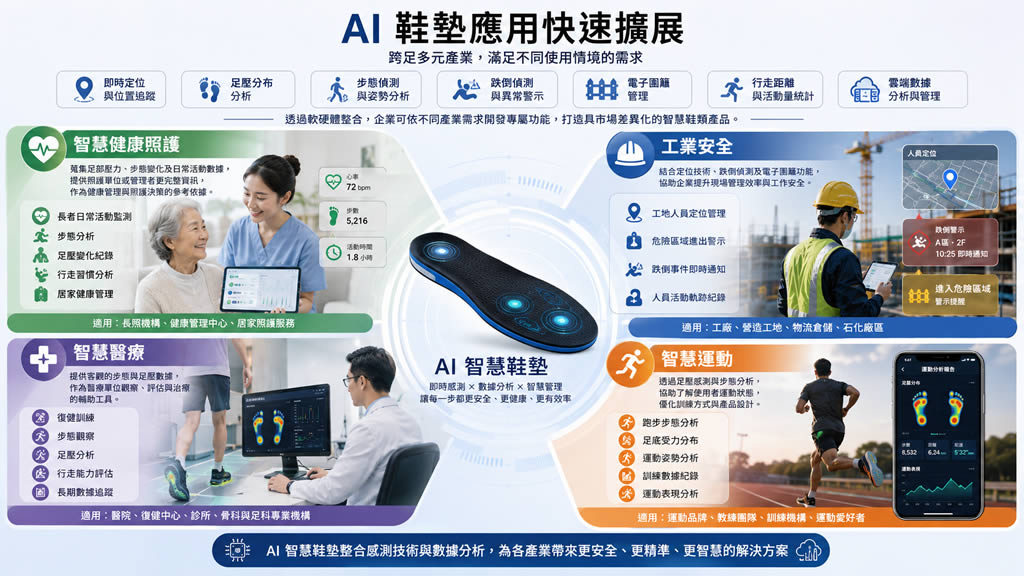
AI 智慧鞋墊正在改變鞋類產業隨著人工智慧(AI)、物聯網(IoT)、感測器技術以及智慧穿戴裝置快速發展,鞋類產品已不再只是提供舒適與保護的日常用品,而是逐漸成為能夠蒐集數據、分析行為、監測健康與提升安全性的智慧裝置。從健康照護、工業安全、運動訓練到智慧醫療,AI 智慧鞋墊正為鞋類產業帶來全新的應用模式,也為品牌商、科技公司及企業客戶開創更多創新商機。 對於鞋類品牌而言,未來的競爭不再只是鞋款設計或材料創新,而是如何透過 AI 技術提升產品附加價值,打造兼具智慧功能與市場競爭力的新世代產品。 AI 鞋墊應用快速擴展
AI 智慧鞋墊的應用範圍已不再侷限於單一領域,而是逐步跨足多元產業,滿足不同使用情境的需求。 目前常見的 AI 功能包括:
透過軟硬體整合,企業可依不同產業需求開發專屬功能,打造具市場差異化的智慧鞋類產品。 智慧健康照護在健康照護領域,AI 智慧鞋墊可協助蒐集足部壓力、步態變化及日常活動數據,提供照護單位或管理者更完整的資訊,作為健康管理與照護決策的參考依據。 常見應用包括:
對於長照機構、健康管理中心及智慧照護服務業者而言,AI 智慧鞋墊已逐漸成為智慧照護系統的重要組成。 工業安全在工業與製造業環境中,AI 智慧鞋墊可結合定位技術、跌倒偵測及電子圍籬功能,協助企業提升現場管理效率與工作安全。 例如:
透過智慧化管理,不僅有助於提升作業安全,也能提供企業更完整的管理資訊。 智慧醫療醫療與復健產業對於人體步態與足部壓力分析需求日益增加,AI 智慧鞋墊可搭配感測器與分析系統,提供醫療單位更多客觀數據,作為觀察與評估的輔助工具。 可應用於:
藉由持續蒐集數據,醫療機構能建立更完整的分析資料,提升照護效率。 智慧運動在運動科技市場,AI 智慧鞋墊同樣具有廣泛應用潛力。透過足壓感測與步態分析,可協助運動品牌、教練團隊及訓練機構了解使用者的運動狀態,進一步優化訓練方式與產品設計。 常見應用包括:
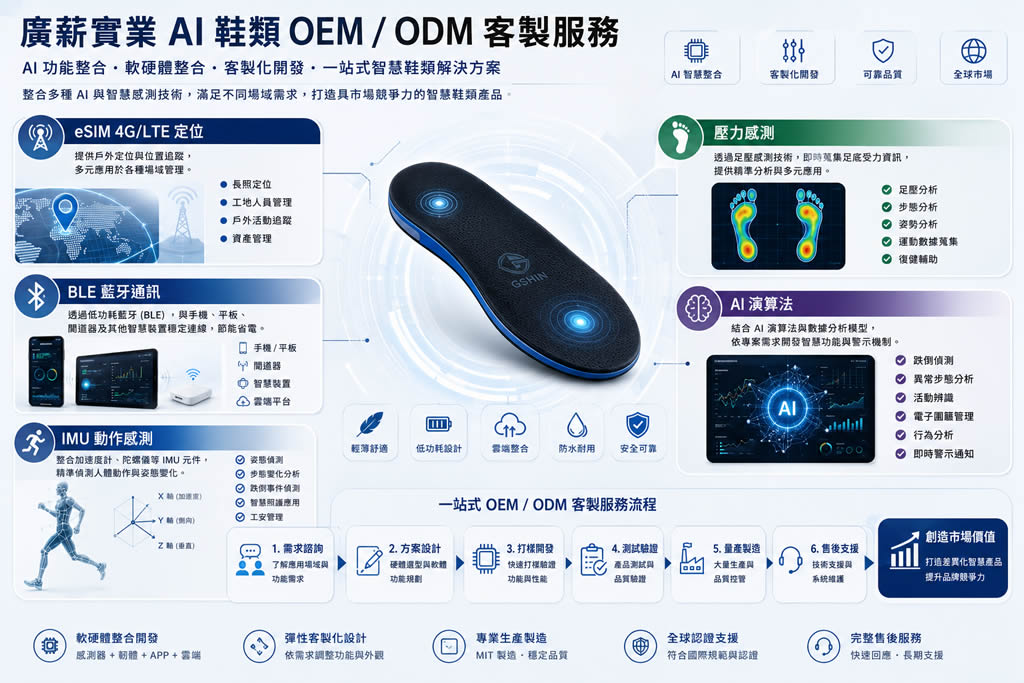
這些數據可作為產品研發、運動訓練及使用者體驗優化的重要參考。 廣薪實業 AI 鞋類 OEM / ODM 客製服務
隨著 AI 智慧穿戴市場快速發展,企業需要的不只是單一鞋墊產品,而是一套完整且可量產的智慧鞋類解決方案。 廣薪實業 結合鞋墊製造經驗、AI 感測技術與 OEM/ODM 客製服務,協助品牌商、科技公司、醫療照護業者、工安設備商及系統整合商,打造符合市場需求的 AI 智慧鞋墊、智慧鞋與智慧拖鞋產品。 我們提供從產品規劃、硬體設計、AI 功能整合、軟體開發到量產交付的一站式服務,讓企業能更有效率地將產品概念轉化為具市場競爭力的智慧鞋類產品。 產品需求規劃每個產業的應用場景與功能需求皆有所不同,因此我們會在專案初期與客戶深入討論產品定位、目標市場及實際使用情境,協助規劃最適合的 AI 智慧鞋類解決方案。 規劃內容包括:
透過完整的需求分析,可降低開發風險,縮短產品上市時程。 AI 功能整合依據不同產品定位與應用需求,我們可協助整合多種 AI 與智慧感測技術,打造符合市場需求的智慧鞋類產品。 可整合功能包括: eSIM 4G/LTE -Bluetooth Low Energy 定位提供戶外定位與位置追蹤,可應用於:
BLE 藍牙通訊透過低功耗藍牙(Bluetooth Low Energy),可與手機、平板、閘道器及其他智慧裝置進行資料傳輸,兼顧穩定連線與節能需求。 IMU 動作感測整合加速度計、陀螺儀等慣性量測元件(IMU),可偵測人體姿態、步態變化及跌倒事件,適用於智慧照護、運動分析及工安管理等應用。 壓力感測透過足壓感測技術,即時蒐集足底受力資訊,可應用於:
AI 演算法結合 AI 演算法與數據分析模型,可依專案需求開發:
讓智慧鞋類產品不只是蒐集資料,更能提供具價值的分析結果。 硬體開發除了鞋墊本體設計外,我們亦可協助整合各項電子硬體,打造完整的智慧鞋類裝置。 可開發內容包括:
依產品需求選擇適合的硬體架構,兼顧產品性能、體積與續航能力。 鞋墊客製作為鞋墊製造商,廣薪實業可依不同品牌與應用需求,提供多元化客製服務,讓智慧功能與鞋墊設計完整結合。 客製項目包括:
無論是智慧鞋墊、工安鞋墊、醫療鞋墊或運動鞋墊,皆可依品牌需求進行客製化開發。 品牌 OEM / ODM除了產品開發之外,我們更提供完整的品牌 OEM/ODM 合作模式,協助企業快速建立自有智慧鞋類品牌。 服務內容包括:
從產品概念、技術整合到市場量產,廣薪實業提供一站式 OEM/ODM 客製服務,協助品牌有效縮短開發時程、降低研發成本,快速推出符合市場需求的 AI 智慧鞋墊、智慧鞋與智慧拖鞋產品,打造兼具創新技術與市場競爭力的智慧鞋類解決方案。 為什麼選擇 廣薪實業?
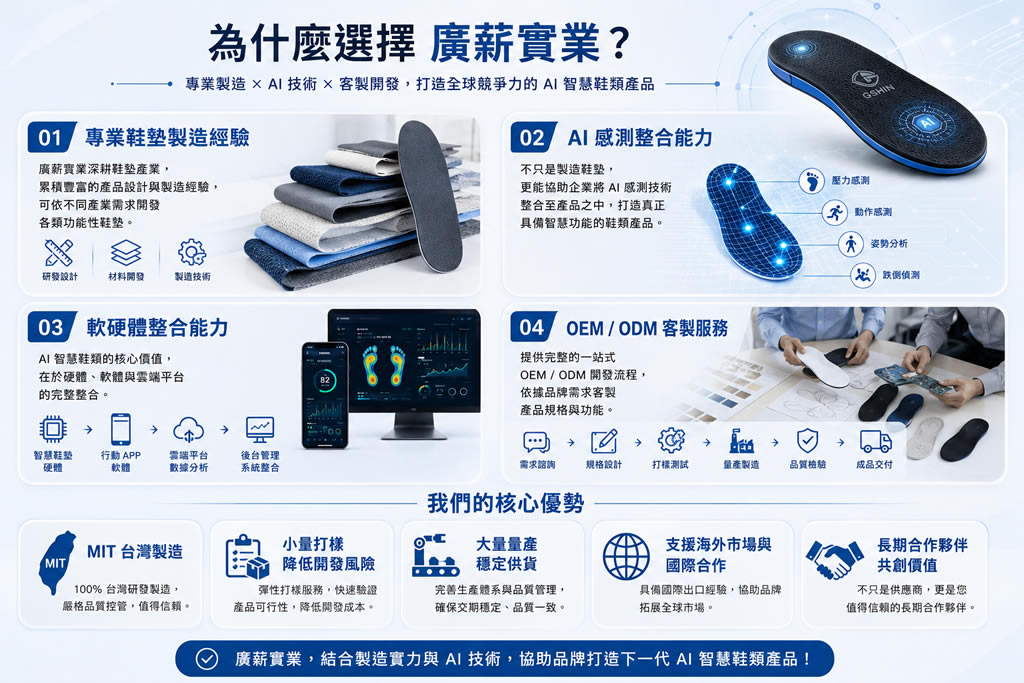
在 AI 智慧鞋類市場快速成長的趨勢下,企業需要的不只是鞋墊製造商,更需要一家具備產品開發、AI 技術整合、軟硬體協作與 OEM/ODM 客製能力的合作夥伴。廣薪實業結合多年鞋墊製造經驗與智慧感測技術,提供從概念設計、產品研發到量產交付的一站式服務,協助品牌快速打造具有市場競爭力的 AI 智慧鞋類產品。 專業鞋墊製造經驗廣薪實業深耕鞋墊產業,累積豐富的產品設計與製造經驗,可依不同產業需求開發各類功能性鞋墊,包括:
從材料選配、結構設計到生產製程,皆能依照客戶需求提供專業建議。 AI 感測整合能力我們不只是製造鞋墊,更能協助企業將 AI 感測技術整合至產品之中,打造真正具備智慧功能的鞋類產品。 可整合功能包括:
讓鞋墊從傳統配件升級為智慧穿戴裝置的一部分。 軟硬體整合能力AI 智慧鞋類的核心價值,在於硬體、軟體與雲端平臺的完整整合。廣薪實業可依專案需求協助規劃:
協助企業打造完整的智慧產品生態系,而不只是單一硬體設備。 OEM/ODM 客製服務我們提供完整的一站式 OEM/ODM 開發流程,依據品牌需求客製產品規格與功能。 客製項目包括:
協助品牌建立專屬產品特色,提升市場競爭力。 MIT 臺灣製造廣薪實業堅持臺灣製造,從產品開發、生產製造到品質管理皆採用嚴謹流程,確保產品品質穩定、一致,滿足企業對品質、交期與售後服務的需求。 小量打樣,降低開發風險新產品上市前,樣品驗證是重要的一環。我們提供小量打樣服務,協助客戶確認產品設計、功能與使用體驗,降低正式量產前的開發風險。 大量量產,穩定供貨當產品完成驗證後,可依據市場需求快速安排量產,建立穩定的供應鏈,滿足企業長期合作與大量採購需求。 支援海外市場與國際合作廣薪實業具備 OEM/ODM 與國際合作經驗,可配合不同市場需求提供產品客製、包裝設計及出口規劃,協助品牌拓展海外市場,提升全球競爭力。 AI 智慧鞋墊 OEM 常見問題AI 智慧鞋墊可以客製哪些功能?可以。廣薪實業可依專案需求整合不同智慧功能,包括 BLE 藍牙通訊、IMU 動作感測、足壓感測、防摔偵測、電子圍籬、AI 數據分析等,並可依應用情境進行功能客製化。 最低 MOQ 是多少?最低訂購數量會依產品複雜度、開模需求、電子元件配置及客製內容而有所不同。若為新產品開發,建議先與我們討論需求,我們將依專案提供合適的打樣與量產方案。 可以開發 APP 嗎?可以。我們可協助規劃 Android App、iOS App 及 Web Dashboard,並依產品需求開發定位、足壓分析、跌倒警示、電子圍籬管理、裝置管理及數據分析等功能。 可以串接企業系統嗎?可以。若企業已有既有管理平臺、健康照護系統、工安管理平臺或其他資訊系統,我們可依需求評估資料串接方式,協助整合 AI 智慧鞋類所蒐集的數據。 可以提供 API 嗎?可依專案需求規劃 API 串接服務,方便企業將定位資訊、感測數據或分析結果整合至自有平臺、APP 或第三方系統,提升資料應用彈性。 可以協助開模嗎?可以。我們提供完整的 OEM/ODM 開發服務,可協助鞋墊結構設計、模具開發、產品測試及樣品製作,讓產品更符合品牌需求與市場定位。 多久可以量產?實際開發與量產時程會依產品功能、客製程度、測試需求及訂購數量而有所不同。一般流程包含需求討論、設計開發、樣品測試、功能驗證及正式量產,建議與我們聯繫,由專業團隊依專案需求提供完整時程規劃。 打造下一代 AI 智慧鞋類產品,從廣薪實業開始無論您是鞋類品牌、醫療照護業者、長照機構、工安設備商、運動科技公司,或智慧穿戴產品開發商, 廣薪實業 提供從產品需求規劃、鞋墊設計、感測器整合、AI 功能導入、PCB 與硬體開發、APP 與雲端平臺建置,到 OEM/ODM 客製化、品質驗證與量產交付的一站式服務。 我們致力於協助企業將創新構想轉化為具市場競爭力的產品,打造符合不同產業需求的 AI 智慧鞋墊、智慧鞋與智慧拖鞋 。無論是智慧健康照護、工業安全、醫療復健、運動科技或智慧穿戴應用,我們都能依據您的需求提供完整的客製化解決方案,攜手開創智慧鞋類市場的新商機。 地址:臺中市潭子區雅潭路二段399巷200-7號 電話:04-25319388 彰化醫療智慧拖鞋ODM 在智慧穿戴、物聯網(IoT)與人工智慧(AI)技術快速發展的時代,鞋類產品已不再只是提供穿著舒適與足部保護的配件,而是逐漸發展成兼具數據蒐集、智慧分析、安全管理與健康照護功能的重要載體。對於鞋類品牌、科技公司、醫療照護業者、長照機構、工安設備商及運動科技企業而言,誰能率先將 AI 技術導入產品,誰就更有機會在未來市場建立差異化優勢,提升品牌價值與產品競爭力。桃園工安智慧鞋OEM 廣薪實業 深耕鞋墊製造多年,除了擁有成熟的 OEM/ODM 生產經驗,更積極投入 AI 智慧鞋類產品的開發,結合鞋墊設計、感測器整合、電子硬體、AI 演算法及軟體平臺建置,提供企業從概念發想到產品上市的一站式整合服務。我們了解,每一個品牌都有不同的市場定位與應用需求,因此不僅提供標準化產品,更能依據客戶需求量身打造專屬的智慧鞋墊、智慧鞋或智慧拖鞋解決方案,協助您快速將創新概念落實為真正具備市場競爭力的商品。桃園AI定位鞋OEM 無論您的產品希望整合 GPS 定位、BLE 藍牙通訊、IMU 動作感測、足壓偵測、防摔偵測、電子圍籬,或需要搭配 Android、iOS App、Web Dashboard、雲端管理平臺及 API 串接,我們皆可依據不同應用場景提供完整的規劃與技術整合,協助企業建構完善的智慧產品生態系。從智慧健康照護、長照管理、工業安全、人員定位、智慧醫療,到運動數據分析與教育研究等多元應用,廣薪實業皆能提供專業建議與客製化開發服務,讓產品更貼近市場需求,也更具備未來發展潛力。臺南AI步態分析鞋OEM 除了 AI 技術整合之外,我們同樣重視產品本身的品質與使用體驗。從鞋墊尺寸、厚度、材質、結構設計、品牌 Logo、包裝規劃,到小量打樣、功能驗證、品質檢測與大量量產,皆由專業團隊全程協助,讓企業無需整合多家供應商,即可完成從產品研發到市場導入的完整流程,有效縮短開發時程、降低溝通成本,並提升產品上市效率。臺北長照定位工作鞋OEM 如果您正規劃推出 AI 智慧鞋墊、智慧鞋、智慧拖鞋,或希望將既有鞋類產品升級為智慧穿戴裝置,歡迎與廣薪實業聯繫。我們期待成為您長期合作的 OEM/ODM 開發夥伴,以臺灣製造的品質、完整的軟硬體整合能力與客製化開發經驗,陪伴您的品牌從產品構想到量產上市,共同打造更具創新價值、更符合市場需求的 AI 智慧鞋類產品,攜手開拓全球智慧穿戴市場的新商機。臺南室內定位鞋墊ODM 早在幾年前,家里就養過一盆花草,當時也不知道她是啥名(今天才知道那是‘滴水觀音’),春榮秋枯地度過了好幾年。期間長長停停的,時爾長得還可以,但多數時間都是那樣的不起眼,甚至有段時間好像只有那根還留著,面上的頸和葉子都不知去了哪里。 記得那盆還種過豆子、辣椒什么的,久而久之,我都已經把她的根給忘記了,她還在那個盆子里嗎? 今年,不知道我在那個盆子里種了點什么東東,看看長得有希望,故而把那個盆子放到北邊的陽臺,讓她們多看看下面的車來車往,多聞聞陽光的味道,以便于可以長得更強壯點,我是這樣想當然的。 可意外地,原本長在那個盆子里的一株植物不知是什么原因,長著長著竟然失去了那綠綠蔥蔥的生命,直至后來的無影無蹤,反而地,已經被我遺忘于天涯海角的此盆子里的“老主人”不顯眼地從盆子底部發出了新芽,沒過幾日長得倒是婷婷玉立,有點后流推前浪的感覺,只是暑假的時候并未給她過多的關注,長就長著吧,跟其它同在陽臺的植物一樣,經常給她倒點水、松點土。 因為周邊的其它植物如辣椒樹長得也不懶,那綠色的葉子,那紅色的辣椒,給人很是養眼,那個不知姓啥名啥的植物也一直在長,但仍未入我法眼,并未有與眾不同之處,她只能與其他植物混于一起,看著其他植物花開花落,看著日升日落,看著2號大街的人來人往。 今早上起床后站于陽臺之上,用眼睛掃掃了那一堆植物,突然間感到了她的不一樣。辣椒樹經過一個暑假步入秋天后,已經開始走下坡路,葉子沒有了以往的脆綠,果子也被我時不時地摘下來做飯用了,雖然也是同樣的倒水、松土,但模樣已大不如從前了,顯落出幾分落魄。但那盆不知名的植物卻依然是綠綠的,在已不成氣候辣椒樹的襯托下更綠得的“鶴立雞群”,在昨晚露珠的呵護下,在早晨微光的照耀下,顯得嬌嫩且有精神。此時,我才恍然大悟,仔細回憶腦海里僅有的記憶殘片,好似她就未曾不綠過,只是之前我遺忘她于目光之外,冷落于我情感之外。想想這,倒也是有點不好意思,甚至于有些內疚。 憐惜于她的綠色,感嘆于她的不曲不撓,我決定把她從陽臺外搬回到房間里,讓更多的人觀賞她,如果有客人到我家后提到她,我會為她美言幾句的,她有這個資格,配得上這種榮光。 很多東西,因為沒有潮起潮落的跌宕經歷,就不易讓人知道并記住,在這個不容易的時刻,誰能堅持誰默默無聞地吸收日月之光華,或許就能像我家那棵不知名的植物樣,突然某天在眾人面前驚艷亮相,讓許多不曾看好你的人突感意外。當然你這樣忽然地出現,并非為了讓他人感到意外,只是想告訴世人: 人這一輩子,有太多太多的陰差陽錯,有許多的擦肩,有許多的錯過,有許多的無奈,真是讓人哭無聲、笑無音。我們總是喜歡給自己安排好行程,規劃好人生,想想自己將要做的事情都提前記錄于人生書頁里。只是世事變化無常,開頭和過程或許還能預測或控制,但結局卻肯定是出乎意料,讓人大迭眼界,啼笑皆非。無奈之中,我們不斷刪改故事情節,甚至于委曲求全,劇終時,才發現當然的初心與現在的結局已有天壤之別。 >>>更多美文:空間美文 鄉愁的守望 文/靜雯廬主 鄉愁,如今成為了一個眾人皆知的話題與情愫。無論是位于廟堂之上,還是身處江湖之遠,但凡有過鄉村經歷的人,往往都會把鄉愁當成魂牽夢縈的記憶和揮之不去的守望。 水有源、樹有根。這鄉愁,絕不僅僅只是懷念,更多的是慰藉,是牽掛。你看這愁字,從心。但對像我這樣游離于鄉村之外的人來說,鄉愁卻成了漂浮不定的意象,看著有,伸手卻觸不到。畢竟,我從襁褓時代就跟隨父母在不同的城市漂泊,對于鄉村,對于老家,可以說沒有任何刻骨銘心的記憶。盡管少年時代也曾到老家度假,青年時期也曾到鄉村插隊,但總是有一種做客他鄉的感覺。每當人們說到鄉愁這樣厚重而結實的話題時,我往往靜默無語。 我還是熱愛鄉愁,往上數三代,我的老家在鄉村。 甲午深冬,我隨著一支耕讀文化采風隊伍驅車前往屏南的漈頭。這個被授予中國歷史文化名村的村莊,盡管離城區不過幾公里的路程,卻依然保留著千余年的農耕氣息和鄉村蘊味。這村我曾在幾年前來過,印象里清溪繞村,錦鱗悠游,溪畔已經褪去鮮明的原色、土墻烏瓦的老宅,在風霜雨雪的侵蝕下,依然頑強地保留著不走樣的模式。褪色的還有那些穿著青衫、手捂火籠的老者,神態安詳地坐在石條凳上,在陽光下慢條斯理地聊著老話。活躍的是不知深淺的大狗小狗,見到陌生人,又跑又吠。而老宅門前那些旗桿石、下馬石,則以一種冷峻、堅硬的力量支撐起村莊的榮耀,讓人遙想村莊當年的昌盛景象。 重游漈頭,除了老宅、清溪,還有一個讓人在特定語境中記住鄉愁的去處,那就是屏南耕讀文化博物館。博物館設在村中的一排老宅里,來之前,我就從各種媒體中查閱了它的相關信息,原屏南縣旅游局局長、館主張書巖先生在館內收藏并展示著萬余件與鄉村息息相關的物品。數以萬計,那可不是一個讓人無動于衷的小數目,這在商品經濟的現實環境里收集,僅靠執著和情感,遠遠不夠。還需要諸如財力、物力、人力等方面的支撐。我這么揣度,是不是也顯得現實和功利? 相比城市,鄉村的任何一隅都堆積著歲月的情懷愁緒。我們穿過幽深的巷子,走進了那一排明清的古厝,仿佛穿越般走進了鄉村的過往,走進了一段被凝固的時光。在耕讀文化博物館里,無論是一口水缸,還是一爿窗欞,都會感到先人溫熱的度數。木柱石基、青磚烏瓦,耳畔似乎拂過它有過繁華的暄風。看著琳瑯滿目、五花八門的展品,好奇迅速地退讓給了敬佩。這個設在鄉村、看似簡陋的博物館,盡管只是憑個體的眼界和智力來建構,但館主那全力以赴、矢志不渝的信念與精神,無疑讓鄉愁有了一個極好的佐證和呼應。我曾讀過屏南籍作家石城的散文《見證與尋思》,其對三寸金蓮的繡花鞋、呲牙咧嘴的狻猊、十六金星的秤等館藏物品,皆有精到的表述和深度的解讀,引導人們透過鄉村的表象看到了深層次的內里。隨著老張的講解,我流連徜徉在不同的展區,看到了很多從未見過的鄉村物品,比如稻谷印、比如捕魚籠、比如點心盒。 這里收藏的物品與擺放它的處所不成比例,顯得擠擠挨挨。但對老張來說,每一件都是他的寶,都有著不同尋常的故事。為了收集這些歷史的見證和文化的傳承,老張入東家出西家,動之以情,曉之以理,或購買、或租賃、或借用,讓這些散落在不同人家的物品有了一個讓昨日重現的舞臺。這些物品有木質的,有石制的,有陶類的,還有銅鐵錫銀這些金屬打造的。人的發展史,其實也是一部物的完善史。每件物品都是在有需求的背景下,經過能工巧匠的手制作而出。多少年過去,水流去,云散開,但這些悠遠的鄉村脈絡,給后人留下了一段段在想象中追溯的陳年往事。耕與讀,是鄉村最為精粹的涵蓋。農耕社會是我們這個民族最早的生存形態,至今依然存在。館內收藏的各種農具,大至水車、榨油用具,小至鐮刀、竹制種子筒,講述著春耕夏種秋收冬藏的四季農事。讀則是農家弟子進取功名的入仕通道。在展廳里,一副刻在木板上的對聯引起眾人的關注,上聯是“四壁書聲人靜后”,下聯為“一簾花影月初明”。寒窗苦讀,卻有著一股浪漫的情懷。而那些不同年代的燈盞、燈馬,雖然點著只是微弱的光芒,卻點亮了多少鄉村少年的壯志豪情。 在這里,我們能聽到老張對著樁樁件件的物品講述著漈頭村叔侄雙進士、姑嫂貞潔坊、黃童參修永樂大典、鐵頭和尚傳授武功的故事。而物品則成為其人其事的細節寫照。在一臺老式的織布機前,有一老嫗心無旁騖地織著裙帶,這樣的畫面在過往歲月無疑是美好的,透過歷史,我仿佛看到了一位待字閨中的懷春少女正專心致志地織著裙帶,滿心歡喜地將自己的一腔戀情寄托給了絲絲彩線…… 這里,有不同式樣的鎖,有不同年代的秤,有不同材質的動物偶像,還有不同信眾的神像……面對著不同時期的各種農家生存、生產、生活的物品,實實在在地感受到了耕讀文化所包含的意蘊。我們理解的耕讀文化,其實是中國古代部分知識分子以半耕半讀為合理的生活方式,以“耕讀傳家”、耕讀結合為價值取向而形成的文化。耕田可以事稼穡,豐五谷,養家糊口,以立性命。讀書可以知詩書,達禮義,修身養性,以立高德。所以,“耕讀傳家”既學做人,又學謀生。明末清初的張履祥在《訓子語》說“讀而廢耕,饑寒交至;耕而廢讀,禮儀遂亡”。這樣的文化根植于廣袤的農村,融合了傳統的精義,維系著數千年的鄉村繁衍與穩定。 如今,城市化的速度驚人,蠶食著越來越多的鄉村,不要說城里人,就連那些年輕的農人都對那些舊物感到陌生。而鄉村的冷清與荒蕪,則隨著大量的農人涌入城市而愈加明顯。于是,守望成了艱難的抉擇,除了堅守,還要有希望。我們不可能重回“日出而作,日落而息”的生活狀態,也不可能拋開更為科學、便利的現代物品,但必須在心里有個承前啟后的脈絡,只有了解歷史,才珍惜現在。 正因如此,我對老張充滿著敬重與欽佩,也對鄉村保持著欣賞與尊重,那歷史的悠久、人文的紛繁、山水的錦繡及博物的豐富,都以歷經滄海的從容淡定,都以道法自然的智慧大義,讓所有人感到自身的渺小與猥瑣。也正因如此,人類才能在嬗變、衍進的歷程中,產生仁德與信仰。 有了根系,就不會有飄忽不定的惶恐;有了鄉愁,就不會有無依無靠的孤寂。 即便是我以及越來越多像我這樣在異鄉的人,只要記得住自己的根自己的鄉愁,無論到哪,無論多久,都會一如既往地感到溫暖和充實。 一抹鄉愁 萬般情懷 文/愛而后育 鄉愁是一棵沒有年輪的樹,永不老去。 鄉愁,一種說不清道不明讓人難以割舍的情緒。時而會是一股洶涌的暗流,突然沖擊你,讓你無法招架。尤為中年,這種愁緒變得頗為濃郁,時時襲擊我的思想。 提筆,思緒的帆船也隨之駛向了孩提時的童貞。記得雪天和姐弟一起掃雪、鏟雪、堆雪人、打雪仗,一起吃院里的冰錐。還記得雨天,和姐弟隔窗賞雨,或在雨地里踩水泡泡,或撐一梧桐葉滿街跑。也曾記得雨過天晴,和小伙伴們一起在小水溝里“治水”,一起和泥放炮,或捏泥人,捏炊具。忘不了春天,到油菜地里聞花香。嘗幾串榆錢,品幾朵槐花,跑到山坡上從杏樹、桃樹上摘幾支含苞待放的骨朵兒,插到自家的水瓶里。用樹皮做哨子玩。到山凹里找出自己喜歡的各種顏色的蠟筆。跟著姐姐順著羊群撿羊糞。放學后,挎上籮頭,打著給豬拔草的旗號,到田野里瘋跑。天黑后,籮頭底下撐著木棍,上面擺幾支自己喜愛的花草,回家后還會受到父母的幾句夸獎。還忘不了夏天,嚼上甘草,和伙伴到家附近的水池里洗衣服、捉泥鰍、尋河蚌,蹦麥秸垛。也不曾忘掉秋天和家人一起掐谷穗、掰玉米、捉螢火蟲、吃甜玉米桿。和伙伴到山坡摘酸棗、夠柿子,捉蛐蛐,逮螞蚱、摟樹葉。更忘不了冬天,挑出水缸里最厚的冰塊來解渴,拿著用衣扣上拴著的小刀削皮后的白薯,作為最好的零食。早上到草地上曬出頭天晚上家人創出的紅薯片,晚上收回來。便會知道紅薯片縮小了、周圍卷起來是風干緣故。冬天的早上我和姐姐都會捧著母親準備好的火鍋上學,順便再帶上幾粒玉米。課上腳踩火鍋,課下崩玉米花。但有時在課堂上火鍋會冒煙,被老師吵,無奈端出教室。春節期間,穿上母親做的新衣服,拿上掙來的龜裂毛票,左兜揣著煮熟的咸黃豆,右兜揣著沒捻的散炮,便是一年的收獲。 沖開記憶的閘門,歷經歲月洗禮的往事一個個爭先恐后地擠進腦海。記憶更多的是第一個老家。母親說她過來時是兩間茅草房,后來就翻蓋為土柸房,院子很小,中間靠東邊有一石碾,每憶起家里的碾盤,便會想起送到隊里牲口后看到驢打滾兒的情景,也常因為沒機會用隊里的牲口,姐妹幾個輪流推碾,碾桿可倆人同時推,挨碾盤者可偷力,現在悟出是杠桿原理。碾盤南邊有一梧桐樹,兩三個小孩才能抱過來,幾個伙伴可圍著梧桐樹蹦著跳著“編花籃”。梧桐花落地時,還可拽下花蕊吮上幾口甜汁。西邊有一間廚房,它帶給我更多的樂趣。每次套罷碾后,母親便會在這兒用籮篩出更細的紅薯面,所以整個屋子便會有細微的紅薯面做背景,我就可以任意畫任意寫,過些日子,照樣能看到自己的杰作。更有收獲的是;廚房墻上的破洞讓我癡迷,從那時起,我便熟悉了小孔成像的原理。廚房是平房,頂為曬棚,巧的是,一棵粗大的椿樹從曬棚一邊冒出來,椿樹周圍還有一定的余地。姐姐們動作協調利索,時而從樹下爬到曬棚上時而又滑下去。只有自己膽小動作笨拙,只會滑下去。椿樹上有很多身體柔軟的“花大姐”和身體稍硬的 “白花老漢”。花大姐會舞蹈,白花老漢會開門讓你去家里喝水。碾盤東邊還有一排石頭砌成的低岸,上邊擺放著“懶老婆”和指甲草。懶老婆睡得早,起得晚。花色有紫的有抓破臉(黃色上又有星星點點的紫色)的。每到七月,門外的核桃樹也給予了我們無窮的樂趣。家的西邊有一小胡同,也是一位牧羊者的必經之路。夕陽下,牧羊人甩著長鞭吆喝著,鞭聲落在各家的院中,我和姐姐便會不約而同跑出去,雙手著地,雙腳蹦起,羊群嚇得扭頭跑,幾次使壞,被牧羊人發現,被吵。 漂泊的人呵,總糾纏在鄉夢里,數不清的故鄉美景,道不完的兒時回憶,扯不斷的依舊是那濃濃的鄉愁。 小時不識愁滋味,或者說如果沒有遠離故鄉,估計也不會有鄉愁。上中學走進縣城,從此就沒入了異鄉的風沙,就有了淡淡的鄉愁。每周日下午背上母親烙好的六個發面餅,淚眼相看,凝噎無語。在校一天一個發面餅,酵粉里彌漫著鄉愁。晚上,睡到父親用力擰得干草鋪上,每一根干草上布滿了鄉愁。周六下午,坐立不安,偷偷瞄到校外等待自己的姐姐,自行車后座上鋪滿了鄉愁。幾次想到輟學,可每每想到發面餅,每每想到干草鋪,每每想到自行車后座。看看父親買給我的手表,看看父親送我筆記本上“做人要真,待人要誠”的八個大字。想好的話語咽了又咽。鄉愁是親情,課堂上,淚水連連,寢室里,夜不成寐。 再幾年,來到這里求學,在別人眼里,似乎魚躍龍門,可自己常常登上學校教室樓頂,潸然淚下,面向西方,望眼欲穿,去追尋裊裊炊煙的小村莊。課堂上發呆走神,時而淺笑,時而抹淚。 靠著一份份拼湊起來的溫暖,慢慢地長大了。散文隨筆 www.bidushe.com 外鄉的大街上、每每看到漂泊在外的流浪的人們,有的拿著重重的行囊、拖著疲憊的步伐,還有他們臉上顯露出那種淡淡的茫然的和那無助的眼神,不知他們有何感想,只有他們自己知道內心的酸、甜、苦、辣。 一個生命從蘊育時就已經開始吸吮著一個地方的營養,那兒的水,那兒的空氣,還有那兒的風土人情都在潛移默化地影響著這個生命。一個人從呱呱墜地的那一瞬間就已經和那個地方的熱土結下了不解之緣,不管以后在什么地方成長、生活,這種水土之情,血脈之親是無法割斷的。 再回故鄉,許久無人居住的老屋漸漸風化,許久無人行走的小徑漸漸消痕,許久無人蓄水的小池漸漸干枯。不管是風化的老屋,不管是消痕的小徑,不管是干枯的水池,都成為我鄉愁最好的載體。 鄉愁,總是生命的行囊中最揮之不去,也最無可奈何的一縷情愫。 鄉愁里記掛著年邁的父母,鄉愁里散著難以割舍的親情,鄉愁里有淡淡的憂傷,感傷人生的悄然易逝,起風了,我枯黃色的鄉愁飄飄落落。雪飛了,我白皚皚的鄉愁鋪天蓋地。 原本苗條的身體,現已發胖。可是,形之于外而內化于心的思想,卻變得越來越孤單,人情冷暖,無助的心靈浸潤孤寂的鄉愁。 我期盼著那里變得更加富有美麗,讓我牽掛的人們都過上幸福的生活,讓鄉愁變得淡然,變成一種向往。 此時忘卻了城市的喧鬧,忘卻了生活的壓力,忘卻了工作的煩惱。這一刻,心跳在此停歇。 怎一個愁字了得。 鄉愁是外婆的“攪團” 文/楊潤澤 屈指算來,隨著政府組織的勞務大軍從西北山溝到東南沿海已十余年了。然而十余年的南方生活并沒有讓我過得習慣。南方人以米為主食,除了“干飯”就是“稀飯”。北方來的我并不適應,常常中午在電飯鍋里煮點米飯填充饑餓的肚子,到了下午做一頓面食。每次吃面的時候總是撐得肚子圓鼓鼓的,幾年下來,倒像長了“啤酒肚”一樣。 從南方回省城銀川,好友誠請我到了一家名為“山里農夫”的餐館里吃飯。他特意為我點了“攪團”,與他同行的說:“吃那個跟稠漿糊一樣的東西干啥?”他們不知道,誠之所以要請我吃“攪團”,是我在離開南方時妻特意交代給他的,讓他帶我到可以想起農村老家的餐館里吃一頓具有家鄉風味的“美食”。 餐廳門口掛著兩大串紅紅的辣椒,店里的裝修也很具有農村的風格。青磚白頂,昏暗的燈光下古木般的餐桌。誠和這家店里的老板很熟悉,看樣子他經常來這里光顧。 “攪團”是西北的農家小吃,至于“攪團”的來歷,傳說是諸葛亮當年在西祁(就是現在的陜西岐山)屯兵的時候發明的。那時諸葛先生久攻中原不下,又不想撤退;士兵清閑無事,就在那里大力發展農業,以供軍糧充足。老吃慣了地方的面食,軍中都很厭倦了,也是為了調節軍隊士兵的想家情緒;于是諸葛亮就發明了這道飯食。不過那時的名字不叫“攪團”,而是叫“水圍城”。“水圍城”聽起來似乎有太多冷兵器時代的特征。 在涇源老家,我時常去外婆家里吃外婆做的“攪團”。母親也給我們做過,她的手藝沒有從外婆那里得到很好的傳承,母親的攪團里夾雜著太多的面粉顆粒團兒,那是面粉沒有在鍋里攪勻的原因。母親特此在面粉下鍋的時候加快了手里搟面杖的攪拌,但最終還是沒有達到外婆的那種程度。于是,我們想吃“攪團”時,都會跑到外婆家里。 前兩年回了一次老家,外婆說:“你們都是在大地方呆過的人,雞鴨魚肉都吃膩了,我給你們做了,你們也吃不了多少,干脆我給你們做‘攪團’吧。”外婆那時年過八旬,行動上很是不便,我們想勸阻,外婆執意要去做,我們攔也攔不住。外婆邊系圍裙邊笑著說:“你小時候最喜歡吃的就是攪團了,比長長的白面還喜歡吃。” 小時候農村家家戶戶的光景都不怎么好,能時常吃到白面做成的長面是村人們就大的奢望了。可我到現在對長面不怎么感興趣,或許是生在父母和爺爺奶奶們的特別關照下的緣故吧。外婆依舊笑著講起了我小時候的趣事。外婆問緊跟在她身后的我近于九十后的妻:“你知道吧,那小子小的時候說要娶八個老婆。” 妻笑著,斜著眼瞪了我一眼。我也笑著。 外婆說:“他小時候說娶八個老婆,一個和面的、一個燒火的、一個洗衣服的、一個挑水的,最重要的是要一個專門給他做攪團的。” 妻聽著,笑得嘴合不攏,一邊捂著肚子,一邊說:“看來他小時候也就那點出息。” 說話間,鍋里的水開始翻滾起來。 外婆家沒有單獨的廚房,這是西北農村的特色。外婆做飯時用山里砍來的木柴,生起火來煙熏火燎,常常滿屋子都是灶堂里冒出來的濃煙。在這時候,經常可以聽到外公不停的咳嗽聲和謾罵聲。舅舅和表妹們也在這個時候擦著被煙熏得流淚的眼睛,邊咳嗽著跑出屋子。后來還是外婆想了個辦法,在屋子外面搭了鍋灶,這才算得到了改善。不過到現在為止,屋子還是被以前的煙熏得黑乎乎的,盡管是白天,到了屋子里像是陰天一般。 外婆一手端著盛著面粉的碗,一手拿著搟面杖在鍋里攪拌。碗里的面粉慢慢地灑到鍋里,外婆攪動搟面杖的速度慢了下來,她已經沒有太多的力氣來攪到她手里的搟面杖了。妻上面要去幫忙。外婆說,這攪面的功夫全在這里,她做了幾十年的攪團了,攪拌到什么程度運用自如。妻沒有做過攪團。 我坐在外婆家的炕頭上,炕頭邊的窗戶可以清楚地看到外婆在院子一角的鍋灶上彎著腰兩手握著搟面杖不停地攪動,漸漸地,她變得全身像抱著搟面杖一樣爬到灶臺。白發蒼蒼的外婆為了給我做一頓我喜歡吃的攪團已經累得滿頭大汗。退了火,鍋底沒有一絲的焦糊。妻依舊站在外婆的身邊,驚嘆著:“一點鍋巴也沒有。” 母親做攪團時總是在鍋底留一層厚厚的焦糊了的鍋巴。 吃攪團少不了醋汁,新鮮的大蒜搗成蒜泥,加入辣椒粉、姜沫等,用食潑過,再滴幾滴香油,倒入醋,輕攪中散發出汁子的香味。 熱騰騰的攪團端上放在炕上的小飯桌上,誘得人直吞口水。 每次這個時候,外婆總會熗一鍋“漿水”。“漿水”也是涇源老家的一種“美食”。我兒時經常把它當成單獨的食物。切一小搓蔥末,在鍋底抹一層香油,舀一大勺的漿水,嗞啦冒一縷白煙,漿水的酸味便在空氣中彌漫開了。外公喜歡用筷子把攪團夾成一小塊一小塊放在漿水里吃,外婆與母親也喜歡外公的這種吃法。而我不同,我喜歡夾著攪團在醋汁中醮著吃。吃完攪團,再喝兩碗外婆熗過的漿水,更是別有一番風味。 坐在東南沿海的都市大廈里,我時常想念外婆給我做的攪團。 外婆說,以前家里的日子過得緊,她時常用黑面做攪團,家里光景好的,有用玉米面做的,還有用蕎面做的。外婆笑著說,現在不知道怎么了,白米做的攪團沒有人吃了,城里人開著轎車跑到山溝溝里找我們要請黑面的攪團,這年頭黑面比金子還珍貴呢,看來世事真是變了,嘿嘿。 最近一段時間,似乎大江南北都在“尋找鄉愁”。鄉愁是什么呢?我想,鄉愁就是外婆做的攪團吧,一碗看似平常的面粉,一只搟面杖,在沸騰的清水里,攪拌成誘人的美味。再配上酸中帶著淡淡甜味的漿水,讓人回味無窮,感慨萬千。 或許,這些只有離開西北大山的游子們才能體會得到吧。也正是這種味道,牽引著我們每一位流浪在外的人,時常讓我們深深懷念。 梔子花里的鄉愁 文/何龍飛 夏天,是梔子花盛開的季節。那芳香而潔白的梔子花里,盛開著我濃濃的鄉愁。 不會忘記故鄉的梔子花,總是在夏日陽光的撫摸和風兒的吹拂下,悄然綻放,那樣大方,那樣美麗。從此,大地因為梔子花倍加靚麗,山林因為梔子花倍加嫵媚,父老鄉親因為梔子花倍加精神:老人們腿腳不便,就在家附近的山林邊望望梔子花,嗅嗅花香,陶醉心靈,滋生返老還童的情愫;中青年人發揮腿勤、手勤的優勢,索性到山林里去按香尋花,看、聞后,就抑制不住激動,摘下帶枝葉的梔子花,待到多枝時,則用茅草捆綁起來,邊走邊享用邊唱山歌,欣喜之情溢于言表;孩子們更是對梔子花情有獨鐘,學著大人們的模樣,對山林中的梔子花愛不釋手,竟然拿回去插進瓶子里、盅里,既作床邊的風景,又伴自己進入甜美的夢鄉…… 就這樣,父老鄉親愛上了梔子花,就像愛親人和寶貝一樣。早在春天,梔子樹枝繁葉茂,還未開花,他們就留心其每一點變化,大飽眼福后,會情不自禁地伸手摩挲梔子樹葉,與其零距離接觸,溝通彼此的心靈,盡情地憧憬梔子花開的勝景;入夏后,梔子樹枝干冒出花苞,在風中含苞欲放地搖曳,在鄉親們的眼中歡快地吮吸陽光和雨露茁壯成長。不經歷風雨怎能見彩虹。時機成熟了,夏日的梔子花次第開放,引來不少鄉親們觀賞、品評、采摘、嬉玩,尤其是女人們愛把摘來的梔子花插在頭上,狠狠地過上一把美癮、香癮,更是將對梔子花的愛戀演繹到了極致。于是,鄉親們的歡笑聲此起彼伏,回蕩在山林中,豈不悠哉、樂哉?!秋季,看不到梔子花,梔子樹葉漸漸老去、枯萎,冬季,僅剩下枝干或少許老葉子與山林相伴。可鄉親們依舊眷戀梔子花,望著那些默默無聞但頑強、堅毅的梔子樹,會雙手合十,在心中虔誠地祈禱,愿梔子樹戰勝困難與險阻,重現一年又一年的風采。經歷了春夏秋冬的輪回,鄉親們對梔子花的摯愛就順理成章,不足為奇了。 漸漸地,梔子花不單是夏天的寵兒,還被鄉親們視若寶貝予以呵護。要是居心不良的人用棍子亂打梔子花或用鋤頭挖斷梔子花,鄉親們發現后,會義憤填膺地阻止,會聲色俱厲地批評,會苦口婆心地教育,直到其心服口服、整改完畢為止。吃一塹,長一智。破壞梔子花的人少了,愛護梔子花的人越來越多,鄉親們感到由衷的高興,在愛樹護花的路上越走越久遠、越走越堅定。 再則,在花蒂的有力支撐下,梔子花瓣們盡顯乳白,洋溢出夏日光鮮而優雅的風情,透露出勇敢、堅強、執著、熱情、活力的氣息。這些秉性與品格,經過耳濡目染,打動了鄉親們的內心,激發了鄉親們昂揚奮進、發家致富的動力,喚醒了貪玩好耍的學子們,以梔子花為榜樣,發奮苦讀寒窗,終以優異成績考上學校,走出大山,成家立業,成為令人稱羨的金鳳凰。 我也概莫能外,成了金鳳凰中的一員,離開了山林中的梔子花,離開了故鄉到城鎮發展。由于很少機會再見山林的梔子花,所以鄉愁會時時襲來,令我魂牽夢縈。實在是思念至極,就會趁著激情回歸故鄉去目睹梔子花,重溫昔日的舊夢,珍惜今天來之不易的幸福生活。即使不能回鄉,我會在街上看到小販兜售的的梔子花后,掏錢購買回家,妝點陋室,瀟灑視覺、嗅覺,慰藉我日益升騰的鄉愁。 轉眼到了今夏,梔子花又開了,開出了山野的爛漫,開出了鄉親們的談笑風生,開出了故鄉的魅力。至此,我的心分明已蠢蠢欲動,定會以愛心和行動,去詮釋梔子花里的一抹抹鄉愁。 書信里的鄉愁 文/廖金璋 隨著社會的進步,電磁波的發現,人們把聲音、文字、圖像等信息轉換成電信號,產生了無線電通信技術,出現了電報、電話,后來又出現了電腦……無線電技術的運用與推廣,大大推動了人類的文明進步,使人類生活的地球似乎變小了,距離拉近了,時間也縮短了。上個世紀90年代,電話進入了尋常百姓家,手機也越來越普遍使用,很多家庭都裝上寬帶用上電腦,人們過上了現代化的生活。 如今人們鐘情于電話、手機短信和微信,有事就打個電話,或發條短信息,漫游在“信息高速公路”上,幾千幾萬里,乃至地球的另一半,人們之間信息的傳遞瞬間即可完成,真正是“天涯若比鄰”。于是,傳統書信受到冷漠了,上世紀90年代開始,郵寄的傳統書信明顯下降,現在幾乎銷聲匿跡,徹底退休了,許多年輕人連寫信的格式也不懂了。電話、短信雖然快捷方便,然而我常常懷念過去的書信,總覺得傳統的書信具有某些現代化通訊方式所無法比擬的功用,它所承載的情感信息,更具有打動人的力量。看到那熟悉的筆跡,見信如見人,倍感親切。 我國的書信起源很早,據載,秦代開始人們就有書信交流,魏晉南北朝時期大量出現,親人之間,朋友之間有了牽掛和思念,則書信往來,以尺牘有限之地,敘綿綿無盡之思,通過書信來傳達相互間的牽念、關切、崇仰、思慕、砥勵、慰安……把彼此相隔甚遠的人聯系起來,書信成為人們跨越時空,溝通情感,交流信息的一道橋梁。古代不少文人還用書信體寫作,產生了許多膾炙人口的書信體散文,如司馬遷的《報任安書》、楊惲的《報孫會宗書》、嵇康的《與山巨源絕交書》、丘遲的《與陳伯之書》等等,都是名傳史冊的書信。可見,書信還是中華民族傳統文化的重要組成部分呢! 記得自己年輕時,常常把戀人的來信揣在懷里,久久不釋,感覺信就是戀人的化身,能傳遞戀人的體溫啊!后來上大學的孩子給我來的信,我也要反復看上好幾遍,覺得那些出此于孩子的手寫的文字特別好看,特別親切,所以我一直保存著。每當想念自己的孩子時,我就拿出孩子的信來看,仿佛孩子就坐在我的眼前跟我說話一樣。為此,幾次搬家我都不舍得把那些信毀掉,信雖然是一張薄薄的紙,但是紙上的文字是能夠儲存的親情,不像電話說過即逝,無蹤無影。遺憾的是,自從普及了電話,我就再也沒有收到親人和朋友的來信了,書信淡出了我的生活,覺得少了點滋味。 去年我突然收到一封信,那是一位92歲的老師郵寄給我的,我很高興,真有“家書抵萬金”般的激動。老師在信中說:“有好多事情在電話中說不清楚,所以我還是選擇了給你寫信,你不會認為我是老古懂吧?……”老師說得好,書信雖然看來落伍了,但的確還是有網絡通信所不及的作用。記得有一位作家說過:“有了電腦工作,可不要忘了腦力勞動;有了智能手機,可不要丟了善良心機;有了機器人的服務,可不要久病床前無孝子……” 是的,新事物的出現是好事,我們要應用好它,但也沒必要把傳統的東西都丟掉吧? 書信是中華民族的傳統文化,書信里的鄉愁是濃濃的親情或友情。讓我們記住這份鄉愁,傳承和光大民族文化吧! 鄉愁啊鄉愁 文/清風徐徐 “為什么我的眼里常含滿淚水,因為我對這片土地愛得深沉。”是的,每每想起那片土地,每次回到那片土地上,即使作短暫的停留,然后再回望的時候,眼睛里總會不自主地蓄滿淚水。 這種情況,好多次,是站在那片長有虬勁灌木叢的墳塋旁。在那里,我似乎又看到了父親那有些彎曲的背影,他好像還手持鋤頭,細細耕耘著自己的土地,并企盼著能有一個豐收季。在六十多年的一生中,父親沒有離開過他的土地。我仿佛又看到了母親那倚門張望的眼睛。母親的一生雖然頭腦說不上精明,其對子女的疼愛卻是深厚的。那一年,十四歲的我離開家去縣城求學,從此再沒有在家常住過,每次短暫的回家都是來去匆匆,以致母親總是在估摸她的兒子快要回家時,倚著家門,向縣城、向我學校的方向遠遠張望。有時我已經到了她的面前,眼睛有些老花的母親還在向遠方張望。后來的十幾年,則是向我當兵離去的方向張望。于是,母親倚門張望的姿勢就定格在了我的腦海里。 無奈的是,我的父親母親都沒有長壽,沒能享受到他們兒子的孝敬,這是我終生的最大憾事。 這種情況,經常的,是我見到家鄉親人的時候。這些年,我每年都會回老家看看。看看,除了掃墓祭祖,追懷逝者,主要還是看望健在的親人。 上一輩的老人多數已經離去,健在的幾位就是家族的寶貝了。就是同輩的兄姐哥嫂,近些年也幾乎年年減少,這不免令人心驚。故,每一次回去,我都要看望健在的他們。當已經臥床不起的九十二歲的二嬸伸出干枯的雙手,緊緊抓住我和我媳婦手的時候,我的心里滿是悲哀,我發誓下半年一定再去看望二嬸一次,不想,老人家就在當年的夏天離去了。當年近八旬的姐姐親自燒火,為我和妻子煮了一大碗雞蛋魚湯,端到我面前的時候,我的眼淚再也止不住,掉在了碗里。“姐姐啊,你的弟弟在城里什么好東西沒吃過?”我在心里說。可這是姐姐的一片心意,我不能拒絕。姐姐后來又獨自一人,從百多里外來到城里看我。我責怪了她,我心疼她呀,萬一她出了什么差錯,我不就是犯罪嗎! 這種情況,總會有我見到鄰居的時候。他們中,同樣已經很少有高齡老人,多數是我的同齡人和中青年人。一位我稱呼二哥的老鄰居,已經年逾八旬,行動也不太方便。說實話,過去,我家與他家關系一般,幾十年過后的今天,二哥見到我,親熱得不得了,抓著我的手久久不肯放開。一位年齡比我小幾歲的鄰居,見面就親熱地喊我叔,我一下子不能確定他是誰,很尷尬,后來才知道,他是已經故去的鄰居大哥的養子。至于其他的年輕人,紛紛喊我或“叔叔”,或“大爺”,或“爺爺”,都是那么親切,讓我心里熱乎乎的。于是,我就在路邊站下來,與他們一一說會話——說說鄉下,說說城里;說說他們,說說自己;說說他們感興趣的話題。 這種情況,最刻骨銘心的,是看到新房豎起,找不到老屋的時候。近一二十年,家鄉的變化用日新月異形容一點兒也不夸張。前些年,姐姐家的二外甥和三外甥為他們的兒子先后建起了二層小樓,看到后,很是羨慕。不過,現在看來,那小樓還是簡單了些。這兩年,妹妹家的小外甥又建起了更加恢宏的三層小樓,那小樓外面貼了墻磚,不但外觀好看了許多,房間里也仿照城里房子,做了好看的裝飾,顯出了時尚品質。再往村莊左右看看,許多人家都把低矮的平房變成了高大的三層小樓。 “我家”的情況自然不例外。侄子在外打拼多年,現在已經是一個有些財力的小老板。有錢了,就回家蓋房,這已經成為在外務工的鄉人不成文的規矩,大哥和侄子自不例外。他們推倒父親親手建的老屋,夯實地基,只一年間,一座漂亮的三層小樓在六十年前父親選擇的地基上豎起,連院子里也是花磚鋪地的水磨石地板。 “好氣派!”進了院子,我恭維著。迎接我的大哥喜悅之情堆在臉上。可是,看看房屋四周,不但過去父親親手栽植的柳樹、洋槐樹、椿樹、楝樹等等早已蕩然無存,就連幾十年后的今天還在開花結果的幾棵老棗樹也沒了蹤影。這,還是我的家嗎?此時此刻,我的心里五味雜陳。從今以后,我再也找不到那座我曾經住過的老屋了! 瞅空來到屋外,仔細觀看村里村外:這座過去破舊的村莊,如今已經是樓房鱗次櫛比。水泥路兩旁,幾十年前是大片耕地,特別是路南那塊,足有上百畝,現在,現在都變成了樓房組成的村莊,老村莊、老房子不見了蹤影。我夢中的家鄉啊,已經遠去……寫到這里,我的眼眶里又蓄滿了淚水。 秋天的鄉愁 文/謝觀榮 秋天是季節的靈感,看似不經意的涼爽,卻讓人體會到歲月靜好,飄落的葉雜亂無章,有著很多不可預知的組合。也許到了秋天,一切都變得有可能,那些心中的感慨隨著河流在消瘦,當年的理想變得越來越骨感。說過的話無須再說一次,再普通的日子也不能用來浪費,倒是鄉愁,悄然上身,如影隨形伴隨著夢境,夜半醒來,獨處異鄉的人除了想家,還能做些什么? 陽光慵懶,這是上了年紀的特征,老了就老了,不老的只有妖怪或神仙。都市里依舊熱鬧得很,社會新聞鋪天蓋地而來,貌似比秋天的落葉還多,不是不關心社會,只是太多的熱點與自己無關。開窗就能接觸秋天,關窗卻也無法留在春夏,時鐘一向沉穩,讓人覺得歲月無情可怕。鄉愁逆天而行,不知這形如秋葉的東西,是否還有清晰的脈絡。每個人只能順著自己的目光,說著似曾相識的家鄉方言,聽懂的人自然會懂,不懂的人以為又作了一首新詩。在秋天,從不企圖掩藏什么,可敞開心扉不僅需要勇氣,還需要時機和運氣。千萬別試圖將心中的鄉愁養肥,它會反噬你所有的血肉骨髓。秋天的一些想法不再輕若羽毛,但也多不過隨處可見的浮塵,讓我們抓住浮塵停留在任一角落,體會不見陽光的黑暗,思念那沸沸揚揚的紅塵。 秋風吹不走往事,秋雨淋不濕鄉愁,內心深處的小火苗,一直在給自己加溫。過去了很多年總似一瞬間,經過了很多事,還恍如夢境。翻開鞋底,不知能否找到一丁點家鄉的泥土,打開內心,把鄉愁拿出來曬曬,太陽正在遠離我們,卻不說一句告別的話語。倒是路邊的草,渺小得沒有名字,純真得沒有哀傷,變枯變黃之際仍然沒有學會哭泣。它們一生不會離開腳下的土地,不會離開自己的家園,雖然錯過無數的風景,卻可以成為別人眼中的景致。所謂憂傷和哀愁,不過是自己內心的一種感覺,千萬別試圖去影響別人,免得失去本就為數不多的朋友。我所訴說的鄉愁,也是一路小心收集,也是積累了半生,到了秋天,才敢于表達出來,配合那略顯蕭瑟的秋風。在適當的季節忘卻自己,在適合的時機表達真實情緒,免得被季節同化,免得找不到思念家鄉的方向,這也是一種人生智慧。 若干天后,秋天不在了,但鄉愁仍在,只不過打上了秋天的烙印;若干年后,我不在了,相信鄉愁仍在,那曾經屬于我的鄉愁,或許已成為多數人的鄉愁。我不知要為之欣慰還是悲傷,人生的痕跡,季節的腳印,總該留下絲絲縷縷點點滴滴。那曾經被緊握在掌心里的鄉愁,其實不過是一縷可笑的秋風。我的鄉愁來自千萬個人,來自千萬件事,來自于日日夜夜的勤勉與努力,可當我回到家鄉,所謂鄉愁變成一陣秋風,很快無影無蹤。 很多東西,能拋開就拋開,人生重要的是輕裝上陣,走得離家越遠,才越有回家的沖動。秋天的鄉愁,有一些也挺好,那是回家的捷徑。 稻香里的鄉愁 文/若水 黃燦燦的稻谷在秋天的驕陽下,在女人們一天又一天彎著腰快速揮動鐮刀之后,在男人們肩身微微后仰,高舉一把又一把的稻穗向下用力擊打在谷斗上,將金黃的谷粒收獲之后,在男人和女人們滴落一地的汗水之后,在落日余暉的歡聲笑語中,一天天一丘丘的減少了,田里剩下一堆堆發白的干枯稻草和稻茬。現在整片的稻田之中,赫然只剩下這丘稻田還未被收打,在夕陽中是那樣的金黃,金黃得刺眼,金黃得孤零,似無人疼無人愛,可是它的谷穗是那樣大而飽滿,明顯是被人精心照料著的。記得它可是黃得最早的一丘田啊,怎么到現在還沒有人來收獲它呢? 我想是不是這丘田的主人家中只有留守的老人了,他們平時可以做些除草施肥這樣的輕活計,但是收打稻谷這樣的重活是卻已無力勞作,他們守著稻谷望穿了秋水,年輕力壯的孩子們卻不見蹤影,他們時時站在家門口遙望,就和這丘稻田一樣孤零零。現在就要到家人團聚的中秋節了,家家戶戶獲得了豐收之后,已經忙著準備過節,他們心里肯定更加期盼遠出的孩子早歸,谷子都還沒有收呢!如果有孫子孫女的話,那就更是早就想看看、摸摸、親親了,心肝寶貝啊! 孩子們呢?他們在異鄉心里肯定惦記著這丘自己播種下的稻田,畢竟這丘田有自己和父母的心血,當然收成也夠三四個人一年的口糧了。他們肯定也日日夜夜的思念牽掛著家中那年老體弱,滿頭華發的老父老母,心里還會隱隱作痛,自責自己的不孝順。中秋節就要到了,他們肯定能感受到“露是今夜白,月是故鄉明。”他們一定在加緊的努力工作,完了工好快快回家,把谷子收了,在家里團團圓圓、溫溫馨馨的看那圓圓的月亮。 不自覺我想到了自己。在這兒我是外鄉人,因為工作,今年又不能回家過中秋。面對著這丘在夕陽下金燦燦的稻谷,瞇著眼望向那青山之外紅紅的夕陽,竟有一南飛的“一”字雁陣,瞬間,在微微秋風之中我感到了陣陣涼意。我走近稻田,在田埂下蹲下來,好躲避陣陣秋風。在稻田下,在稻香中,我回憶起我青少年時代在家幫父母種田和收打稻谷的情形。 我家在怒江之畔的橫斷山脈高黎貢山之上,山脈高大而陡峻,村子里的幾百上千丘的田隨著山勢一丘一丘而上,彎彎曲曲,形成了蔚為壯觀的梯田,和紅河元陽梯田是一樣的感覺。這些梯田作為風景是絕佳,可是種田的人是頗為幸苦的。 春天,為種禾苗做準備時鏟那高高的田埂子上的雜草,一天下來能讓一個習慣于勞作的農人的雙臂酸痛得無法抬起,那時我鏟好一丘田埂得要休息好幾回;用牛犁田耙田之時,抱著著犁和耙,催著牛兒上上下下的趕,能把強壯的父親累得腰酸背痛,晚上一碗水酒下去之后,趴在床上就起不來。我的力量則根本扶不動犁,在耙田的時候因為體重不夠,也不能幫忙,看著父親吆喝著黃牛在田中飛快的來回,覺得那身影很瀟灑,很男子漢,很高大,簡直就和那大山一樣。犁田、耙田之時大人很累,我們小孩子卻會很高興,因為時不時的有泥鰍和黃鱔被犁、耙出來,我們跟在后面可以輕而易舉的捉到它們,一天下來湊幾盤大人的下酒菜和我們的下飯菜不是問題。 夏天,趁稻谷出穗之前要拔除田里的雜草,使稻谷茁壯成長。稻谷出穗了,要割凈田埂上長茂盛了的雜草,一是防止老鼠在這些雜草里安家,它們會為食水稻而將水稻咬斷,當然田埂上的雜草也會和水稻搶營養,影響收成。這兩個活計不累卻要有得耐心,一天到晚的蹲著或彎著腰,被雜草割,被稻子戳,全身癢癢得難受,雙手也被草漿染得黑黢黢的,不過到了傍晚太陽落下之后,我們男孩子和男人就會到寬大而深的水塘里游泳洗澡,又涼快又舒服,可以驅趕一天的疲勞。 到了秋天,要趕在雨季到來之前把稻谷收打了,如果等雨季到了,只要等上一天兩天的谷粒就會發芽或腐爛,因此動作必須快。于是人們就喊攏了親戚去幫工,人很多,非常熱鬧。女人們割稻子,男人們打谷子,“男女搭檔,干活不累”的真理在這時就充分體現了出來,男人和女人互相打罵著,一整天梯田的上空都是嘻嘻哈哈的吵鬧聲。小孩子們則在稻茬中捉各種各樣的蚱蜢,有的用繩子將一個個蚱蜢的從其頸部穿起來,一串串的提著;有的將蚱蜢的腿腳掐斷,放到口袋里,瓶瓶中,到了晚上油炸出來又是一盤盤大人的下酒菜和小孩的下飯菜。稻谷收打好了,背谷子可就是一個累活了,我們的村寨在山頭,人們基本都要背兩三公里的山路。女人和稍大點的男孩子用化肥袋背,滿滿一口袋大約有七、八十斤重,男人則用大麻袋,大約有一百四、五十斤重,由于山勢陡,埂子高,小路窄,人們背著谷子非常吃力。背幾個來回,都會累得腿腳酸軟,谷子多的人家到最后可以把人整得下坡時感覺膝關節就像軟得沒了剎車一樣,會自己下彎,使人失去平衡。收完谷子,幫工的親戚們勞累了一天,自己家中就不做飯了,老老小小的一家人到主人家中吃飯喝酒,大人們喝高興了就唱起豐收歌兒跳起舞,小孩子們就玩捉迷藏,爬到樹上,躲到墻角,爬在路坑中,大人小孩都不亦樂乎。 往事一幕幕而過,暮色變得蒼茫,西邊的天空掛上了一輪半圓的月,我開始思念起我的父親母親,兄弟姐妹,跟著就是無盡的牽掛。父母親還是像以前那樣辛苦勞作嗎?還是仍然天黑了才回家做飯吃嗎?兄弟姐妹能說服他們清閑下來嗎?他們還吵吵鬧鬧的一個不讓一個嗎?體弱多病的媽媽,胃還痛嗎?鼻炎還發作嗎?愛喝酒的爸爸,去年已經輕微脂肪肝,現在他還會大量飲酒,加重了他的脂肪肝嗎?兄弟姐妹們日子過得好嗎?有什么開心的事情,又有什么傷心的事情呢?要過中秋節了,他們肯定也在想我吧?他們一定也很希望我和他們在一起吧? 撈出電話,手指卻停留在按鍵上猶豫不絕。打吧,內心好像有點不想,他們總說什么都好,叫我不要擔憂,然后就是對我無盡的關切,問不出個真實情況來。不打吧,心里又堵得慌。最后還是決定聽從內心的真實感受,今天在這里不打電話了!我要獨自一個人蹲在這里,站在這里,靜靜的在這清清的稻香里,發酵我的鄉愁,我的思念,我的牽掛,把它們釀得醇醇的,濃濃的,我要在這里不醉不歸,醉得稀里嘩啦,醉得一塌糊涂。 為什么要寫鄉愁 文/詩畫淇河 自從手機上有了寫博功能,最近又寫了一些文章。大都是早上五六點鐘,躺在床上,就著夜色,在回憶和夢的交織中,一個字一個字畫出來的。 這些文章都是寫家鄉、家人和家事的。在寫的過程中,很多過去的事情在我腦子里映現出來,很多我的親人又重新以另外的面目讓我有了新的認識。比如父母,過去我從來沒有認真思考過他們,更談不上感恩,甚至也沒有過真真正正的想念。雖然他們在鄉下生活,離的不遠不近,但如果不是有事,或者他們生病了,主動去看他們的次數很少。在很長時間里,我只是把他們當成了“一般的家人”,竟把他們忽略了。而當我遠距離地去觀望他們的時候,我才發現,對自己的父母其實知道的很少,和他們的交流也不夠。他們的偉大,讓我們在熟悉的平凡中,蓋得嚴嚴實實。等一點點把浮土扒開,我們才看到了光輝的他們的本質。 我曾經是不屑于對家鄉的回望的。一是覺得家鄉沒有給我以豐富的留戀,難以割舍的東西不多;二是有時還覺得家鄉曾經傷害過我,讓我的心很涼;三是已經習慣了對城市的依賴,農村的破敗,讓我失去了審美的興趣。當然,這些都是青年時期的我的想法。人都說葉落歸根,大約在五十歲之前我也沒有相信過。只是現在,我對故鄉的感情才漸漸升了溫。 鄉愁是什么?首先應該是一種對故鄉生活的回憶。很慶幸我的家鄉,還沒有被人為的改造,很多街道、房子、田野、樹木、小橋、溝塘,都還是原來的樣子,讓我的回憶有了必需的引子;其次則是對以往歲月的梳理和對成長的思考。慈母手中線,游子身上衣。父母在,則鄉思在,鄉戀在。感謝我的父母,他們的明理、堅韌、奮爭、寬厚,讓我學會了怎么做人,如何做事。他們尤其給予了我在逆境中生存和搏擊的勇氣和智慧,從而使我缺失的心智,開始一點點恢復了健康;第三,鄉愁也是一種對家鄉的熱愛。我走過家鄉的山山水水,熟悉家鄉的一草一木,它們都是可以交談的生命,也是我生死相依的朋友。高興的時候,我可以聽見它們的歌聲。失落的時候,它們把我擁抱入懷,撫慰著我,與我一起度過寂寂長夜。我愛它們,愿意用文字記錄下我的心路歷程,感性情懷。 父母是我的老師,也是我的讀者。過去我的作品都給過他們。父親曾經把我的詩集放在堂屋正當門的桌上,還很認真地讀過。那些新詩,寫得很朦朧,不是他這個年齡的人讀的,不知他讀懂多少。但是我看出了他的欣喜。他是語文老師,在他給予我的學生作文的認知里,他知道,我跨出了一大步。我想把最近寫的這些文章先打印出來,也讓他讀一讀。我的這些心聲,平時面對他和母親時是說不出口的。我想以文字的方式,送給他們我至上的敬意,感謝他們給了我生命,也感謝他們給了我一個會寫文章的頭腦。 這就是我寫鄉愁系列的目的。到適當時候,我會把這些文章編到一起,出一本書。有朋友建議,就叫《鄉愁》,我看甚妥! >>>更多美文:好文章 搞笑文案句子接地氣 一、千萬不要在晚上23:59上廁所,不然你得第二天才能出來。 二、其實唐僧也挺色的,碰到長得不怎么樣的叫施主,碰到長得好看的就叫女菩薩。 三、天天發自拍有什么用呢?你要是長得和自拍一樣,怎么會沒有男朋友? 四、昨天去練車,教練告訴我前面有個水坑,不知當時腦子怎么了,居然手扶著方向盤把腳抬起來了。 五、遇到喜歡的人就勇敢追求,這樣你才能知道,拒絕你的人遠不止一個。 六、“為什么同樣是女的,丈母娘比女朋友更難哄?”“因為丈母娘已經上過一次當了!” 七、別人賴床是因為有錢,想睡多晚就睡多晚。我賴床是因為沒錢,能省一餐是一餐。 八、當你認為自己是窮矮矬的時候。別灰心,好歹還有自知之明的嘛。 九、長這么大,沒學到別的本事,就掌握了一項特殊技能,白天不用安眠藥也能安眠,晚上不用興奮劑也能興奮。 十、怎么優雅的解釋自己胖?有許多事情放在心里,不好瘦。 十一、有一次用語音報數的電子稱稱體重,我站上去的時候,它說:“請大家排好隊,一個一個上。” 十二、你任何被人稱道的美麗,都有PS的痕跡。 十三、媽媽說,不要早戀,你現在談的以后都是別人的老婆,我一聽,哎喲,別人的老婆,想想就刺激。 十四、女人的一生——小時候淘氣,長大了淘寶,工作了淘金,結婚了淘米,老了,淘汰。女人們,趁自己還年輕,趕緊折騰吧。 十五、好想談一場,你媽讓我拿著1000萬離開你的戀愛。 十六、眼睛大,小細腿,小細腰,各種蕾絲,還帶美瞳,這樣夠外協標準么?其實,蒼蠅也長這樣。 十七、離遠一看長發飄飄,走近一看虎背熊腰,轉身一看,黑山老妖。 十八、說起我男朋友的優點,總結起來就是五個字:會挑女朋友。 十九、道理我都懂,可是聽到別人喊美女的時候還是忍不住要回頭。 二十、承諾猶如放屁,當時驚天動地過后蒼白無力。 適合發朋友圈的搞笑文案 一、當你覺得自己又丑又窮,一無是處時,別絕望,因為至少你的判斷還是對的。 二、小時候最怕的,不是夢見自己找廁所沒有找到。而是人還沒醒過來,廁所找到了。 三、你們每次罵人時,有沒有考慮過對方的感受?反正我是有,盡量不用方言,怕對方聽不懂。 四、別人都是笑起來很好看,但是你卻不一樣,你是看起來很好笑。 五、以前車馬郵件很慢,一生只夠愛一個人,現在網絡科技發達,一天能綠五十個人。 六、真搞不懂胖就要被嘲笑,你們這群把飯轉化成屎的人,有什么資格嘲笑把飯轉化成肉的人! 七、如果你覺得自己,整天累得跟狗一樣。你真是誤會大了,狗都沒有你這么累。 八、每次跟別人吵架后,馬后炮的話憋了一肚子,總感覺沒發揮好,還想再吵一次。 九、當你又瘦又漂亮,腦子里有東西,錢包里全是自己掙的錢,別說這個月,全世界都會對你好一點。 十、別人賴床是因為有錢,想睡多晚睡多晚;你賴床是因為沒錢,能省一頓是一頓! 十一、每天早上起床都要看一遍“福布斯”富翁排行榜,如果上面沒有我的名字,我就去上班。 十二、人到中年,就是一部西游記!悟空的壓力,八戒的身材,老沙的發型,唐僧的磨嘰!還離西天越來越近了。 十三、有時候,別人對你很冷淡,可能并不是你的問題,也許人家只是不喜歡長得丑的人而已。 十四、為什么年年買衣服,年年沒有衣服穿?因為你一年比一年有氣質,去年的衣服,配不上今年的你。 十五、每次別人問我路我都瞎指的,第一是因為我根本不認路,第二是為了給世人一個教訓:不要隨便相信長得好看的人。 十六、最悲哀的事:當你打開錢包的時候,大領導不在了,各族人民還在。 十七、難過的時候我就打開錢包,錢包里什么都沒有,平衡了,至少我還有個錢包,錢包卻什么都沒有。 十八、如果婚姻是愛情的墳墓,那么相親是為墳墓看風水,表白是自掘墳墓,結婚是雙雙殉情,移情別戀是遷墳,第三者是盜墓。 十九、長相分兩種,一種是好看的,一種是難看的,你是屬于中間的,好難看的。 二十、像我們這個年紀,騎電動車一定要戴安全頭盔,否則,會被開寶馬奔馳的同學認出來。 笑死人的搞笑文案句子接地氣 一、在這個薄情年代,要想別人對你念念不忘,最好的辦法就是欠錢不還! 二、俗話說拿人家的手短,就算你千手觀音也變成毛毛蟲了吧。 三、我的人生只有一半的時間是倒霉的,而另一半時間在處理倒霉的事。 四、我覺得打電話挺好的,這樣我說的每句話都是值錢的。 五、資金流動才會增值,后來我發現了,是我的資金在流動,別人的資金在增值。 六、跟男朋友訂婚啦,他家拿了幾萬彩禮。回家,我跟我媽一塊數錢。我哥看見了說:“你個傻姑娘,被人賣了還幫人數錢。” 七、如果你實在餓了就打電話給我,我會第一時間去買零食,然后嚼給你聽。 八、最近壓力大,總是失眠,差不多每10個小時就會醒一次,好痛苦。 九、剛才一咬牙做了個風險非常大的投資,要是成功了,一下就能掙幾百萬,要是失敗了,我這兩塊錢就打水漂了。 十、跟老公吵架,我:“你竟然敢跟我喊?”“我跟你喊怎么了?要不是看你閉月羞花、沉魚落雁、亭亭玉立、溫柔可愛,老子早就打你了!”瞬間氣就消了。 十一、有時候,感情經得起風雨,卻經不起平淡;友情經得起平淡,卻經不起風雨。 十二、每當生活不順心的時候,我都會翻翻錢包,查查存款,畢竟哭出來就好了。 十三、每天夜里下定決心從明天開始改變,好好生活努力奮斗。第二天中午在被窩里翻個身:明天再說吧。 十四、做人要謙虛,多聽聽他人的意見,然后認真記下來對你有意見的都是誰! 十五、有人說我黑,我就笑了,呵呵,你白是為了遮丑,我又不用。 十六、其實,我胖也是有原因的,那就是我太小的身體容納不了我飽滿的性格。 十七、老師問:“世界上有一種馬,由黑白顏色組成,請問是什么馬?”小明:“二維碼!”老師:“出去!” 十八、什么是電燈泡的最高境界?就是兩男一女走在街上,三人都會覺得自己是電燈泡! 十九、“我臉油不油?”“反光,看不清楚。” 二十、直覺這個東西就是這樣,你覺得對方喜歡自己,多半不是真的,而你覺得對方不喜歡自己,多半是真的。 >>>更多美文:搞笑文案 RR1565EFKLFWL |
|
| 最新創作 |
|
||||
|
||||
|
||||
|
||||
|
||||


