字體:小 中 大 |
|
|
|
| 2015/12/27 19:36:05瀏覽219|回應0|推薦0 | |
西洋文學概論Week13 The content of the course 1. Vocabulary Spect- to look For example: spectator: a person who looks on or watches; onlooker; observer. inspect: to look carefully at or over; view closely and critically Audi- to listen For example: audience: 1.the group of spectators at a public event; listeners or viewers collectively, as in attendance at a theater or concert. 2. the persons reached by a book, radio or television broadcast, etc. auditorium: the space set apart for the audience in a theater, school, or other public building. Characteristic: a distinguishing feature or quality.
2.words definition (1)Hubris Hubris means, in a modern context, extreme pride or self-confidence; in its ancient Greek context, it typically describes violent and excessive behavior rather than an attitude. When it offends the gods of ancient Greece, it is usually punished. The adjectival form of the noun hubris is "hubristic". Hubris is usually perceived as a characteristic of an individual rather than a group, although the group the offender belongs to may suffer consequences from the wrongful act. Hubris often indicates a loss of contact with reality and an overestimation of one's own competence, accomplishments or capabilities, especially when the person exhibiting it is in a position of power.
(2) tragic flaw The term hamartia derives from the Greek ἁμαρτία, from ἁμαρτάνειν hamartánein, which means “to miss the mark” or “to err”. It is most often associated with Greek tragedy, although it is also used in Christian theology. Hamartia as it pertains to dramatic literature was first used by Aristotle in his Poetics. In tragedy, hamartia is commonly understood to refer to the protagonist’s error or flaw that leads to a chain of plot actions culminating in a reversal from their good fortune to bad. What qualifies as the error or flaw can include an error resulting from ignorance, an error of judgement, a flaw in character, or sin. The spectrum of meanings has invited debate among critics and scholars, and different interpretations among dramatists.
(3)dramatic tronie The term 'tronie' is not clearly defined in art historical literature. Literary and archival sources show that initially the term 'tronie' was not always associated with people. Inventories sometimes referred to flower and fruit still lifes as 'tronies'. More common was the meaning of face or visage. Often the term referred to the entire head, even a bust, and in exceptional cases the whole body. A tronie could be two-dimensional, but also made of plaster or stone. Sometimes a tronie was a likeness, the depiction of an individual, including the face of God, Christ, Mary, a saint or an angel. In particular a tronie denoted the characteristic appearance of the head of a type, for example a farmer, a beggar or a jester. Tronie sometimes meant so much as a grotesque head or a model such as the type of an ugly old person. When conceived as the face of an individual and of a type a tronie's aim was to express feelings and character in an accurate manner and must therefore be expressive.
3. Christopher Marlowe
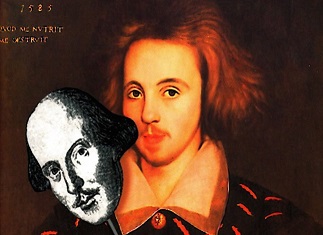
Christopher Marlowe, also known as Kit Marlowe, was an English playwright, poet and translator of the Elizabethan era. Marlowe was the foremost Elizabethan tragedian of his day. He greatly influenced William Shakespeare, who was born in the same year as Marlowe and who rose to become the pre-eminent Elizabethan playwright after Marlowe's mysterious early death. Marlowe's plays are known for the use of blank verse and their overreaching protagonists.
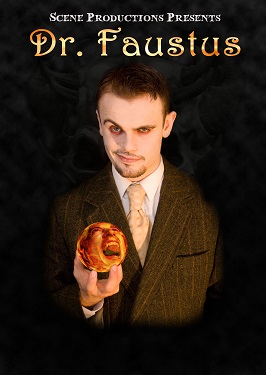
Doctor Faustus (or The Tragicall History of the Life and Death of Doctor Faustus)
The Tragical History of the Life and Death of Doctor Faustus, commonly referred to simply as Doctor Faustus, is a play by Christopher Marlowe, based on the German story Faust. Doctor Faustus was first published in 1604, eleven years after Marlowe's death and at least 10 years after the first performance of the play. It is the most controversial Elizabethan play outside of Shakespeare, with few critics coming to any agreement as to the date or the nature of the text.
4.the sphinx
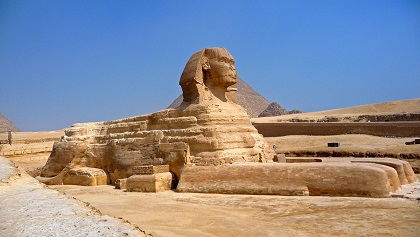
The sphinx is a mythical creature with, as a minimum, the head of a human and the body of a lion. In Greek tradition, it has the head of a human, the haunches of a lion, and sometimes the wings of a bird. It is mythicised as treacherous and merciless. Those who cannot answer its riddle suffer a fate typical in such mythological stories, as they are killed and eaten by this ravenous monster. This deadly version of a sphinx appears in the myth and drama of Oedipus. Unlike the Greek sphinx, which was a woman, the Egyptian sphinx is typically shown as a man (an androsphinx). In addition, the Egyptian sphinx was viewed as benevolent, but having a ferocious strength similar to the malevolent Greek version and both were thought of as guardians often flanking the entrances to temples.
Reference website: Christopher Marlowe https://www.bing.com/images/search?q=Christopher+Marlowe&view=detailv2&&id=50CCE 22E87FED000F6277759772F45F5D7FB2A27&selectedIndex=8&ccid=ilBqoioa&simid=608 041235354291459&thid=OIP.M8a506aa22a1a220dc661ef8540a33dceH2&ajaxhist=0 Doctor Faustus https://www.bing.com/images/search?q=Doctor+Faustus&view=detailv2&&id=9F00DB41FE8 DE7A5A76C64E0AD0B7A827D687763&selectedIndex=0&ccid=vfZvxjDJ&simid=6080081 42629308550&thid=OIP.Mbdf66fc630c98c3a6bac6716cdb74238H2&ajaxhist=0 sphinx https://www.bing.com/images/search?q=the+sphinx&view=detailv2&&id=F4234D68D80CE 59FE95AD8D07162EB9022ACF81B&selectedIndex=2&ccid=mF5eSTDG&simid=608008 993028375479&thid=OIP.M985e5e4930c6f88054e0f19eae92fad1H0&ajaxhist=0
|
|
| ( 知識學習|隨堂筆記 ) |