


 字體:小 中 大 |
|
|
|
| 2014/10/05 11:50:28瀏覽299|回應0|推薦0 | |
When I Was One-and-Twenty BY A. E. HOUSMAN When I was one-and-twenty I heard a wise man say, “Give crowns and pounds and guineas But not your heart away; Give pearls away and rubies But keep your fancy free.” But I was one-and-twenty, No use to talk to me.
When I was one-and-twenty I heard him say again, “The heart out of the bosom Was never given in vain; ’Tis paid with sighs a plenty And sold for endless rue.” And I am two-and-twenty, And oh, ’tis true, ’tis true.
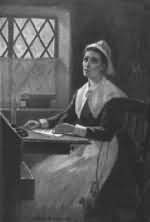
Colonial Literature 1. Anna Bradstreet (1612-1672) The Tenth Muse Lately Sprung Up in America
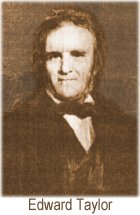
2. Edward Taylor (1645-1729) Meditation Eight
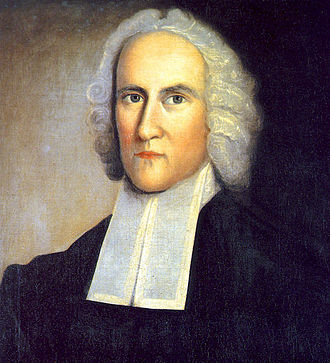
3. Johnathan Edward (1703-1758) Freedom of Will
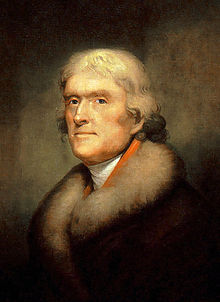
The Recolutionary Period 1. Thomas Jefferson (1743-1826) The Declaration of Independence
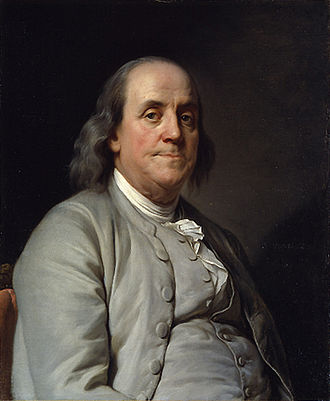
2. Benjamin Franklin (1706-1790) Autobiography
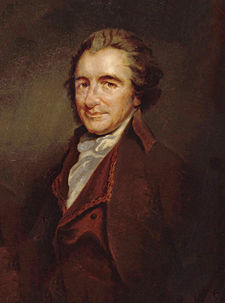
3. Thomas Paine (1737-1809) Common Sense
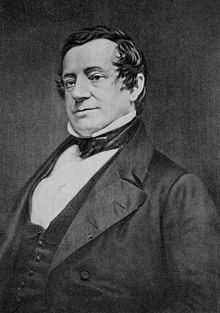
The Romantic Period 1. Washing Irving (1783-1859) Rip Van Winkle
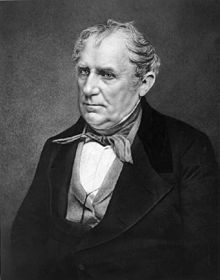
2. James Cooper (1789-1851) The Deerslayer
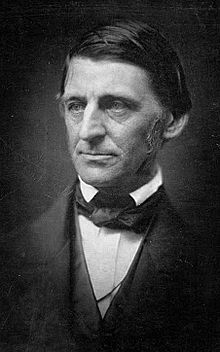
3. Ralph Waldo Emerson (1803-1882) The American Scholar
訴求: 真普選,不要假普選
1. 經濟-修改健保法案 強調生而平等,而不是只服務有錢人 2. 種族
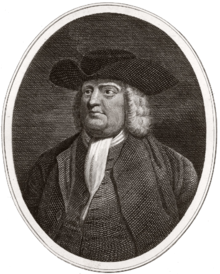
William Penn (14 October 1644 – 30 July 1718) was an English real estate entrepreneur, philosopher, early Quaker and founder of the Province of Pennsylvania, the English North American colony and the future Commonwealth of Pennsylvania. He was an early advocate of democracy and religious freedom, notable for his good relations and successful treaties with the Lenape Indians. Under his direction, the city of Philadelphia was planned and developed.
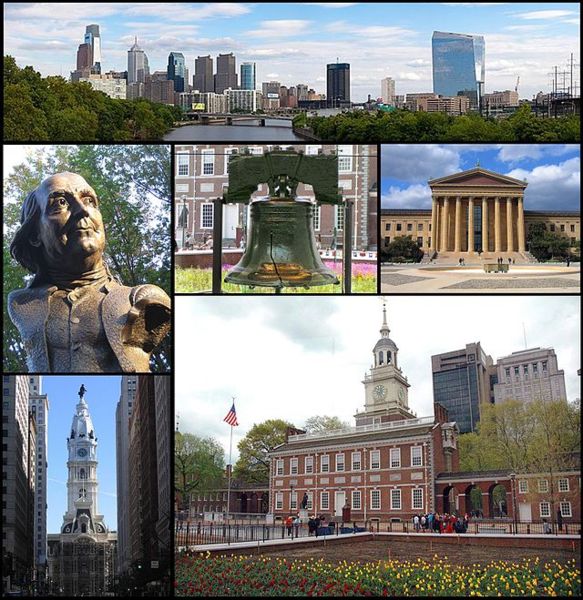
Philadelphia is the largest city in the Commonwealth of Pennsylvania, the fifth-most-populous city in the United States, and the core of the sixth-largest metropolitan area in the country. Popular nicknames for Philadelphia are Philly and The City of Brotherly Love, the latter of which comes from the literal meaning of the city's name in Greek (Greek: Φιλαδέλφεια ([pʰilaˈdelpʰeːa], Modern Greek: [filaˈðelfia]) "brotherly love", compounded from philos (φίλος) "loving", and adelphos (ἀδελφός) "brother"). Penn, as a devout follower of the newly established Quaker religion, believed the city, from where his area's government would stem, needed a solid name, one steeped in biblical history. So, in 1680, the "Quaker King," as Penn had become known, blessed the settlement with a name taken from the Book of Revelation.
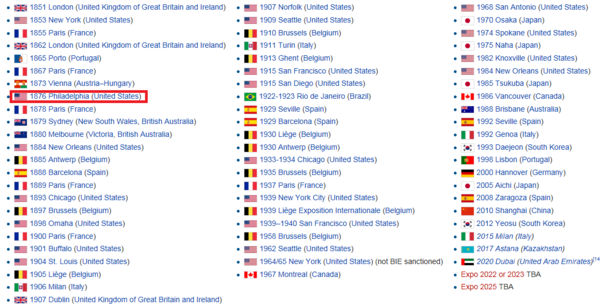
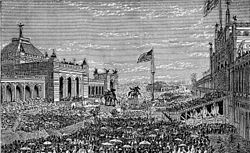
The Centennial International Exhibition of 1876, the first official World's Fair in the United States, was held in Philadelphia, Pennsylvania, from May 10 to November 10, 1876, to celebrate the 100th anniversary of the signing of the Declaration of Independence in Philadelphia. Officially named the International Exhibition of Arts, Manufactures and Products of the Soil and Mine, it was held in Fairmount Park along the Schuylkill River on fairgrounds designed by Herman J. Schwarzmann. About 10 million visitors attended, equivalent to about 20% of the population of the United States at the time.
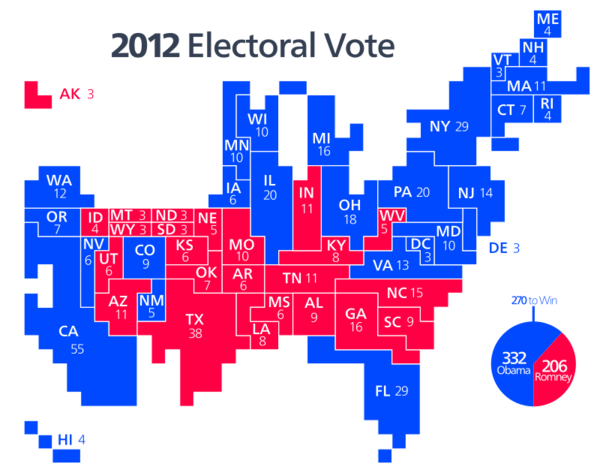
The United States Electoral College is the institution that officially elects the President and Vice President of the United States every four years. The President and Vice President are not elected directly by the voters. Instead, they are elected by "electors" who are chosen by popular vote on a state-by-state basis. Electors are apportioned to each state and the District of Columbia, but not to territorial possessions of the United States, such as Puerto Rico and Guam. *The number of electors in each state is equal to the number of members of Congress to which the state is entitled, while the Twenty-third Amendment grants the District of Columbia the same number of electors as the least populous state, currently three. In total, there are 538 electors, corresponding to the 435 members of the House of Representatives, 100 senators, and the three additional electors from the District of Columbia.
|
|
| ( 知識學習|隨堂筆記 ) |

 不用錢的最貴/ 不喜歡就不要答應
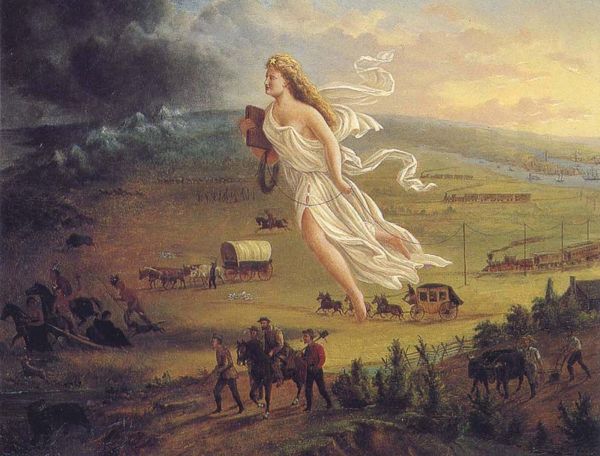 In the 19th century, Manifest Destiny was the widely held belief in the United States that American settlers were destined to expand throughout the continent. Historians have for the most part agreed that there are three basic themes to Manifest Destiny:The special virtues of the American people and their institutions; America's mission to redeem and remake the west in the image of agrarian America; An irresistible destiny to accomplish this essential duty.


