字體:小 中 大
 |
|
|
|
| 2017/01/02 00:29:41瀏覽231|回應0|推薦0 | |
|
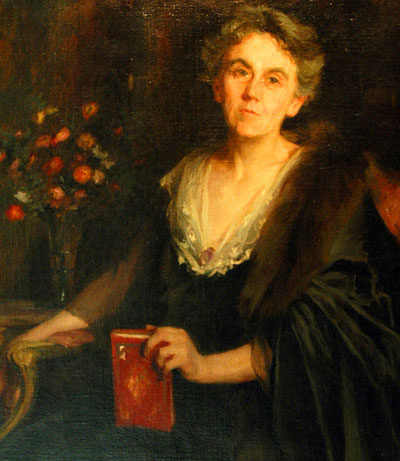
Edith Hamilton was an American educator and author who was "recognized as the greatest woman Classicist." She was 62 years old when The Greek Way, her first book, was published in 1930. It was instantly successful, and is the earliest expression of her belief in "the calm lucidity of the Greek mind" and "that the great thinkers of Athens were unsurpassed in their mastery of truth and enlightenment."
The Stories of the Months and Days
By Reginald C. Couzens
[1923, Copyright not renewed]
Scanned at sacredspiral.com, May 2004, by Eliza Fegley. Additional HTML formatting at sacred-texts.com, by John Bruno Hare. This text is in the public domain in the United States because it was not renewed in a timely fashion at the copyright office, as required at the time. These files may be used for any non-commercial purpose, provided this notice of attribution is left intact.
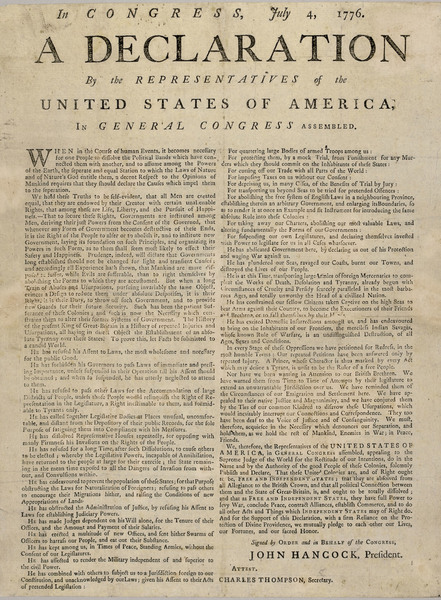
A declaration of independence or declaration of statehood is an assertion by a defined territory that it is independent and constitutes a state. Such places are usually declared from part or all of the territory of another nation or failed nation, or are breakaway territories from within the larger state. In 2010, the UN's International Court of Justice ruled in an advisory opinion in Kosovo that "International law contains no prohibition on declarations of independence", though the state from which the territory wishes to secede may regard the declaration as rebellion, which may lead to a war of independence or a constitutional settlement to resolve the crisis.
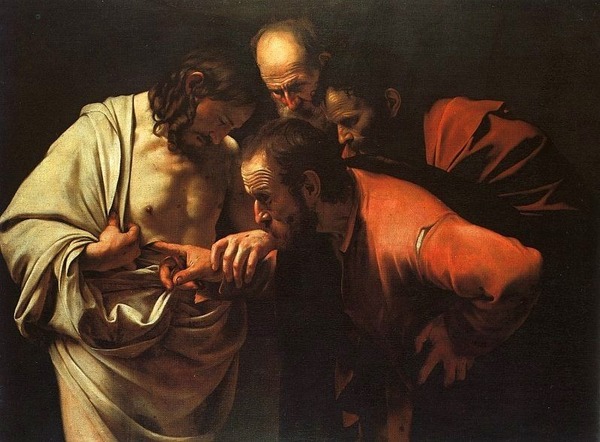
A doubting Thomas is a skeptic who refuses to believe without direct personal experience—a reference to the Apostle Thomas, who refused to believe that the resurrected Jesus had appeared to the ten other apostles, until he could see and feel the wounds received by Jesus on the cross.
Thirteenth Amendment to the United States Constitution
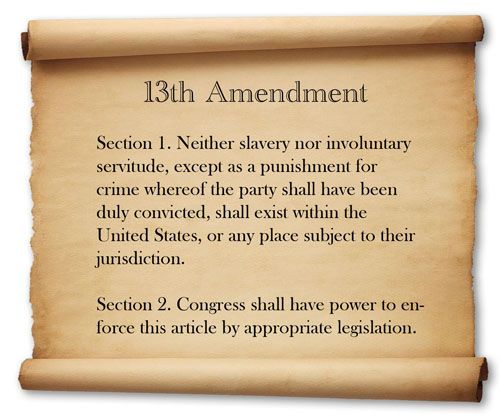
The Thirteenth Amendment (Amendment XIII) to the United States Constitution abolished slavery and involuntary servitude, except as punishment for a crime. In Congress, it was passed by the Senate on April 8, 1864, and by the House on January 31, 1865. The amendment was ratified by the required number of states on December 6, 1865. On December 18, 1865, Secretary of State William H. Seward proclaimed its adoption. It was the first of the three Reconstruction Amendments adopted following the American Civil War. 1. Novice(n)
Definition:A person new to a field or activity; I'm a complete novice at skiing.
2. Renovation(n)
Definition:To return to a condition of newness, as by repairing or remodeling. The building has undergone major renovation. 3. Innovation(n)
Definition:The act of introducing something new. His greatest innovation was the use of interchangeable parts. 4. Neophyte(n) Definition:A neophyte is someone who is new to a particular activity. The neophyte must not despair of mastering the rules and procedures.
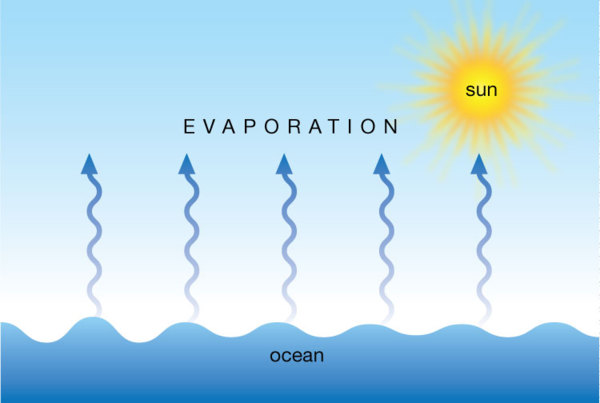
Definition:To convert or change into a vapor. Be careful not to lose too much liquid by evaporation.
Definition:To undergo or show change The levels of tolerable pain vary greatly from individual to individual.
Definition:If you say that there are various things, you mean there are several different things of the type mentioned. Specialists see various reasons for the recent surge in inflation. Definition:Having or consisting of various kinds or forms. It is essential that your diet is varied and balanced. 9. Variable(adj)
Definition:Likely to change or vary. The drill has variable speed control.
Old English cwellan "to kill, murder, execute," from Proto-Germanic *kwaljanan (source also of Old English cwelan "to die," cwalu "violent death;" Old Saxon quellian "to torture, kill;" Old Norse kvelja "to torment;" Middle Dutch quelen "to vex, tease, torment;" Old High German quellan "to suffer pain," German quälen "to torment, torture"), from PIE root *gwele- (1) "to throw, reach," with extended sense of "to pierce" (source also of Armenian kelem "I torture;" Old Church Slavonic zali "pain;" Lithuanian galas "end," gela "agony," gelti "to sting;" see ballistics). Milder sense of "suppress, extinguish" developed by c. 1300. Related: Quelled; quelling. 1610s, from French consternation "dismay, confusion," from Latin consternationem (nominative consternatio) "confusion, dismay," from consternat-, past participle stem of consternare "overcome, confuse, dismay, perplex, terrify, alarm," probably related to consternere "throw down, prostrate," from com-, intensive prefix (see com-), + sternere "to spread out" (see stratum). "large bottle for wine or liquor," mid-15c., from Middle French flacon, Old French flascon "small bottle, flask" (14c.), from Late Latin flasconem (nominative flasco) "bottle" (see flask). late 14c., from Old French discerner (13c.) "distinguish (between), separate" (by sifting), and directly from Latin discernere "to separate, set apart, divide, distribute; distinguish, perceive," from dis- "off, away" (see dis-) + cernere "distinguish, separate, sift" (see crisis). Related: Discerned; discerning. early 15c., from Old French laudable "praiseworthy, glorious" and directly from Latin laudabilis "praiseworthy," from laudare "to praise, commend, extol" (see laud). Related: Laudably.
|
|
| ( 知識學習|隨堂筆記 ) |