字體:小 中 大 |
|
|
|||||||||||||||||||||||||||||||||||||||||||||||||||||||||||||||||||||||||||||||||||||||||||||||||||||||||||||||
| 2026/11/02 11:55:25瀏覽104|回應0|推薦0 | |||||||||||||||||||||||||||||||||||||||||||||||||||||||||||||||||||||||||||||||||||||||||||||||||||||||||||||||
THE WHITE FILES: THE MANY
Film Novel TABLE OF CONTENTS
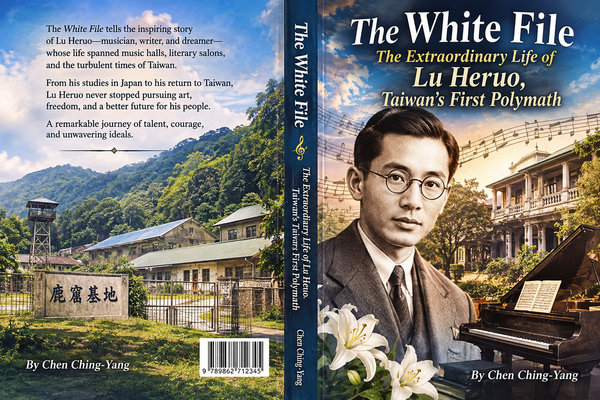
I. PURPOSE OF WRITINGIn October 1945, Taiwan was liberated from Japanese colonial rule and returned to Chinese sovereignty after fifty years of separation. At the time, the people of Taiwan were eager for good governance and placed great expectations on the Chinese government. They believed that they would no longer be treated as second-class citizens. Unexpectedly, Chiang Kai-shek sent Chen Yi to Taiwan to take over the administration. Chen Yi arrived with a group of civilian and military officials whose outdated and corrupt attitudes were deeply resented by the local population. They behaved as conquerors, and many of their policies were unacceptable to the Taiwanese people. Public opinion toward the new administration deteriorated rapidly. What was supposed to be a government takeover became a plundering operation, as officials used the opportunity to enrich themselves. Meanwhile, the troops stationed in Taiwan were poorly disciplined. Friction between soldiers and civilians, along with tensions between people from different provincial backgrounds, continued to escalate until the February 28 Incident finally erupted. Chen Yi ordered his troops to launch a brutal and merciless crackdown against the people of Taiwan. Countless Taiwanese were arrested and killed, leaving tens of thousands dead or wounded. Following the February 28 Incident, Chen Yi brought in additional troops to conduct a campaign known as the "Rural Pacification Campaign." The February 27 Brigade, a resistance force spontaneously organized by native Taiwanese, was no match for the governments military forces. Taiwanese intellectuals and community leaders were either killed or forced to flee. Some escaped into remote mountainous regions, where they joined forces with the Communist Party and continued their resistance. In the spring of 1949, the situation on the mainland rapidly deteriorated for the Nationalist government, which retreated to Taiwan and the Penghu Islands. On May 20 of that year, the government imposed martial law, plunging Taiwan into the political winter of the White Terror. People could be arrested or punished at any moment, and those who dared to speak out against the authorities had to remain silent for fear of retaliation. This story opens in the 1950s, during the White Terror, with a massacre that took place in Lukut Village, a mountainous settlement in the Xizhi area of northern Taiwan. Lukut Village lies in the mountainous region where Nangang, Xizhi, and Shiding meet, at an elevation of more than 600 meters above sea level. The story explores how the villagers of Lukut, after losing family members and friends and enduring the indifference and discrimination of others, struggled through those difficult years and found the courage to rebuild their lives and create a better future. Although this village massacre was buried for nearly six decades, much time has passed since those events. The remains of the Lukut "Base" have long since disappeared beneath overgrown vegetation and abandoned terrain. Most of the surviving victims and their descendants have also received what the government calls "substantive compensation." Nevertheless, the shadow of the White Terror remains in their hearts, a reminder of the historical suffering endured by the previous generation. As the ancient saying goes, "Those who do not remember the past are bound to repeat it." The purpose of writing this full-length historical novel is not to expose the political "scars" of the Kuomintangs rule. Rather, it is to preserve a literary and historical record of a period that society has largely overlooked. It is also intended to remind the people of Taiwan that, as our country progresses toward greater liberalization and democratization, regardless of which political party holds power in the future, historical injustices and fabricated political cases in modern Taiwan must be confronted honestly. We must learn from history and never again treat human lives as expendable, abuse the powers granted by the state, or use the military and police as instruments to eliminate political opponents. Furthermore, the various ethnic and cultural communities within Taiwan should no longer maintain rigid divisions or regard one another with hostility. Instead, they should learn to coexist and integrate as one community, just as the Yu and Xia families, who become united through marriage in this novel, come to love and support one another. In other words, under the shared premise that all people on the island belong to a community of common destiny, every ethnic group should set aside narrow ethnic divisions and work together to cultivate a beautiful and firmly established sense of national identity as a "New Taiwan." This novel draws on the investigative report prepared by Professor Chang Yen-hsien, former director of the Academia Historica. It has also been revised and supplemented with field research gathered through my personal visits and interviews with elderly villagers who witnessed those events. Through the form of a film novel, this work brings to life the village massacre that occurred more than half a century ago. The characters in the story include Tsai Hsiao-chien, leader of the Taiwan Communist Party; Chen Benjiang, chairman of the Base, also known as Jiang; Lu Heruo, known as Wang; Chen Tonghe, political commissar; Liao Xueli, instructor; Chen Chunqing, party secretary; Colonel Kuo Wen-cheng, head of the Investigation and Security Section of the Ministry of National Defenses Bureau of Investigation; Liao Musheng, chief of general affairs at the township office; Chen Qiwang, village chief of Lukut; Huang Bida, village administrative officer; and Ku Yen-pi-hsia of Lukang. All were real historical figures who played active roles during that period. Most of the story is based on historical facts. However, certain aspects of the female characters romantic relationships have been fictionalized to create a dramatic, intricate, and sweeping story set against a turbulent historical era. II. STORY SYNOPSISHistorical SettingThe story takes place between 1947 and 1963, during the early years of Nationalist government rule in Taiwan following its relocation from mainland China. Following the February 28 Incident in 1947, several Taiwanese intellectuals who were evading arrest by the Nationalist government, including musician Lu Heruo, joined forces with Communist Party members such as Chen Benjiang. They entered the mountainous region of Lukut, in Shiding Township, Taipei County, where they established a secret "Base," organized local villagers, and spread Communist ideology. The governments military intelligence agency, the Bureau of Investigation, dispatched agents to infiltrate the organization. Once the time was right, on December 28, 1952, a large force of military and police personnel surrounded the mountainous area and launched a massive arrest operation. The resulting massacre became one of the largest political injustices in Taiwans history during the White Terror era, involving the greatest number of executions and prison sentences in a single case. Main Characters and Story DevelopmentLu Heruo travels overseas to Japan with his wife, Lin Xuerong, and settles in Tokyo, where he studies vocal music under the renowned instructor Yoshiko Nagasaka. Teacher Nagasaka greatly admires Lu Heruos dedication to learning and his tireless efforts. Knowing that his family is struggling financially, she frequently provides them with essential supplies and even helps him secure opportunities with the famous local Takarazuka Revue, where he participates in stage productions, plays, and opera performances. Although Lu Heruos performances earn the companys recognition, Japan is at war at the time, and audiences for stage plays and opera are scarce. With their limited income, Lu Heruo and his family continue to live in near-starvation. His children begin to show signs of malnutrition. His uncle and his early mentor write to him, urging him to return to Taiwan and pursue his career there. It is not until Lu Heruo discovers that he has contracted pulmonary tuberculosis that he finally decides to return to Taiwan with his wife and children. A man of extraordinary talent, Lu Heruo has an extensive circle of friends. His close friend in Taichung, Zhang Wenhuan, introduces him to Ku Yen-pi-hsia, who runs a literary salon in Taipei. From then on, Lu Heruo becomes a regular at the salon and also works as a private music tutor at her home, improving his familys financial circumstances. At the literary salon, Lu Heruo shares common interests with several prominent novelists of the time, including Yang Kui and Lung Ying-tsung. They become close friends and share their disapproval of the Japanese writer Nishikawa Mitsuru, who lives in Taiwan and publishes articles attacking Taiwanese novelists. They are equally contemptuous of the colonial governments so-called "Music Patriotic Service Association" activities. While working at the Xingye Control Corporation, a film company, Lu Heruo meets Su Yulan, a young woman applying for an acting position. Yulan admires his talent, and the two begin a romantic relationship, eventually establishing a home together. Su Yulan becomes his mistress. During this period, Lu Heruo is active in Taiwans cultural circles and participates in the preparation and production of theatrical plays and stage performances. After Chen Yis government takes over Taiwan, Lu Heruo initially places his hopes in the Nationalist authorities. He voluntarily joins the Three Principles of the People Youth Corps, actively studies Mandarin Chinese, and becomes a reporter for the Peoples Herald. However, as a native Taiwanese journalist who frequently reports on negative developments and misconduct within government offices, he finds himself unwelcome at the newspaper. He subsequently resigns and takes a position as a music teacher at Taipei First Girls High School, where his talent and charm make him admired and popular among both female teachers and students. Following the February 28 Incident, the authorities launch a massive campaign to arrest and kill Taiwanese intellectuals and community leaders. His close friend Yang Kui and Yangs wife are arrested and imprisoned. Witnessing widespread official corruption and the deterioration of peoples livelihoods, Lu Heruos political views begin to shift to the left. He sells his property at a steep discount to raise funds for a printing business and becomes a reporter for the Bright Light Daily. He secretly joins the Taiwan Communist Party and frequently publishes strongly worded articles criticizing the governments policies. His printing business also secretly produces documents issued by the Chinese Communist Party, attracting the attention of Colonel Kuo Wen-cheng, head of the Bureau of Investigations Investigation and Security Section. Kuo orders his subordinate, military officer Xing Aihua, to forcibly bring Lu Heruo to him. At his quarters, Kuo hosts a banquet for Lu and employs both persuasion and intimidation in an attempt to win him over. He even promises him a prestigious and favorable position in exchange for his cooperation. However, Lu Heruo remains unmoved and insists that the newspaper must continue its role of monitoring and criticizing the governments policies. Following the February 28 Incident in 1947, a number of native Taiwanese who were evading government pursuit gradually arrived in Lukut Village. They were intellectuals and political figures dissatisfied with Chiang Kai-sheks regime and the Kuomintang government that had taken over Taiwan under Chen Yi. The villagers commonly refer to these newcomers as the "Mountain Refugees," meaning people who have gone into hiding in the mountains. They establish a secret "Base," where they train Communist Party members, organize lectures and reading groups, and spread their political ideology. Their ultimate goal is to "overthrow Chiang Kai-sheks corrupt authoritarian regime and liberate Taiwan." As a result, they gain the support and recognition of many local villagers. Liao Musheng, chief of general affairs at the township office, and Chen Qiwang, the village chief of Lukut, become their financial supporters, providing funds and safe houses. Local tea farmers such as Lin Maotong and Yu Lianfu also sympathize with and support their activities. The Bright Light Daily frequently publishes articles criticizing government policies, attracting the attention and surveillance of the Bureau of Investigation. Colonel Kuo Wen-cheng, head of the Investigation and Security Section, orders his subordinate, military officer Xing Aihua, to forcibly bring the newspapers editor-in-chief, Lu Heruo, to him. Kuo hosts a banquet for Lu at his quarters and uses a combination of persuasion and intimidation to try to win him over, promising him a prestigious position in exchange for his cooperation. Lu, however, refuses to yield and remains committed to the newspapers role of holding the authorities accountable. Su Yulan, Lu Heruos live-in partner, becomes increasingly worried when he returns home late. From Lu, she learns that he has been summoned for questioning by the Bureau of Investigation. She repeatedly urges him to think of her and their daughter and stop confronting the Bureau. After the meeting, Lu informs the newspapers publisher, Zhong Haodong, and its president, Lin Hanwen, about what happened. Both Zhong and Lin commend his integrity and courage. Kuo Wen-cheng then decides to launch a purge of the Bright Light Daily. Accusing the newspaper of operating an "underground Communist intelligence station," he divides his forces into three groups to arrest the publisher, president, and employees. His agents also go to Keelung Middle School to arrest Zhongs wife and several faculty members, while conducting arrests of university faculty and students with leftist political views on the campus of National Taiwan University. Fortunately, the newspaper staff manage to warn Lu Heruo in time. He flees with Su Yulan and her daughter. During their escape, Lu seeks help from his business partner, Xiao Dongping, the novelist Zhang Wenhuan, and Ku Yen-pi-hsia of Lukang. As a result, Xiao and Ku are subsequently implicated in the case. After making arrangements for his legal wife, Lin Xuerong, and his live-in partner, Su Yulan, and their child, Lu Heruo initially considers escaping secretly to Japan. However, his close friend Zhang Wenhuan advises him to seek help from Tsai Hsiao-chien in Taipei, who has an extensive network of political connections. When Tsai receives Lu, he explains that the ports are already under surveillance and that it would be extremely difficult for Lu to leave Taiwan by ship. He advises Lu to take temporary refuge at the Lukut Base. Tsai writes a letter of introduction for Lu to take to Lukut. After reading the letter and following Tsais instructions, Chen Benjiang, the chairman of the Base, decides to make full use of Lu Heruos talents and appoints him director of the Political Department. At the Base, Lu Heruo is reunited with He Yunxuan, a young lecturer in the Department of Political Science at National Taiwan University, who has also sought refuge there following the Bright Light Daily incident. The two men have known each other for some time and share a deep mutual understanding and respect. To conceal their identities, Lu Heruo adopts the alias Wang Wenbo at the Base, while He Yunxuan takes the name Zhang Haiqing. However, ideological differences persist among the members of the Base, creating internal tensions and power struggles. Chen Benjiang and Chen Danghe represent the pro-Chinese Communist Party faction, which believes that the Chinese Communist Party should lead the movement. In contrast, Lu Heruo, Liao Xueli, and Chen Chunqing belong to the Taiwan Communist Party faction, which advocates that the Taiwanese people themselves should overthrow Chiang Kai-sheks regime. These conflicting political positions inevitably lead to disagreements and struggles over authority within the organization. Political Commissar Chen Danghe and Instructor Dong Zhiqian each harbor their own ulterior motives. They join forces to frame Lu Heruo. On the one hand, Chen Danghe is consumed by ambition and desperately wants to remove Lu Heruo from his position as director of the Political Department. On the other hand, he is jealous of Lu because the beautiful young Chen Ruyu, the younger sister of Liao Musheng, has taken a liking to him. Chen hopes to eliminate Lu and take Chen Ruyu for himself. Dong Zhiqian, meanwhile, is an undercover agent for the Bureau of Investigation who has infiltrated the Base. In addition to collecting a list of the Bases members, his mission is to create internal conflicts whenever an opportunity arises. The two men first devise a scheme to release a venomous snake into Lu Heruos room in the middle of the night, hoping that it will bite and kill him. However, their plan fails. They then come up with a second scheme: stealing a batch of mining explosives from the Bases ammunition storage facility and framing Lu Heruo for the theft. Fortunately, justice prevails. Yu Wenyan, the son of Yu Lianfu, witnesses their conspiracy with his own eyes. Dong Zhiqian also covets Chen Ruyu because of her beauty. While Lu Heruo is being held under guard and confined by Chen Benjiang in connection with the stolen explosives case, Dong takes advantage of the turmoil within the Base to pursue his own sinister intentions. When Chen Ruyu is alone, he approaches her wearing a mask and carrying a knife, then attempts to rape her. Fortunately, Yu Lianfu and his son Wenyan happen to pass by and discover the assault. Yu Lianfu grabs a shoulder pole and fights Dong Zhiqian. Dong is no match for him, suffers injuries, and flees. When Chen Qiwang learns that his younger sister Ruyu has narrowly escaped sexual assault, he listens to Yu Lianfus account and concludes that the attacker must be someone from within the Base. He therefore personally visits the Base and demands that Chairman Chen Benjiang investigate all suspicious individuals within the organization. Chen Danghe and Dong Zhiqians scheme to frame Lu Heruo and use him as a scapegoat is subsequently exposed when Yu Wenyan reveals what he witnessed. Chen Qiwang then discovers the stolen explosives, exposing the two mens conspiracy in time. He also summons Chairman Chen Benjiang to the scene, leaving Benjiang deeply embarrassed. After returning to the Base, Chen Benjiang immediately orders Chen Danghe and Dong Zhiqian to be detained. Chen Danghe admits to his crime and receives a relatively lenient punishment. Dong, however, continues to deny any wrongdoing and repeatedly makes excuses. Chen Benjiang notices that Dong Zhiqian has sustained injuries and suspects that he is the masked attacker who attempted to rape Chen Ruyu. As previously agreed, he turns Dong over to Chen Qiwang for punishment. Chen Qiwang cripples one of Dongs legs and secretly confines him in the woodshed of his own home. At the end of that year, during the provincial council election campaign, Chen Qiwangs brother-in-law, Liao Qingwen, a so-called "Half-Mountain" who had previously conducted business on the Chinese mainland, has already been bought off by Colonel Kuo Wen-cheng, head of the Bureau of Investigations Investigation and Security Section under the Taiwan Garrison Command. Together with Dong Zhiqian, the former Bright Light Daily reporter who has been recruited by Kuo, Liao Qingwen returns to Lukut Village to operate undercover. Taking advantage of Chen Qiwangs busy schedule campaigning for a friend and his resulting lack of vigilance, Liao Qingwen manages to rescue Dong Zhiqian from confinement. Not long after Dong Zhiqian escapes from Lukut Village, Kuo Wen-cheng obtains the membership list of the Base and identifies the villagers who sympathize with the Communist Party. The day after the provincial council election, Kuo orders military, military police, and regular police forces to seal off all roads leading into and out of Lukut Village. They then advance into the mountains and launch a massive operation to arrest the villagers. Fortunately, Xu Jialiang, the chief of the Lukut Police Station and the brother-in-law of Yu Lianfu, manages to deliver a warning in time. The members of the Base are able to evacuate under cover of darkness. Meanwhile, following a plan jointly devised by Chen Qiwang and Liao Musheng, Lu Heruo and Chen Ruyu, as well as He Yunxuan and Chen Ruyu, leave the area and seek refuge elsewhere. However, while escaping from Lukut, Lu Heruo is bitten by a venomous snake and dies from the injury. Villagers of Lukut who sympathize with the Base, including Liao Musheng, Chen Qiwang, Chen Tianqi, Chen Qiwangs eldest son, Lin Maotong, and Chen Chunqing, are all captured and killed by the military and police forces. The circumstances surrounding the life and death of Lu Heruo, a Taiwanese novelist whose political views shifted to the left, have long been a matter of historical debate, with various conflicting accounts. For dramatic purposes, this film novel fictionalizes this part of the story, including the romantic relationship between Lu Heruo and Chen Ruyu. III. AUTHORS NOTES[1] The central storyline of this novel focuses on the interactions among the principal figures of the Lukut Base: Tsai Hsiao-chien, leader of the Taiwan Communist Party; Professor Chen Benjiang, chairman of the Base; Lu Heruo, the writer; He Yunxuan, a young lecturer at National Taiwan University; Chen Qiwang, the village chief; and Chen Chunqing, a local villager. It also explores their relationships and conflicts with Mao Renfeng of the Bureau of Investigation, Kuo Wen-cheng, head of the Investigation and Security Section, and undercover agents Dong Zhiqian and Liao Qingwen. [2] The novel contains a large number of characters. The author has therefore chosen to focus primarily on those who play significant roles in the development of the plot. As for the dialogue between characters, most conversations would historically have taken place in Japanese and Taiwanese Hokkien, with some Hakka and, during the later period, Mandarin spoken by people who had relocated from mainland China.
|
|||||||||||||||||||||||||||||||||||||||||||||||||||||||||||||||||||||||||||||||||||||||||||||||||||||||||||||||
| ( 創作|小說 ) |