字體:小 中 大
 |
|
|
|
| 2014/04/30 23:07:53瀏覽116|回應0|推薦0 | |
chivalry (中世紀)騎士精神 knight
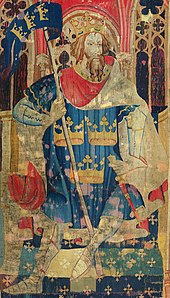
King Arthur is a legendary British leader of the late 5th and early 6th centuries, who, according to medieval histories and romances, led the defence of Britain against Saxon invaders in the early 6th century. The details of Arthur's story are mainly composed of folklore and literary invention, and his historical existence is debated and disputed by modern historians. The sparse historical background of Arthur is gleaned from various sources, including the Annales Cambriae, the Historia Brittonum, and the writings of Gildas. Arthur's name also occurs in early poetic sources such as Y Gododdin.
The Round Table is King Arthur's famed table in the Arthurian legend, around which he and his Knights congregate. As its name suggests, it has no head, implying that everyone who sits there has equal status. The table was first described in 1155 by Wace, who relied on previous depictions of Arthur's fabulous retinue. The symbolism of the Round Table developed over time; by the close of the 12th century it had come to represent the chivalric order associated with Arthur's court, the Knights of the Round Table. Excalibur 石中劍
Excalibur is the legendary sword of King Arthur, sometimes attributed with magical powers or associated with the rightful sovereigntyof Great Britain. Sometimes Excalibur and the Sword in the Stone (the proof of Arthur's lineage) are said to be the same weapon, but in most versions they are considered separate. The sword was associated with the Arthurian legend very early. In Welsh, the sword is called Caledfwlch; in Cornish, the sword is called Calesvol. feudwlism 封建制度 Catholicism adoration 崇拜;敬愛
According to the Bible, Mary (מרים; c. 18 BC – c. 41 AD), also known as Saint Mary or Virgin Mary, was a Jewish woman ofNazareth in Galilee. She is identified in the New Testament as the mother of Jesus through divine intervention. Mary (Maryam) also has a revered position in Islam, where a whole chapter of the Qur'an is devoted to her.Christians hold her son Jesus to be Christ (i.e., the messiah) and God the Son Incarnate. By contrast, Muslims regard Jesus as one of the prophets of God sent to humanity; not as God himself nor the Son of God.
Mary I (18 February 1516 – 17 November 1558) was Queen of England and Ireland from July 1553 until her death. Her executions of Protestants caused her opponents to give her the sobriquet "Bloody Mary". She was the only child of Henry VIII and his first wife Catherine of Aragon who survived to adulthood. Her younger half-brother,Edward VI, succeeded Henry in 1547. When Edward became mortally ill in 1553, he attempted to remove Mary from the line of succession because of religious differences. On his death their first cousin once removed, Lady Jane Grey, was initially proclaimed queen. Mary assembled a force in East Anglia and successfully deposed Jane, who was ultimately beheaded. In 1554, Mary marriedPhilip of Spain, becoming queen consort of Habsburg Spain on his accession in 1556. As the fourth crowned monarch of the Tudor dynasty, Mary is remembered for her restoration of Roman Catholicism after the short-lived Protestant reign of her half-brother. During her five-year reign, she had over 280 religious dissenters burned at the stake in theMarian persecutions. Her re-establishment of Roman Catholicism was reversed after her death in 1558 by her younger half-sister and successor, Elizabeth I.
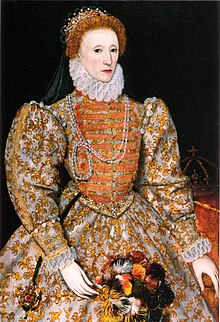
Elizabeth I (7 September 1533 – 24 March 1603) was queen regnant of England and Ireland from 17 November 1558 until her death. Sometimes called "The Virgin Queen", "Gloriana" or "Good Queen Bess", Elizabeth was the fifth and last monarch of theTudor dynasty. The daughter of Henry VIII, she was born into the royal succession, but her mother, Anne Boleyn, was executed two and a half years after her birth, with Anne's marriage to Henry VIII being annulled, and Elizabeth hence declared illegitimate. Her half-brother, Edward VI, ruled as king until his death in 1553, whereupon he bequeathed the crown to Lady Jane Grey, cutting his two half-sisters, Elizabeth and the Roman Catholic Mary, out of the succession in spite of statute law to the contrary. His will was set aside, Mary became queen, and Lady Jane Grey was executed. In 1558, Elizabeth succeeded her half-sister, during whose reign she had been imprisoned for nearly a year on suspicion of supporting Protestant rebels. Elizabeth set out to rule by good counsel, and she depended heavily on a group of trusted advisers led by William Cecil, Baron Burghley. One of her first moves as queen was the establishment of an English Protestant church, of which she became the Supreme Governor. This Elizabethan Religious Settlement later evolved into today's Church of England. It was expected that Elizabeth would marry and produce an heir so as to continue the Tudor line. She never did, however, despite numerous courtships. As she grew older, Elizabeth became famous for her virginity, and a cult grew up around her which was celebrated in the portraits, pageants, and literature of the day.
the Holy Grail 中世紀 based on faith & reason Rembrandt lighting is a lighting technique that is used in studio portrait photography. It can be achieved using one light and a reflector, or two lights, and is popular because it is capable of producing images which appear both natural and compelling with a minimum of equipment. Rembrandt lighting is characterized by an illuminated triangle under the eye of the subject on the less illuminated side of the face. It is named for the Dutch painter Rembrandt, who often used this type of lighting.
The painting may be more properly titled by its long since forgotten name The Company of captain Frans Banning Cocq and lieutenant Willem van Ruytenburch preparing to march out. In the 18th century the painting became known as the Night Watch. It is prominently displayed in the Rijksmuseum, Amsterdam, the Netherlands, as the best known painting in its collection. The Night Watch is one of the most famous paintings in the world.
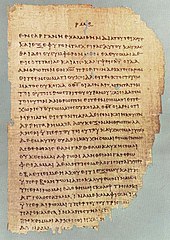
The Book of Revelation, often known simply as Revelation or the Apocalypse,[1] is the final book of the New Testament and occupies a central place in Christian eschatology. Written in Koine Greek, its title is derived from the first word of the text,apokalypsis, meaning "unveiling" or "revelation." The author of the work identifies himself in the text as "John" and says that he was on Patmos, an island in the Aegean, when he was instructed by a heavenly figure to write down the contents of a vision. This John is traditionally supposed to be John the Apostle, although some historical-critical scholars reject this view.[2] Recent scholarship has suggested other possibilities including a putative figure given the name John of Patmos. Most modern scholars believe it was written around AD 95, with some believing it dates from around AD 60. Twelfth Night (Shakespeare) Twelfth Night; or, What You Will is a comedy by William Shakespeare, believed to have been written around 1601–02 as a Twelfth Night's entertainment for the close of the Christmas season. The play expanded on the musical interludes and riotous disorder expected of the occasion,[1] with plot elements drawn from the short story "Of Apollonius and Silla" by Barnabe Rich, based on a story by Matteo Bandello. The first recorded performance was on 2 February 1602, at Candlemas, the formal end of Christmastide in the year's calendar. The play was not published until its inclusion in the 1623 First Folio. She's the Man 足球尤物
Twelfth Night v.s. She's the Man http://www.teenink.com/nonfiction/academic/article/323711/Shes-the-Man-vs-Twelfth-Night/ ------------------------------------------------------ commencement hooding ceremony |
|
| ( 不分類|不分類 ) |