字體:小 中 大
 |
|
|
||
| 2015/09/28 16:57:48瀏覽202|回應0|推薦0 | ||
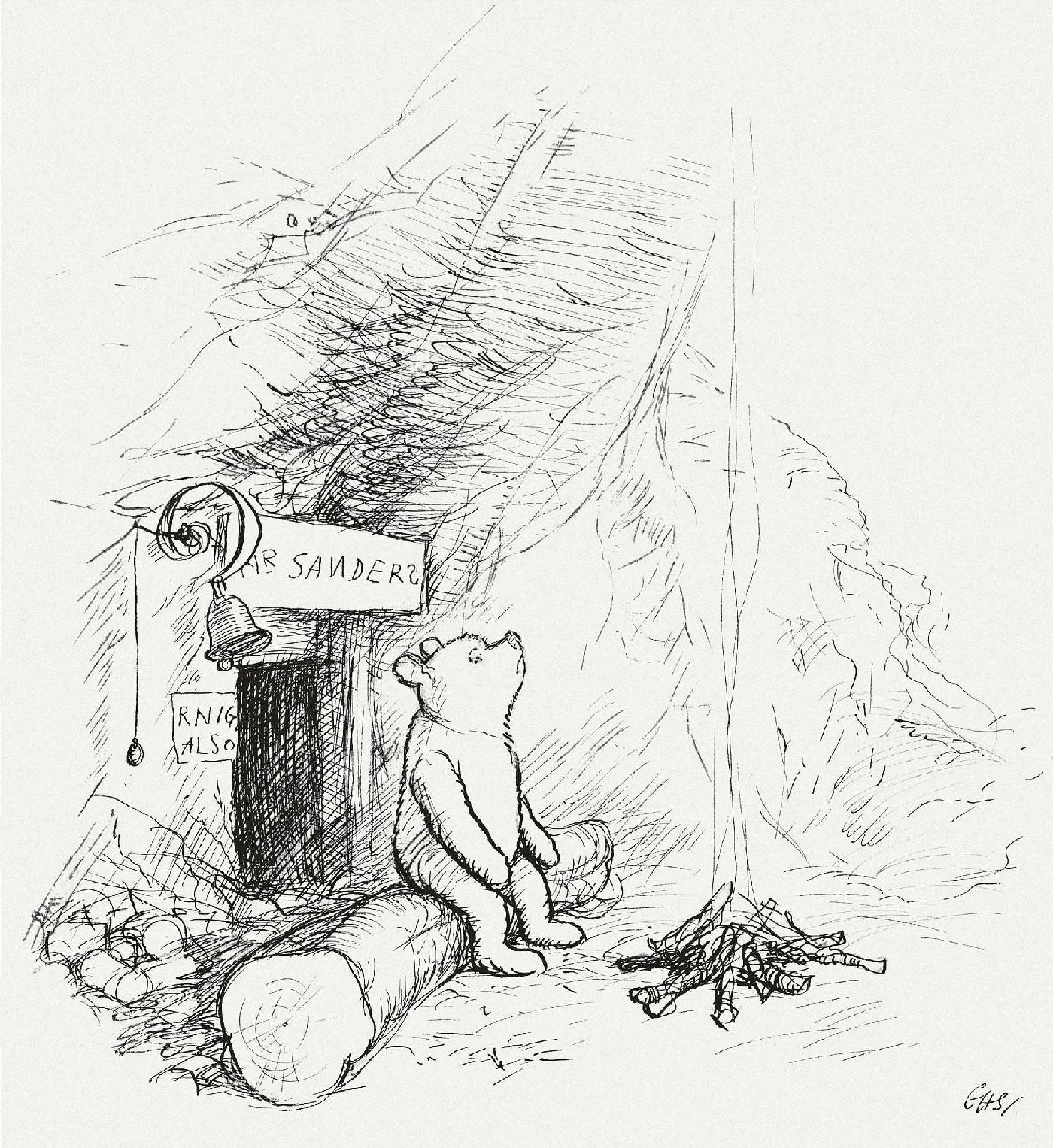
Winnie-the-Pooh Winnie-the-Pooh, also called Pooh Bear, is a fictional anthropomorphic teddy bear created by English author A. A. Milne.
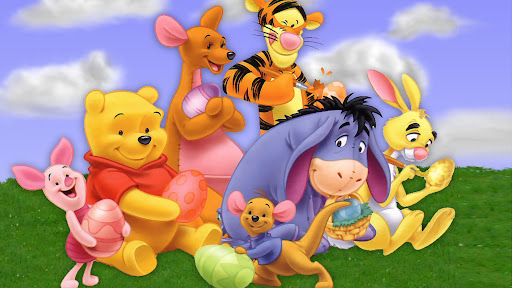
(Quiz on Winnie-the-Pooh: http://www.lavasurfer.com/wtp/pooh-quiz.html) A. A. Milne named the character Winnie-the-Pooh for a teddy bear owned by his son, Christopher Robin Milne, who was the basis for the character Christopher Robin. The rest of Christopher Robin Milne's toys, Piglet, Eeyore, Kanga, Roo and Tigger, were incorporated into Milne's stories. Two more characters, Owl and Rabbit, were created by Milne's imagination, while Gopher was added to the Disney version. Christopher Milne had named his toy bear after Winnie, a Canadian black bear he often saw at London Zoo, and "Pooh", a swan they had met while on holiday. . Character
Pooh is naive and slow-witted, but he is also friendly, thoughtful, and steadfast. Although he and his friends agree that he "has no Brain," Pooh is occasionally acknowledged to have a clever idea, usually driven by common sense. Pooh is very fond of food, especially "hunny" but also condensed milk and other items. Eeyore is generally characterized as a pessimistic, gloomy, depressed, anhedonic, old grey stuffed donkey who is a friend of Winnie-the-Pooh. Piglet is Winnie‑the‑Pooh's closest friend amongst all the toys/animals featured in the stories. Despite the fact that he is a "Very Small Animal" of a generally timid disposition, he tries to be brave and on occasion conquers his fears. Kanga is a female kangaroo and the doting mother of Roo. The two live in a house near the Sandy Pit in the northwestern part of the forest. Kanga is the only female character to appear in the books. Roo is Kanga's cheerful, playful and energetic joey, who moved to the Hundred Acre Wood with her. His best friend is Tigger, whom he looks up to like an older brother. Roo is the youngest of the main characters. Rabbit is friendly, but irritable. He fancies himself the smartest animal in the Hundred Acre Wood. He insists on doing things his way and is obsessed with rules, planning and order. He often loses his temper to others and bosses them around, but deep down, he cares a lot about his friends. Tigger is Pooh's exuberant, happy, less-than-responsible and sometimes trouble-making tiger friend. He loves to bounce, especially bouncing on others. He is full of energy, outgoing, and likes to have fun and is so overconfident that he thinks that any task is "what tiggers do best". He becomes Roo's best friend. . p.s. Eeyore's name is an onomatopoeic representation of the braying sound made by a normal donkey, usually represented as "hee haw" in American English: the spelling with an "r" is explained by the fact that Milne and most of his intended audience spoke a non-rhotic variety of English in which the "r" in "Eeyore" is not pronounced as /r/.
p. Onomatopoeia An onomatopoeia is a word that phonetically imitates, resembles or suggests the source of the sound that it describes. Onomatopoeia (as an uncountable noun) refers to the property of such words. Common occurrences of onomatopoeias include animal noises such as "oink", "miaow" (or "meow"), "roar" or "chirp". Onomatopoeias are not the same across all languages; they conform to some extent to the broader linguistic system they are part of; hence the sound of a clock may be tick tock in English, dī dā in Mandarin, or katchin katchin in Japanese, or "tik-tik" (टिक-टिक) in Hindi. . . Vocabulary ● character the qualities that make up someone’s personality e.g., Stinginess with money was one aspect of Steve’s character that I didn’t like. the qualities that make something clearly different from anything else e.g., Each of his books has its own distinctive character. a letter, number, or symbol that is written, printed, or used in computer programs e.g., The password may be up to 12 characters long. . Nonesense Nonsense is a communication, via speech, writing, or any other symbolic system, that lacks any coherent meaning. Sometimes in ordinary usage, nonsense is synonymous with absurdity or the ridiculous. Many poets, novelists and songwriters have used nonsense in their works, often creating entire works using it for reasons ranging from pure comic amusement or satire, to illustrating a point about language or reasoning. In the philosophy of language and philosophy of science, nonsense is distinguished from sense or meaningfulness, and attempts have been made to come up with a coherent and consistent method of distinguishing sense from nonsense. It is also an important field of study in cryptography regarding separating a signal from noise. . Example "Beautiful Soup" by Lewis Carroll
. Song Today by John Denver . Aesop's Fable 57. The Ass Eating Thistles.
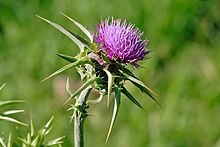
Thistle
Thistle is the common name of a group of flowering plants characterized by leaves with sharp prickles on the margins, mostly in the family Asteraceae. |
||
| ( 知識學習|隨堂筆記 ) |