字體:小 中 大 |
|
|
||||||||||||||||||||||||||||||||||||||||||||||||||||||||
| 2017/01/08 22:02:01瀏覽155|回應0|推薦0 | ||||||||||||||||||||||||||||||||||||||||||||||||||||||||
2016.10.13
🎃 Western Literature 🎃
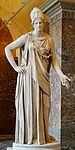
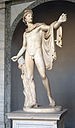
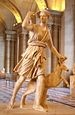
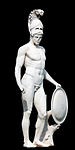
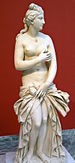
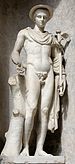
🍙 Twelve Olympians
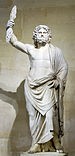
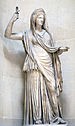
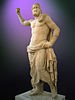
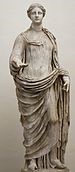
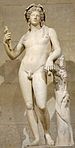
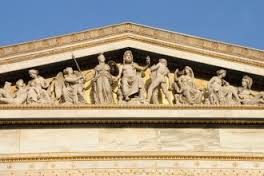
The Twelve Olympians, also known as the Dodekatheon, were the principal deities of the Greek pantheon, said to reside atop Mount Olympus. The Olympians gained their supremacy in a ten-year-long war of gods in which Zeus led his siblings to victory over their predecessor gods, the Titans.
The concept of the "Twelve Gods" is older than any extant Greek or Roman source. The gods meet in council in the Homeric epics, but the first ancient reference to religious ceremonies for the Olympians collectively is found in the Homeric Hymn to Hermes. The Greek cult of the Twelve Olympians can be traced to 6th-century BC Athens and probably has no precedent in the Mycenaean period. The Altar of the Twelve Gods at Athens is usually dated to the archonship of the younger Pesistratos, in 522/521 BC.
In ancient Greek religion, the "Olympian Gods" and the "Cults of Twelve Gods" were often relatively distinct concepts.
🍙 Greek mythology
Greek mythology is the body of myths and teachings that belong to the ancient Greeks, concerning their gods and heroes, the nature of the world, and the origins and significance of their own cult and ritual practices. It was a part of the religion in ancient Greece. Modern scholars refer to and study the myths in an attempt to shed light on the religious and political institutions of Ancient Greece and its civilization, and to gain understanding of the nature of myth-making itself.
🍙 Survey of mythic history
Greek mythology has changed over time to accommodate the evolution of their culture, of which mythology, both overtly and in its unspoken assumptions, is an index of the changes. In Greek mythology's surviving literary forms, as found mostly at the end of the progressive changes, it is inherently political, as Gilbert Cuthbertson has argued.
👉 The myths of origin or age of gods (Theogonies, "births of gods"): myths about the origins of the world, the gods, and the human race. 👉 The age when gods and mortals mingled freely: stories of the early interactions between gods, demigods, and mortals. 👉 The age of heroes (heroic age), where divine activity was more limited. The last and greatest of the heroic legends is the story of the Trojan War and after (which is regarded by some researchers as a separate fourth period).
🍙 VR/ Virtual reality:
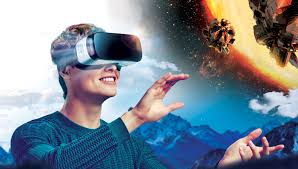
First things first, you're going to need to know what VR actually is. The clue is in the name - it's the experience of a world that doesn't actually exist. We aren't talking about getting yourself lost in a book or day dreaming about a photo or painting however, even if these technically are also experiencing some sort of virtual reality. The virtual reality we are talking about is one created by computers that allows you to experience and interact with a 3D world that isn't real by putting on a head-mounted display and some form of input tracking.
🍙 AR/ Augmented reality:
Augmented reality (AR) is a live direct or indirect view of a physical, real-world environment whose elements are augmented (or supplemented) by computer-generated sensory input such as sound, video, graphics or GPS data. It is related to a more general concept called mediated reality, in which a view of reality modified (possibly even diminished rather than augmented) by a computer. As a result, the technology functions by enhancing one’s current perception of reality. By contrast, virtual reality replaces the real world with a simulated one.
Achilles’ heel 🍙 Achilles’ heel
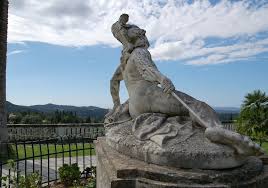
An Achilles' heel is a weakness in spite of overall strength, which can actually or potentially lead to downfall. While the mythological origin refers to a physical vulnerability, idiomatic references to other attributes or qualities that can lead to downfall are common.
|
||||||||||||||||||||||||||||||||||||||||||||||||||||||||
| ( 知識學習|隨堂筆記 ) |