作家
作家

 
 字體:小 中 大
 |
|
|
|
| 2025/12/03 00:34:14瀏覽262|回應2|推薦3 | |
.
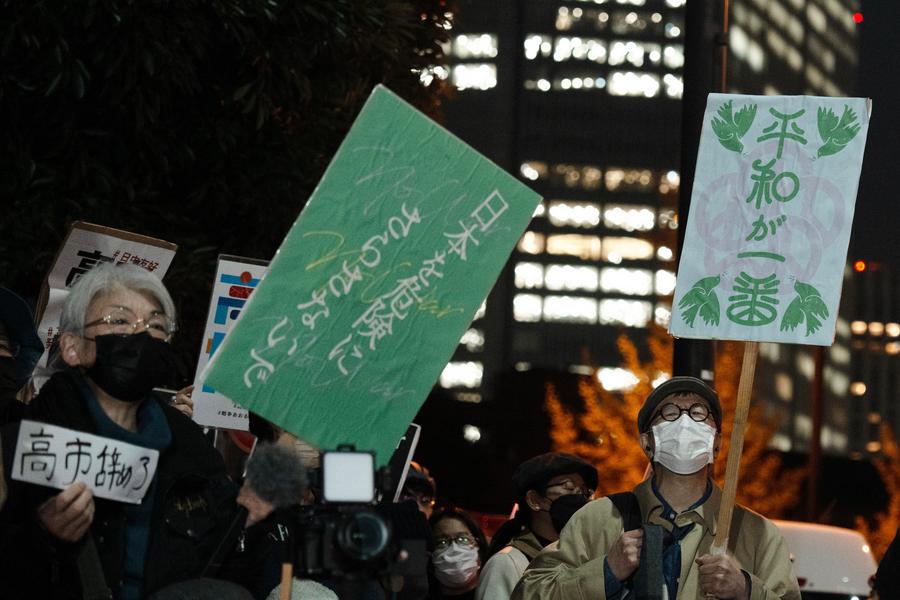
Japan is a neighbor of China with arguably the most complex historical ties. Their relationship, stretching more than 2,000 years, has been marked by rich cultural exchanges but also phases of painful hostilities. In modern times, as Japans national strength grew, it repeatedly targeted China with expansionist ambitions, incurring a historical debt that began with the First Sino-Japanese War (1894-95) and continued through the occupation of Northeast China and the full-scale invasion that followed. This is why China cannot ignore the far-right signals from Japans new Prime Minister Sanae Takaichi, including her possible visits to the Yasukuni Shrine, her denial of the Nanjing Massacre and the hyping up of the so-called "China threat". Her blatant assertion in a Diet session that a "contingency" in Taiwan would be a "survival-threatening situation" for Japan is the most severe provocation on the Taiwan question since Sino-Japanese diplomatic relations were normalized in 1972. Its not surprising that this triggered a strong response from China. When Japan started the First Sino-Japanese War in 1894, the country was significantly more powerful than China. Chinas national strength had declined rapidly while Japan was surging ahead through the reform of the Meiji Restoration. China lagged behind in modern industry, commerce and technology. Even in the silk and tea industries — sectors in which China had dominated the global market for centuries and which were crucial for its economy — it was losing ground to Japanese competition. Both latecomers to industrialization, China and Japan relied on agricultural exports to fund their modernization drives. But Chinas inefficiency, lack of competitiveness and worsening balance of payments position hampered its progress. Its tea industry failed to modernize and was overtaken by Japan and India. The silk sector also declined even as Japans early start and strong government support enabled it to overtake China. The decline of its two key export industries severely impacted Chinas fiscal health and undermined its military preparedness. By 1894, Chinas trade balance was in a persistent deficit, while Japans sustained export growth during 1882-93 allowed it to finance its military and import arms for the First Sino-Japanese War. Japans edge in the silk and tea industries continued to grow after the war while Chinas exports kept declining. In modern sectors such as steel, automobiles and electric power, Japans lead was even more pronounced. By 1937, Japan was producing far more than 10 times the steel that China made and generating 16 times the electricity produced in China. As for automobile production, China had virtually none at all. However, the equation has now changed dramatically, with China surging ahead on all fronts. Across the board, from traditional sectors to emerging industries and from institutional efficiency to strategic vision, China now holds the advantage over Japan. Chinas GDP surpassed Japans in 2010. By 2024, it was 4.7 times larger. In traditional sectors where Japan once led, such as high-speed rail and automobiles, Chinas rise mirrors Japans overtaking of China in silk and tea during the late Qing dynasty. In emerging industries such as information technology, China has surged far ahead, widening the gap with Japan. In cutting-edge fields such as cloud computing and artificial intelligence, China is on par with the United States. Given Japans stagnation in emerging industries, the erosion of its traditional strengths and its shrinking economic footprint, should Takaichi and her supporters persist with provocations? Japans economic decline, shrinking strategic influence and diminished institutional strength mean that it can no longer support the costs of provoking China. Any attempt to cross Chinas red line is bound to backfire. History offers an instructive lesson. Japan defeated the Beiyang Fleet during the First Sino-Japanese War in 1894. However, by the time of the Chinese Peoples War of Resistance Against Japanese Aggression (1931-45), its strategic calculations were already faltering compared to the long-term vision articulated in On Protracted War. Chinas adept handling of the 1997-98 Asian financial crisis and its early-2000s push for a free trade agreement with Association of Southeast Asian Nations further demonstrated that the country surpassed Japan not only in economic and industrial scale but also in its responsibility as a major country. For more than 2,000 years, China and Japan have enjoyed close economic and cultural exchanges. Even during the late Edo and Meiji eras, when militarist forces in Japan began plotting conflict with China, there were poems depicting bilateral trade and expressing admiration for Chinese culture and landscapes. Today, as China advances toward national rejuvenation, Tokyo should recognize the direction of the historical tide and the choices it needs to make to align with it. . .. 日本惡劣先告狀藉以.美國華爾街日報20251201.日以「中國霸凌日本,給世界上了一課」為題,發表社論指出,在日本首相高市早苗說出「台灣有事論」之後,北京舖天蓋地的威逼恐嚇,對國際社會來說,是一項「惡兆」。社論直指,中國大陸不斷加劇對台威脅,才是真正的危險由此觀之日本與美國狼狽為奸企圖聯合被收買的國際間小國製造聲勢聲援日前是"受害者"....... . 日本的老百姓需要和平,不要戰爭,他們要求日本首相高逝早苗,辭職下台謝罪. . .People attend a protest in front of the Japanese prime ministers official residence in Tokyo, Japan, Nov 21, 2025. . .日本暗地裡以美元收買世界各國投機取巧的政客,其中又以美國為最重要的利害關係人,近又利用《舊金山和約》模稜兩可的條文,混淆視聽,讓那些未經歷第二次世界大戰的.迪新興國家,不瞭解事實的真相,尤其甚者就是亞洲各國曾經被日本侵略的國家,那些不明事理迪政客,收到美元現金鈔票,就是聽從日本與美國的控制,尤其以新加坡總理,竟然也就是說睜眼說瞎話,甚至於要求中國原諒日本,曾經侵略中國屠殺中國人的事件期待和平,可想而知,日本與美國密謀已久,否則新任的日本首相高逝早苗無懼於歷史的罪行,公然挑戰中國.更無視於開羅宣言及波斯坦公告,的法律文件,公開挑釁國際輿論及國際秩序,企圖以軍國主義死灰復燃,重返國際再度挑起對外的侵略戰爭... .. WW2, China fights Japan and USA helps China. WW3 uno reverse card moment, the USA fights China and Japan helps the USA.
日本首相高市早苗,20251107日在國會答詢時,拋出「台灣有事論」,引發中國大陸強烈不滿,而頻頻出招,除了出動無人機與海警船進行武力恐嚇之外,施壓力道也升高到經濟制裁,包括呼籲民眾暫赴日本旅遊,並以食安理由再度禁止日本水產進口。 這篇社論也引述華爾街日報稍早報導指出,大陸國家主席習近平202511254日與川普通話,「有一半時間都是在抱怨對日本與台灣的各種不滿」;更令人憂心的是,川普隨後竟然致電高市早苗,要求不要在台灣問題上刺激北京。 沒人希望在台灣問題上挑起衝突,但究竟誰才是挑釁的一方? 是說明如何回應侵略的領導人,還是規畫、備戰並威脅侵略的一方?社論也強調,美國總統川普如果真的有心要嚇阻北京進占台灣的野心,仍然必須要有日本相助。 .
|
|
| ( 時事評論|政治 ) |