


 字體:小 中 大
 |
|
|
|
| 2026/02/14 22:16:35瀏覽104|回應0|推薦0 | |
The ladle nozzle is a fundamental component of the molten steel flow-control system in primary and secondary metallurgy. Although geometrically simple, the ladle nozzle functions within one of the harshest service environments in modern industry: extreme temperature gradients, high-velocity molten steel flow, erosive slag attack, thermal shock during tapping and emptying, and mechanical loading from slide gate mechanism actuation. Its performance directly affects casting stability, steel cleanliness, productivity, and refractory consumption. This article provides a detailed explanation of what a ladle nozzle is, how it is designed, how it works, and why its performance is essential for continuous casting and overall steel plant efficiency.
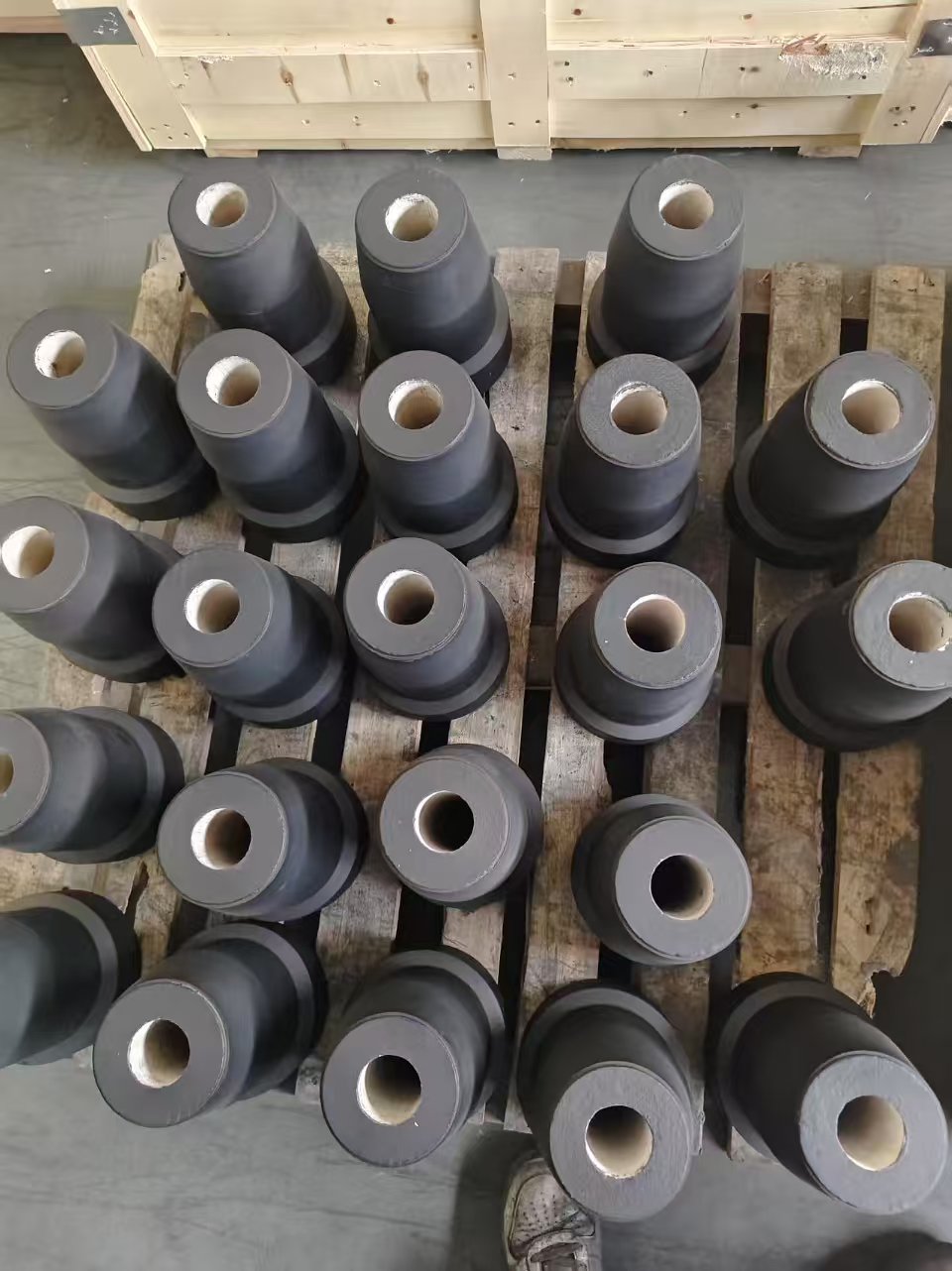 ladle nozzle
1. Definition and Functional Role of a Ladle Nozzle
A ladle nozzle is the refractory-lined passage located at the bottom of the steelmaking ladle through which molten steel flows into the tundish during casting. It is the core conduit between the ladle interior and the slide gate system or stopper rod system. Structurally, the ladle nozzle is a refractory tube—typically straight through, with a precisely engineered bore diameter—installed inside the ladle bottom plate.
Its primary functions are:
Provide a controlled flow path for molten steel to exit the ladle.
Interface with the flow-control mechanism, typically a slide gate or stopper rod.
Ensure sealing and flow stability during casting.
Withstand erosion, thermal shock, and chemical attack from molten steel and slag.
Maintain dimensional accuracy to avoid turbulence, steel reoxidation, and nozzle clogging.
The nozzle must maintain structural integrity throughout the entire casting sequence, often lasting multiple heats depending on the lining and plant practice.
2. Structural Components of the Ladle Nozzle System
Although the “nozzle” is often referred to as a singular part, in practice it is part of a multi-component assembly. The main components include:
2.1 The Inner Nozzle (Well Nozzle)
The inner nozzle is installed flush with the ladle bottom refractory. It interfaces directly with the slide plate or stopper head. Its main requirements include:
High erosion resistance
Consistent bore geometry
Resistance to steel infiltration
Strong bonding with the ladle bottom lining
The inner nozzle must also prevent molten steel penetration between the nozzle and the seating block.
2.2 The Outer Nozzle
The outer nozzle connects the slide gate plates or stopper rod mechanism to the tundish. Its function is to:
Maintain the correct casting stream shape
Provide thermal insulation
Resist chemical wear from steel and slag
The outer nozzle is typically exchangeable at each heat.
2.3 Seating Block or Collector Block
This is the refractory “socket” in which the inner nozzle is installed. It provides mechanical and thermal stability, distributing stress between the ladle bottom refractories and the nozzle.
2.4 Slide Gate Plates
When the ladle uses a slide gate system, the nozzle bore is aligned with the slide gate plates. The bore in the slide plate is positioned over the nozzle exit to allow controlled opening by sliding the plates.
2.5 Nozzle Brick Mortar
Special mortar is applied between the nozzle and seating block to ensure:
Tight sealing
No molten steel penetration
Stable mechanical anchoring
This is a critical installation step.
3. Materials Used in Ladle Nozzles
Refractory materials for ladle nozzles must combine mechanical strength, chemical stability, and thermal shock resistance. The typical compositions include:
3.1 Alumina-Graphite
The most widely used material, combining:
High thermal shock resistance
Low wettability by molten steel
Excellent erosion resistance
Fine graphite flakes reinforce the matrix and reduce slag adhesion.
3.2 Alumina-Zirconia-Carbon (AZC)
Used in more demanding plants for improved erosion resistance, especially in high-oxygen or high-flow environments. Zirconia enhances corrosion resistance and stabilizes the flow channel.
3.3 High-Purity Alumina
Used when extremely clean steel is required, especially in stainless steel and ultra-low carbon applications. High-purity alumina offers:
Minimal impurity pickup
Good erosion resistance
Stable high-temperature mechanical strength
3.4 Zirconia-based Refractories
Employed in extreme service environments where:
Long ladle life is required
Severe erosion from superheat or long casting sequences is expected
Zirconia provides unparalleled thermal shock and corrosion resistance but at higher cost.
4. Operational Performance Requirements
A ladle nozzle must perform reliably during all loading, tapping, and casting operations. The main operational requirements include:
4.1 Flow Stability
The nozzle must provide a laminar and stable flow stream, minimizing turbulence, which can entrain slag or cause reoxidation.
4.2 Structural Integrity
It must survive:
Sudden heating during ladle filling
Bottom pressure from molten steel head
Abrasion from high-velocity molten steel
Slide plate or stopper rod friction
4.3 Resistance to Nozzle Clogging
Nozzle clogging is one of the most serious operational challenges in continuous casting. Clogging occurs due to:
Alumina buildup from deoxidation products
Steel reoxidation
Temperature drops near the nozzle
Reaction with inclusions
The nozzle design and material both influence clogging behavior.
4.4 Thermal Shock Resistance
Nozzles encounter temperatures approaching 1600°C within seconds. Cracking or spalling can lead to:
Leaks
Streaming issues
Unplanned ladle downtimes
5. Failure Modes of Ladle Nozzles
Understanding nozzle failure mechanisms helps optimize refractory selection and casting practices. Common failure modes include:
5.1 Erosion
Molten steel erodes the nozzle bore through:
High flow velocity
Non-uniform flow
Slag entrainment
As erosion enlarges the bore, the flow rate increases uncontrollably.
5.2 Corrosion
Slag chemistry, especially high FeO or MnO content, penetrates the nozzle surface. Chemical reactions degrade alumina-carbon materials.
5.3 Clogging and Deposits
Alumina-based inclusions accumulate at the bore entrance or within the slide plate interface, restricting steel flow and requiring oxygen lances to clear.
5.4 Thermo-mechanical Cracking
Rapid temperature changes induce cracks, especially if the nozzle has poor thermal shock resistance.
5.5 Steel Penetration
Improper installation or mortar application can allow steel to penetrate between the nozzle and seating block, leading to dangerous breakouts.
6. Ladle Nozzle and Flow Control Mechanisms
The nozzle interfaces with two major ladle flow-control systems:
6.1 Slide Gate System
The most common system in modern steel plants.
The slide gate plates move laterally over the nozzle exit, adjusting the opening area to regulate flow.
Key characteristics:
Accurate flow control
Good adaptability for continuous casting
Replaceable plates for each heat
6.2 Stopper Rod System
Less common in modern high-throughput plants, but used in certain billets or specialty steel operations.
The stopper rod vertically controls the nozzle opening.
7. Installation Considerations
Correct installation is essential to nozzle performance:
Precise positioning of the nozzle relative to the ladle centerline.
Correct mortar thickness—too thick leads to weak bonding; too thin leads to penetration.
Pre-heating procedures to reduce thermal shock.
Proper alignment with slide gate plates to ensure a consistent sealing surface.
Failure in any of these steps increases the likelihood of operational issues.
8. Importance of Ladle Nozzle Performance in Steel Plant Operations
The ladle nozzle significantly influences:
Product Quality
Clean steel requires stable flow with minimal reoxidation.
Proper nozzle design reduces inclusion pickup.
Operational Stability
Prevents clogging events
Reduces casting interruptions
Safety
A leaking or damaged nozzle may cause a ladle breakout—one of the most dangerous events in a steel plant.
Cost Efficiency
Improved nozzle life reduces refractory consumption and downtime.
Conclusion
Although the ladle nozzle is a relatively small component compared to the scale of steelmaking equipment, it is one of the most critical elements of molten steel flow control. Its design, material selection, installation quality, and operational behavior directly influence casting stability, product quality, and steel plant productivity. As continuous casting speeds increase and higher purity steels become standard, advanced nozzle refractories and optimized flow-control practices will continue to play a central role in modern metallurgy.
|
|
| ( 不分類|不分類 ) |


