10/29
* James Fenimore Cooper
à The most important writers of his time
à a writer who helped chart the future course of American fiction
à He wrote novels of manners, transatlantic and European fiction, and several historical
novels on the American Revolution.
à Best known for his Leatherstocking series (1800s); The Pionners (1823)
à His works explore the imperial, racial, and their evocative portrayals of the frontiersman
Natty Bumppo and his Indian friend Chingachgook helped to develop what the British
novelist and critic D. H. Lawrence influentially called “the myth of America.”
à He create image of a nation founded through conflict and dispossession that nonetheless
managed to sustain belief in its youthful innocence.

* Ralph Waldo Emerson
à The most influential American writer of the nineteenth century
à significant writers of the time sought to come to terms.
à His essays convey themes about: nonconformity, self-reliance, and anti-institutionalism
(he live his life based on these three criteria)
à Influenced Henry David Thoreau through the three themes
à Influenced Whitman’s great poetry by writing poetries that “speaks somewhat wildly” in
addressing the nation’s “ample geography”.
à He’s the son of a Unitarian minister (a Unitaria? = not a consonant, considered as emi-
consonant)
à Rejected the view of the philosopher John Locke.
à “Meter does not make the argument, he wrote, in striking contrast to his contemporary
Edgar Allan Poe, but the argument makes its own meter; thus he inspired Whitman to
break with poetic tradition by introducing the idea of “open form” poetry. Emerson
lectured in Boston, across the Northeast, in the South, and even in California, giving
more than fifteen hundred lectures over the course of his career. These as much as his
essays helped develop this reputation.” (507)
à Individualism (self0culture and the individual mind) + Emotionalism = Romanticism
- 以人為本,不以神為本
à First book: Nature
- “Transcendentalist”, participants included himself and Bronson Alcott, Henry
David Thoreau
- God is within yourself
- Self-Reliance, the ultimate truth
- Chapters:
1. Nature (Romanticism 文藝復興)
2. Commodity (物慾太強)
3. Beauty
4. Language (a. Words are signs of natural facts; b. Particular natural facts
are symbols of particular spiritual facts; c. Nature is the symbol of spirit;
spirit, nature, heart)
5. Discipline (克制自己)
6. Idealism
7. Spirit
8. Prospects
à The American Scholar
- a friendly sign of the survival of the love of letters amongst a people too
busy to give to letters any more
- Our day of dependence, our long apprenticeship to the learning of other
lands, draws to a close
- convey into unlooked for wisdom that he might be more helpful to himself
- Functions are parelled out to individuals, each of whom aims to do his
stint of the joint work, whilst each other performs his. The fable implies
that the individual to possess himself, must sometimes return from his own
labor to embrace all the other laborers. But unfortunately, this original
unit, this fountain of power has been so distributed to multitudes, has been
so minutely subdivided and peddled out, that it is spilled into drops and
cannot be gathered.
- Man is thus metamorphosed into a thing, into many things.
- The main influences he receives:
1. Nature
2. Books
3. Man thinking
4. “Practical men” 世界很美好要去走走看看 “Travelling is a fool’s
paradise”
5. Patience (on our own feet) 要找到自己的人生方向要 patient

* Each and all
https://www.youtube.com/watch?v=uQzU0A4P2VM
* Derby Wharf and the Custom House
à Salem, Massachusetts
à Witch house, The House of Seven Gables (Hawthorne)

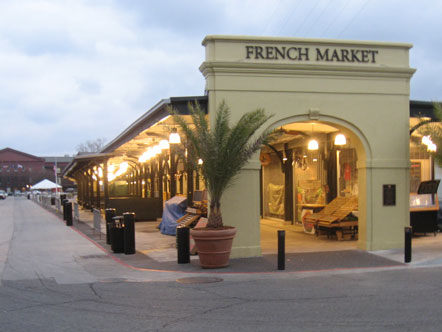
* New Orleans (French market)
à Seafood with Jazz
à The original doughnuts
* Boston Old Youth Church (Salem Street)

* James Town
à Settlement in Virginia
à The three ships

* Antebellum, Confederate flag

* First school in St. Augustine, Florida

* Jimmy Carter, Thomas Wolfe (Angel)
* James Madison – Knowledge will forever govern

* Plantation (Boone Hall)


 字體:小 中 大


